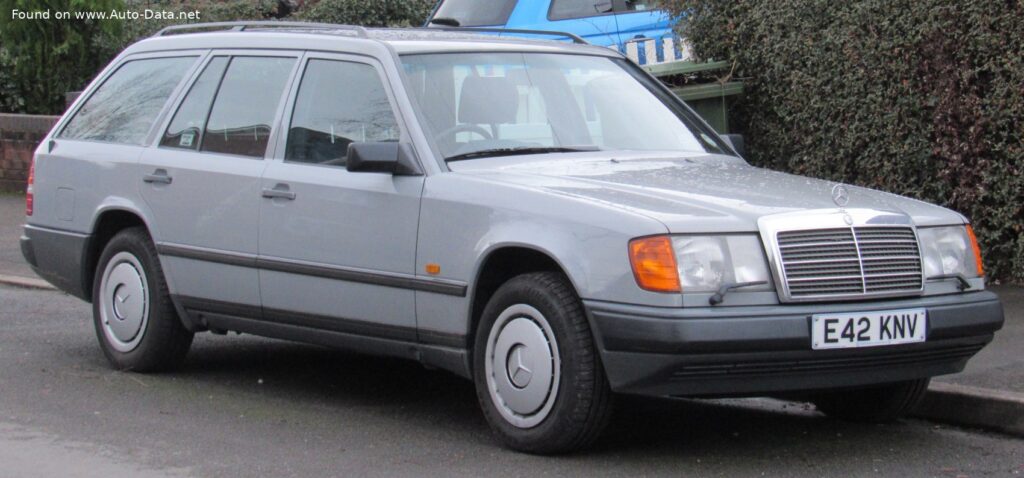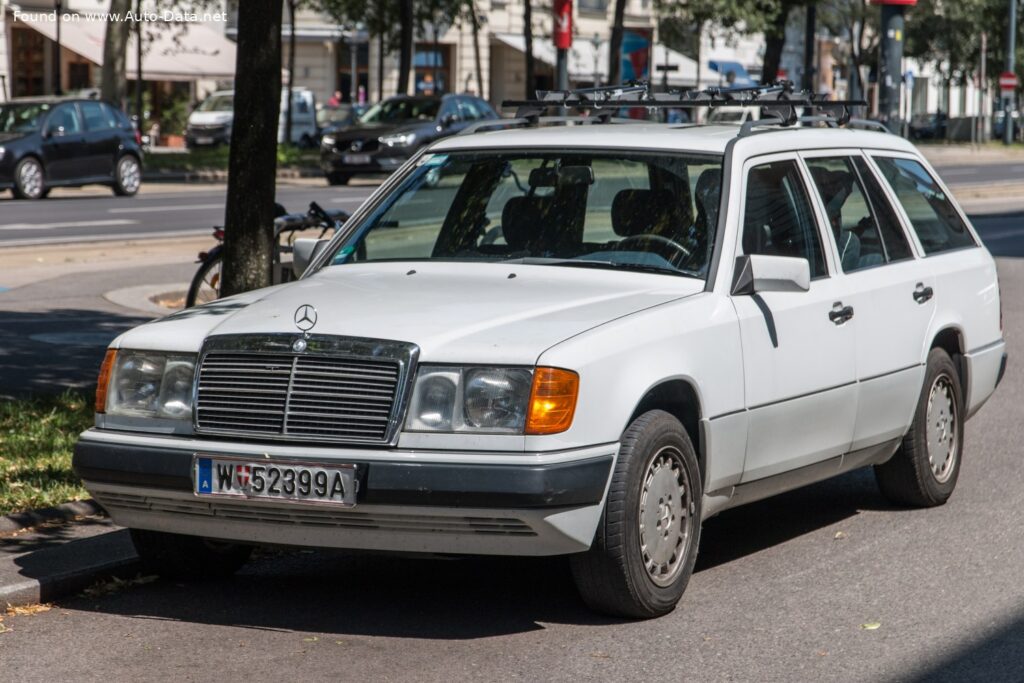
The Mercedes-Benz W124 series, produced from 1984 to 1996, stands as a monumental achievement in automotive engineering, often hailed as one of the finest vehicles ever built by the German marque. Renowned for its unparalleled build quality, durability, and refined driving experience, the W124 established a benchmark for executive cars globally. Within this illustrious lineage, the S124 designation specifically refers to the station wagon (estate) variant, a highly practical and versatile offering that became a staple in the European market. The subject of this article, the Mercedes-Benz S124 (facelift 1989) 250 TD, represents a significant evolution within the W124 family, incorporating a series of updates that enhanced its aesthetic appeal and refined its already impressive mechanical package.
Launched in September 1989, this facelifted model brought subtle yet impactful changes to the W124, aligning its design more closely with the evolving Mercedes-Benz aesthetic of the late 1980s and early 1990s. The 250 TD variant, powered by a robust 2.5-liter, naturally aspirated five-cylinder diesel engine, was a quintessential European offering, prized for its exceptional fuel economy, reliability, and capability as a long-distance cruiser and family hauler. While not officially sold in the United States in this specific diesel wagon configuration, its reputation for “over-engineering” and longevity resonated worldwide, cementing its status as a timeless classic and a testament to Mercedes-Benz’s commitment to quality during a golden era of automotive manufacturing. This vehicle embodies a period where mechanical integrity and enduring design were paramount, offering a blend of comfort, utility, and understated luxury that few competitors could match.
The Mercedes-Benz S124 (facelift 1989) 250 TD: Engineering and Heritage
Powertrain & Engine Architecture
At the heart of the Mercedes-Benz S124 (facelift 1989) 250 TD lies the venerable OM 602 D 25 / 602.912 engine, a 2.5-liter (2497 cm3 or 152.38 cu. in.) naturally aspirated inline-five-cylinder diesel powerplant. This engine configuration was a hallmark of Mercedes-Benz diesel offerings during this era, celebrated for its smooth operation, impressive longevity, and remarkable fuel efficiency. The OM 602 produced a modest but entirely adequate 94 horsepower at 4600 rpm, coupled with a robust 116.53 lb.-ft. of torque available between 2600 and 3100 rpm. This torque delivery, characteristic of naturally aspirated diesels, provided ample pulling power for daily driving and highway cruising, even when the wagon was fully loaded.
Power was sent to the rear wheels via a durable five-speed manual transmission, offering drivers direct control over the engine’s output. While not designed for outright speed, the 250 TD delivered respectable performance for its class and era. It accelerated from 0 to 60 mph in a calculated 16.7 seconds, reaching a maximum speed of 102.53 mph. These figures underscored its role as a practical, reliable workhorse rather than a performance machine. Fuel economy was a significant strong suit, with urban consumption rated at 24.8 US mpg and an impressive extra-urban figure of 40.6 US mpg, making it an economically sensible choice for European motorists facing higher fuel prices. The engine featured a precombustion chamber injection system and a SOHC (Single Overhead Camshaft) valvetrain, designs known for their reliability and ease of maintenance. With a high compression ratio of 22:1, typical for diesel engines, and a generous 7-liter engine oil capacity, the OM 602 was engineered for endurance, often covering hundreds of thousands of miles with proper care.
Driving Characteristics
The 250 TD, with its 94 hp and five-speed manual transmission, offered a driving experience focused on relaxed cruising and effortless usability. Compared to higher-output W124 variants like the 260E or 300E, the 250 TD prioritized fuel economy and low-end torque over outright acceleration. The five-speed manual transmission allowed drivers to keep the engine in its optimal torque band, making it easy to maintain speed on inclines or when carrying a load. While the acceleration was not brisk, the engine’s torque characteristics meant that it felt stronger than its horsepower figure suggested. Compared to the automatic transmission options available on other W124 models, the manual gearbox provided a more engaging driving experience and allowed for greater control, particularly in challenging conditions. The gear ratios were well-matched to the engine’s power delivery, providing a comfortable and predictable driving experience. It wasn’t a sports car, but a capable and comfortable long-distance hauler.
Equipment & Trim Levels
The S124 250 TD, even in base trim, was well-equipped for its time. Standard features typically included power steering, central locking, power windows, and a high-quality audio system. Interior upholstery was generally cloth, though leather was available as an option. The dashboard layout was functional and ergonomically designed, with clear instrumentation and robust switchgear. Optional extras included a sunroof, air conditioning, heated seats, and upgraded audio systems. The level of equipment varied depending on the specific market, with some countries offering more features as standard than others. The overall interior ambiance was one of understated luxury and durability, reflecting Mercedes-Benz’s commitment to quality and refinement. The wood trim, while not extensive, added a touch of elegance to the cabin.
Chassis & Braking
The S124 250 TD utilized a robust chassis designed for comfort and stability. The front suspension featured independent double wishbones, while the rear suspension employed a sophisticated independent multi-link setup. This combination provided a smooth and controlled ride, even on uneven surfaces. Braking was handled by disc brakes on all four wheels, complemented by an Anti-lock Braking System (ABS), which was a significant safety feature for the time. The steering system was a cone worm with recirculation balls type, providing precise and reassuring feedback. The standard tire size was 195/65 R15 on 6.5J x 15 wheels, offering a comfortable ride and predictable grip. The suspension was tuned to prioritize comfort and stability, rather than sporty handling, making it well-suited for long-distance cruising and carrying heavy loads. Rear drum brakes were sometimes fitted on lower-spec models, but the majority of 250 TDs featured all-round discs.
Market Reception & Comparison
Critics generally praised the Mercedes-Benz S124 250 TD for its exceptional fuel economy, reliability, and comfortable ride. While not lauded for its performance, it was recognized as a practical and capable vehicle well-suited to its intended purpose. Compared to other trims in the W124 lineup, the 250 TD offered a more affordable entry point into the Mercedes-Benz range, while still providing the brand’s renowned quality and refinement. The gasoline-powered 260E and 300E offered more power and a sportier driving experience, but at the cost of fuel economy. The 250 TD was often seen as the sensible choice for those prioritizing practicality and long-term reliability. Compared to competitors like the BMW E34 Touring and Audi 100 Avant, the 250 TD offered a more luxurious interior and a more refined driving experience. Its diesel engine also provided superior fuel economy compared to the gasoline engines offered by its rivals.
Technical Specifications
| Category | Specification |
| Brand | Mercedes-Benz |
| Model | W124 |
| Generation | S124 (facelift 1989) |
| Type (Engine) | 250 TD (94 Hp) |
| Start of production | September, 1989 |
| End of production | July, 1993 |
| Powertrain Architecture | Internal Combustion engine |
| Body type | Station wagon (estate) |
| Seats | 5 |
| Doors | 5 |
| Fuel consumption (economy) – urban | 24.8 US mpg (9.5 l/100 km) |
| Fuel consumption (economy) – extra urban | 40.6 US mpg (5.8 l/100 km) |
| Fuel Type | Diesel |
| Acceleration 0 – 60 mph | 16.7 sec |
| Maximum speed | 102.53 mph (165 km/h) |
| Weight-to-power ratio | 16.1 kg/Hp |
| Power | 94 Hp @ 4600 rpm |
| Power per liter | 37.6 Hp/l |
| Torque | 116.53 lb.-ft. @ 2600-3100 rpm (158 Nm) |
| Engine layout | Front, Longitudinal |
| Engine Model/Code | OM 602 D 25 / 602.912 |
| Engine displacement | 2.5 liters (2497 cm3 / 152.38 cu. in.) |
| Number of cylinders | 5 |
| Engine configuration | Inline |
| Cylinder Bore | 3.43 in. (87 mm) |
| Piston Stroke | 3.31 in. (84 mm) |
| Compression ratio | 22:1 |
| Number of valves per cylinder | 2 |
| Fuel injection system | Precombustion chamber injection |
| Engine aspiration | Naturally aspirated engine |
| Valvetrain | SOHC |
| Engine oil capacity | 7.4 US qt (7 l) |
| Coolant capacity | 10.04 US qt (9.5 l) |
| Kerb Weight | 3328.98 lbs. (1510 kg) |
| Max. weight | 4695.85 lbs. (2130 kg) |
| Max load | 1366.87 lbs. (620 kg) |
| Fuel tank capacity | 19.02 US gal (72 l) |
| Length | 187.6 in. (4765 mm) |
| Width | 68.5 in. (1740 mm) |
| Height | 58.62 in. (1489 mm) |
| Wheelbase | 110.24 in. (2800 mm) |
| Front track | 58.94 in. (1497 mm) |
| Rear (Back) track | 58.94 in. (1497 mm) |
| Drivetrain Architecture | Rear wheel drive, Internal Combustion engine |
| Drive wheel | Rear wheel drive |
| Number of gears and type of gearbox | 5 gears, manual transmission |
| Front suspension | Wishbone |
| Rear suspension | Independent multi-link suspension |
| Front brakes | Disc |
| Rear brakes | Disc |
| Assisting systems | ABS (Anti-lock braking system) |
| Steering type | Cone worm with recirculation balls |
| Power steering | Hydraulic Steering |
| Tires size | Front: 195/65 R15, Rear: 195/65 R15 |
| Wheel rims size | Front: 6.5J x 15, Rear: 6.5J x 15 |
Legacy
The Mercedes-Benz S124, particularly the diesel variants like the 250 TD, carved out a formidable legacy, especially in the European market. It was not just a car; it was an institution, revered for its uncompromising quality and a reputation for being “bulletproof.” This model cemented the W124’s status as the last truly “over-engineered” Mercedes-Benz, a vehicle designed to last for decades and withstand immense mileage with minimal fuss.
In its primary market, the Mercedes-Benz S124 (facelift 1989) 250 TD was a popular choice for a diverse range of buyers. Its combination of robust diesel economy, legendary reliability, and substantial cargo capacity made it an ideal vehicle for families, tradespeople, and even taxi fleets across Europe. The 250 TD, in particular, was praised for its low running costs and the ability to comfortably cover long distances, often fully laden, without complaint. Its competitors included vehicles like the BMW E34 5 Series Touring, the Audi 100 Avant, and the Volvo 740/940 Estate. While BMW offered a sportier driving experience and Volvo was known for its sheer cargo volume, the Mercedes-Benz S124 stood out for its superior ride comfort, refinement, and an unmatched sense of solidity and premium feel. It represented a conservative yet highly effective approach to luxury and utility.
Today, the W124 series, and the S124 wagons in particular, are highly sought-after modern classics. Enthusiasts and collectors appreciate their timeless design, exceptional build quality, and the satisfying mechanical feel that is often absent in newer vehicles. Well-maintained diesel examples, like the 250 TD, command respectable prices and are often imported to other markets, including the US, where their unique blend of classic Mercedes-Benz charm and diesel practicality is highly valued. The S124 played a crucial role in shaping Mercedes-Benz’s image as a manufacturer of durable, dependable, and prestigious vehicles, leaving an indelible mark on automotive history and continuing to be celebrated by a passionate global community. Its enduring presence on roads worldwide, decades after its production ceased, is a testament to its exceptional design and engineering.