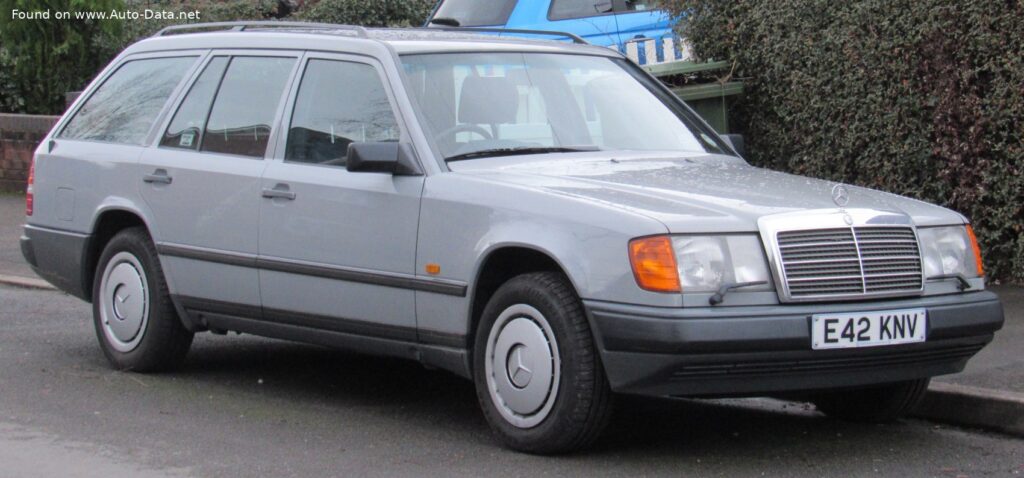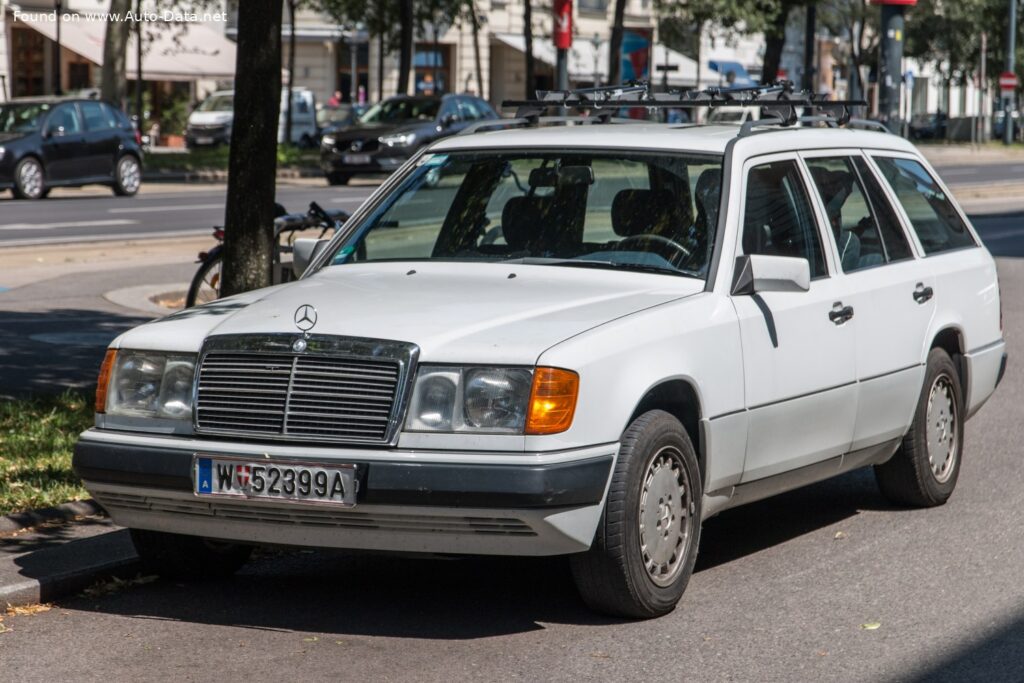
The Mercedes-Benz S124 (facelift 1989) 250 TD Turbo represents a pivotal moment in the history of premium executive automobiles, particularly within the European market. As part of the iconic W124 generation, a series celebrated globally for its unparalleled build quality, engineering integrity, and longevity, the S124 designation refers specifically to the station wagon (estate) variant. Launched in March 1990 as part of the significant 1989 facelift, this model embodied Mercedes-Benz’s commitment to combining luxury, practicality, and robust engineering. The 250 TD Turbo variant, powered by an efficient and durable five-cylinder turbocharged diesel engine, was particularly popular in markets where diesel fuel was favored for its economy and torque characteristics, offering a compelling blend of comfortable long-distance cruising and ample cargo capacity. While not officially sold in the United States in this specific diesel guise, the W124 chassis itself was a strong seller, establishing Mercedes-Benz’s reputation for solidity and sophistication. The Mercedes-Benz S124 (facelift 1989) 250 TD Turbo was produced until July 1993, marking it as a late-era example of the pre-E-Class nomenclature W124 series.
Powertrain & Engine Architecture
Under the hood of the S124 250 TD Turbo lies Mercedes-Benz’s renowned OM 602 D 25 A / 602.962 engine. This powerplant is an inline five-cylinder, 2.5-liter (2497 cm³ or 152.38 cu. in.) turbocharged diesel unit, a hallmark of Mercedes-Benz’s commitment to durable and efficient diesel technology. With a single overhead camshaft (SOHC) and two valves per cylinder, this engine was designed for reliability and smooth operation rather than outright blistering speed. It produced a respectable 126 horsepower at 4600 rpm, a figure that, while modest by today’s standards, was considered quite competitive for a diesel engine of its era.
More importantly for a vehicle of its type, the engine delivered a robust 231 Nm (170.38 lb.-ft.) of torque at a low 2800 rpm. This ample torque, available across a broad rev range, was crucial for effortlessly hauling the S124’s substantial kerb weight of 3439.21 lbs (1560 kg), especially when fully loaded with passengers and cargo. The engine utilized a precombustion chamber injection system, a common feature in Mercedes-Benz diesels of the period, which contributed to efficient combustion and reduced engine noise. The high 22:1 compression ratio was also typical of diesel engines, maximizing thermal efficiency.
Power was delivered to the rear wheels via a 5-speed manual transmission, a common configuration for European market vehicles emphasizing driver engagement and fuel efficiency. While an automatic transmission was available on other W124 models, the 250 TD Turbo was predominantly offered with the manual gearbox. The turbocharger, a Garrett unit, significantly enhanced performance over naturally aspirated diesel variants, providing a noticeable boost in acceleration and making the S124 250 TD Turbo a capable highway cruiser. It could accelerate from 0 to 60 mph in a respectable 12.3 seconds (0-100 km/h in 12.9 seconds) and achieve a top speed of 118.06 mph (190 km/h).
Fuel efficiency was a key selling point for this diesel model. The S124 250 TD Turbo boasted impressive economy figures for its time: an urban consumption of 10.1 liters per 100 km (23.3 US mpg) and an extra-urban (highway) consumption of 6.2 liters per 100 km (37.9 US mpg). These numbers underscored its suitability for long-distance travel, supported by a generous 19.02 US gallon (72-liter) fuel tank, offering an impressive cruising range.
Driving Characteristics
The driving experience in the S124 250 TD Turbo was characterized by relaxed, effortless cruising. The 5-speed manual transmission, while requiring driver involvement, allowed for precise control of the engine’s torque band. The gear ratios were well-matched to the engine’s characteristics, providing strong acceleration in each gear. Compared to the naturally aspirated diesel versions of the W124, the 250 TD Turbo offered a significant performance improvement, particularly when overtaking or climbing hills. However, it wasn’t intended to be a sports car; the focus was on comfortable, refined transportation.
Compared to the higher-performance gasoline-powered W124 variants, such as the 230E or 300E, the 250 TD Turbo naturally lacked the same level of outright acceleration. However, the diesel engine’s superior torque meant that it felt less strained when carrying a full load of passengers and luggage. The turbocharger provided a noticeable surge of power, but it wasn’t as immediate or dramatic as the response from a gasoline engine. The 250 TD Turbo offered a different kind of driving experience – one that prioritized efficiency, durability, and relaxed cruising over sporty handling.
Equipment & Trim Levels
The S124 250 TD Turbo was positioned as a mid-range offering within the W124 station wagon lineup. Standard features typically included power steering, central locking, electric windows, and an adjustable steering column. The interior was typically upholstered in a durable cloth material, although leather upholstery was available as an option. The dashboard layout was functional and ergonomic, with clearly labeled controls and a comprehensive instrument cluster.
Optional extras included a sunroof, air conditioning, heated seats, and a premium sound system. Many examples were also equipped with Mercedes-Benz’s automatic climate control system, which provided precise temperature regulation. The S124 also offered a range of convenience features, such as a rear window wiper, a load-securing net in the cargo area, and a split-folding rear seat for increased versatility. The level of equipment varied depending on the specific market and the customer’s preferences.
Chassis & Braking
The S124 250 TD Turbo featured a robust chassis designed for comfort and stability. The front suspension utilized independent wishbones with coil springs and shock absorbers, while the rear suspension employed an independent multi-link system, a groundbreaking design for its time. This multi-link setup provided excellent ride quality and handling characteristics, minimizing body roll and maximizing tire contact with the road.
The braking system consisted of disc brakes on all four wheels, providing ample stopping power. An Anti-lock Braking System (ABS) was standard equipment, enhancing safety by preventing wheel lockup during hard braking. The S124 rode on 195/65 R15 tires mounted on 6.5J x 15 wheel rims, a practical setup that contributed to ride comfort and tire longevity. The steering system was a cone worm with recirculation balls, providing precise and responsive steering feel.
Market Reception & Comparison
Critics generally praised the S124 250 TD Turbo for its blend of practicality, comfort, and fuel efficiency. The diesel engine was lauded for its durability and low running costs, while the spacious interior and versatile cargo area made it an ideal family vehicle. However, some critics noted that the performance was not as exhilarating as that of the gasoline-powered W124 variants.
Compared to other trims in the W124 lineup, the 250 TD Turbo offered a compelling value proposition for buyers who prioritized fuel economy and long-distance cruising. It was more affordable than the higher-performance gasoline models, yet it still provided a luxurious and comfortable driving experience. In terms of reliability, the 250 TD Turbo was considered to be exceptionally durable, with many examples exceeding 300,000 miles with proper maintenance.
Technical Specifications: Mercedes-Benz S124 (facelift 1989) 250 TD Turbo (126 Hp)
| General Information | |
| Brand | Mercedes-Benz |
| Model | W124 |
| Generation | S124 (facelift 1989) |
| Type (Engine) | 250 TD Turbo (126 Hp) |
| Start of Production | March, 1990 |
| End of Production | July, 1993 |
| Powertrain Architecture | Internal Combustion engine |
| Body type | Station wagon (estate) |
| Seats | 5 |
| Doors | 5 |
| Performance Specifications | |
| Fuel Consumption (Urban) | 10.1 l/100 km (23.3 US mpg) |
| Fuel Consumption (Extra Urban) | 6.2 l/100 km (37.9 US mpg) |
| Fuel Type | Diesel |
| Acceleration 0 – 60 mph | 12.3 sec |
| Acceleration 0 – 100 km/h | 12.9 sec |
| Maximum Speed | 190 km/h (118.06 mph) |
| Weight-to-Power Ratio | 12.4 kg/Hp (80.8 Hp/tonne) |
| Weight-to-Torque Ratio | 6.8 kg/Nm (148.1 Nm/tonne) |
| Engine Specifications | |
| Power | 126 Hp @ 4600 rpm |
| Power per liter | 50.5 Hp/l |
| Torque | 231 Nm @ 2800 rpm (170.38 lb.-ft. @ 2800 rpm) |
| Engine Layout | Front, Longitudinal |
| Engine Model/Code | OM 602 D 25 A / 602.962 |
| Engine Displacement | 2497 cm³ (2.5 l / 152.38 cu. in.) |
| Number of Cylinders | 5 |
| Engine Configuration | Inline |
| Cylinder Bore | 87 mm (3.43 in.) |
| Piston Stroke | 84 mm (3.31 in.) |
| Compression Ratio | 22:1 |
| Number of Valves per Cylinder | 2 |
| Fuel Injection System | Precombustion chamber injection |
| Engine Aspiration | Turbocharger |
| Valvetrain | SOHC |
| Engine Oil Capacity | 7 l (7.4 US qt) |
| Coolant Capacity | 9.5 l (10.04 US qt) |
| Space, Volume and Weights | |
| Kerb Weight | 1560 kg (3439.21 lbs) |
| Max. Weight | 2180 kg (4806.08 lbs) |
| Max Load | 620 kg (1366.87 lbs) |
| Fuel Tank Capacity | 72 l (19.02 US gal) |
| Dimensions | |
| Length | 4765 mm (187.6 in.) |
| Width | 1740 mm (68.5 in.) |
| Height | 1489 mm (58.62 in.) |
| Wheelbase | 2800 mm (110.24 in.) |
| Front Track | 1497 mm (58.94 in.) |
| Rear (Back) Track | 1497 mm (58.94 in.) |
| Drivetrain, Brakes and Suspension Specifications | |
| Drivetrain Architecture | Internal Combustion engine drives the rear wheels. |
| Drive Wheel | Rear wheel drive |
| Number of Gears and Type of Gearbox | 5 gears, manual transmission |
| Front Suspension | Wishbone |
| Rear Suspension | Independent multi-link suspension |
| Front Brakes | Disc |
| Rear Brakes | Disc |
| Assisting Systems | ABS (Anti-lock braking system) |
| Steering Type | Cone worm with recirculation balls |
| Power Steering | Hydraulic Steering |
| Tires Size (Front/Rear) | 195/65 R15 |
| Wheel Rims Size (Front/Rear) | 6.5J x 15 |
Legacy
The Mercedes-Benz S124, and indeed the entire W124 family, holds a revered place in automotive history, particularly in Europe. The Mercedes-Benz S124 (facelift 1989) 250 TD Turbo cemented its reputation as a benchmark for engineering excellence, durability, and practical luxury. Its robust construction earned it the nickname “over-engineered,” a term of endearment that highlighted its exceptional build quality and ability to withstand hundreds of thousands of miles with proper maintenance. This longevity meant that many W124s, including the S124 station wagon, served as reliable family vehicles, taxis, and business fleets across Europe for decades, often outlasting much newer competitors.
Today, the Mercedes-Benz S124 250 TD Turbo is celebrated not just as a utilitarian classic but as a testament to an era when Mercedes-Benz prioritized engineering longevity above all else. Its legacy is one of unwavering reliability, refined performance, and a practical elegance that continues to captivate automotive aficionados, solidifying its place as one of the finest vehicles ever produced by the German marque. Well-maintained examples command strong prices in the used car market, reflecting their enduring appeal and the growing appreciation for classic Mercedes-Benz vehicles.