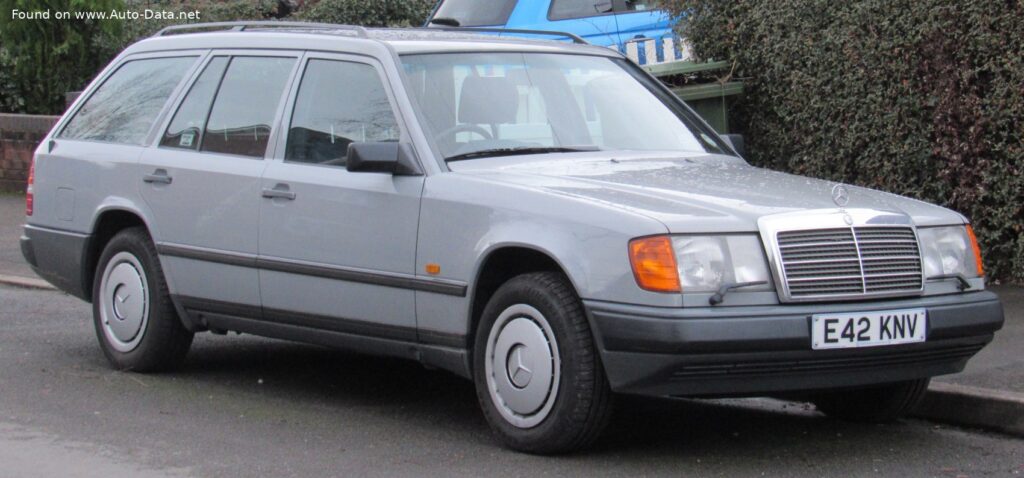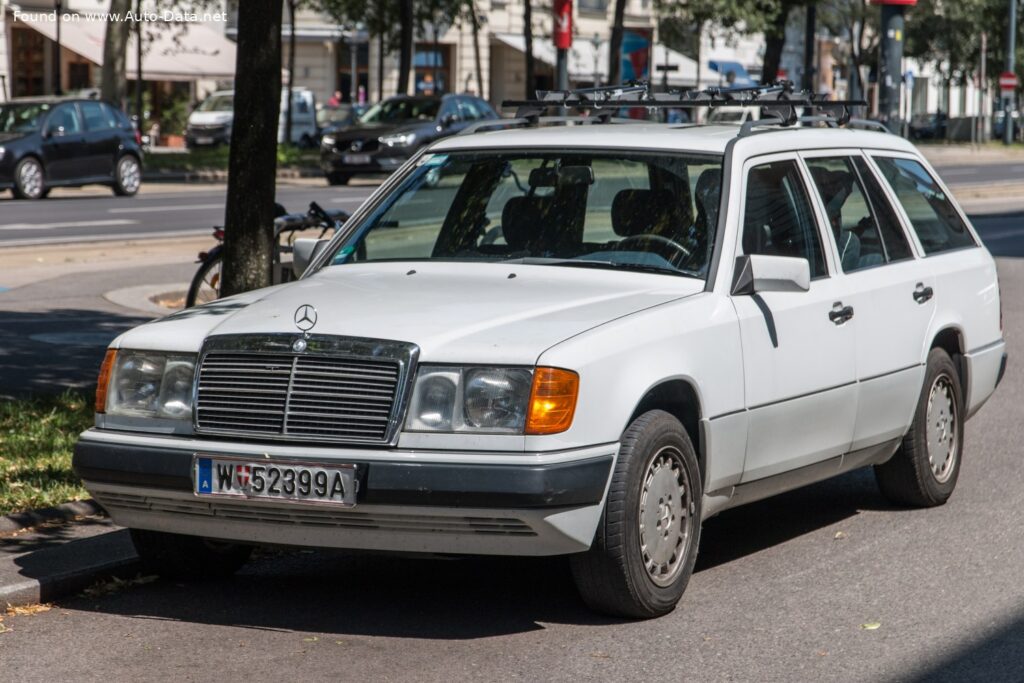
The Mercedes-Benz S124 (facelift 1989) 300 TD (113 Hp) represents a pivotal moment in the history of the German luxury automaker, embodying the brand’s unwavering commitment to engineering excellence, durability, and practical luxury. Part of the iconic W124 generation, which ran from 1984 to 1995, the S124 designation specifically refers to the station wagon (estate) variant. Unveiled as part of the significant 1989 facelift, this particular model combined the W124’s celebrated robust platform with a highly regarded, naturally aspirated diesel inline-six engine, making it an archetypal European workhorse and a testament to Mercedes-Benz’s reputation for building vehicles that truly lasted. While the W124 sedan and coupe variants found considerable success in the United States, the diesel-powered S124 wagon, particularly with the 300 TD engine, played a more prominent role in European markets, where its blend of fuel efficiency, cavernous cargo space, and legendary reliability made it a favorite for families, businesses, and even taxi fleets.
Engine & Performance of the Mercedes-Benz S124
At the heart of the Mercedes-Benz S124 (facelift 1989) 300 TD (113 Hp) was the venerable OM 603 D 30, an inline-six diesel engine with a displacement of 3.0 liters (2996 cubic centimeters or 182.83 cubic inches). This naturally aspirated powerplant, identified by its internal code 603.912, was renowned for its smooth operation, exceptional longevity, and modest fuel consumption rather than outright speed. It delivered a respectable 113 horsepower at 4600 rpm, with a robust torque output of 140.87 lb.-ft. available between 2800 and 3050 rpm. This torque curve, characteristic of a diesel engine, provided ample pulling power, crucial for a vehicle often laden with passengers and cargo.
The engine featured a SOHC (Single Overhead Camshaft) valvetrain with two valves per cylinder and utilized a precombustion chamber injection system, a common and reliable diesel technology of the era. With a high compression ratio of 22:1, it was designed for efficient diesel combustion. Power was routed to the rear wheels via a durable 5-speed manual transmission, offering direct driver engagement and further contributing to the vehicle’s long-distance cruising efficiency. While its acceleration figures might seem leisurely by modern standards—0 to 60 mph in approximately 13.9 seconds—the 300 TD was engineered for sustained, comfortable cruising at its top speed of 111.85 mph, making it perfectly suited for the autobahns and extended journeys across the continent. Its fuel economy was impressive for its size and era, boasting 40.6 US mpg on the extra-urban cycle and 23.8 US mpg in city driving, thanks to the inherent efficiency of its diesel engine and the well-engineered drivetrain.
Design & Features
The S124 series, particularly after the 1989 facelift, exemplified Mercedes-Benz’s pragmatic yet elegant design philosophy. The station wagon body style, often referred to as an “estate” in Europe, was celebrated for its remarkable practicality and intelligent use of space. Measuring 187.6 inches in length, 68.5 inches in width, and 58.62 inches in height, with a generous 110.24-inch wheelbase, the S124 wagon offered a spacious cabin for five occupants and a substantial cargo area. The facelift introduced subtle but significant refinements, including updated body-colored side cladding (often called “Sacco panels” by enthusiasts), revised headlamps, and a more integrated front grille, aligning its aesthetics with the evolving Mercedes-Benz design language of the early 1990s.
Underneath its dignified exterior, the S124 boasted advanced engineering for its time. The suspension system featured a wishbone setup at the front and a sophisticated independent multi-link suspension at the rear. This multi-link design, a Mercedes-Benz innovation, provided an exceptional balance of ride comfort, precise handling, and stability, even when the vehicle was fully loaded. Braking performance was handled by disc brakes on all four wheels, complemented by an Anti-lock Braking System (ABS), a significant safety feature for the period that enhanced control under emergency braking conditions. Steering was managed by a hydraulic power-assisted cone worm system with recirculation balls, providing reassuring feel and ease of maneuverability. The vehicle rode on 195/65 R15 tires mounted on 6.5J x 15-inch wheel rims, a sensible choice that prioritized comfort and durability. Beyond its mechanical prowess, the S124 was also known for its meticulous build quality, high-grade interior materials, and a sense of enduring solidity that was unmatched by many contemporaries.
Technical Specifications
| Category | Specification |
| Brand | Mercedes-Benz |
| Model | W124 |
| Generation | S124 (facelift 1989) |
| Type (Engine) | 300 TD (113 Hp) |
| Production Start | September, 1989 |
| Production End | August, 1993 |
| Powertrain Architecture | Internal Combustion engine |
| Body Type | Station wagon (estate) |
| Fuel Type | Diesel |
| Fuel Consumption (Urban) | 9.9 l/100 km |
| Fuel Consumption (Extra Urban) | 5.8 l/100 km |
| Acceleration 0 – 60 mph | 13.9 sec |
| Maximum Speed | 180 km/h |
| Weight-to-Power Ratio | 13.7 kg/Hp |
| Weight-to-Torque Ratio | 8.1 kg/Nm |
| Power | 113 Hp @ 4600 rpm |
| Power per liter | 37.7 Hp/l |
| Torque | 191 Nm @ 2800-3050 rpm |
| Engine Layout | Front, Longitudinal |
| Engine Model/Code | OM 603 D 30 / 603.912 |
| Engine Displacement | 2996 cm3 |
| Number of Cylinders | 6 |
| Cylinder Bore | 87 mm |
| Piston Stroke | 84 mm |
| Compression Ratio | 22:1 |
| Valves per Cylinder | 2 |
| Fuel Injection System | Precombustion chamber injection |
| Engine Aspiration | Naturally aspirated engine |
| Valvetrain | SOHC |
| Engine Oil Capacity | 7.5 l |
| Kerb Weight | 1550 kg |
| Max. Weight | 2170 kg |
| Max Load | 620 kg |
| Fuel Tank Capacity | 72 l |
| Length | 4765 mm |
| Width | 1740 mm |
| Height | 1489 mm |
| Wheelbase | 2800 mm |
| Front Track | 1497 mm |
| Rear Track | 1497 mm |
| Drivetrain Architecture | ICE drives rear wheels |
| Number of Gears | 5 gears |
| Front Suspension | Wishbone |
| Rear Suspension | Independent multi-link suspension |
| Front Brakes | Disc |
| Rear Brakes | Disc |
| Assisting Systems | ABS (Anti-lock braking system) |
| Steering Type | Cone worm with recirculation balls |
| Power Steering | Hydraulic Steering |
| Tires Size (Front) | 195/65 R15 |
| Tires Size (Rear) | 195/65 R15 |
| Wheel Rims Size (Front) | 6.5J x 15 |
| Wheel Rims Size (Rear) | 6.5J x 15 |
Legacy and Market Impact
The Mercedes-Benz W124 series, and particularly the S124 wagon, is widely regarded as one of the most enduring and well-engineered automobiles ever produced by Mercedes-Benz. Its reputation for being “over-engineered” is not a criticism but a badge of honor, signifying its exceptional build quality, reliability, and longevity. The Mercedes-Benz S124 (facelift 1989) 300 TD (113 Hp), with its robust diesel engine, cemented this legacy, becoming a highly sought-after vehicle in its primary European markets.
In Europe, the S124 diesel wagon was a benchmark for executive family haulers. Its primary competitors included the BMW 5 Series Touring (E34 generation) and the Audi 100 Avant (C3/C4 generations), along with sturdy offerings from Volvo like the 740/940 Estate. However, the Mercedes-Benz often stood apart due to its unparalleled ride comfort, superior interior quality, and the legendary durability of its diesel powertrains. It was a common sight on German autobahns, ferrying families on vacation, serving as executive transport, or enduring the rigorous daily demands of taxi services, often accumulating hundreds of thousands of miles with minimal fuss.
While the W124 sedan and coupe models were popular in the U.S., the diesel S124 wagon with the naturally aspirated 300 TD engine had a more limited official presence, as American consumers at the time generally favored gasoline engines and larger SUVs for family transport. Nevertheless, its impact was significant globally. It set new standards for safety features like ABS, advanced suspension design, and overall structural rigidity for its class. The S124 wagon pioneered features like the optional rear-facing third-row seat, transforming it into a practical seven-seater, further enhancing its versatility.
Today, the Mercedes-Benz S124 300 TD is a highly respected modern classic. Enthusiasts and collectors prize these vehicles for their timeless design, comfortable ride, and remarkable resilience. Many examples are still on the road, a testament to their inherent quality and the care with which they were engineered and built. The 1989 facelift models, with their subtle aesthetic enhancements and continued mechanical robustness, represent a sweet spot in the W124’s production run, embodying the pinnacle of Mercedes-Benz’s commitment to building cars that were not just luxurious but also incredibly functional and enduring.