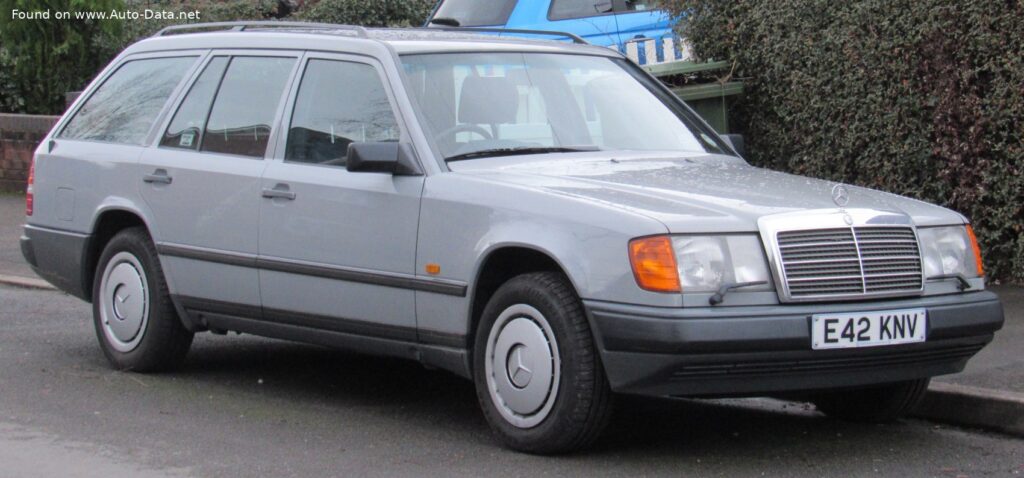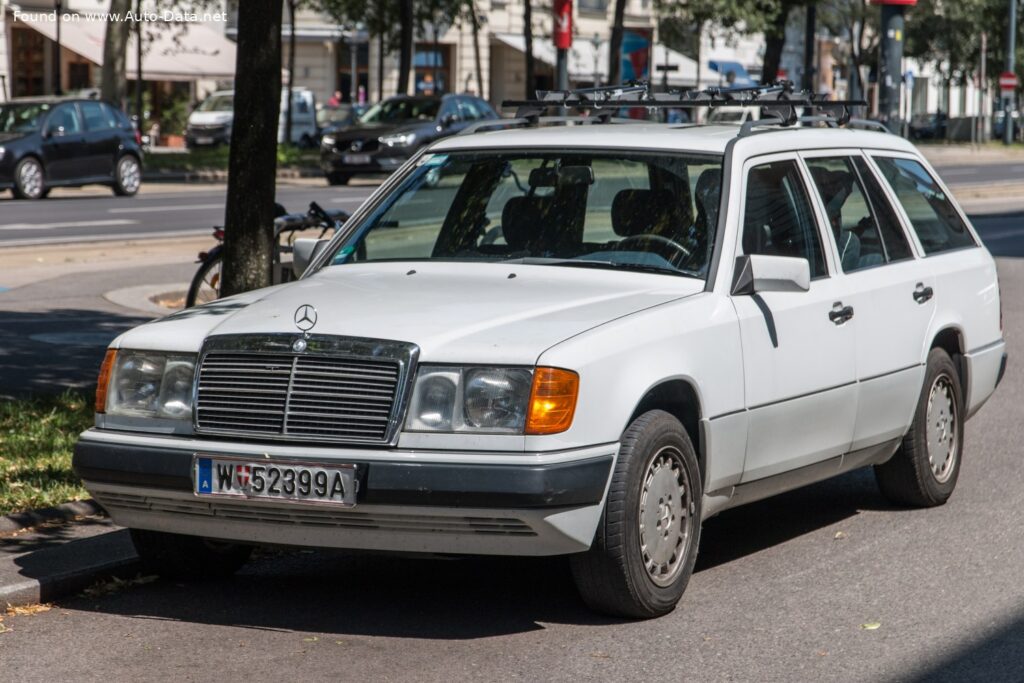
The Mercedes-Benz S124 (facelift 1989) 300 TD (113 Hp) Automatic represents a high point in German automotive engineering, embodying the brand’s commitment to durability, comfort, and understated elegance. Part of the broader W124 series produced from 1984 to 1996, the S124 specifically denotes the station wagon, or “estate” as it was known in Europe. This variant offered a compelling blend of practicality and luxury, becoming a popular choice for families and professionals, particularly within the European market. The 1989 facelift brought subtle refinements to the W124, enhancing both its aesthetics and functionality.
The Mercedes-Benz S124: A Legacy of Engineering
While the W124 sedan was the primary volume seller, the S124 wagon distinguished itself as a premium, versatile vehicle. Its spacious cargo area, comfortable ride, and sophisticated engineering set it apart. The 300 TD Automatic, equipped with a naturally aspirated 3.0-liter inline-six diesel engine and a smooth automatic transmission, exemplified Mercedes-Benz’s philosophy of providing reliable, comfortable, and long-lasting transportation. This model was not widely sold in the United States, but it became a staple in Europe, where station wagons held a larger market share and diesel engines were favored for their fuel efficiency.
Engine & Performance
The heart of the Mercedes-Benz S124 (facelift 1989) 300 TD (113 Hp) Automatic is the OM 603 D 30 / 603.912 engine, a 3.0-liter inline-six diesel. This engine is renowned for its exceptional reliability and smooth operation. Producing 113 horsepower at 4600 rpm, the engine’s output might seem modest by contemporary standards, but it was well-suited to the vehicle’s intended purpose: comfortable, economical long-distance travel and robust utility.
The engine generated 191 Nm (140.87 lb.-ft.) of torque between 2800 and 3050 rpm. This broad torque band, typical of diesel engines, provided ample pulling power, essential for a vehicle of its size and potential load. Power delivery was smooth and consistent, contributing to a relaxed driving experience. The engine utilized a precombustion chamber injection system, a common diesel technology of the era, which enhanced its durability and fuel efficiency.
Power was transferred to the rear wheels via a 4-speed automatic transmission, engineered for seamless shifts and longevity. While not designed for rapid acceleration, the powertrain offered commendable fuel economy for its time, achieving 25 US mpg in urban conditions and 35.1 US mpg on the open road. Acceleration from 0 to 60 mph took 14.5 seconds, with a top speed of 108.74 mph, highlighting its focus on comfortable cruising rather than outright performance. The rear-wheel-drive configuration provided balanced handling and the characteristic Mercedes-Benz driving feel.
Design & Features
The Mercedes-Benz S124 (facelift 1989) 300 TD retained the timeless, elegant, and functional design of the W124 series. The station wagon body style offered exceptional practicality, with a large cargo area accessible through a rear tailgate. The 1989 facelift included updated body cladding, revised bumpers, and other minor exterior enhancements that modernized the appearance without altering the fundamental design. The five-door configuration provided easy access for both passengers and cargo, comfortably seating five occupants.
The interior of the S124 was a testament to Mercedes-Benz’s commitment to ergonomic design and high-quality materials. The cabin was spacious, offering excellent visibility and intuitive controls built to withstand the test of time. For its era, the S124 offered a respectable level of comfort and convenience features. Standard equipment typically included power steering with a hydraulic system, and crucially, ABS (Anti-lock Braking System), enhancing stopping performance, particularly in adverse conditions.
The suspension system was engineered for a refined ride and stable handling. The front utilized a wishbone setup, while the rear featured an independent multi-link suspension. This sophisticated arrangement contributed significantly to the W124’s reputation for superior ride comfort and road holding, even when fully loaded. Braking was provided by disc brakes on all four wheels, ensuring confident stopping power. The car rode on 195/65 R15 tires mounted on 6.5J x 15 wheel rims, a sensible setup balancing comfort, grip, and durability.
Technical Specifications
| Category | Specification |
| General Information | |
| Brand | Mercedes-Benz |
| Model | W124 |
| Generation | S124 (facelift 1989) |
| Type (Engine) | 300 TD (113 Hp) Automatic |
| Start of Production | September, 1989 |
| End of Production | August, 1993 |
| Powertrain Architecture | Internal Combustion Engine |
| Body Type | Station wagon (estate) |
| Seats | 5 |
| Doors | 5 |
| Performance Specs | |
| Fuel Consumption (Urban) | 9.4 l/100 km (25 US mpg) |
| Fuel Consumption (Extra Urban) | 6.7 l/100 km (35.1 US mpg) |
| Fuel Type | Diesel |
| Acceleration 0 – 60 mph | 14.5 sec |
| Acceleration 0 – 62 mph (0 – 100 km/h) | 15.3 sec |
| Maximum Speed | 175 km/h (108.74 mph) |
| Weight-to-Power Ratio | 13.7 kg/Hp (72.9 Hp/tonne) |
| Weight-to-Torque Ratio | 8.1 kg/Nm (123.2 Nm/tonne) |
| Engine Specs | |
| Power | 113 Hp @ 4600 rpm |
| Power per Liter | 37.7 Hp/l |
| Torque | 191 Nm (140.87 lb.-ft.) @ 2800-3050 rpm |
| Engine Layout | Front, Longitudinal |
| Engine Model/Code | OM 603 D 30 / 603.912 |
| Engine Displacement | 2996 cm3 (182.83 cu. in.) |
| Number of Cylinders | 6 |
| Engine Configuration | Inline |
| Cylinder Bore | 87 mm (3.43 in.) |
| Piston Stroke | 84 mm (3.31 in.) |
| Compression Ratio | 22:1 |
| Number of Valves per Cylinder | 2 |
| Fuel Injection System | Precombustion chamber injection |
| Engine Aspiration | Naturally aspirated engine |
| Valvetrain | SOHC |
| Engine Oil Capacity | 7.5 l (7.93 US qt) |
| Engine Oil Specification | Not specified in data |
| Space, Volume and Weights | |
| Kerb Weight | 1550 kg (3417.17 lbs) |
| Max. Weight (GVWR) | 2170 kg (4784.03 lbs) |
| Max Load | 620 kg (1366.87 lbs) |
| Fuel Tank Capacity | 72 l (19.02 US gal) |
| Dimensions | |
| Length | 4765 mm (187.6 in.) |
| Width | 1740 mm (68.5 in.) |
| Height | 1489 mm (58.62 in.) |
| Wheelbase | 2800 mm (110.24 in.) |
| Front Track | 1497 mm (58.94 in.) |
| Rear Track | 1497 mm (58.94 in.) |
| Drivetrain, Brakes and Suspension Specs | |
| Drivetrain Architecture | Rear-wheel drive |
| Drive Wheel | Rear wheel drive |
| Number of Gears and Type of Gearbox | 4 gears, automatic transmission |
| Front Suspension | Wishbone |
| Rear Suspension | Independent multi-link suspension |
| Front Brakes | Disc |
| Rear Brakes | Disc |
| Assisting Systems | ABS (Anti-lock braking system) |
| Steering Type | Cone worm with recirculation balls |
| Power Steering | Hydraulic Steering |
| Front Wheel Tires | 195/65 R15 |
| Rear Wheel Tires | 195/65 R15 |
| Front Wheel Rims | 6.5J x 15 |
| Rear Wheel Rims | 6.5J x 15 |
Legacy and Market Impact
The Mercedes-Benz W124 series, and particularly the S124 wagon, established a lasting legacy in the automotive world, especially in Europe. The S124 300 TD Automatic exemplified Mercedes-Benz’s reputation for “over-engineering,” with components designed for exceptional longevity. This commitment to durability translated into a strong reputation for reliability, making the W124 a popular choice for taxi fleets, long-distance commuters, and families prioritizing longevity and low running costs.
In Europe, the S124 300 TD competed with premium executive wagons like the BMW 5-Series Touring and the Audi 100 Avant. While BMW emphasized sporty handling and Audi offered Quattro all-wheel drive, the Mercedes-Benz S124 distinguished itself through its ride comfort, build quality, and cargo capacity. Its diesel engine, while not the most powerful, provided excellent fuel efficiency and renowned durability, appealing to European consumers.
The S124 wagon’s significance lies in its role as a benchmark for practical luxury. It demonstrated that a utilitarian body style could still offer prestige and a premium driving experience. Its impact extended beyond sales figures, solidifying Mercedes-Benz’s image as a manufacturer of high-quality, dependable vehicles representing a sound long-term investment. Even today, the W124 series, and especially the S124, enjoys a dedicated following, with many examples still in service, a testament to their inherent quality and enduring appeal. The 300 TD variant, with its robust diesel powertrain, remains highly sought after for its blend of efficiency, reliability, and the classic Mercedes-Benz driving experience.