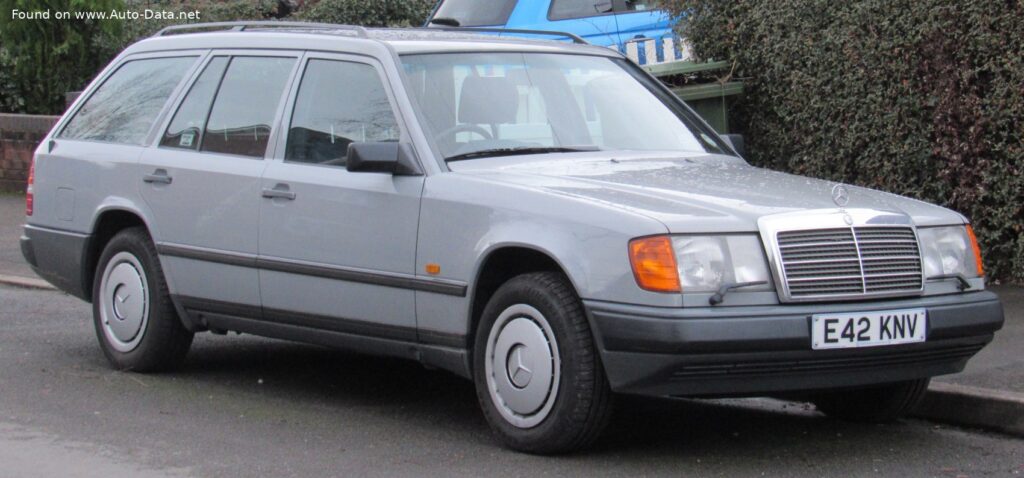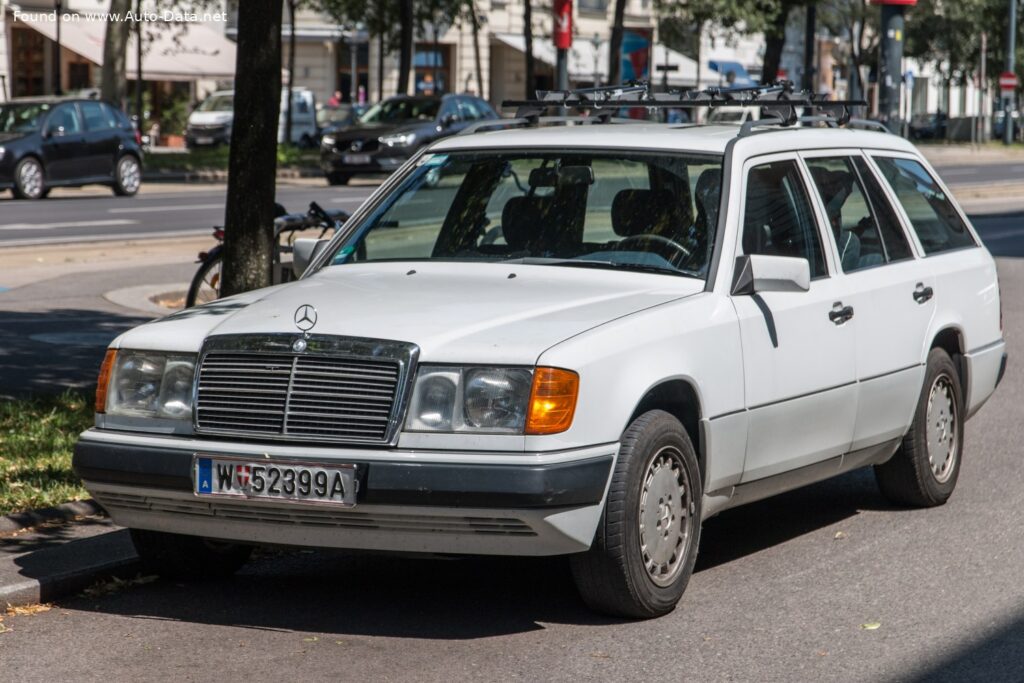
The Mercedes-Benz S124 (facelift 1989) 300 TE 4MATIC Automatic represents a high point in the W124 series, a lineage celebrated for its exceptional build quality, durability, and sophisticated design. The S124 designation specifically denotes the station wagon (estate) variant, offering a compelling blend of luxury and practicality. Produced from September 1989 to July 1993, this facelifted model combined refinement with robust performance and an advanced all-wheel-drive system, making it a desirable vehicle, particularly within the European market where station wagons were highly valued. It showcased Mercedes-Benz’s commitment to innovation, especially with the introduction of its 4MATIC all-wheel-drive system, enhancing traction and stability in various driving conditions.
Engine & Performance: The M103 Inline-Six
The Mercedes-Benz S124 (facelift 1989) 300 TE 4MATIC Automatic is powered by the M103 E30 / 103.985 engine, a 3.0-liter (2960 cm3 or 180.63 cu. in.) naturally aspirated inline-six. This engine is renowned for its smooth power delivery, robust construction, and longevity. It features a Single Overhead Camshaft (SOHC) valvetrain with two valves per cylinder and a multi-port manifold injection system, producing 180 horsepower at 5700 rpm. The engine’s power-per-liter rating of 60.8 Hp/l reflects a well-engineered unit designed for consistent, reliable performance.
Torque output is a substantial 255 Nm (188.08 lb.-ft.) at 4400 rpm, providing ample pulling power for a family wagon, even when fully loaded. This torque, combined with the smooth-shifting 4-speed automatic transmission, ensures effortless cruising and responsive acceleration. The 300 TE 4MATIC could accelerate from 0 to 60 mph in 9.3 seconds (0-100 km/h in 9.8 seconds) and achieve a top speed of 126.76 mph (204 km/h). These figures were competitive for a luxury station wagon of its time, especially considering the all-wheel-drive system. The engine’s longitudinal front layout contributes to the vehicle’s balanced weight distribution and classic Mercedes-Benz driving feel.
A key feature of this model is its 4MATIC all-wheel-drive system. Unlike permanent all-wheel-drive systems, the W124’s 4MATIC is an intelligent, on-demand system. It primarily drives the rear wheels, engaging the front wheels through an electrically or mechanically operated clutch only when wheel slip is detected. This system provides superior traction in challenging conditions without significantly impacting fuel economy during normal driving. Fuel consumption figures are 16.1 US mpg in urban settings and 23.5 US mpg on the highway, respectable for a vehicle of its size, power, and drivetrain complexity.
Design & Features: Functional Elegance
The S124 station wagon embodies Mercedes-Benz’s philosophy of functional elegance. Its five-door, five-seat body type is designed for maximum utility without compromising aesthetic appeal. The 1989 facelift brought subtle refinements, including body-color side moldings, revised bumpers, and updated interior trim, aligning its appearance with the brand’s evolving design language. The W124’s design, penned by Bruno Sacco, is considered a masterpiece of automotive styling, characterized by clean lines, robust proportions, and aerodynamic efficiency.
Measuring 187.6 inches in length, 68.5 inches in width, and 58.94 inches in height, with a 110.24-inch wheelbase, the S124 300 TE offers a spacious and comfortable cabin. The station wagon body provides a cavernous cargo area, making it practical for families, long-distance travel, or carrying bulky items. Safety was a priority, even in this era, with Anti-lock Braking System (ABS) as standard equipment. The braking system features ventilated discs at the front and solid discs at the rear, providing strong and consistent stopping power.
The S124 utilizes a wishbone setup at the front and a sophisticated independent multi-link suspension at the rear. This advanced rear suspension design contributed significantly to the W124’s renowned ride comfort, precise handling, and excellent road holding. Power-assisted hydraulic steering, of the cone worm with recirculation balls type, provides a direct and communicative steering feel. The vehicle rides on 195/65 R15 tires mounted on 6.5J x 15 inch wheels, a sensible setup balancing comfort and grip. The attention to detail in the W124’s engineering, from its robust chassis to its well-appointed interior, underscores its premium position.
Technical Specifications: Mercedes-Benz S124 (facelift 1989) 300 TE (180 Hp) 4MATIC Automatic
| Category | Specification |
| General Information | |
| Brand | Mercedes-Benz |
| Model | W124 |
| Generation | S124 (facelift 1989) |
| Type (Engine) | 300 TE (180 Hp) 4MATIC Automatic |
| Start of Production | September, 1989 |
| End of Production | July, 1993 |
| Powertrain Architecture | Internal Combustion Engine |
| Body type | Station wagon (estate) |
| Seats | 5 |
| Doors | 5 |
| Performance Specs | |
| Fuel consumption (economy) – urban | 14.6 l/100 km (16.1 US mpg) |
| Fuel consumption (economy) – extra urban | 10 l/100 km (23.5 US mpg) |
| Fuel Type | Petrol (Gasoline) |
| Acceleration 0 – 60 mph | 9.3 sec |
| Acceleration 0 – 100 km/h | 9.8 sec |
| Maximum speed | 204 km/h (126.76 mph) |
| Weight-to-power ratio | 9.1 kg/Hp (110.4 Hp/tonne) |
| Weight-to-torque ratio | 6.4 kg/Nm (156.4 Nm/tonne) |
| Engine Specs | |
| Power | 180 Hp @ 5700 rpm |
| Power per liter | 60.8 Hp/l |
| Torque | 255 Nm @ 4400 rpm (188.08 lb.-ft. @ 4400 rpm) |
| Engine layout | Front, Longitudinal |
| Engine Model/Code | M 103 E 30 / 103.985 |
| Engine displacement | 2960 cm3 (180.63 cu. in.) |
| Number of cylinders | 6 |
| Engine configuration | Inline |
| Cylinder Bore | 88.49 mm (3.48 in.) |
| Piston Stroke | 80.2 mm (3.16 in.) |
| Compression ratio | 9.2:1 |
| Number of valves per cylinder | 2 |
| Fuel injection system | Multi-port manifold injection |
| Engine aspiration | Naturally aspirated engine |
| Valvetrain | SOHC |
| Engine oil capacity | 6.5 l (6.87 US qt) |
| Coolant | 9 l (9.51 US qt) |
| Space, Volume and Weights | |
| Kerb Weight | 1630 kg (3593.53 lbs.) |
| Max. weight | 2210 kg (4872.22 lbs.) |
| Max load | 580 kg (1278.68 lbs.) |
| Fuel tank capacity | 72 l (19.02 US gal) |
| Dimensions | |
| Length | 4765 mm (187.6 in.) |
| Width | 1740 mm (68.5 in.) |
| Height | 1497 mm (58.94 in.) |
| Wheelbase | 2800 mm (110.24 in.) |
| Front track | 1497 mm (58.94 in.) |
| Rear (Back) track | 1497 mm (58.94 in.) |
| Drivetrain, Brakes and Suspension Specs | |
| Drivetrain Architecture | The Internal combustion engine (ICE) drives the rear wheels permanently, and the front wheels are driven through an electrically or mechanically operated clutch if necessary. |
| Drive wheel | All-wheel drive (4×4) |
| Number of gears and type of gearbox | 4 gears, automatic transmission |
| Front suspension | Wishbone |
| Rear suspension | Independent multi-link suspension |
| Front brakes | Ventilated discs |
| Rear brakes | Disc |
| Assisting systems | ABS (Anti-lock braking system) |
| Steering type | Cone worm with recirculation balls |
| Power steering | Hydraulic Steering |
| Tires size | Front wheel tires: 195/65 R15, Rear wheel tires: 195/65 R15 |
| Wheel rims size | Front wheel rims: 6.5J x 15, Rear wheel rims: 6.5J x 15 |
Legacy and Market Impact
The Mercedes-Benz W124 series, and particularly the S124 station wagon variant, holds a revered place in automotive history. The Mercedes-Benz S124 (facelift 1989) 300 TE 4MATIC Automatic exemplifies the pinnacle of Mercedes-Benz’s engineering prowess during an era often referred to as the “golden age” of Mercedes-Benz over-engineering. These vehicles were built to an uncompromising standard, leading to their legendary reputation for reliability, longevity, and exceptional resistance to wear and tear. It was not uncommon for W124 models, especially the robust inline-six variants, to achieve hundreds of thousands of miles with proper maintenance.
In Europe, the S124 300 TE 4MATIC was highly regarded as a versatile and prestigious family vehicle, competing with the BMW 5 Series Touring and Audi 100 Avant. While BMW offered a sportier driving experience and Audi pioneered quattro all-wheel-drive, the Mercedes-Benz S124 distinguished itself with superior ride comfort, build quality, and understated luxury. The 4MATIC system gave it an edge in markets with challenging winter conditions.
Even in the United States, where station wagons declined in popularity, the W124 wagon maintained a strong following. Its spaciousness, robust construction, and refined driving experience appealed to discerning buyers. The 4MATIC variant, though less common, was appreciated for its advanced technology and added security.
Today, the W124 series, including the Mercedes-Benz S124 (facelift 1989) 300 TE 4MATIC Automatic, is highly sought after by collectors and enthusiasts. Its classic status is cemented by its timeless design, mechanical integrity, and the enduring legacy of being one of the last “over-engineered” Mercedes-Benz models. It represents an era when automotive design prioritized durability, comfort, and safety, making it an icon of automotive excellence and a cherished piece of Mercedes-Benz heritage.