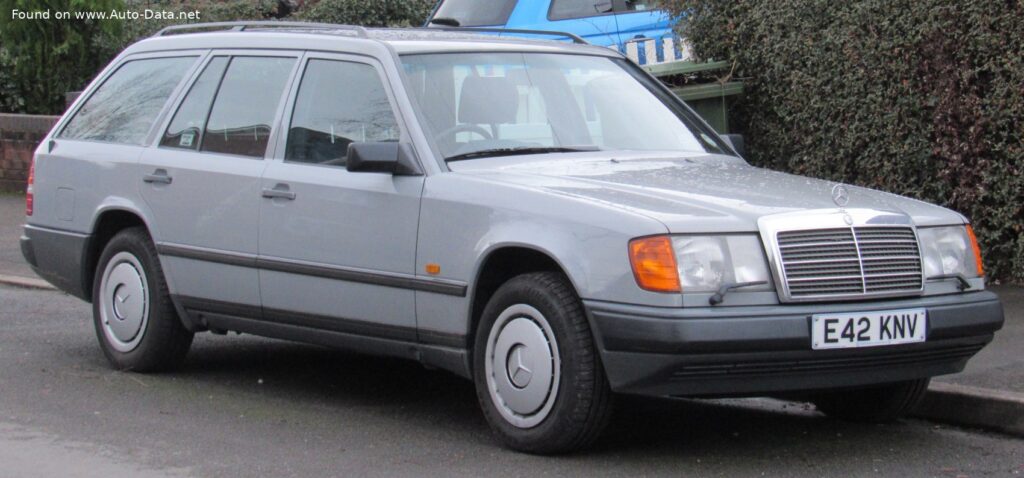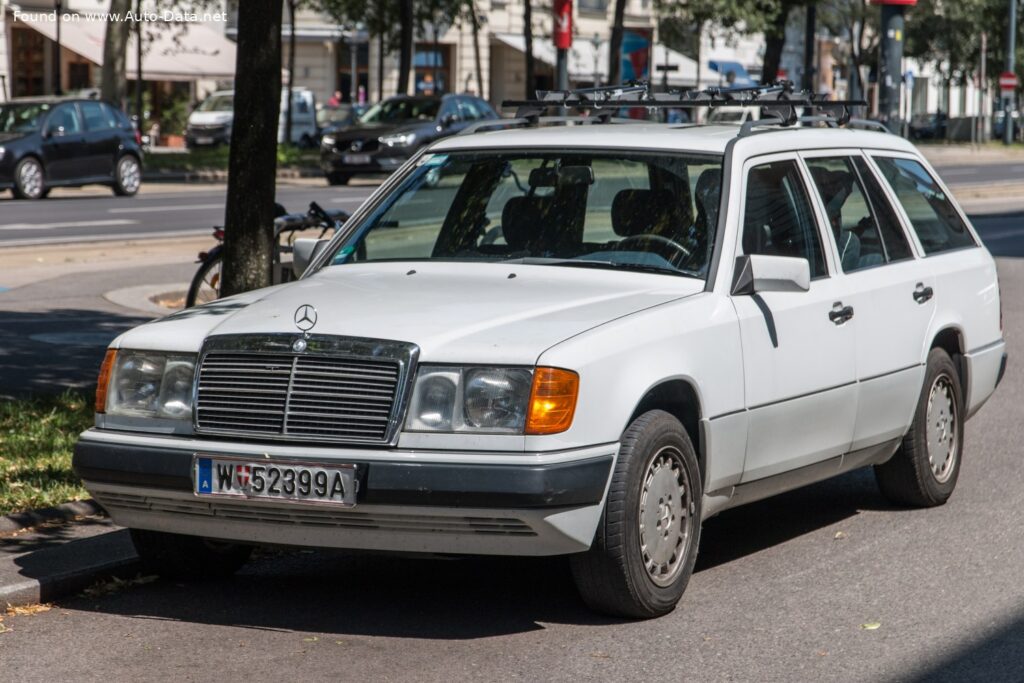
The Mercedes-Benz S124 320 TE, representing the station wagon variant of the revered W124 executive car platform, stands as a testament to German engineering and a golden era for Mercedes-Benz. Specifically, the Mercedes-Benz S124 320 TE from the 1992-1993 production run, featuring the updated M104 inline-six engine, represents the pinnacle of performance and luxury in its segment during the early 1990s. This model, a product of the W124’s 1989 facelift, built upon an already formidable reputation for durability, comfort, and understated elegance. Positioned in the highly competitive executive car market, the S124 320 TE offered a compelling blend of family utility and spirited driving dynamics, a combination that solidified its status as a benchmark for premium station wagons globally, including its significant presence and appreciation in the United States, where the W124 platform was highly regarded.
The Mercedes-Benz S124 320 TE: A Legacy of Engineering
The W124 generation, introduced in 1984, quickly earned a reputation for its robust build quality, advanced engineering, and timeless design. The S124 wagon variant, introduced shortly thereafter, carried these attributes into a more versatile body style. The 1989 facelift brought subtle but significant improvements, including revised styling cues, updated interiors, and, most importantly for models like the 320 TE, a new generation of engines. The Mercedes-Benz S124 320 TE, produced for a brief period between July 1992 and July 1993, was among the most desirable iterations of the S124, combining the practicality of a five-door station wagon with the potent performance of a modern 3.2-liter engine. This particular model, with its 220 horsepower, was designed for discerning buyers who demanded both luxury and dynamic capability without compromise.
Engine & Performance: The Heart of the 320 TE
At the core of the Mercedes-Benz S124 320 TE lies the formidable M104 E32 engine, an inline-six powerplant renowned for its smoothness, reliability, and impressive power delivery. This naturally aspirated, 3.2-liter (3199 cm3 or 195.21 cu. in.) engine was a marvel of its time, featuring a Dual Overhead Camshaft (DOHC) valvetrain with four valves per cylinder, a significant upgrade over earlier Mercedes-Benz engines. With a compression ratio of 10:1 and a multi-port manifold fuel injection system, it produced a robust 220 horsepower at 5500 rpm and a substantial 228.64 lb.-ft. of torque at 3750 rpm. This power output, combined with a relatively light curb weight of 3505.35 lbs., resulted in a highly respectable weight-to-power ratio of 7.2 kg/Hp.
Performance figures for the S124 320 TE were impressive for a family wagon of its era. It could accelerate from 0 to 60 mph in a brisk 7.9 seconds, with 0-62 mph (0-100 km/h) taking 8.3 seconds. Its top speed was electronically limited to 137.94 mph (222 km/h), showcasing its Autobahn-cruising capabilities. Power was routed to the rear wheels via a precise 5-speed manual transmission, offering an engaging driving experience that was a hallmark of Mercedes-Benz’s rear-wheel-drive architecture. Fuel economy, while not its primary selling point, was reasonable for a vehicle of its size and performance. It achieved an estimated 15.6 US mpg in urban driving and a more efficient 26.7 US mpg on the highway, thanks in part to its advanced engine design and efficient powertrain.
Design & Features: Practicality Meets Prestige
The design of the Mercedes-Benz S124 320 TE is a study in timeless automotive aesthetics. Its five-door station wagon body exudes a sense of solidity and purpose, characterized by clean lines, a robust stance, and the iconic Mercedes-Benz grille. The facelifted models (post-1989) featured subtle styling enhancements that kept the W124 fresh without straying from its classic appeal. The interior was a sanctuary of quality materials and ergonomic design, typical of Mercedes-Benz during this period. With seating for five adults, the S124 TE offered generous passenger space and a highly versatile cargo area, making it ideal for long journeys or everyday family duties.
Key features for its time included a comprehensive suite of safety technologies. While modern active safety systems were still nascent, the S124 came equipped with four-wheel disc brakes, with ventilated discs at the front, and a standard Anti-lock Braking System (ABS), a significant safety enhancement for the early 90s. The independent multi-link rear suspension, a Mercedes-Benz innovation, provided exceptional ride comfort and handling stability, even when fully loaded. Power steering, specifically a hydraulic cone worm system with recirculation balls, ensured precise and effortless maneuverability. The vehicle rode on 195/65 R15 tires mounted on 6.5J x 15-inch wheel rims, a practical setup balancing comfort and grip. The thoughtful engineering extended to details like the 72-liter (19.02 US gallon) fuel tank, offering a substantial cruising range.
Technical Specifications
| Category | Specification |
| General Information | |
| Brand | Mercedes-Benz |
| Model | W124 |
| Generation | S124 (facelift 1989) |
| Type (Engine) | 320 TE (220 Hp) |
| Start of Production | July, 1992 |
| End of Production | July, 1993 |
| Powertrain Architecture | Internal Combustion engine |
| Body type | Station wagon (estate) |
| Seats | 5 |
| Doors | 5 |
| Performance Specs | |
| Fuel consumption (economy) – urban | 15.1 l/100 km (15.6 US mpg) |
| Fuel consumption (economy) – extra urban | 8.8 l/100 km (26.7 US mpg) |
| Fuel Type | Petrol (Gasoline) |
| Acceleration 0 – 60 mph | 7.9 sec |
| Acceleration 0 – 100 km/h (0 – 62 mph) | 8.3 sec |
| Maximum speed | 222 km/h (137.94 mph) |
| Weight-to-power ratio | 7.2 kg/Hp (138.4 Hp/tonne) |
| Weight-to-torque ratio | 5.1 kg/Nm (195 Nm/tonne) |
| Engine Specs | |
| Power | 220 Hp @ 5500 rpm |
| Power per liter | 68.8 Hp/l |
| Torque | 310 Nm @ 3750 rpm (228.64 lb.-ft. @ 3750 rpm) |
| Engine layout | Front, Longitudinal |
| Engine Model/Code | M 104 E 32 / 104.992 |
| Engine displacement | 3199 cm3 (195.21 cu. in.) |
| Number of cylinders | 6 |
| Engine configuration | Inline |
| Cylinder Bore | 89.9 mm (3.54 in.) |
| Piston Stroke | 84 mm (3.31 in.) |
| Compression ratio | 10:1 |
| Number of valves per cylinder | 4 |
| Fuel injection system | Multi-port manifold injection |
| Engine aspiration | Naturally aspirated engine |
| Valvetrain | DOHC |
| Engine oil capacity | 7.5 l (7.93 US qt) |
| Coolant | 9 l (9.51 US qt) |
| Space, Volume and Weights | |
| Kerb Weight | 1590 kg (3505.35 lbs.) |
| Max. weight | 2200 kg (4850.17 lbs.) |
| Max load | 610 kg (1344.82 lbs.) |
| Fuel tank capacity | 72 l (19.02 US gal) |
| Dimensions | |
| Length | 4765 mm (187.6 in.) |
| Width | 1740 mm (68.5 in.) |
| Height | 1489 mm (58.62 in.) |
| Wheelbase | 2800 mm (110.24 in.) |
| Front track | 1497 mm (58.94 in.) |
| Rear (Back) track | 1497 mm (58.94 in.) |
| Drivetrain, Brakes and Suspension Specs | |
| Drivetrain Architecture | The Internal combustion engine (ICE) drives the rear wheels of the vehicle. |
| Drive wheel | Rear wheel drive |
| Number of gears and type of gearbox | 5 gears, manual transmission |
| Front suspension | Wishbone |
| Rear suspension | Independent multi-link suspension |
| Front brakes | Ventilated discs |
| Rear brakes | Disc |
| Assisting systems | ABS (Anti-lock braking system) |
| Steering type | Cone worm with recirculation balls |
| Power steering | Hydraulic Steering |
| Tires size | Front wheel tires: 195/65 R15; Rear wheel tires: 195/65 R15 |
| Wheel rims size | Front wheel rims: 6.5J x 15; Rear wheel rims: 6.5J x 15 |
Legacy and Market Impact
The Mercedes-Benz S124 320 TE, and indeed the entire W124 line, carved out an enduring legacy as one of the most well-engineered and durable vehicles ever produced by Mercedes-Benz. Its impact on the premium executive wagon segment was profound, setting a high bar for build quality, ride comfort, and long-term reliability. In its primary markets, including Europe and the United States, the S124 TE was seen as the quintessential family car for the affluent, offering practical utility without sacrificing the prestige and driving pleasure associated with the three-pointed star.
Competitors during its production run included the BMW 5 Series Touring (E34), which offered a sportier driving experience, and the Audi 100 Avant (C4), known for its quattro all-wheel-drive option and refined interiors. However, the S124 stood apart with its unparalleled reputation for tank-like construction, a comfortable yet composed ride, and an interior that, while perhaps less overtly luxurious than some rivals, was built to withstand decades of use. The 320 TE, with its powerful M104 engine, specifically enhanced the W124’s reputation, proving that a station wagon could indeed be a driver’s car.
Today, the Mercedes-Benz S124, particularly well-maintained examples of the 320 TE, are highly sought after by enthusiasts and collectors. They represent a golden age of Mercedes-Benz engineering, before the advent of more complex electronics and cost-cutting measures. Their robust mechanicals, combined with timeless design, ensure that these vehicles continue to provide reliable and enjoyable motoring, cementing their place as modern classics. The S124 320 TE is more than just a car; it’s a piece of automotive history that embodies the very best of Mercedes-Benz’s commitment to quality, performance, and lasting value.