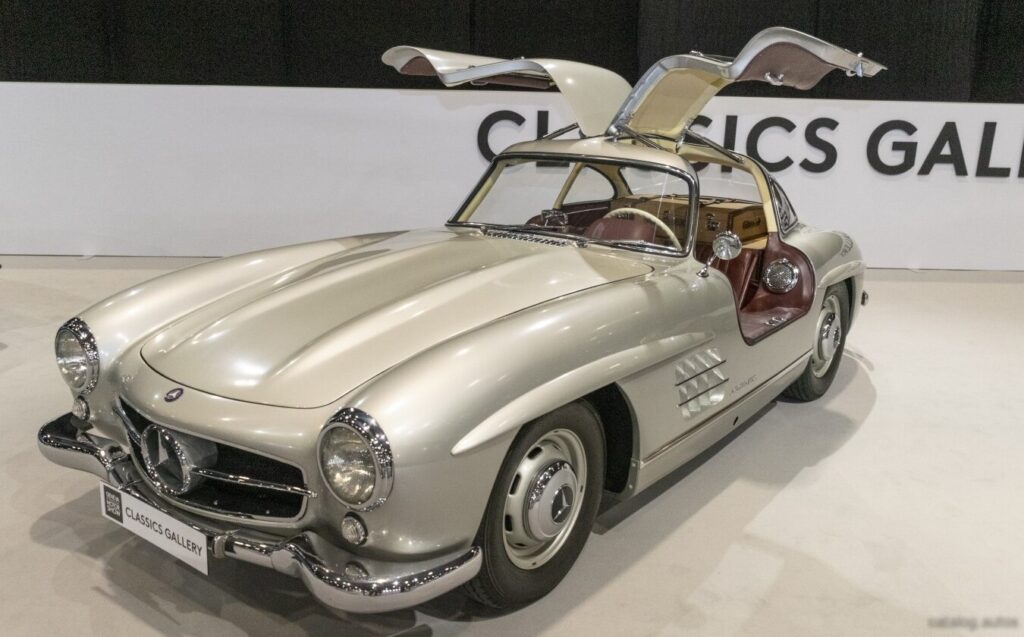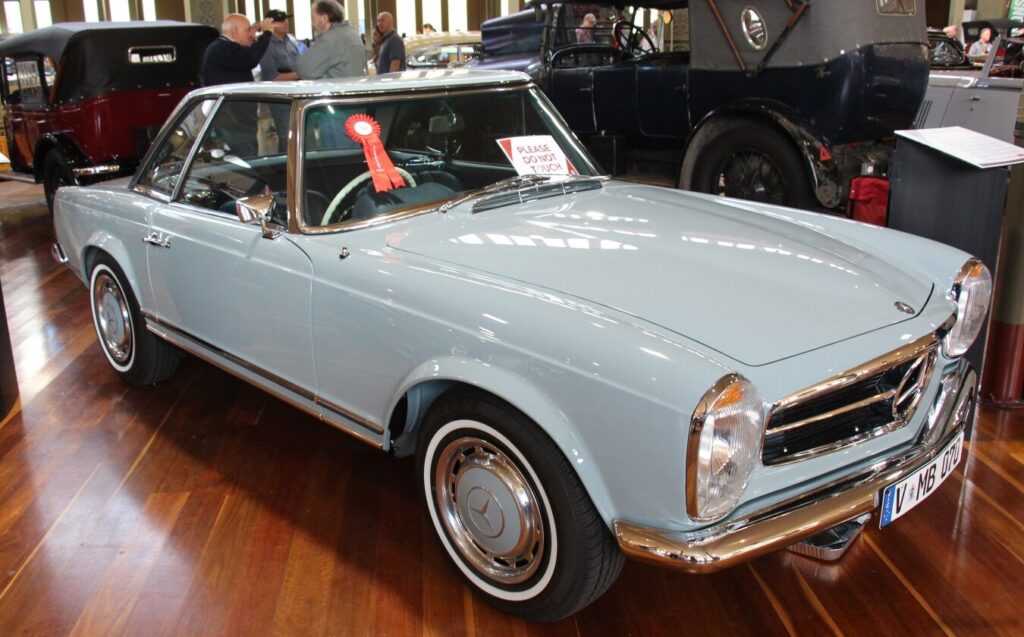
The Mercedes-Benz W113, marketed as the SL “Pagoda” due to its distinctive, slightly concave hardtop, represented a significant evolution in the SL lineage. Produced between 1963 and 1971, it succeeded the iconic 300 SL “Gullwing” and aimed to blend sporty performance with luxurious comfort. The 280 SL, introduced in November 1967 and continuing through March 1971, was the final and most refined iteration of the W113. This variant, equipped with a 2.8-liter inline-six engine and an automatic transmission, occupied a premium position within the range, offering a sophisticated grand touring experience. It was designed to appeal to buyers seeking a comfortable and capable roadster without the demands of a manual gearbox.
Technical Specifications
| Brand | Mercedes-Benz |
| Model | SL |
| Generation | SL Coupe (W113) |
| Type (Engine) | 280 SL (170 Hp) Automatic |
| Start of production | November, 1967 |
| End of production | March, 1971 |
| Powertrain Architecture | Internal Combustion engine |
| Body type | Coupe |
| Seats | 2 |
| Doors | 2 |
| Fuel consumption (combined) | 11.4 l/100 km |
| Fuel consumption (US mpg) | 20.6 US mpg |
| Fuel consumption (UK mpg) | 24.8 UK mpg |
| Fuel consumption (km/l) | 8.8 km/l |
| Fuel Type | Petrol (Gasoline) |
| Acceleration 0 – 100 km/h | 9 sec |
| Acceleration 0 – 62 mph | 9 sec |
| Acceleration 0 – 60 mph | 8.6 sec |
| Maximum speed | 195 km/h (121.17 mph) |
| Weight-to-power ratio | 8 kg/Hp, 125 Hp/tonne |
| Weight-to-torque ratio | 5.7 kg/Nm, 176.5 Nm/tonne |
| Power | 170 Hp @ 5750 rpm |
| Power per litre | 61.2 Hp/l |
| Torque | 240 Nm @ 4500 rpm (177.01 lb.-ft. @ 4500 rpm) |
| Engine layout | Front, Longitudinal |
| Engine Model/Code | M 130 / 130.983 |
| Engine displacement | 2778 cm3 (169.52 cu. in.) |
| Number of cylinders | 6 |
| Engine configuration | Inline |
| Cylinder Bore | 86.5 mm (3.41 in.) |
| Piston Stroke | 78.8 mm (3.1 in.) |
| Compression ratio | 9.5:1 |
| Number of valves per cylinder | 2 |
| Fuel injection system | Multi-port manifold injection |
| Engine aspiration | Naturally aspirated engine |
| Valvetrain | SOHC |
| Engine oil capacity | 5.5 l (5.81 US qt | 4.84 UK qt) |
| Coolant capacity | 12.9 l (13.63 US qt | 11.35 UK qt) |
| Kerb Weight | 1360 kg (2998.29 lbs.) |
| Max. weight | 1715 kg (3780.93 lbs.) |
| Max load | 355 kg (782.64 lbs.) |
| Trunk (boot) space – minimum | 340 l (12.01 cu. ft.) |
| Fuel tank capacity | 82 l (21.66 US gal | 18.04 UK gal) |
| Length | 4285 mm (168.7 in.) |
| Width | 1760 mm (69.29 in.) |
| Height | 1306 mm (51.42 in.) |
| Wheelbase | 2400 mm (94.49 in.) |
| Front track | 1484 mm (58.43 in.) |
| Rear (Back) track | 1485 mm (58.46 in.) |
| Drivetrain Architecture | The Internal combustion engine (ICE) drives the rear wheels of the vehicle. |
| Drive wheel | Rear wheel drive |
| Number of gears and type of gearbox | 4 gears, automatic transmission |
| Front suspension | Double wishbone, Transverse stabilizer |
| Rear suspension | Trailing arm |
| Front brakes | Disc |
| Rear brakes | Disc |
| Assisting systems | ABS (Anti-lock braking system) |
| Steering type | Cone worm with recirculation balls |
| Wheel rims size | 6J x 14 |
Powertrain & Engine Architecture
The heart of the 280 SL is the M130.983, a 2.8-liter (2778 cc) inline-six engine. This engine featured a cast iron block and an aluminum cylinder head, employing a single overhead camshaft (SOHC) operating two valves per cylinder. Crucially, the 280 SL benefited from Bosch multi-port fuel injection, a significant upgrade over the carburetors used in earlier W113 models. This system improved fuel efficiency and provided smoother power delivery. The engine produced 170 horsepower at 5,750 rpm and 240 Nm (177 lb-ft) of torque at 4,500 rpm. The automatic transmission was a four-speed unit, providing a more relaxed driving experience than the available manual transmission. While not known for blistering acceleration, the automatic transmission was well-suited to the 280 SL’s grand touring character.
Driving Characteristics
The 280 SL Automatic offered a refined and comfortable driving experience. The automatic transmission, while not as engaging as a manual, provided smooth shifts and eliminated the need for constant gear changes, making it ideal for long-distance cruising. Acceleration from 0-60 mph took around 8.6 seconds, respectable for the era but noticeably slower than the manual versions. The engine’s torque curve was relatively flat, providing adequate power for overtaking and hill climbing. The steering, utilizing a cone worm and recirculation balls system, was precise but required a fair amount of effort. The suspension, featuring double wishbones at the front and a trailing arm setup at the rear, provided a comfortable ride, absorbing bumps and imperfections in the road effectively.
Equipment & Trim Levels
The 280 SL Automatic was generally well-equipped, reflecting its position as the top-of-the-line W113 variant. Standard features included leather upholstery, a wood-trimmed dashboard, and power-assisted steering. The hardtop, a defining feature of the “Pagoda” SLs, was standard, providing excellent weather protection and security. A soft top was also included, offering open-air motoring. Optional extras included air conditioning, a radio, and power windows. Interior color schemes were customizable, allowing buyers to personalize their vehicles. The level of trim and features generally aligned with Mercedes-Benz’s commitment to luxury and refinement.
Chassis & Braking
The W113 chassis was a robust monocoque construction, providing a solid foundation for the vehicle. The 280 SL featured disc brakes on all four wheels, a relatively advanced feature for the late 1960s, providing excellent stopping power. Anti-lock braking system (ABS) was also available as an option. The suspension system, as mentioned previously, was designed to balance comfort and handling. The front suspension utilized double wishbones and a transverse stabilizer bar to reduce body roll, while the rear suspension employed a trailing arm setup. The 280 SL’s weight distribution was relatively balanced, contributing to its stable handling characteristics.
Market Reception & Comparison
The 280 SL Automatic was generally well-received by automotive critics. It was praised for its comfortable ride, refined engine, and luxurious interior. However, some critics noted that the automatic transmission detracted from the sporty character of the SL. Compared to the earlier 250 SL and 230 SL models, the 280 SL offered improved performance and a more modern driving experience. Compared to the manual transmission versions of the 280 SL, the automatic was slightly slower in acceleration but offered greater convenience. Fuel economy, at around 20.6 US mpg, was reasonable for the time, but not exceptional. Reliability was generally good, typical of Mercedes-Benz engineering.
Legacy
The Mercedes-Benz W113 280 SL Automatic remains a highly sought-after classic car today. Its combination of elegant styling, robust engineering, and comfortable driving experience has ensured its enduring appeal. The M130 engine, while not a high-performance unit, is known for its durability and relatively straightforward maintenance. Well-maintained examples command high prices in the collector car market. The automatic transmission, while not preferred by some enthusiasts, adds to the car’s appeal for those seeking a relaxed and refined classic motoring experience. The 280 SL represents a high point in Mercedes-Benz’s SL history, bridging the gap between the iconic “Gullwing” and the more modern R107 generation.