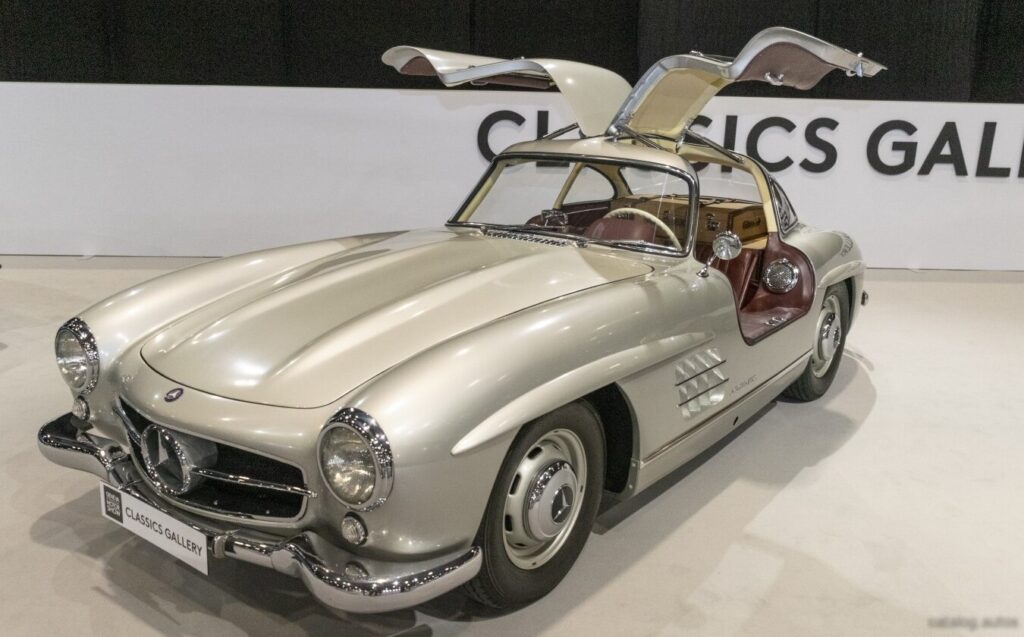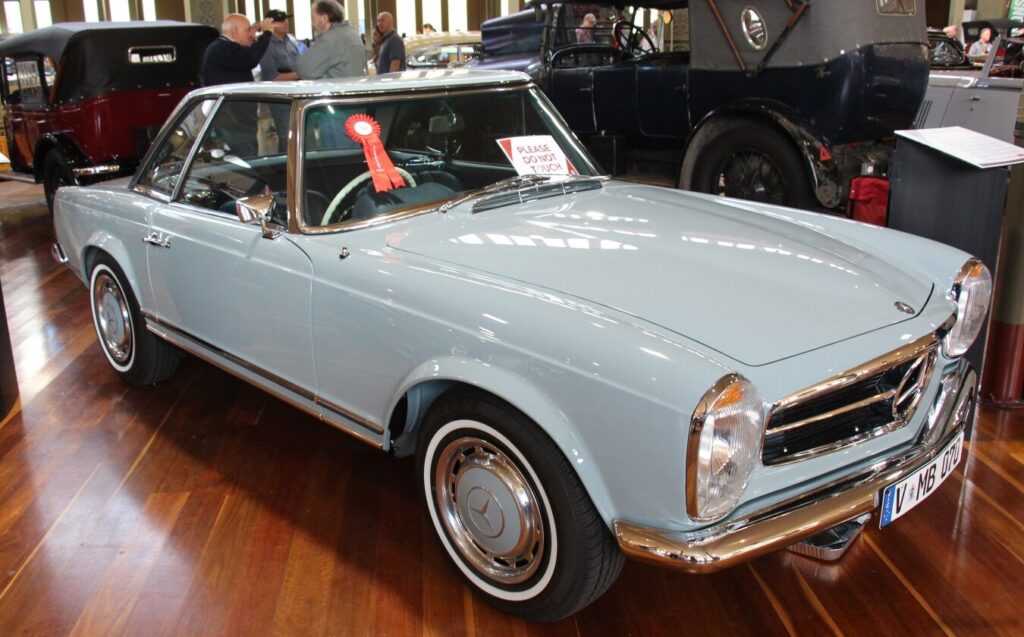
The Mercedes-Benz W113, marketed as the SL “Pagoda” due to its distinctive, slightly concave hardtop, represented a significant evolution in the SL lineage. Produced between 1963 and 1971, it succeeded the iconic 300 SL “Gullwing” and aimed to blend sports car performance with grand touring comfort. The 280 SL, introduced in November 1967 and continuing through March 1971, was the final and most refined iteration of the W113. This variant, equipped with the M130 engine and a five-speed manual transmission, occupied the top position in the SL lineup, offering a compelling combination of power, sophistication, and driving pleasure. It was primarily aimed at the North American market, where demand for comfortable, high-performance roadsters was strong.
Technical Specifications
| Brand | Mercedes-Benz |
| Model | SL |
| Generation | SL Coupe (W113) |
| Type (Engine) | 280 SL (170 Hp) Manual 5-speed |
| Start of production | November, 1967 |
| End of production | March, 1971 |
| Powertrain Architecture | Internal Combustion engine |
| Body type | Coupe |
| Seats | 2 |
| Doors | 2 |
| Fuel consumption (combined) | 11.4 l/100 km (20.6 US mpg, 24.8 UK mpg, 8.8 km/l) |
| Fuel Type | Petrol (Gasoline) |
| Acceleration 0 – 100 km/h | 9 sec |
| Acceleration 0 – 62 mph | 9 sec |
| Acceleration 0 – 60 mph | 8.6 sec |
| Maximum speed | 200 km/h (124.27 mph) |
| Weight-to-power ratio | 8 kg/Hp, 125 Hp/tonne |
| Weight-to-torque ratio | 5.7 kg/Nm, 176.5 Nm/tonne |
| Power | 170 Hp @ 5750 rpm |
| Power per litre | 61.2 Hp/l |
| Torque | 240 Nm @ 4500 rpm (177.01 lb.-ft. @ 4500 rpm) |
| Engine layout | Front, Longitudinal |
| Engine Model/Code | M 130 / 130.983 |
| Engine displacement | 2778 cm3 (169.52 cu. in.) |
| Number of cylinders | 6 |
| Engine configuration | Inline |
| Cylinder Bore | 86.5 mm (3.41 in.) |
| Piston Stroke | 78.8 mm (3.1 in.) |
| Compression ratio | 9.5:1 |
| Number of valves per cylinder | 2 |
| Fuel injection system | Multi-port manifold injection |
| Engine aspiration | Naturally aspirated engine |
| Valvetrain | SOHC |
| Engine oil capacity | 5.5 l (5.81 US qt | 4.84 UK qt) |
| Coolant | 12.9 l (13.63 US qt | 11.35 UK qt) |
| Kerb Weight | 1360 kg (2998.29 lbs.) |
| Max. weight | 1715 kg (3780.93 lbs.) |
| Max load | 355 kg (782.64 lbs.) |
| Trunk (boot) space – minimum | 340 l (12.01 cu. ft.) |
| Fuel tank capacity | 82 l (21.66 US gal | 18.04 UK gal) |
| Length | 4285 mm (168.7 in.) |
| Width | 1760 mm (69.29 in.) |
| Height | 1306 mm (51.42 in.) |
| Wheelbase | 2400 mm (94.49 in.) |
| Front track | 1484 mm (58.43 in.) |
| Rear (Back) track | 1485 mm (58.46 in.) |
| Drivetrain Architecture | The Internal combustion engine (ICE) drives the rear wheels of the vehicle. |
| Drive wheel | Rear wheel drive |
| Number of gears and type of gearbox | 5 gears, manual transmission |
| Front suspension | Double wishbone, Transverse stabilizer |
| Rear suspension | Trailing arm |
| Front brakes | Disc |
| Rear brakes | Disc |
| Assisting systems | ABS (Anti-lock braking system) |
| Steering type | Cone worm with recirculation balls |
| Wheel rims size | 6J x 14 |
INTRODUCTION
The 280 SL represented the pinnacle of the W113 series. Replacing the 250 SL in late 1967, it featured a larger 2.8-liter inline-six engine, offering increased power and refinement. The five-speed manual transmission, while not standard, was a popular option, providing drivers with greater control and a more engaging driving experience. The “Pagoda” SLs were known for their elegant styling, robust construction, and comfortable interiors, making them highly sought-after classic cars today. The 280 SL, with its larger engine and improved features, is often considered the most desirable variant of the W113.
Powertrain & Engine Architecture
The heart of the 280 SL is the M130.983 engine, a 2778 cc (169.52 cu. in.) inline-six cylinder powerplant. This engine utilized a cast iron block and aluminum cylinder head, a common configuration for Mercedes-Benz engines of the era. It featured a single overhead camshaft (SOHC) operating two valves per cylinder. Crucially, the 280 SL employed Bosch mechanical multi-port fuel injection, a significant upgrade over the carburetors used in earlier W113 models. This system improved fuel efficiency and provided smoother power delivery. The engine produced 170 horsepower at 5750 rpm and 240 Nm (177 lb-ft) of torque at 4500 rpm. The five-speed manual transmission, a Getrag unit, offered precise shifts and allowed the driver to fully exploit the engine’s power. This transmission was a significant improvement over the four-speed automatic available, providing a more connected and sporty driving experience.
Driving Characteristics
The 280 SL with the five-speed manual transmission offered a distinctly engaging driving experience. While not a lightweight sports car, the combination of the torquey inline-six and the well-matched gearbox allowed for brisk acceleration. Zero to 60 mph was achievable in around 8.6 seconds, and the car could reach a top speed of 200 km/h (124 mph). The gear ratios were well-spaced, providing ample power for both cruising and spirited driving. Compared to the automatic version, the manual transmission offered greater control, particularly on winding roads. The suspension, featuring double wishbones at the front and a trailing arm setup at the rear, provided a comfortable ride while maintaining good handling characteristics. The steering, though not power-assisted, was relatively light and precise.
Equipment & Trim Levels
The 280 SL was a well-equipped car for its time. Standard features included leather upholstery, a wood-trimmed dashboard, and a comprehensive instrument panel. Power steering and air conditioning were optional extras, and many examples were ordered with these features, particularly in the North American market. The hardtop, a defining feature of the “Pagoda” SLs, was standard, providing excellent weather protection and security. A soft top was also available as an option. Interior color options were varied, allowing buyers to personalize their cars. The 280 SL was positioned as the premium offering in the W113 range, and its price reflected this.
Chassis & Braking
The W113 chassis was a robust monocoque construction, providing a strong and rigid platform. The 280 SL featured disc brakes on all four wheels, a relatively advanced feature for the late 1960s. The braking system was effective, providing good stopping power. The front suspension utilized double wishbones with a transverse stabilizer bar, while the rear suspension employed a trailing arm design. This setup provided a good balance between ride comfort and handling. The steering system was a cone worm with recirculation balls, offering a direct and responsive feel.
Market Reception & Comparison
The 280 SL was well-received by automotive critics and buyers alike. It was praised for its elegant styling, comfortable interior, and refined performance. Compared to the earlier 250 SL, the 280 SL offered a noticeable improvement in power and torque. The five-speed manual transmission was particularly appreciated by enthusiasts, who found it enhanced the driving experience. The 280 SL was often compared to other grand touring cars of the era, such as the Jaguar E-Type and the Porsche 911. While not as overtly sporty as these rivals, the 280 SL offered a more comfortable and refined driving experience. Fuel economy, at around 20.6 US mpg, was reasonable for a car of its size and performance.
Legacy
The Mercedes-Benz 280 SL (W113) has become a highly collectible classic car. Its robust construction and relatively simple mechanicals have contributed to its longevity, and many examples are still on the road today. The M130 engine is known for its reliability, although regular maintenance is essential. The five-speed manual transmission is particularly sought after by collectors, as it offers a more engaging driving experience. The 280 SL represents a high point in Mercedes-Benz design and engineering, and it continues to be admired for its elegance, performance, and enduring appeal. Values for well-maintained examples have steadily increased in recent years, reflecting the car’s growing popularity among collectors and enthusiasts.