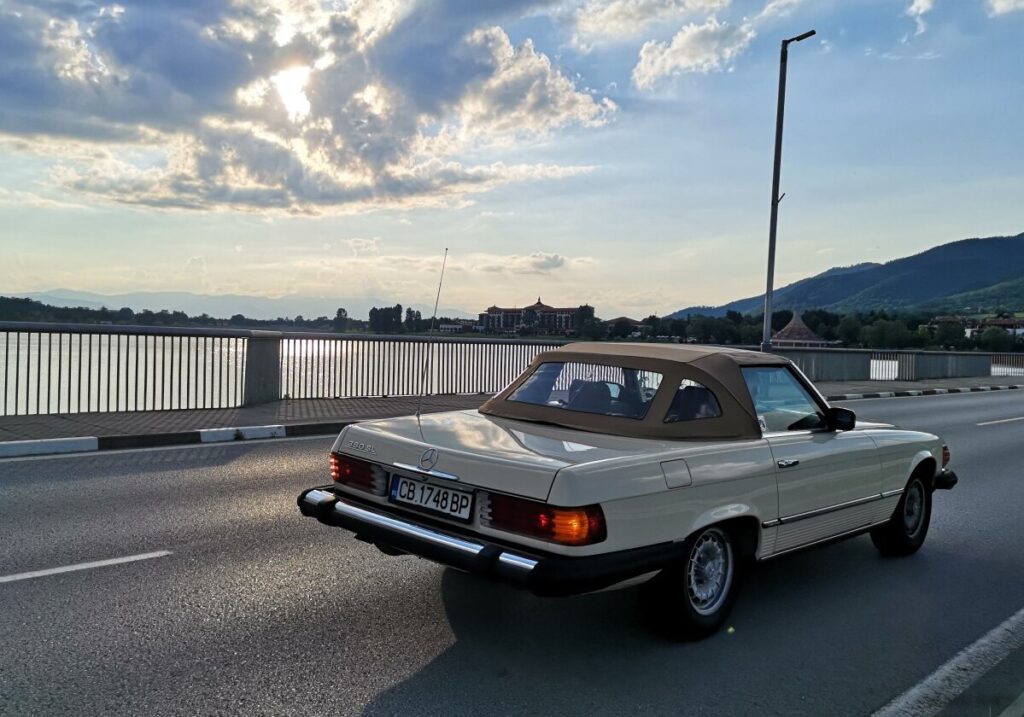
The Mercedes-Benz SL (R107) 280 SL, produced between February 1976 and April 1978, represents a pivotal point in the evolution of the iconic SL roadster lineage. Positioned as a mid-range offering within the R107 generation – which spanned from 1971 to 1989 – the 280 SL aimed to balance performance and refinement, appealing to buyers seeking a sophisticated grand tourer. It followed the initial 350 SL and preceded the later 380 SL, offering a slightly more economical alternative without sacrificing the core SL experience. The R107 series, designed under the direction of Bruno Sacco, was intended as a more comfortable and less overtly sporty successor to the W113 “Pagoda” SL, and the 280 SL continued this trend.
Technical Specifications
| Brand | Mercedes-Benz |
| Model | SL |
| Generation | SL (R107) |
| Type (Engine) | 280 SL (177 Hp) |
| Start of production | February, 1976 |
| End of production | April, 1978 |
| Powertrain Architecture | Internal Combustion engine |
| Body type | Roadster |
| Seats | 2 |
| Doors | 2 |
| Fuel consumption (combined) | 12.5 l/100 km |
| Fuel consumption (US mpg) | 18.8 US mpg |
| Fuel consumption (UK mpg) | 22.6 UK mpg |
| Fuel consumption (km/l) | 8 km/l |
| Fuel Type | Petrol (Gasoline) |
| Acceleration 0 – 100 km/h | 10.1 sec |
| Acceleration 0 – 62 mph | 10.1 sec |
| Acceleration 0 – 60 mph | 9.6 sec |
| Maximum speed | 200 km/h (124.27 mph) |
| Weight-to-power ratio | 8.5 kg/Hp, 118 Hp/tonne |
| Weight-to-torque ratio | 6.4 kg/Nm, 155.3 Nm/tonne |
| Power | 177 Hp @ 6000 rpm |
| Power per litre | 64.5 Hp/l |
| Torque | 233 Nm @ 4500 rpm (171.85 lb.-ft. @ 4500 rpm) |
| Engine layout | Front, Longitudinal |
| Engine Model/Code | M 110 E 28 / 110.986 |
| Engine displacement | 2746 cm3 (167.57 cu. in.) |
| Number of cylinders | 6 |
| Engine configuration | Inline |
| Cylinder Bore | 86 mm (3.39 in.) |
| Piston Stroke | 78.8 mm (3.1 in.) |
| Compression ratio | 8.7:1 |
| Number of valves per cylinder | 2 |
| Fuel injection system | Multi-port manifold injection |
| Engine aspiration | Naturally aspirated engine |
| Valvetrain | DOHC |
| Engine oil capacity | 6 l (6.34 US qt | 5.28 UK qt) |
| Coolant capacity | 12 l (12.68 US qt | 10.56 UK qt) |
| Kerb Weight | 1500 kg (3306.93 lbs.) |
| Max. weight | 1920 kg (4232.88 lbs.) |
| Max load | 420 kg (925.94 lbs.) |
| Fuel tank capacity | 90 l (23.78 US gal | 19.8 UK gal) |
| Length | 4390 mm (172.83 in.) |
| Width | 1790 mm (70.47 in.) |
| Height | 1300 mm (51.18 in.) |
| Wheelbase | 2460 mm (96.85 in.) |
| Front track | 1452 mm (57.17 in.) |
| Rear track | 1440 mm (56.69 in.) |
| Drivetrain Architecture | Rear wheel drive |
| Number of gears | 4 gears, manual transmission |
| Front suspension | Double wishbone |
| Rear suspension | Trailing arm |
| Front brakes | Ventilated discs |
| Rear brakes | Disc |
| Steering type | Cone worm with recirculation balls |
| Power steering | Hydraulic Steering |
| Tires size | Front wheel tires: 195/70 R14 Rear wheel tires: 195/70 R14 |
| Wheel rims size | Front wheel rims: 6.5J x 14 Rear wheel rims: 6.5J x 14 |
Powertrain & Engine Architecture
The heart of the 280 SL is the M110 E 28 inline-six engine, a 2.8-liter (2746 cc) powerplant. This engine, a descendant of the earlier M110 series, featured a cast-iron block and an aluminum cylinder head. It employed a dual overhead camshaft (DOHC) valvetrain, operating two valves per cylinder. Fuel delivery was handled by Bosch K-Jetronic multi-port fuel injection, a sophisticated system for its time that improved fuel efficiency and reduced emissions compared to carbureted engines. The engine produced 177 horsepower at 6000 rpm and 233 Nm (171.85 lb-ft) of torque at 4500 rpm. The 280 SL was typically equipped with a four-speed manual transmission, though an optional four-speed automatic transmission was also available. The automatic, while offering convenience, did slightly diminish acceleration performance.
Driving Characteristics
The 280 SL with the manual transmission offered a reasonably engaging driving experience. Acceleration to 60 mph took around 9.6 seconds, and it could reach a top speed of 200 km/h (124 mph). The inline-six engine provided smooth and linear power delivery, making it well-suited for long-distance cruising. The automatic transmission, while providing ease of use, resulted in a noticeable decrease in responsiveness and acceleration. Gear ratios were optimized for comfortable highway driving rather than outright performance. Compared to the earlier 350 SL, the 280 SL felt slightly less powerful, but its improved fuel economy and refined engine characteristics appealed to a different segment of buyers.
Equipment & Trim Levels
The 280 SL came standard with a generous array of features for its era. These included power steering, disc brakes on all four wheels, leather upholstery, and a wood-trimmed dashboard. Optional extras included air conditioning, a sunroof, and upgraded audio systems. The interior was designed with comfort and luxury in mind, featuring supportive seats and a well-appointed cabin. Trim levels were relatively simple, with most variations stemming from the selection of optional equipment. The 280 SL generally presented a more understated elegance compared to the more overtly sporty trims.
Chassis & Braking
The R107 chassis featured independent suspension all around, with double wishbones at the front and a trailing arm setup at the rear. This configuration provided a comfortable ride and good handling characteristics. The 280 SL utilized ventilated disc brakes on all four wheels, offering ample stopping power. Steering was handled by a cone worm and recirculation ball system with hydraulic power assistance. The suspension was tuned for a balance between comfort and handling, prioritizing a smooth ride over aggressive cornering. The relatively light weight of the 280 SL (around 1500 kg or 3306 lbs) contributed to its nimble handling.
Market Reception & Comparison
The 280 SL was generally well-received by automotive critics. It was praised for its comfortable ride, refined engine, and elegant styling. However, some critics noted that its performance was not as exhilarating as that of the 350 SL. Compared to the 350 SL, the 280 SL offered better fuel economy and a slightly lower price point. Compared to the later 380 SL, it provided a more affordable entry point into the R107 range. The 280 SL appealed to buyers who prioritized comfort and refinement over outright performance.
Legacy
The Mercedes-Benz R107 280 SL has proven to be a remarkably durable and reliable vehicle. The M110 engine is known for its longevity, and many examples are still on the road today. The 280 SL is considered a classic among Mercedes-Benz enthusiasts, and well-maintained examples command a premium in the used car market. Its combination of classic styling, comfortable ride, and reliable powertrain has ensured its enduring appeal. While not the fastest or most sporting variant of the R107, the 280 SL represents a sweet spot in the lineup, offering a balanced blend of performance, luxury, and affordability.