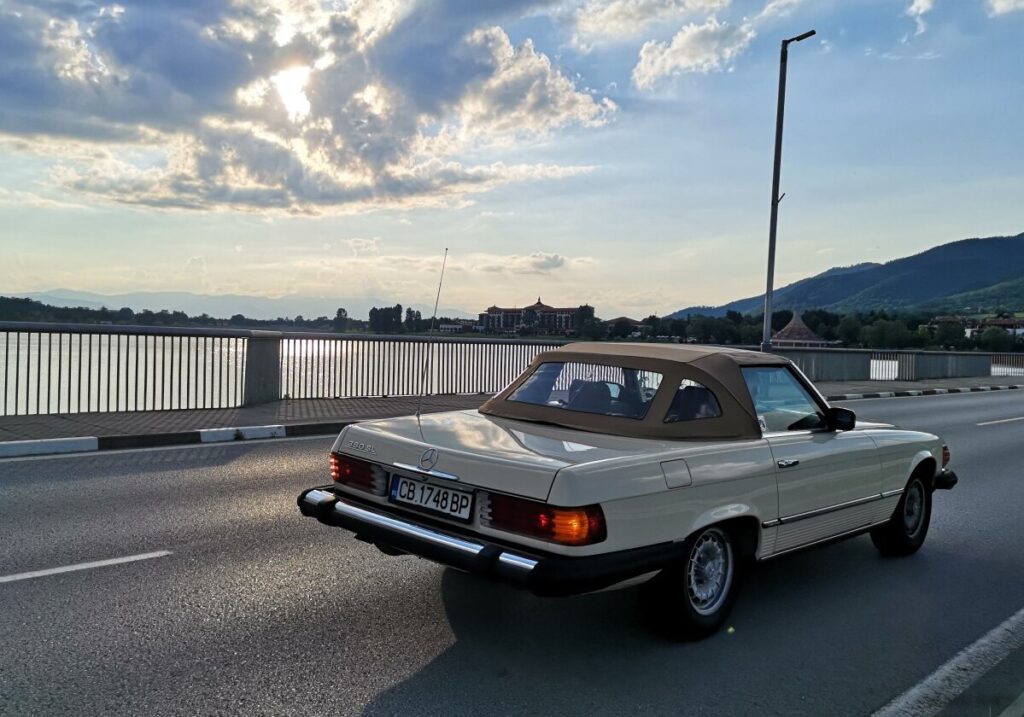
The Mercedes-Benz R107 generation SL, produced from 1971 to 1989, represented a significant evolution in the iconic SL lineage. The 350 SL V8, specifically manufactured between February 1976 and March 1980, occupied a crucial middle ground within the R107 range. It offered a compelling blend of performance and luxury, appealing to buyers seeking a sophisticated grand tourer. This variant, powered by the M116 E 35 engine and paired with a three-speed automatic transmission, was positioned as a step up from the six-cylinder models, offering increased power and refinement without the higher price tag of the flagship 450 SL. The R107 platform, internally designated as the W107, was notable for its robust construction and focus on passenger safety, setting new standards for the era.
Technical Specifications
| Brand | Mercedes-Benz |
| Model | SL |
| Generation | SL (R107) |
| Type (Engine) | 350 SL V8 (195 Hp) Automatic |
| Start of production | February, 1976 |
| End of production | March, 1980 |
| Powertrain Architecture | Internal Combustion engine |
| Body type | Roadster |
| Seats | 2 |
| Doors | 2 |
| Fuel consumption (combined) | 13 l/100 km (18.1 US mpg, 21.7 UK mpg, 7.7 km/l) |
| Fuel Type | Petrol (Gasoline) |
| Acceleration 0 – 100 km/h | 10.1 sec |
| Acceleration 0 – 62 mph | 10.1 sec |
| Acceleration 0 – 60 mph | 9.6 sec |
| Maximum speed | 200 km/h (124.27 mph) |
| Weight-to-power ratio | 7.9 kg/Hp, 126.6 Hp/tonne |
| Weight-to-torque ratio | 5.6 kg/Nm, 178.6 Nm/tonne |
| Power | 195 Hp @ 5500 rpm |
| Power per litre | 55.7 Hp/l |
| Torque | 275 Nm @ 4000 rpm (202.83 lb.-ft. @ 4000 rpm) |
| Engine layout | Front, Longitudinal |
| Engine Model/Code | M 116 E 35 / 116.984 |
| Engine displacement | 3499 cm3 (213.52 cu. in.) |
| Number of cylinders | 8 |
| Engine configuration | V-engine |
| Cylinder Bore | 92 mm (3.62 in.) |
| Piston Stroke | 65.8 mm (2.59 in.) |
| Compression ratio | 9:1 |
| Number of valves per cylinder | 2 |
| Fuel injection system | Multi-port manifold injection |
| Engine aspiration | Naturally aspirated engine |
| Valvetrain | SOHC |
| Engine oil capacity | 8 l (8.45 US qt | 7.04 UK qt) |
| Coolant | 14.3 l (15.11 US qt | 12.58 UK qt) |
| Kerb Weight | 1540 kg (3395.12 lbs.) |
| Max. weight | 1960 kg (4321.06 lbs.) |
| Max load | 420 kg (925.94 lbs.) |
| Fuel tank capacity | 90 l (23.78 US gal | 19.8 UK gal) |
| Length | 4390 mm (172.83 in.) |
| Width | 1790 mm (70.47 in.) |
| Height | 1300 mm (51.18 in.) |
| Wheelbase | 2460 mm (96.85 in.) |
| Front track | 1452 mm (57.17 in.) |
| Rear (Back) track | 1440 mm (56.69 in.) |
| Drivetrain Architecture | The Internal combustion engine (ICE) drives the rear wheels of the vehicle. |
| Drive wheel | Rear wheel drive |
| Number of gears and type of gearbox | 3 gears, automatic transmission |
| Front suspension | Double wishbone |
| Rear suspension | Trailing arm |
| Front brakes | Ventilated discs |
| Rear brakes | Disc |
| Steering type | Cone worm with recirculation balls |
| Power steering | Hydraulic Steering |
| Tires size | Front wheel tires: 205/70 R14 Rear wheel tires: 205/70 R14 |
| Wheel rims size | Front wheel rims: 6.5J x 14 Rear wheel rims: 6.5J x 14 |
Powertrain & Engine Architecture
The heart of the 350 SL was the M116 E 35 V8 engine, a 3.5-liter (3499 cc) naturally aspirated powerplant. This engine featured a cast iron block and aluminum cylinder heads, a design choice that helped to reduce weight and improve heat dissipation. It employed a single overhead camshaft (SOHC) valvetrain operating two valves per cylinder. Fuel delivery was handled by a Bosch K-Jetronic multi-port fuel injection system, a sophisticated system for its time that contributed to smooth operation and relatively good fuel economy. The engine produced 195 horsepower at 5500 rpm and 275 Nm (202.83 lb-ft) of torque at 4000 rpm. This power was transmitted to the rear wheels through a three-speed automatic transmission, a common pairing for luxury vehicles of the era. The transmission was designed for smooth, comfortable shifts rather than outright performance.
Driving Characteristics
The 350 SL Automatic offered a relaxed and refined driving experience. While not a sports car in the modern sense, the V8 engine provided ample power for comfortable cruising and effortless overtaking. The three-speed automatic transmission, while lacking the responsiveness of a manual gearbox, offered smooth shifts and made the car easy to drive in traffic. Acceleration from 0 to 60 mph took around 9.6 seconds, and the car had a top speed of approximately 124 mph. Compared to the six-cylinder 350 SL, the V8 offered noticeably more power and torque, resulting in improved acceleration and a more relaxed feel at highway speeds. However, it wasn’t as nimble or engaging to drive as a manual transmission-equipped model.
Equipment & Trim Levels
The 350 SL came reasonably well-equipped as standard. Interior appointments included leather upholstery, wood trim, and power windows. Air conditioning was a common option, as were power-assisted steering and brakes. The dashboard layout was typical of Mercedes-Benz at the time, featuring a comprehensive array of gauges and controls. Optional extras included a sunroof, upgraded sound system, and automatic climate control. The level of luxury and refinement was a key selling point for the R107 SL, and the 350 SL V8 offered a good balance of features and price.
Chassis & Braking
The R107 SL utilized a robust chassis with independent suspension all around. The front suspension featured double wishbones, while the rear employed a trailing arm setup. This configuration provided a comfortable ride and good handling characteristics. Braking duties were handled by ventilated disc brakes at the front and solid discs at the rear. Power-assisted steering was standard, making the car easy to maneuver at low speeds. The suspension was tuned for comfort rather than outright sportiness, but it provided a stable and predictable driving experience.
Market Reception & Comparison
The 350 SL V8 was generally well-received by automotive critics. It was praised for its smooth engine, comfortable ride, and luxurious interior. However, some critics noted that the automatic transmission could feel sluggish at times, and that the car wasn’t as sporty as some of its competitors. Compared to the six-cylinder 350 SL, the V8 offered a significant performance upgrade, but at a higher price. The 450 SL, with its larger engine, offered even more power but was considerably more expensive. The 350 SL V8 struck a good balance between performance, luxury, and price, making it a popular choice among buyers.
Legacy
The M116 engine, found in the 350 SL, is known for its durability and reliability. With proper maintenance, these engines can last for hundreds of thousands of miles. The R107 SL as a whole has developed a strong following among classic car enthusiasts. The 350 SL V8, in particular, is valued for its combination of performance, luxury, and relative affordability. Today, well-maintained examples command respectable prices in the used car market. While parts availability can sometimes be a challenge, a dedicated network of suppliers and enthusiasts ensures that these classic Mercedes-Benz roadsters will continue to be enjoyed for years to come. The R107 platform, and the 350 SL V8 variant, remains a testament to Mercedes-Benz’s commitment to quality and engineering excellence.