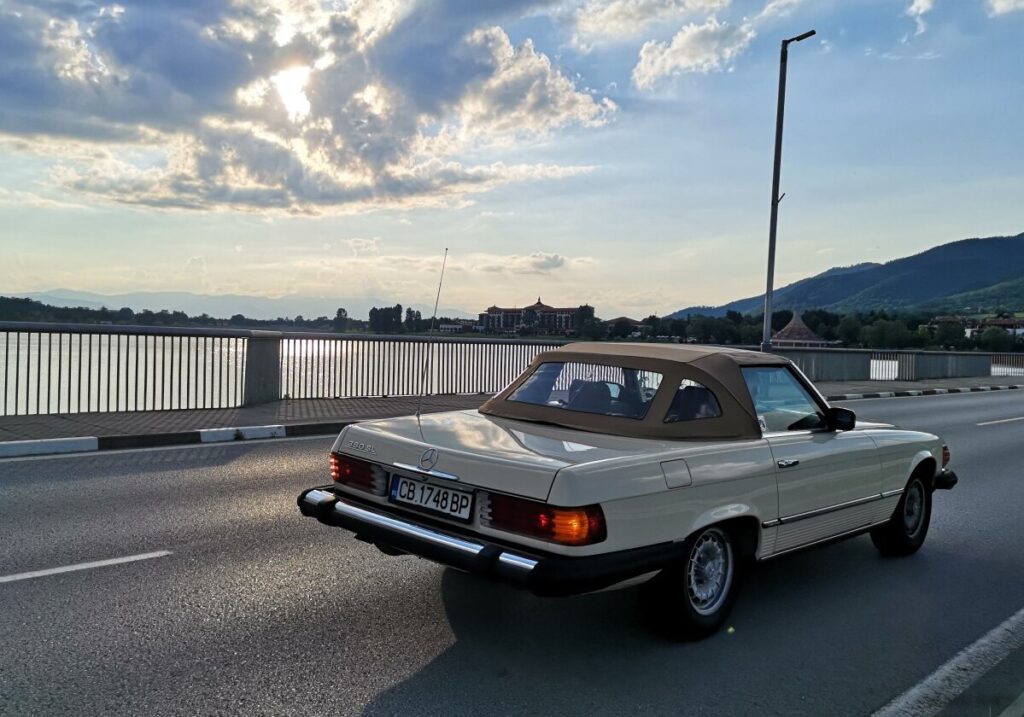
The Mercedes-Benz R107 380 SL, produced from October 1981 to October 1985, represented a significant evolution of the iconic SL roadster lineage. Positioned as a mid-range offering within the R107 generation (which spanned from 1971 to 1989), the 380 SL bridged the gap between the entry-level 280 SL and the more potent 560 SL. It was designed to offer a blend of performance, luxury, and the renowned Mercedes-Benz build quality, primarily targeting the North American market where larger displacement engines were highly favored. The R107 series, overall, was a commercial success, becoming the longest-running SL generation and solidifying the model’s reputation for sophisticated motoring.
Technical Specifications
| Brand | Mercedes-Benz |
| Model | SL |
| Generation | SL (R107) |
| Type (Engine) | 380 SL V8 (204 Hp) Automatic |
| Start of production | October, 1981 |
| End of production | October, 1985 |
| Powertrain Architecture | Internal Combustion engine |
| Body type | Roadster |
| Seats | 2 |
| Doors | 2 |
| Fuel consumption (economy) – urban | 14.2 l/100 km (16.6 US mpg, 19.9 UK mpg, 7 km/l) |
| Fuel consumption (economy) – extra urban | 9.2 l/100 km (25.6 US mpg, 30.7 UK mpg, 10.9 km/l) |
| Fuel Type | Petrol (Gasoline) |
| Acceleration 0 – 100 km/h | 9.8 sec |
| Acceleration 0 – 62 mph | 9.8 sec |
| Acceleration 0 – 60 mph | 9.3 sec |
| Maximum speed | 205 km/h (127.38 mph) |
| Weight-to-power ratio | 7.5 kg/Hp, 132.5 Hp/tonne |
| Weight-to-torque ratio | 4.9 kg/Nm, 204.5 Nm/tonne |
| Power | 204 Hp @ 5250 rpm |
| Power per litre | 53.1 Hp/l |
| Torque | 315 Nm @ 3250 rpm (232.33 lb.-ft. @ 3250 rpm) |
| Engine layout | Front, Longitudinal |
| Engine Model/Code | M 116 E 38 / 116.962 |
| Engine displacement | 3839 cm3 (234.27 cu. in.) |
| Number of cylinders | 8 |
| Engine configuration | V-engine |
| Cylinder Bore | 88 mm (3.46 in.) |
| Piston Stroke | 78.9 mm (3.11 in.) |
| Compression ratio | 9.4:1 |
| Number of valves per cylinder | 2 |
| Fuel injection system | Multi-port manifold injection |
| Engine aspiration | Naturally aspirated engine |
| Valvetrain | SOHC |
| Engine oil capacity | 8 l (8.45 US qt | 7.04 UK qt) |
| Coolant | 12.5 l (13.21 US qt | 11 UK qt) |
| Kerb Weight | 1540 kg (3395.12 lbs.) |
| Max. weight | 1960 kg (4321.06 lbs.) |
| Max load | 420 kg (925.94 lbs.) |
| Fuel tank capacity | 85 l (22.45 US gal | 18.7 UK gal) |
| Length | 4390 mm (172.83 in.) |
| Width | 1790 mm (70.47 in.) |
| Height | 1300 mm (51.18 in.) |
| Wheelbase | 2455 mm (96.65 in.) |
| Front track | 1452 mm (57.17 in.) |
| Rear (Back) track | 1440 mm (56.69 in.) |
| Drivetrain Architecture | The Internal combustion engine (ICE) drives the rear wheels of the vehicle. |
| Drive wheel | Rear wheel drive |
| Number of gears and type of gearbox | 4 gears, automatic transmission |
| Front suspension | Double wishbone |
| Rear suspension | Threaded twist beam |
| Front brakes | Ventilated discs |
| Rear brakes | Disc |
| Steering type | Cone worm with recirculation balls |
| Power steering | Hydraulic Steering |
| Tires size | Front wheel tires: 205/70 R14Rear wheel tires: 205/70 R14 |
| Wheel rims size | Front wheel rims: 6.5J x 14Rear wheel rims: 6.5J x 14 |
Powertrain & Engine Architecture
The heart of the 380 SL is the M116 E 38 3.8-liter V8 engine. This engine, a cornerstone of Mercedes-Benz’s engineering prowess during the era, featured a single overhead camshaft (SOHC) design per bank, operating two valves per cylinder. The M116 was known for its smooth operation and inherent balance, characteristics stemming from its 90-degree V-angle. Fuel delivery was managed by a Bosch K-Jetronic multi-port fuel injection system, a sophisticated system for its time that contributed to improved fuel efficiency and reduced emissions compared to carbureted engines. The engine produced 204 horsepower at 5250 rpm and 232 lb-ft of torque at 3250 rpm. Paired exclusively with a four-speed automatic transmission (typically the 722.3 series), the powertrain was designed for effortless cruising rather than outright performance. The automatic transmission was selected to appeal to the luxury-oriented buyer, prioritizing comfort and ease of use over driver involvement.
Driving Characteristics
The 380 SL Automatic offered a distinctly grand touring experience. While not a sports car in the modern sense, the combination of the V8 engine and automatic transmission provided ample power for comfortable highway cruising and relaxed city driving. Acceleration to 60 mph took around 9.3 seconds, respectable for the early 1980s, but noticeably slower than the manual transmission versions or the higher-output 560 SL. The automatic transmission’s gear ratios were geared towards smooth transitions and fuel economy, rather than aggressive acceleration. The steering, while hydraulic, lacked the directness of more modern systems, contributing to a somewhat detached feel. However, the comfortable suspension and well-insulated cabin made for a refined and enjoyable driving experience, particularly on long journeys.
Equipment & Trim Levels
The 380 SL came reasonably well-equipped as standard. Interior appointments typically included leather upholstery (often in shades of beige, brown, or black), wood trim on the dashboard and door panels, and power windows. Air conditioning was standard, as was a basic sound system. Optional extras were plentiful, including a premium sound system, cruise control, sunroof, and heated seats. The level of trim could vary depending on the market, with North American models generally being more lavishly equipped than their European counterparts. The dashboard layout was classic Mercedes-Benz of the period, with a functional and understated design.
Chassis & Braking
The R107 chassis featured independent suspension all around, with double wishbones at the front and a threaded twist beam rear axle. This setup provided a comfortable ride, although it wasn’t particularly sporty in terms of handling. Braking was accomplished via ventilated discs at the front and solid discs at the rear. Hydraulic power steering was standard, making maneuvering at low speeds relatively easy. The tires were typically 205/70 R14, providing a good balance of comfort and grip for the vehicle’s weight and intended use.
Market Reception & Comparison
The 380 SL was generally well-received by automotive critics. It was praised for its build quality, comfortable ride, and refined engine. However, some critics noted its relatively modest performance compared to other sports cars of the era. Compared to the 280 SL, the 380 SL offered a significant power boost, making it a more capable grand tourer. In contrast to the 560 SL, the 380 SL was more fuel-efficient and slightly less expensive, appealing to buyers who didn’t require the ultimate in performance. Reliability was generally good, although the K-Jetronic fuel injection system could be prone to issues if not properly maintained.
Legacy
The Mercedes-Benz R107 380 SL remains a popular classic car today. The M116 engine, while aging, is known for its durability and relative simplicity. However, finding well-maintained examples can be challenging, as many cars have suffered from neglect or improper repairs. The K-Jetronic fuel injection system requires specialized knowledge to diagnose and repair, which can add to the cost of ownership. Despite these potential issues, the 380 SL continues to be appreciated for its timeless design, comfortable ride, and classic Mercedes-Benz character. It represents a significant piece of automotive history and a testament to the enduring appeal of the SL roadster.