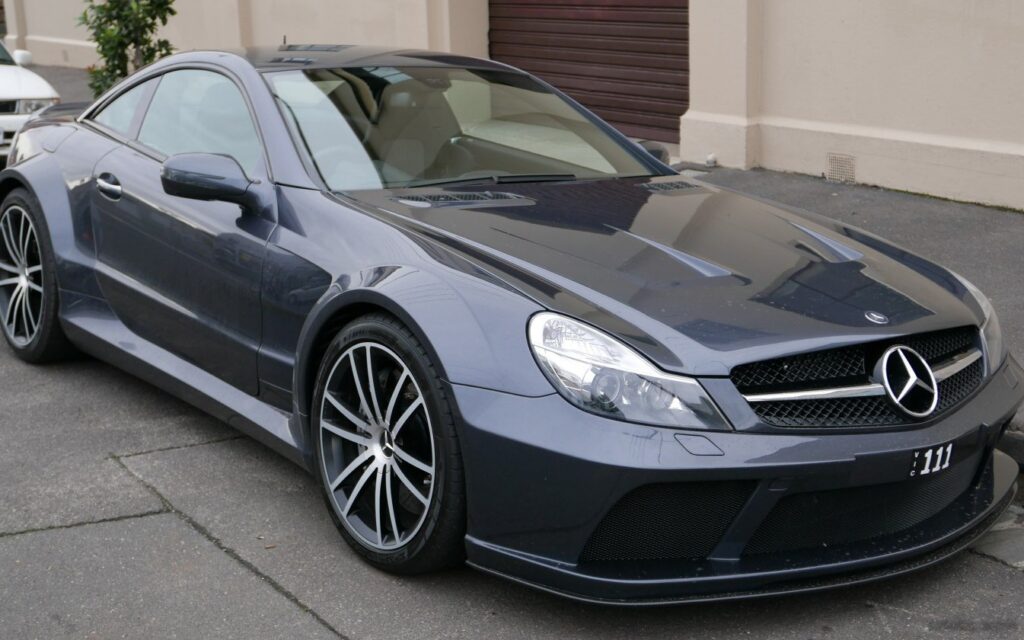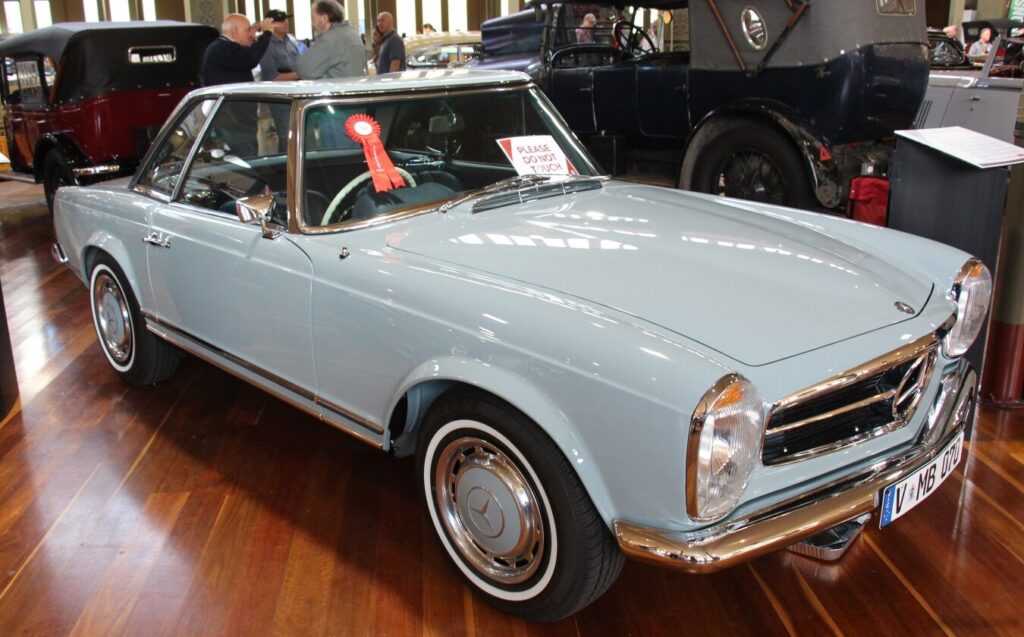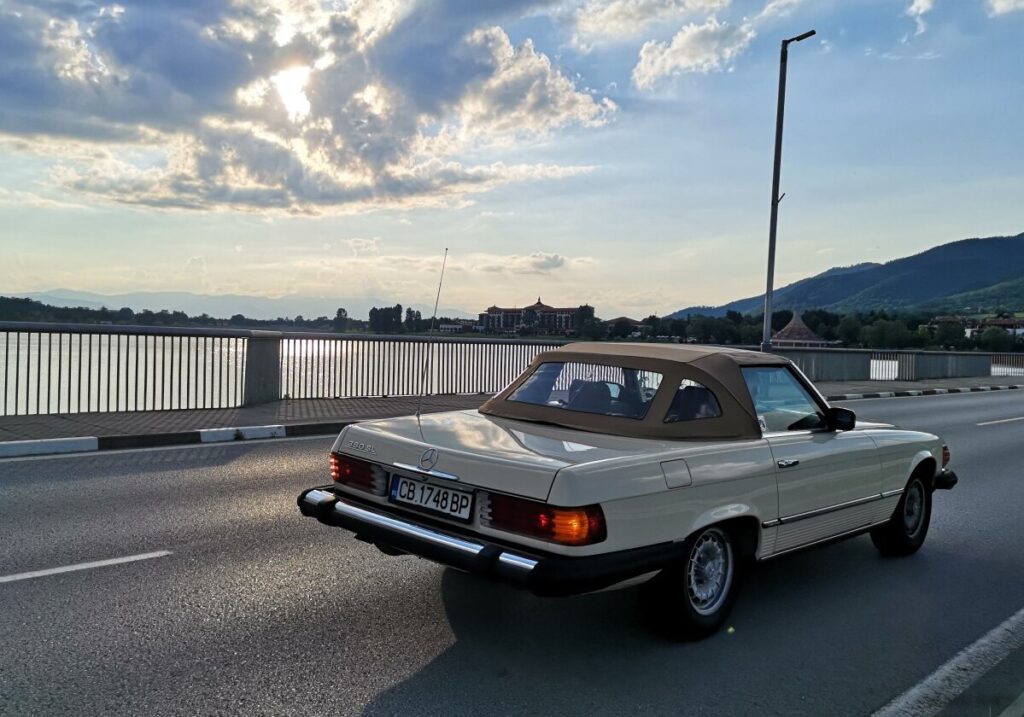
The Mercedes-Benz R107 380 SL, produced from February 1980 to October 1981, represented a significant evolution of the iconic SL roadster lineage. Positioned as a mid-range offering within the R107 generation (which spanned from 1971 to 1989), the 380 SL bridged the gap between the entry-level 280 SL and the more potent 560 SL. It was designed to offer a blend of performance, luxury, and the renowned Mercedes-Benz build quality, primarily targeting the North American market where larger displacement engines were highly favored. The R107 series, overall, was a commercial success, becoming the longest-running SL generation and solidifying the model’s reputation as a sophisticated grand tourer.
Technical Specifications
| Brand | Mercedes-Benz |
| Model | SL |
| Generation | SL (R107) |
| Type (Engine) | 380 SL V8 (218 Hp) Automatic |
| Start of production | February, 1980 |
| End of production | October, 1981 |
| Powertrain Architecture | Internal Combustion engine |
| Body type | Roadster |
| Seats | 2 |
| Doors | 2 |
| Fuel consumption (urban) | 19 l/100 km (12.4 US mpg, 14.9 UK mpg, 5.3 km/l) |
| Fuel consumption (extra urban) | 11.1 l/100 km (21.2 US mpg, 25.4 UK mpg, 9 km/l) |
| Fuel Type | Petrol (Gasoline) |
| Acceleration 0 – 100 km/h | 9 sec |
| Acceleration 0 – 62 mph | 9 sec |
| Acceleration 0 – 60 mph | 8.6 sec |
| Maximum speed | 215 km/h (133.59 mph) |
| Weight-to-power ratio | 7.1 kg/Hp, 141.6 Hp/tonne |
| Weight-to-torque ratio | 5.2 kg/Nm, 194.2 Nm/tonne |
| Power | 218 Hp @ 5500 rpm |
| Power per litre | 57.1 Hp/l |
| Torque | 299 Nm @ 4000 rpm (220.53 lb.-ft. @ 4000 rpm) |
| Engine layout | Front, Longitudinal |
| Engine Model/Code | M 116 E 38 / 116.960 |
| Engine displacement | 3818 cm3 (232.99 cu. in.) |
| Number of cylinders | 8 |
| Engine configuration | V-engine |
| Cylinder Bore | 92 mm (3.62 in.) |
| Piston Stroke | 71.8 mm (2.83 in.) |
| Compression ratio | 9:1 |
| Number of valves per cylinder | 2 |
| Fuel injection system | Multi-port manifold injection |
| Engine aspiration | Naturally aspirated engine |
| Valvetrain | SOHC |
| Engine oil capacity | 8 l (8.45 US qt | 7.04 UK qt) |
| Coolant | 12.5 l (13.21 US qt | 11 UK qt) |
| Kerb Weight | 1540 kg (3395.12 lbs.) |
| Max. weight | 1960 kg (4321.06 lbs.) |
| Max load | 420 kg (925.94 lbs.) |
| Fuel tank capacity | 90 l (23.78 US gal | 19.8 UK gal) |
| Length | 4390 mm (172.83 in.) |
| Width | 1790 mm (70.47 in.) |
| Height | 1300 mm (51.18 in.) |
| Wheelbase | 2455 mm (96.65 in.) |
| Front track | 1452 mm (57.17 in.) |
| Rear (Back) track | 1440 mm (56.69 in.) |
| Drivetrain Architecture | The Internal combustion engine (ICE) drives the rear wheels of the vehicle. |
| Drive wheel | Rear wheel drive |
| Number of gears and type of gearbox | 4 gears, automatic transmission |
| Front suspension | Double wishbone |
| Rear suspension | Threaded twist beam |
| Front brakes | Ventilated discs |
| Rear brakes | Disc |
| Steering type | Cone worm with recirculation balls |
| Power steering | Hydraulic Steering |
| Tires size | Front wheel tires: 205/70 R14Rear wheel tires: 205/70 R14 |
| Wheel rims size | Front wheel rims: 6.5J x 14Rear wheel rims: 6.5J x 14 |
Powertrain & Engine Architecture
The heart of the 380 SL is the M116 E38 3.8-liter V8 engine. This engine, a cornerstone of Mercedes-Benz’s engineering prowess during the era, featured a single overhead camshaft (SOHC) design per bank, operating two valves per cylinder. It utilized Bosch K-Jetronic fuel injection, a mechanical system known for its reliability and precise fuel delivery. The M116 was designed for smooth operation and relatively low emissions for its time. The engine’s 9:1 compression ratio contributed to its torque output, making it well-suited for relaxed cruising. Paired with the engine was a 4-speed automatic transmission, a common choice for the American market, prioritizing ease of use over outright performance. This transmission was designed to provide smooth shifts and contribute to the car’s overall comfortable driving experience.
Driving Characteristics
The 380 SL Automatic offered a distinctly different driving experience compared to its manual transmission counterparts or the higher-output 560 SL. While the 218 horsepower and 220 lb-ft of torque were respectable, the automatic transmission and the car’s substantial weight (around 3400 lbs) meant that acceleration was more about effortless progress than outright speed. The 0-60 mph time of around 8.6 seconds reflects this. The automatic transmission’s gear ratios were optimized for cruising, providing relaxed highway performance. However, it lacked the responsiveness of a manual gearbox, and downshifts could be somewhat sluggish. The suspension, tuned for comfort, provided a smooth ride, but body roll was noticeable during spirited cornering. Overall, the 380 SL Automatic was a refined and comfortable grand tourer, ideal for long-distance journeys.
Equipment & Trim Levels
The 380 SL came reasonably well-equipped as standard. Interior appointments typically included leather upholstery, wood trim, and power windows. Air conditioning was standard, a necessity for the target American market. The dashboard layout was functional and elegant, featuring a comprehensive array of gauges. Optional extras included a sunroof, cruise control, and upgraded audio systems. The exterior featured chrome trim and distinctive Mercedes-Benz styling cues of the era. The 380 SL didn’t offer the same level of customization as some other luxury cars, but it provided a comfortable and well-appointed interior.
Chassis & Braking
The R107 chassis featured independent suspension all around, with double wishbones at the front and a threaded twist beam rear axle. This setup prioritized ride comfort and stability. The 380 SL utilized ventilated disc brakes at the front and solid discs at the rear, providing adequate stopping power for its weight and performance. Hydraulic power steering was standard, making the car easy to maneuver at low speeds. The suspension was tuned to provide a balance between comfort and handling, but it wasn’t particularly sporty. Stabilizer bars were fitted front and rear to reduce body roll.
Market Reception & Comparison
The 380 SL was generally well-received by critics, who praised its comfortable ride, refined interior, and robust build quality. However, some reviewers noted that the automatic transmission dulled the driving experience compared to the manual versions. Compared to the 280 SL, the 380 SL offered a significant performance boost, while remaining more affordable than the flagship 560 SL. Fuel economy was a concern, with the 380 SL averaging around 12-21 mpg. Reliability was generally good, but maintenance costs could be high due to the complexity of the engine and fuel injection system.
Legacy
The Mercedes-Benz R107 380 SL has proven to be a durable and collectible classic. The M116 engine, while not the most powerful of its time, is known for its longevity and relatively straightforward maintenance. Today, well-maintained examples command respectable prices in the used car market. The 380 SL Automatic remains a popular choice for enthusiasts seeking a comfortable and stylish classic roadster. Its blend of luxury, performance, and reliability has ensured its place as a significant model in Mercedes-Benz history. Finding original parts can sometimes be a challenge, but a robust aftermarket supports the R107 platform, ensuring that these cars can continue to be enjoyed for years to come.