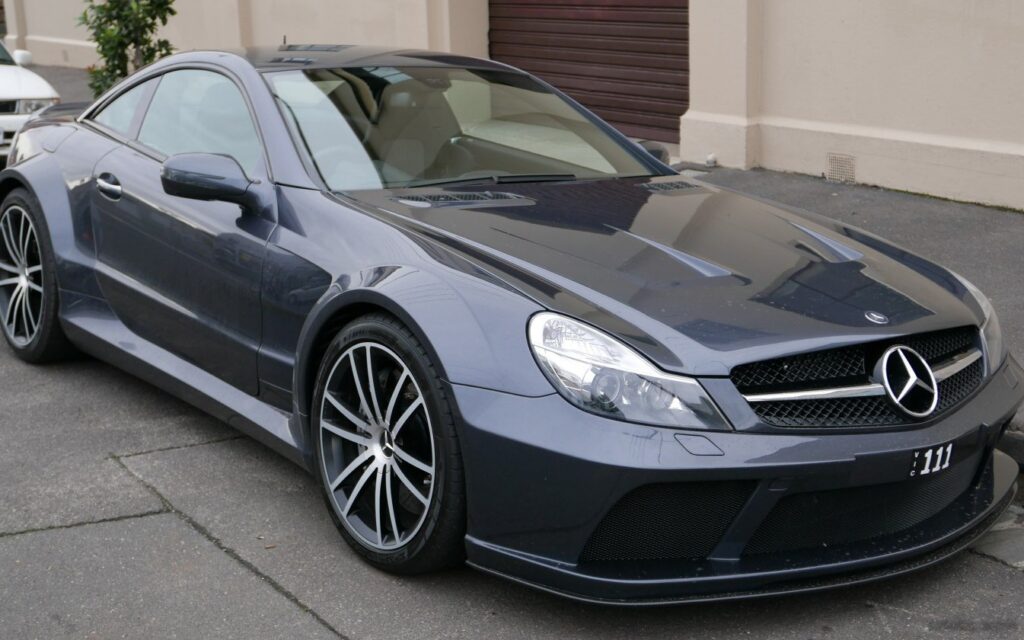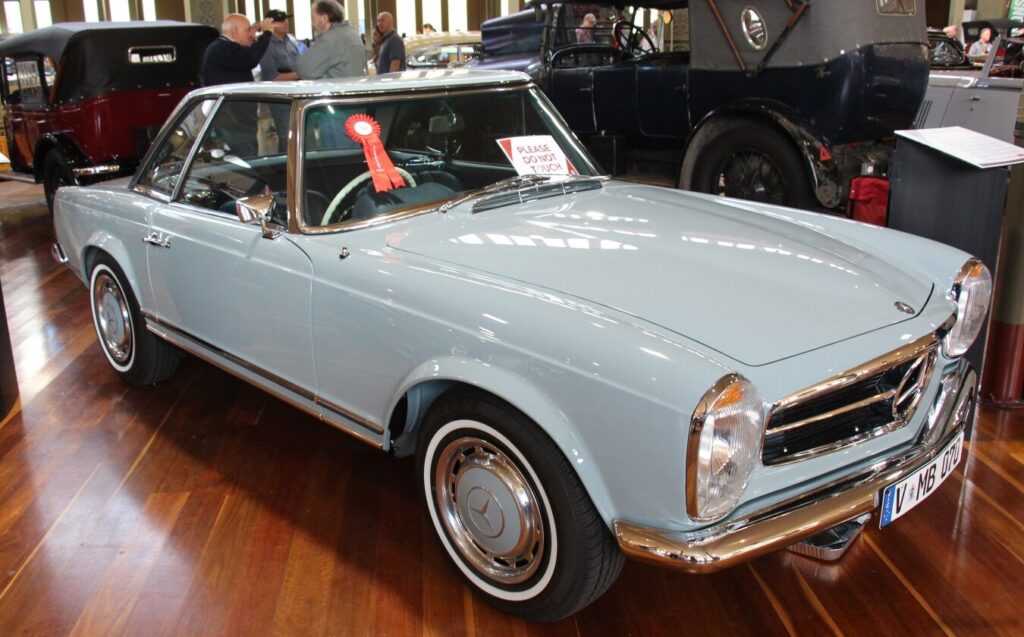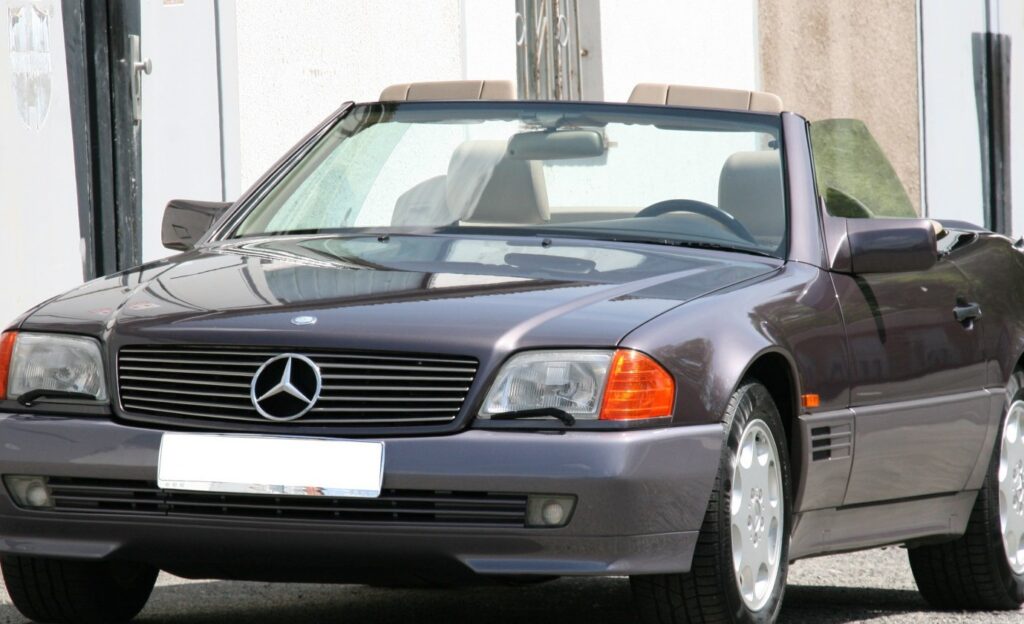
The Mercedes-Benz SL (R129) 300 SL-24, produced from July 1988 to June 1993, represents the entry point into the sophisticated R129 generation of the iconic SL roadster. Positioned as the base model, it offered a blend of luxury, performance, and Mercedes-Benz engineering within the 1HX0 chassis family. While later models would boast more powerful engines like the 320 and 500 variants, the 300 SL-24 provided a more accessible entry point to SL ownership, appealing to buyers prioritizing refinement and a comfortable grand touring experience over outright speed. This model served as a crucial stepping stone in re-establishing the SL as a modern luxury roadster after a nearly two-decade hiatus since the R107.
Powertrain & Engine Architecture
The heart of the 300 SL-24 is the M104 E 30/2 engine, a 2,960 cc (180.63 cubic inches) inline-six cylinder powerplant. This engine, designated with the code 104.981, is a naturally aspirated, single overhead camshaft (SOHC) design, featuring multi-port fuel injection. The M104 was a significant departure from the earlier Mercedes-Benz inline-six engines, incorporating advancements in materials and design for improved efficiency and durability. It boasts a bore of 88.5 mm (3.48 inches) and a stroke of 80.2 mm (3.16 inches), resulting in a compression ratio of 10:1. The engine produces 231 horsepower at 6,300 rpm and 272 Nm (200.62 lb-ft) of torque at 4,600 rpm.
While a five-speed manual transmission was available, the vast majority of 300 SL-24 models were equipped with a four-speed automatic transmission. This automatic, a robust and reliable unit for its time, was geared towards providing smooth and effortless cruising. The automatic transmission’s gear ratios were optimized for comfortable highway driving and relaxed acceleration, rather than aggressive performance. The transmission was electronically controlled, offering adaptive shifting based on driving conditions.
Engine Management and Fuel System
The M104 E 30/2 engine utilizes a Bosch Motronic engine management system, controlling fuel injection, ignition timing, and idle speed. The multi-port fuel injection system delivers fuel directly to each cylinder, optimizing combustion efficiency and reducing emissions. The engine requires 7.5 liters (7.93 US quarts) of engine oil, specified to Mercedes-Benz standards, and has a coolant capacity of 11.5 liters (12.15 US quarts).
Driving Characteristics
The 300 SL-24, with its automatic transmission, delivers a refined and comfortable driving experience. Acceleration from 0 to 100 km/h (0-62 mph) takes approximately 8.4 seconds, while 0-60 mph is achieved in around 8 seconds. Top speed is electronically limited to 240 km/h (149.13 mph). Compared to the manual transmission version, the automatic slightly diminishes acceleration due to inherent transmission losses. However, the automatic’s smooth shifting and ease of use make it ideal for long-distance cruising.
The power delivery is linear and predictable, with ample torque available throughout the rev range. While not a sports car in the truest sense, the 300 SL-24 offers sufficient power for confident overtaking and enjoyable driving on winding roads. The automatic transmission’s gear ratios prioritize fuel efficiency and comfort over aggressive downshifts, making it less responsive than the manual counterpart. The weight-to-power ratio of 7.3 kg/hp and weight-to-torque ratio of 6.2 kg/Nm contribute to a balanced feel, though it’s noticeably heavier than the higher-performance SL variants.
Equipment & Trim Levels
The 300 SL-24 came standard with a comprehensive list of features befitting a luxury roadster. Interior appointments included leather upholstery, power-adjustable seats, and wood trim. Standard equipment also included automatic climate control, power windows, power locks, and a high-quality sound system. The dashboard layout was clean and functional, with easy-to-read gauges and intuitive controls.
Optional extras were plentiful, allowing buyers to personalize their SL. These included a premium sound system, heated seats, a sunroof, and upgraded leather options. The exterior was typically finished in metallic paint, with a choice of soft-top colors. The 300 SL-24’s trim level was generally considered the base model, but even in its standard form, it offered a luxurious and well-equipped driving experience.
Chassis & Braking
The R129 chassis features independent suspension all around, with a wishbone setup at the front and a multi-link spring suspension at the rear. Both ends incorporate a transverse stabilizer bar to reduce body roll during cornering. The suspension is tuned for comfort, providing a smooth and controlled ride. The 300 SL-24 utilizes ventilated disc brakes at the front and solid disc brakes at the rear. Anti-lock braking system (ABS) is standard, enhancing safety and stability during hard braking. The steering is a cone worm with recirculation balls, assisted by hydraulic power steering, providing a balanced feel and precise control. The standard tire size is 225/55 R16, mounted on 8J x 16 inch wheel rims.
Market Reception & Comparison
The 300 SL-24 was generally well-received by automotive critics, who praised its comfortable ride, refined interior, and overall build quality. However, some critics noted that its performance was not as exhilarating as that of the higher-powered SL variants. Compared to the 320 and 500 models, the 300 SL-24 offered a more affordable entry point into the R129 lineup, but at the expense of outright speed. Fuel economy was respectable for a vehicle of its class, achieving approximately 16.2 l/100 km (14.5 US mpg) in urban driving and 8.8 l/100 km (26.7 US mpg) on the highway. Reliability was generally good, although the complex electronics of the R129 generation could occasionally present challenges.
Technical Specifications
| Brand | Mercedes-Benz |
| Model | SL |
| Generation | SL (R129) |
| Type (Engine) | 300 SL-24 (231 Hp) |
| Start of production | July, 1988 |
| End of production | June, 1993 |
| Powertrain Architecture | Internal Combustion engine |
| Body type | Roadster |
| Seats | 2 |
| Doors | 2 |
| Fuel consumption (urban) | 16.2 l/100 km (14.5 US mpg) |
| Fuel consumption (extra urban) | 8.8 l/100 km (26.7 US mpg) |
| Fuel Type | Petrol (Gasoline) |
| Acceleration 0 – 100 km/h | 8.4 sec |
| Acceleration 0 – 62 mph | 8.4 sec |
| Acceleration 0 – 60 mph | 8 sec |
| Maximum speed | 240 km/h (149.13 mph) |
| Weight-to-power ratio | 7.3 kg/Hp |
| Weight-to-torque ratio | 6.2 kg/Nm |
| Power | 231 Hp @ 6300 rpm |
| Torque | 272 Nm @ 4600 rpm (200.62 lb.-ft. @ 4600 rpm) |
| Engine layout | Front, Longitudinal |
| Engine Model/Code | M 104 E 30/2 / 104.981 |
| Engine displacement | 2960 cm3 (180.63 cu. in.) |
| Number of cylinders | 6 |
| Engine configuration | Inline |
| Cylinder Bore | 88.5 mm (3.48 in.) |
| Piston Stroke | 80.2 mm (3.16 in.) |
| Compression ratio | 10:1 |
| Number of valves per cylinder | 4 |
| Fuel injection system | Multi-port manifold injection |
| Engine aspiration | Naturally aspirated engine |
| Valvetrain | DOHC |
| Engine oil capacity | 7.5 l (7.93 US qt | 6.6 UK qt) |
| Coolant | 11.5 l (12.15 US qt | 10.12 UK qt) |
| Kerb Weight | 1690-1740 kg (3725.81 – 3836.04 lbs.) |
| Max. weight | 2130 kg (4695.85 lbs.) |
| Fuel tank capacity | 80 l (21.13 US gal | 17.6 UK gal) |
| Length | 4470 mm (175.98 in.) |
| Width | 1812 mm (71.34 in.) |
| Height | 1303 mm (51.3 in.) |
| Wheelbase | 2515 mm (99.02 in.) |
| Drivetrain Architecture | Rear wheel drive |
| Number of gears and type of gearbox | 5 gears, manual transmission (optional) / 4 gears, automatic transmission (standard) |
Legacy
The M104 engine, found in the 300 SL-24, is known for its durability and relatively straightforward maintenance. While the R129 generation as a whole can be complex due to its advanced features, the 300 SL-24 is often considered the most reliable and affordable entry point into R129 ownership. Today, well-maintained examples of the 300 SL-24 are sought after by enthusiasts who appreciate the classic Mercedes-Benz roadster experience without the higher price tag and potential maintenance costs associated with the more powerful variants. The automatic transmission, while not offering the most engaging driving experience, remains a reliable component, and parts availability is generally good. The 300 SL-24 represents a sweet spot in the R129 lineup, offering a blend of luxury, performance, and affordability that continues to appeal to collectors and enthusiasts alike.