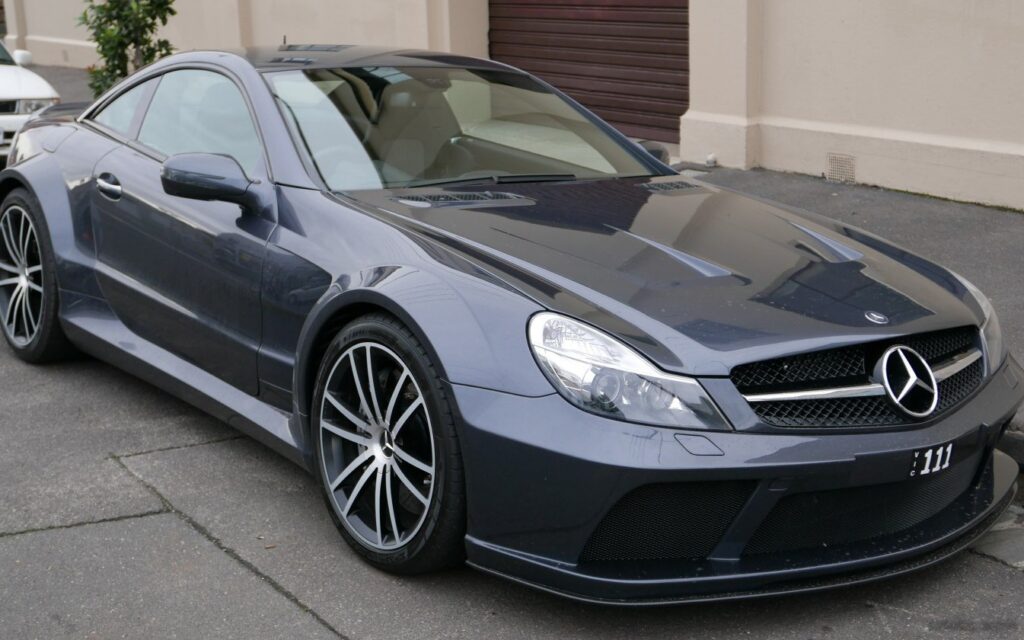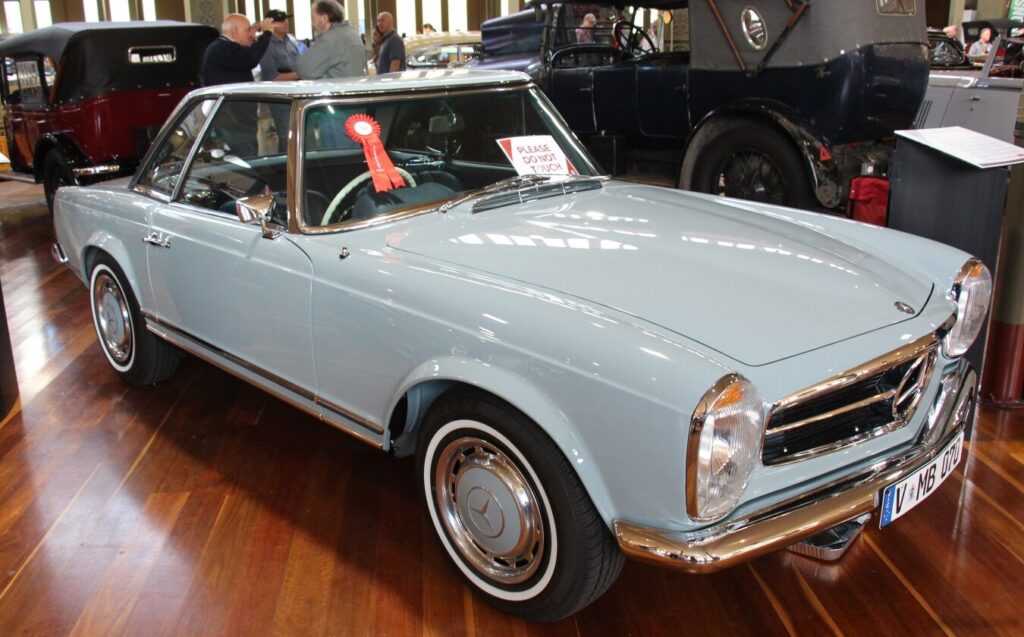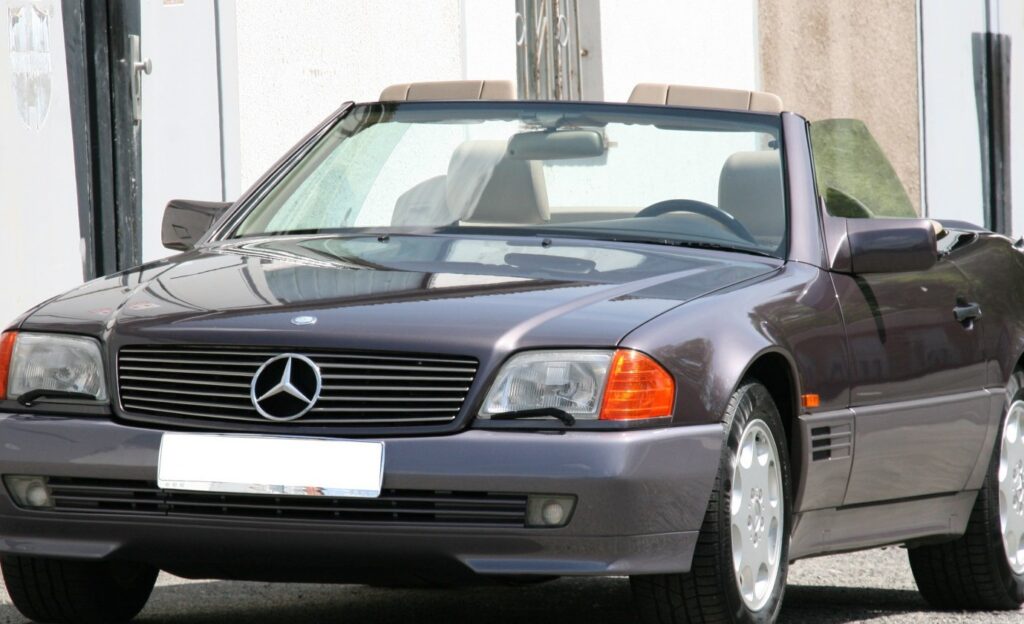
The Mercedes-Benz SL (R129) 500 SL V8 Automatic, produced from March 1989 to September 1992, represented the flagship of the R129 generation of the iconic SL roadster. This variant, powered by the M119.960 5.0-liter V8 engine paired with a four-speed automatic transmission, occupied the premium position within the R129 lineup. It was positioned above the 300 SL and 400 SL, offering significantly more performance and a more luxurious experience. The R129 series itself was a substantial redesign of the SL, introducing a host of new technologies and safety features, and marked a return to the traditional roadster layout after the controversial R107 generation.
Powertrain & Engine Architecture
At the heart of the 500 SL was the M119.960 engine, a 4,973 cc (303.47 cu. in.) naturally aspirated V8. This engine featured a cast iron block and aluminum cylinder heads, employing multi-port fuel injection. The valvetrain consisted of dual overhead camshafts (DOHC) with four valves per cylinder, contributing to its impressive power output. The engine produced 326 horsepower at 5,500 rpm and 450 Nm (331.9 lb-ft) of torque at 4,000 rpm. Compression ratio was set at 10:1. Engine oil capacity was 8 liters (8.45 US qt / 7.04 UK qt), and it required a specific oil specification.
The engine was mated to a four-speed automatic transmission, a robust unit designed to handle the substantial torque output. While not offering the driver engagement of a manual transmission, the automatic provided smooth and effortless cruising, aligning with the grand touring nature of the 500 SL. The drivetrain configuration was rear-wheel drive, with the engine mounted longitudinally in the front of the vehicle.
Engine Code Specifics
The M119 engine family was known for its durability and relatively straightforward maintenance. The 500 SL variant, specifically, benefited from Mercedes-Benz’s engineering focus on reliability. However, like all vehicles of this era, preventative maintenance, particularly regarding cooling system components and vacuum lines, was crucial to long-term health.
Driving Characteristics
The 500 SL Automatic delivered a markedly different driving experience compared to the lower-powered SL variants. Acceleration from 0 to 100 km/h (0-62 mph) was achieved in 6.2 seconds, and 0-60 mph in a calculated 5.9 seconds. Top speed was electronically limited to 250 km/h (155.34 mph). The automatic transmission, while smooth, did result in some power loss compared to a manual transmission, but the convenience and ease of use were highly valued by the target demographic.
The power delivery was characterized by a broad torque curve, providing ample acceleration in most driving situations. The four-speed automatic’s gear ratios were optimized for both cruising and spirited driving, though it lacked the close ratios of a modern transmission. The car felt substantial and planted on the road, offering a comfortable and refined ride.
Equipment & Trim Levels
The 500 SL Automatic came standard with a comprehensive list of features befitting its flagship status. These included leather upholstery, power-adjustable seats, climate control, a high-quality sound system, and power windows and locks. The interior trim was typically finished in wood veneer, adding to the luxurious ambiance.
Optional extras were plentiful, including a driver and passenger airbag system (a significant safety feature for its time), a premium sound system with a CD changer, and various exterior color options. The R129 SL also offered the option of a removable hardtop, providing coupe-like comfort and security during inclement weather. The standard soft top was well-insulated and featured a glass rear window.
Chassis & Braking
The R129 SL featured a robust chassis designed to handle the power of the 500 SL variant. The front suspension utilized coil springs, wishbones, and a transverse stabilizer bar, while the rear suspension employed an independent multi-link setup with coil springs and a transverse stabilizer bar. This suspension configuration provided a comfortable ride while maintaining good handling characteristics.
Braking duties were handled by ventilated discs at the front (300 mm) and discs at the rear (278 mm). An Anti-lock Braking System (ABS) was standard, enhancing safety and control during hard braking. The steering system was a cone worm with recirculation balls, assisted by hydraulic power steering.
Market Reception & Comparison
The 500 SL Automatic was generally well-received by automotive critics. It was praised for its powerful engine, luxurious interior, and comfortable ride. However, some critics noted the relatively slow acceleration compared to contemporary sports cars, attributing this to the weight of the vehicle and the inherent limitations of the four-speed automatic transmission.
Compared to the 300 SL and 400 SL, the 500 SL offered a significant performance advantage. Fuel economy, however, was considerably lower. The 500 SL consumed 16.6 l/100 km (14.2 US mpg / 17 UK mpg) in urban driving, 10.1 l/100 km (23.3 US mpg / 28 UK mpg) in extra-urban driving, and 12 l/100 km (19.6 US mpg / 23.5 UK mpg) combined. The 500 SL targeted buyers who prioritized performance and luxury over fuel efficiency.
Technical Specifications
| Brand | Mercedes-Benz |
| Model | SL |
| Generation | SL (R129) |
| Type (Engine) | 500 SL V8 (326 Hp) Automatic |
| Start of production | March, 1989 |
| End of production | September, 1992 |
| Powertrain Architecture | Internal Combustion engine |
| Body type | Roadster |
| Seats | 2 |
| Doors | 2 |
| Fuel consumption (economy) – urban | 16.6 l/100 km (14.2 US mpg / 17 UK mpg) |
| Fuel consumption (economy) – extra urban | 10.1 l/100 km (23.3 US mpg / 28 UK mpg) |
| Fuel consumption (economy) – combined | 12 l/100 km (19.6 US mpg / 23.5 UK mpg) |
| Fuel Type | Petrol (Gasoline) |
| Acceleration 0 – 100 km/h | 6.2 sec |
| Acceleration 0 – 62 mph | 6.2 sec |
| Acceleration 0 – 60 mph | 5.9 sec |
| Maximum speed | 250 km/h (155.34 mph) |
| Power | 326 Hp @ 5500 rpm |
| Torque | 450 Nm @ 4000 rpm (331.9 lb.-ft. @ 4000 rpm) |
| Maximum engine speed | 6000 rpm |
| Engine layout | Front, Longitudinal |
| Engine Model/Code | M 119.960 |
| Engine displacement | 4973 cm3 (303.47 cu. in.) |
| Number of cylinders | 8 |
| Engine configuration | V-engine |
| Cylinder Bore | 96.5 mm (3.8 in.) |
| Piston Stroke | 85 mm (3.35 in.) |
| Compression ratio | 10:1 |
| Number of valves per cylinder | 4 |
| Fuel injection system | Multi-port manifold injection |
| Engine aspiration | Naturally aspirated engine |
| Valvetrain | DOHC |
| Engine oil capacity | 8 l (8.45 US qt / 7.04 UK qt) |
| Coolant | 15.5 l (16.38 US qt / 13.64 UK qt) |
| Kerb Weight | 1770-1800 kg (3902.18 – 3968.32 lbs.) |
| Max. weight | 2160-2190 kg (4761.98 – 4828.12 lbs.) |
| Max load | 390 kg (859.8 lbs.) |
| Trunk (boot) space – minimum | 265 l (9.36 cu. ft.) |
| Fuel tank capacity | 80 l (21.13 US gal / 17.6 UK gal) |
| Length | 4470 mm (175.98 in.) |
| Width | 1812 mm (71.34 in.) |
| Height | 1303 mm (51.3 in.) |
| Wheelbase | 2515 mm (99.02 in.) |
| Drive wheel | Rear wheel drive |
| Number of gears and type of gearbox | 4 gears, automatic transmission |
Legacy
The M119 engine, as found in the 500 SL, is generally considered a durable and reliable powerplant when properly maintained. Common issues include cooling system failures (radiator, water pump, hoses) and vacuum leaks. The four-speed automatic transmission, while robust, can exhibit wear and tear over time, potentially leading to slipping or harsh shifting.
Today, the R129 500 SL Automatic remains a desirable classic car, appreciated for its combination of performance, luxury, and iconic styling. Well-maintained examples command a premium in the used car market. The car’s enduring appeal is a testament to Mercedes-Benz’s engineering prowess and the timeless design of the R129 generation.