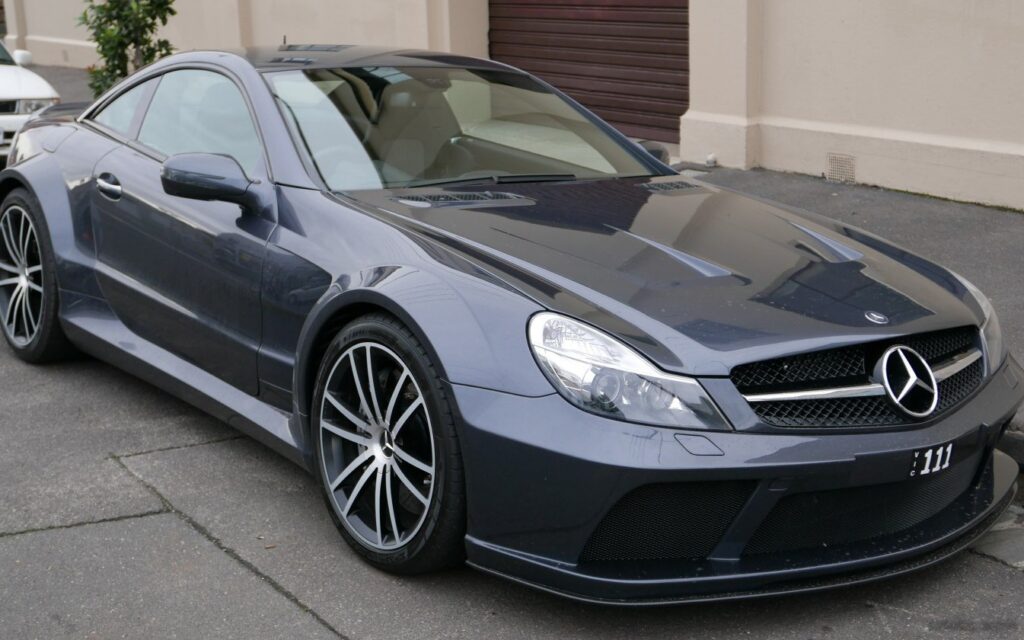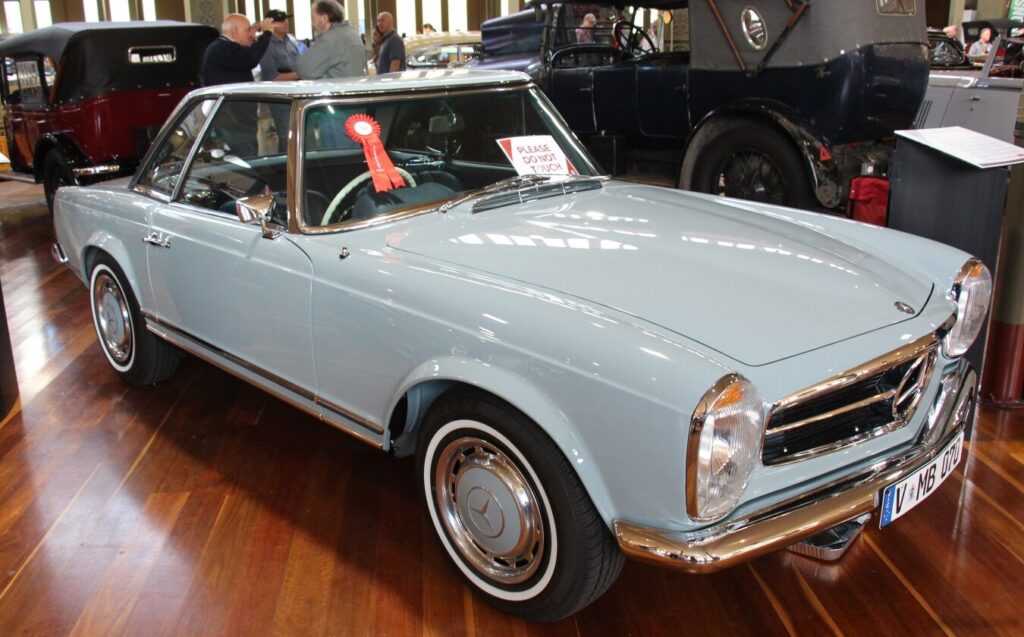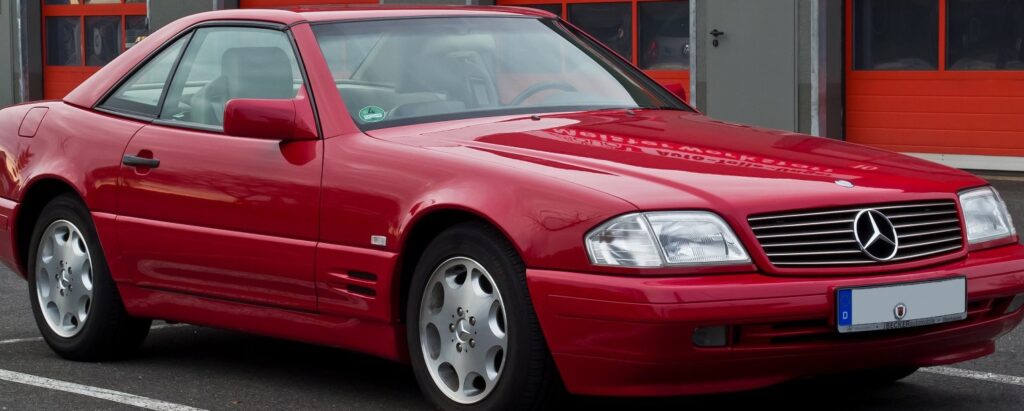
The Mercedes-Benz SL (R129) underwent a significant facelift in 1995, improving upon the already successful first generation of the modern SL roadster. Production of the R129 continued until 2001, and within its range, the AMG SL 60 V8, produced from April 1996 to May 1998, represented the pinnacle of performance. This variant, equipped with a naturally aspirated 6.0-liter V8 engine and a five-speed automatic transmission, was positioned as the flagship model, offering a substantial step up in power and luxury compared to the standard SL models like the SL280 or SL320. The R129 platform, shared with other Mercedes-Benz models of the era, provided a solid foundation for the high-performance AMG variant.
AMG SL 60: Powertrain & Engine Architecture
The heart of the AMG SL 60 is the M119 E 60 engine, a 5,956 cc (363.46 cu. in.) naturally aspirated V8. This engine, hand-built by AMG, featured a cast-iron block and aluminum cylinder heads. It boasted a bore of 100 mm (3.94 in.) and a stroke of 94.8 mm (3.73 in.), resulting in a compression ratio of 10:1. The engine utilized multi-port fuel injection and a double overhead camshaft (DOHC) valvetrain with four valves per cylinder. This configuration allowed for a high power output of 381 hp at 5,500 rpm and a substantial 580 Nm (427.79 lb-ft) of torque at 3,750 rpm. Power per liter was an impressive 64 hp/l.
The engine was paired with a five-speed automatic transmission, specifically designed to handle the high torque output. This transmission featured electronic control and offered smooth, yet responsive shifts. While not as overtly sporty as a manual transmission, the automatic was well-suited to the grand touring nature of the SL 60. The drivetrain is rear-wheel drive, delivering power to the rear wheels for a classic roadster driving experience.
Fuel System and Lubrication
The M119 E 60 engine employed a sophisticated multi-port fuel injection system, ensuring precise fuel delivery for optimal combustion. Engine oil specification details are available through Mercedes-Benz service documentation. The engine’s design prioritized both performance and reliability, utilizing robust components and a well-engineered cooling system to manage the heat generated by the high-output V8.
Driving Characteristics
The AMG SL 60 delivered a markedly different driving experience compared to the lower-powered SL variants. Acceleration from 0 to 100 km/h (0-62 mph) took just 5.8 seconds, while 0-60 mph was achieved in approximately 5.5 seconds. The electronically limited top speed of 250 km/h (155.34 mph) provided ample performance for highway cruising and spirited driving. The automatic transmission, while smooth, did slightly detract from the immediacy of response offered by a manual gearbox. However, the abundance of torque meant that the car felt strong and effortless in most driving situations. The weight-to-power ratio of 4.9 kg/hp and weight-to-torque ratio of 3.2 kg/Nm contributed to the car’s impressive performance.
The SL 60’s power delivery was linear and predictable, making it relatively easy to control, even for drivers unfamiliar with high-performance vehicles. The suspension, tuned for comfort and stability, provided a smooth ride, while still offering adequate handling for a grand tourer of its size and weight.
Equipment & Trim Levels
As the flagship model, the AMG SL 60 came standard with a comprehensive list of features. The interior was typically appointed with high-quality leather upholstery, often in exclusive color combinations. Standard features included power-adjustable seats with memory function, automatic climate control, a premium sound system, and a host of other luxury amenities. The dashboard configuration was consistent with the R129 facelift, featuring a redesigned instrument cluster and center console. Optional extras included upgraded sound systems, burl walnut trim, and various driver assistance features.
Chassis & Braking
The R129 chassis provided a robust and stable platform for the AMG SL 60. The front suspension utilized coil springs, wishbones, and a transverse stabilizer, while the rear suspension featured an independent multi-link setup with coil springs and a transverse stabilizer. This configuration provided a good balance between ride comfort and handling precision. Braking duties were handled by ventilated discs on all four wheels, coupled with an Anti-lock Braking System (ABS) for enhanced safety. The steering system was a cone worm with recirculation balls and hydraulic power assistance.
The SL 60 was equipped with 245/40 ZR 18 tires on the front and 275/35 ZR 18 tires on the rear, mounted on 8.5 J x 18 H2 and 10 J x 18 H2 wheels, respectively. These tires provided excellent grip and contributed to the car’s overall handling performance.
Market Reception & Comparison
The AMG SL 60 was generally well-received by automotive critics, who praised its powerful engine, luxurious interior, and comfortable ride. However, some critics noted that the automatic transmission lacked the engagement of a manual gearbox. Compared to the standard SL models, the SL 60 offered a significant performance advantage, but at a considerably higher price. It competed with other high-performance roadsters of the era, such as the Porsche 911 and the BMW Z8. Fuel consumption was relatively high, with combined figures of 11.5 l/100 km (20.5 US mpg, 24.6 UK mpg, 8.7 km/l), reflecting the engine’s large displacement and high output. The SL 60 met Euro 2 emission standards.
Technical Specifications
| Brand | Mercedes-Benz |
| Model | SL |
| Generation | SL (R129, facelift 1995) |
| Type (Engine) | AMG SL 60 V8 (381 Hp) Automatic |
| Start of production | April, 1996 |
| End of production | May, 1998 |
| Powertrain Architecture | Internal Combustion engine |
| Body type | Roadster |
| Seats | 2 |
| Doors | 2 |
| Fuel consumption (urban) | 16 l/100 km (14.7 US mpg, 17.7 UK mpg, 6.3 km/l) |
| Fuel consumption (extra urban) | 9.6 l/100 km (24.5 US mpg, 29.4 UK mpg, 10.4 km/l) |
| Fuel consumption (combined) | 11.5 l/100 km (20.5 US mpg, 24.6 UK mpg, 8.7 km/l) |
| Fuel Type | Petrol (Gasoline) |
| Acceleration 0 – 100 km/h | 5.8 sec |
| Acceleration 0 – 62 mph | 5.8 sec |
| Acceleration 0 – 60 mph | 5.5 sec |
| Maximum speed | 250 km/h (155.34 mph) |
| Emission standard | Euro 2 |
| Weight-to-power ratio | 4.9 kg/Hp |
| Weight-to-torque ratio | 3.2 kg/Nm |
| Power | 381 Hp @ 5500 rpm |
| Torque | 580 Nm @ 3750 rpm (427.79 lb.-ft. @ 3750 rpm) |
| Engine layout | Front, Longitudinal |
| Engine Model/Code | M 119 E 60 |
| Engine displacement | 5956 cm3 (363.46 cu. in.) |
| Number of cylinders | 8 |
| Engine configuration | V-engine |
| Cylinder Bore | 100 mm (3.94 in.) |
| Piston Stroke | 94.8 mm (3.73 in.) |
| Compression ratio | 10:1 |
| Number of valves per cylinder | 4 |
| Fuel injection system | Multi-port manifold injection |
| Engine aspiration | Naturally aspirated engine |
| Valvetrain | DOHC |
| Kerb Weight | 1855 kg (4089.57 lbs.) |
| Max. weight | 2230 kg (4916.31 lbs.) |
| Max load | 375 kg (826.73 lbs.) |
| Trunk (boot) space – minimum | 265 l (9.36 cu. ft.) |
| Fuel tank capacity | 80 l (21.13 US gal | 17.6 UK gal) |
| Length | 4499 mm (177.13 in.) |
| Width | 1812 mm (71.34 in.) |
| Height | 1296 mm (51.02 in.) |
| Wheelbase | 2515 mm (99.02 in.) |
| Front track | 1532 mm (60.31 in.) |
| Rear (Back) track | 1521 mm (59.88 in.) |
| Drag coefficient (Cd) | 0.32-0.40 |
| Minimum turning circle (turning diameter) | 10.7 m (35.1 ft.) |
| Drive wheel | Rear wheel drive |
| Number of gears and type of gearbox | 5 gears, automatic transmission |
Legacy
The AMG SL 60 remains a desirable classic car today, sought after by collectors and enthusiasts. The M119 engine is known for its durability and relatively straightforward maintenance, although parts can be expensive. Well-maintained examples command high prices in the used car market. The combination of performance, luxury, and iconic styling ensures that the AMG SL 60 will continue to be appreciated for years to come. While modern SL models offer more advanced technology and performance, the R129 AMG SL 60 represents a unique and compelling chapter in the history of the Mercedes-Benz SL.