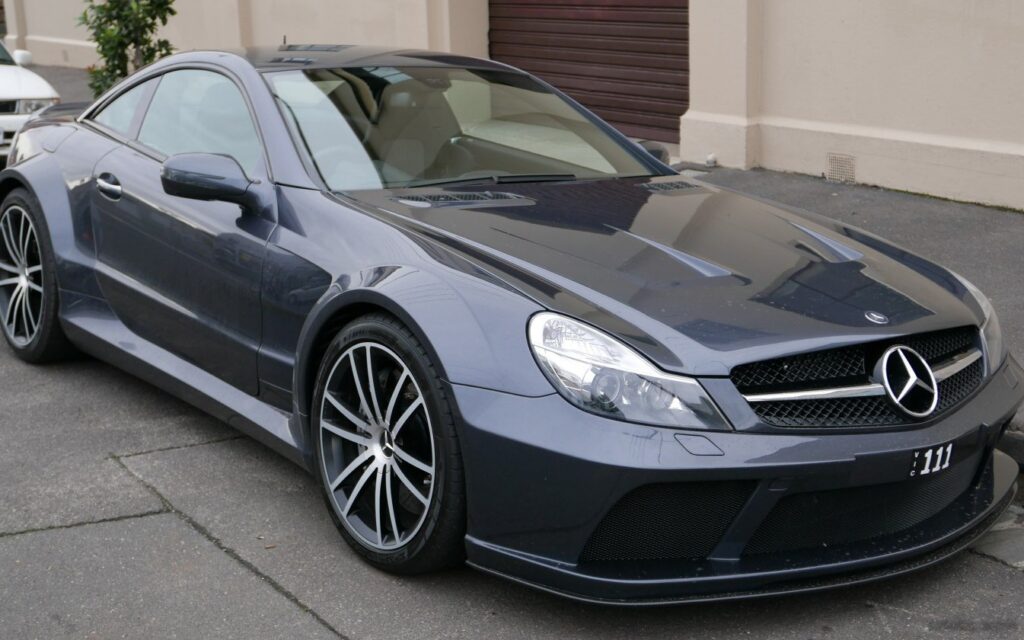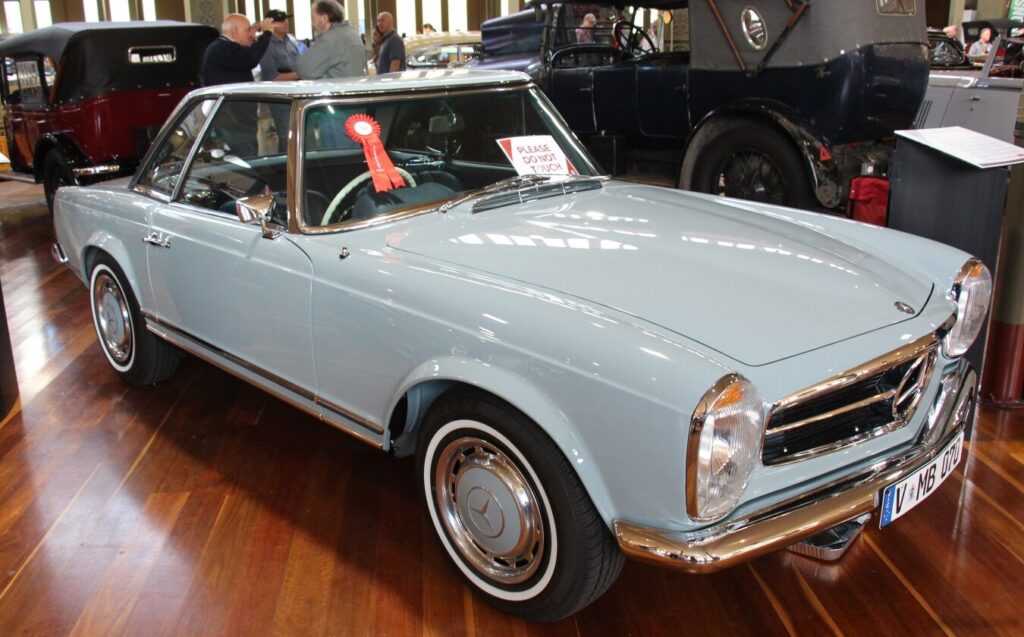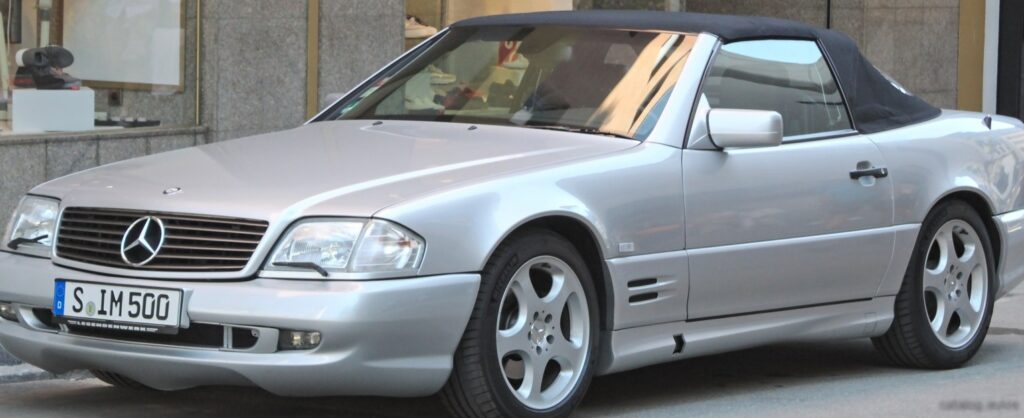
The Mercedes-Benz SL (R129) underwent a significant facelift in 1998, introducing updated styling, improved safety features, and revised engine options. The SL 280 V6, produced from June 1998 to June 2001, represented a compelling entry point into the R129 range, offering a blend of performance, luxury, and relative affordability. Positioned as the base model after the facelift, it catered to buyers seeking the iconic SL roadster experience without the higher price tags associated with the SL320, SL500, or the high-performance SL600. The R129 generation, built on the 129 platform, was the final SL generation with a removable hardtop, a feature highly valued by enthusiasts.
SL 280 V6 Powertrain & Engine Architecture
The heart of the SL 280 is the M112.923 engine, a 2.8-liter (2799 cc) naturally aspirated V6. This engine is a key member of the M112 family, known for its smooth operation and robust construction. It features a 60-degree V-angle, three valves per cylinder (two intake, one exhaust) operated by a single overhead camshaft (SOHC) per bank. The engine utilizes multi-port fuel injection, delivering fuel directly into the intake ports. The M112.923 produces 204 horsepower at 5700 rpm and 270 Nm (199.14 lb-ft) of torque between 3000 and 5000 rpm. The compression ratio is 10:1. Engine oil capacity is 8 liters (8.45 US quarts), and coolant capacity is 11.8 liters (12.47 US quarts).
While a five-speed manual transmission was offered in some European markets, the vast majority of SL 280 models were equipped with a five-speed automatic transmission (specifically the 722.6). This transmission, a staple in Mercedes-Benz vehicles of the era, is electronically controlled and offers smooth, albeit not particularly sporty, shifts. The automatic transmission’s gear ratios are optimized for comfortable cruising and adequate acceleration, prioritizing refinement over outright performance. The transmission’s shift points are designed to keep the engine within its optimal torque band, providing a relaxed driving experience.
Engine Code Specifics (M112.923)
The M112.923 engine benefitted from Mercedes-Benz’s engineering expertise, incorporating features like a magnesium alloy engine block for weight reduction and a silent chain drive for the camshafts. The engine’s design emphasized durability and ease of maintenance, contributing to its relatively good long-term reliability. The engine’s intake manifold design was optimized for airflow, contributing to its responsive throttle response. The engine is longitudinally mounted in the chassis, driving the rear wheels.
Driving Characteristics
The SL 280 V6, with its 204 hp and automatic transmission, delivers a comfortable and refined driving experience. Acceleration from 0 to 100 km/h (0-62 mph) takes approximately 9.5 seconds, while 0-60 mph is achieved in around 9 seconds. Top speed is electronically limited to 232 km/h (144.16 mph). Compared to the more powerful SL320 (with its supercharged inline-six) or the SL500 (with its V8), the SL 280 feels noticeably less urgent in its acceleration. However, it provides sufficient power for relaxed highway cruising and enjoyable backroad driving. The automatic transmission, while smooth, lacks the responsiveness of a manual gearbox, and downshifts can sometimes feel hesitant. The power delivery is linear, with the engine building revs smoothly and predictably. The weight-to-power ratio of 8.5 kg/hp and weight-to-torque ratio of 6.4 kg/Nm reflect the car’s substantial weight (1735 kg / 3825.02 lbs) relative to its output.
Equipment & Trim Levels
The SL 280 came standard with a generous array of features, befitting its luxury roadster status. Standard equipment included leather upholstery, automatic climate control, power-adjustable seats, a high-quality sound system, and alloy wheels. The interior featured wood trim accents, adding to the sense of luxury. The SL 280 also included safety features such as ABS (Anti-lock Braking System) and airbags. Optional extras included a premium sound system, heated seats, a sunroof, and upgraded leather upholstery. The exterior was typically finished in metallic paint, with a choice of colors available. The removable hardtop, a defining feature of the R129 SL, was standard, providing coupe-like security and weather protection when in place.
Chassis & Braking
The SL 280 utilizes a robust chassis with coil spring suspension and wishbone front suspension, complemented by an independent multi-link rear suspension. A transverse stabilizer bar is fitted to both the front and rear axles, reducing body roll during cornering. The braking system consists of ventilated discs at the front and solid discs at the rear. The hydraulic power steering provides a comfortable and precise steering feel. Tire size is 245/45 R 17 W, mounted on 8.25 J x 17 H 2 alloy wheels. The suspension tuning prioritizes ride comfort over outright handling sharpness, resulting in a smooth and compliant ride quality. The car’s substantial weight necessitates a capable braking system, and the ABS helps to maintain stability during hard braking.
Market Reception & Comparison
The SL 280 V6 was generally well-received by automotive critics as an accessible entry point into the R129 SL range. While its performance wasn’t as exhilarating as the higher-powered models, it offered a compelling combination of luxury, comfort, and reliability. Fuel economy, while not exceptional, was reasonable for a vehicle of its size and class, averaging around 11.4 l/100 km (20.6 US mpg) combined. Compared to the SL320, the SL 280 offered a lower purchase price but sacrificed some performance. The SL 280’s simpler engine design and lower output also translated to potentially lower maintenance costs over the long term. The SL 280’s CO2 emissions were rated at 272 g/km, meeting Euro 3 standards.
Technical Specifications
| Brand | Mercedes-Benz |
| Model | SL |
| Generation | SL (R129, facelift 1998) |
| Type (Engine) | SL 280 V6 (204 Hp) |
| Start of production | June, 1998 |
| End of production | June, 2001 |
| Powertrain Architecture | Internal Combustion engine |
| Body type | Roadster |
| Seats | 2 |
| Doors | 2 |
| Fuel consumption (economy) – urban (NEDC) | 16.2 l/100 km (14.5 US mpg, 17.4 UK mpg, 6.2 km/l) |
| Fuel consumption (economy) – extra urban (NEDC) | 8.7 l/100 km (27 US mpg, 32.5 UK mpg, 11.5 km/l) |
| Fuel consumption (economy) – combined (NEDC) | 11.4 l/100 km (20.6 US mpg, 24.8 UK mpg, 8.8 km/l) |
| CO2 emissions (NEDC) | 272 g/km |
| Fuel Type | Petrol (Gasoline) |
| Acceleration 0 – 100 km/h | 9.5 sec |
| Acceleration 0 – 62 mph | 9.5 sec |
| Acceleration 0 – 60 mph | 9 sec (Calculated) |
| Maximum speed | 232 km/h (144.16 mph) |
| Emission standard | Euro 3 |
| Weight-to-power ratio | 8.5 kg/Hp |
| Weight-to-torque ratio | 6.4 kg/Nm |
| Power | 204 Hp @ 5700 rpm |
| Torque | 270 Nm @ 3000-5000 rpm (199.14 lb.-ft. @ 3000-5000 rpm) |
| Engine layout | Front, Longitudinal |
| Engine Model/Code | M 112.923 |
| Engine displacement | 2799 cm3 (170.81 cu. in.) |
| Number of cylinders | 6 |
| Engine configuration | V-engine |
| Cylinder Bore | 89.9 mm (3.54 in.) |
| Piston Stroke | 73.5 mm (2.89 in.) |
| Compression ratio | 10:1 |
| Number of valves per cylinder | 3 |
| Fuel injection system | Multi-port manifold injection |
| Engine aspiration | Naturally aspirated engine |
| Valvetrain | SOHC |
| Engine oil capacity | 8 l (8.45 US qt | 7.04 UK qt) |
| Coolant | 11.8 l (12.47 US qt | 10.38 UK qt) |
| Kerb Weight | 1735 kg (3825.02 lbs.) |
| Max. weight | 2130 kg (4695.85 lbs.) |
| Max load | 395 kg (870.83 lbs.) |
| Trunk (boot) space – minimum | 265 l (9.36 cu. ft.) |
| Fuel tank capacity | 80 l (21.13 US gal | 17.6 UK gal) |
| Length | 4499 mm (177.13 in.) |
| Width | 1812 mm (71.34 in.) |
| Height | 1300 mm (51.18 in.) |
| Wheelbase | 2515 mm (99.02 in.) |
| Minimum turning circle | 10.7 m (35.1 ft.) |
| Drive wheel | Rear wheel drive |
| Number of gears | 5 |
| Gearbox type | Automatic transmission |
Legacy
The SL 280 V6, while not the most sought-after variant of the R129 generation, has proven to be a reliable and enjoyable classic roadster. The M112.923 engine is known for its durability, and with proper maintenance, can provide many years of service. Today, the SL 280 represents a relatively affordable entry point into R129 ownership, making it an attractive option for enthusiasts seeking a stylish and well-built convertible. Common issues include wear and tear on the hydraulic suspension components, potential leaks in the hydraulic convertible top system, and age-related deterioration of rubber seals. However, these issues are generally well-documented and can be addressed with proper maintenance and repair. The SL 280’s blend of luxury, comfort, and relative affordability ensures its continued appeal in the used car market.