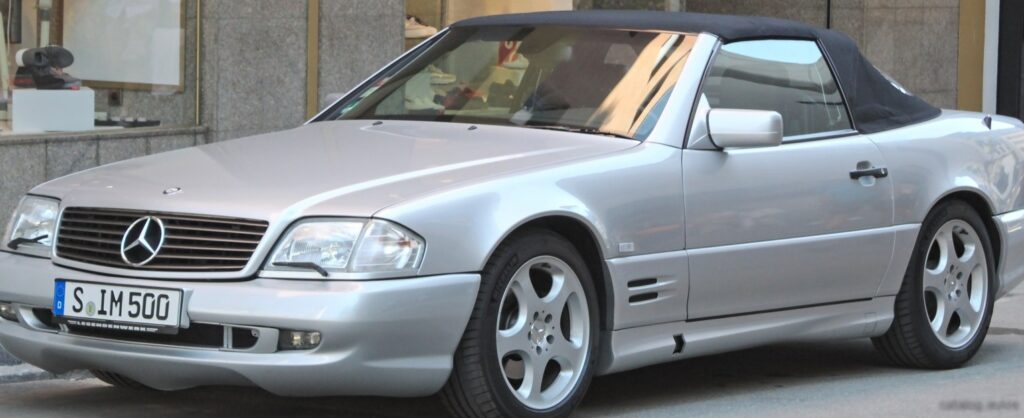
The Mercedes-Benz SL 280, part of the R129 generation following the 1998 facelift, represented a compelling blend of luxury, performance, and accessibility within the iconic SL roadster lineage. Produced from June 1998 to June 2001, this variant occupied a middle ground in the R129 lineup, offering a naturally aspirated V6 engine paired exclusively with an automatic transmission. It was positioned as a more attainable entry point into the SL experience compared to the higher-performance SL320, SL500, and SL600 models, while still delivering the open-air motoring experience and sophisticated engineering expected of the SL badge.
The R129 SL 280: A Detailed Overview
The R129 SL underwent a significant facelift in 1998, addressing some criticisms leveled at the original design launched in 1989. This refresh included revised styling cues, improved safety features, and updated engine options. The SL 280, introduced with this facelift, utilized the M112.923 2.8-liter V6 engine, a significant departure from the earlier inline-six configurations. This engine was designed to provide a balance between performance and fuel efficiency, appealing to buyers who prioritized a comfortable grand touring experience over outright speed.
Powertrain & Engine Architecture
At the heart of the SL 280 lies the M112.923 V6 engine, a 2,799 cc (170.81 cubic inches) naturally aspirated powerplant. This engine features a 60-degree V-angle, three valves per cylinder (two intake, one exhaust), and a single overhead camshaft (SOHC) design. The M112 engine family was notable for its all-aluminum construction, contributing to a lighter overall weight compared to previous Mercedes-Benz engines. Fuel delivery is managed by a multi-port manifold injection system, ensuring precise fuel atomization for optimal combustion. The engine produces 204 horsepower at 5,700 rpm and 270 Nm (199.14 lb-ft) of torque between 3,000 and 5,000 rpm.
The SL 280 was exclusively offered with a 5-speed automatic transmission. This transmission, a robust unit designed to handle the engine’s torque output, provided smooth and refined gear changes. While not offering the driver engagement of a manual transmission (which was not available on this model), the automatic transmission contributed to the SL 280’s overall comfort and ease of driving. The transmission’s gear ratios were tuned for a balance of acceleration and fuel economy, prioritizing relaxed cruising over aggressive performance.
Driving Characteristics
The SL 280’s driving experience is best described as refined and comfortable. The 204 hp V6 provides adequate power for relaxed cruising and occasional spirited driving. Acceleration from 0 to 60 mph takes approximately 9 seconds, and the car has a top speed of 141.67 mph (228 km/h). Compared to the SL320 or SL500, the SL 280 feels less urgent in its acceleration, but the difference is not dramatic. The automatic transmission contributes to a smooth and effortless driving experience, particularly in city traffic. The engine delivers a relatively flat torque curve, making it easy to maintain speed on highways and during overtaking maneuvers. However, drivers accustomed to the more powerful SL variants may find the SL 280’s performance somewhat underwhelming.
Equipment & Trim Levels
The SL 280 came standard with a generous array of features befitting a luxury roadster. Standard equipment typically included leather upholstery, automatic climate control, power-adjustable seats, a premium sound system, and alloy wheels. The R129 SL was also equipped with a sophisticated multi-link rear suspension, providing a comfortable and controlled ride. Optional extras included features such as a panoramic sunroof, upgraded sound systems, burl walnut trim, and various driver assistance systems. The interior design was characterized by its elegant simplicity and high-quality materials. The dashboard layout was straightforward and user-friendly, with all essential controls within easy reach of the driver.
Chassis & Braking
The R129 SL chassis is a robust and well-engineered structure, providing a solid foundation for the car’s handling characteristics. The front suspension utilizes coil springs, wishbones, and a transverse stabilizer bar, while the rear suspension features an independent multi-link setup with coil springs and a transverse stabilizer bar. This suspension configuration delivers a comfortable ride while maintaining good handling stability. The SL 280 is equipped with ventilated disc brakes at the front and solid disc brakes at the rear. Anti-lock braking system (ABS) is standard, enhancing braking performance and safety. The steering system is a cone worm with recirculation balls, providing precise and responsive steering feel. The car rides on 245/45 R 17 W tires mounted on 8.25 J x 17 H 2 alloy wheels.
Market Reception & Comparison
The SL 280 was generally well-received by automotive critics as a more accessible entry point into the SL range. While some reviewers noted that the V6 engine lacked the outright performance of the larger engines, they praised the car’s comfortable ride, refined interior, and overall build quality. Fuel economy was also a positive point, with combined fuel consumption figures of around 20.8 US mpg (11.3 l/100 km). Compared to the SL320, the SL 280 offered a lower purchase price but sacrificed some performance. The SL 280’s fuel economy was slightly better than the SL320, but the SL320 offered a more engaging driving experience. Reliability was generally good, although like all Mercedes-Benz vehicles of this era, the SL 280 requires regular maintenance to prevent issues.
Technical Specifications
| Brand | Mercedes-Benz |
| Model | SL |
| Generation | SL (R129, facelift 1998) |
| Type (Engine) | SL 280 V6 (204 Hp) Automatic |
| Start of production | June, 1998 |
| End of production | June, 2001 |
| Powertrain Architecture | Internal Combustion engine |
| Body type | Roadster |
| Seats | 2 |
| Doors | 2 |
| Fuel consumption (economy) – urban (NEDC) | 16 l/100 km (14.7 US mpg) |
| Fuel consumption (economy) – extra urban (NEDC) | 8.6 l/100 km (27.4 US mpg) |
| Fuel consumption (economy) – combined (NEDC) | 11.3 l/100 km (20.8 US mpg) |
| CO2 emissions (NEDC) | 270 g/km |
| Fuel Type | Petrol (Gasoline) |
| Acceleration 0 – 100 km/h | 9.5 sec |
| Acceleration 0 – 62 mph | 9.5 sec |
| Acceleration 0 – 60 mph | 9 sec |
| Maximum speed | 228 km/h (141.67 mph) |
| Emission standard | Euro 3 |
| Weight-to-power ratio | 8.5 kg/Hp |
| Weight-to-torque ratio | 6.4 kg/Nm |
| Power | 204 Hp @ 5700 rpm |
| Torque | 270 Nm @ 3000-5000 rpm (199.14 lb.-ft.) |
| Engine layout | Front, Longitudinal |
| Engine Model/Code | M 112.923 |
| Engine displacement | 2799 cm3 (170.81 cu. in.) |
| Number of cylinders | 6 |
| Engine configuration | V-engine |
| Cylinder Bore | 89.9 mm (3.54 in.) |
| Piston Stroke | 73.5 mm (2.89 in.) |
| Compression ratio | 10:1 |
| Number of valves per cylinder | 3 |
| Fuel injection system | Multi-port manifold injection |
| Engine aspiration | Naturally aspirated engine |
| Valvetrain | SOHC |
| Engine oil capacity | 8 l (8.45 US qt | 7.04 UK qt) |
| Coolant | 11.8 l (12.47 US qt | 10.38 UK qt) |
| Kerb Weight | 1735 kg (3825.02 lbs.) |
| Max. weight | 2130 kg (4695.85 lbs.) |
| Max load | 395 kg (870.83 lbs.) |
| Trunk (boot) space – minimum | 265 l (9.36 cu. ft.) |
| Fuel tank capacity | 80 l (21.13 US gal | 17.6 UK gal) |
| Length | 4499 mm (177.13 in.) |
| Width | 1812 mm (71.34 in.) |
| Height | 1300 mm (51.18 in.) |
| Wheelbase | 2515 mm (99.02 in.) |
Legacy
The SL 280, while not the most sought-after variant of the R129 generation, remains a desirable classic roadster. The M112 V6 engine is generally considered reliable, although regular maintenance is crucial to prevent issues such as oil leaks and sensor failures. The automatic transmission is also known for its durability. Today, the SL 280 represents a relatively affordable way to experience the R129 SL’s iconic design and luxurious features. Values have been steadily increasing in recent years as collectors recognize the appeal of this well-rounded and refined roadster. Its blend of comfort, style, and relative affordability makes it an attractive option for enthusiasts seeking a classic Mercedes-Benz experience.