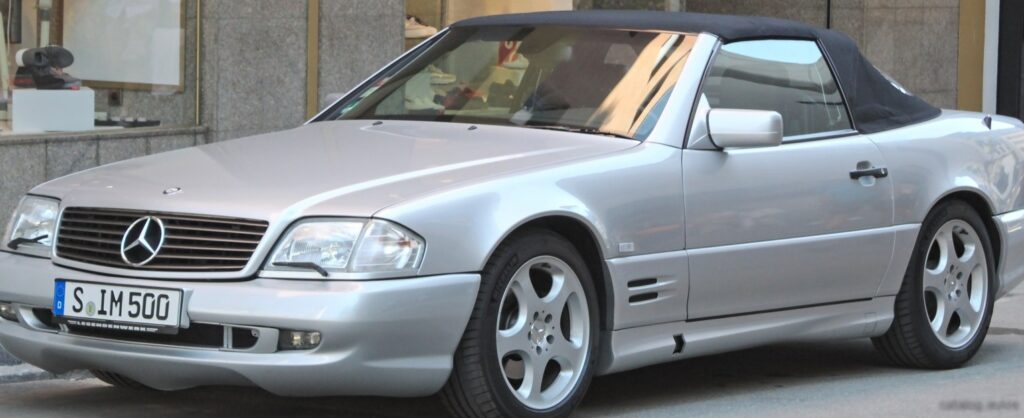
The Mercedes-Benz SL (R129) underwent a significant facelift in 1998, introducing numerous improvements to the already successful roadster. Among the variants offered, the SL 500 V8 with a 306 horsepower engine and automatic transmission represented a compelling blend of performance and luxury. Produced from June 1998 to July 2001, this model occupied a premium position within the R129 lineup, offering a substantial step up in power and refinement compared to the entry-level SL 280 and mid-range SL 320. It served as a more accessible alternative to the high-performance SL 600, which featured a V12 engine.
SL 500 V8: Powertrain & Engine Architecture
The heart of the SL 500 was the M113.961 engine, a 4.966-liter (303.04 cubic inches) naturally aspirated V8. This engine was a significant departure from the earlier M119 V8s used in the R129, featuring a more modern design with increased efficiency and power output. It produced 306 horsepower at 5600 rpm and 460 Nm (339.28 lb-ft) of torque between 2700 and 4250 rpm. The engine employed multi-port fuel injection and a single overhead camshaft (SOHC) valvetrain with three valves per cylinder. Bore and stroke dimensions were 97 mm (3.82 in) and 84 mm (3.31 in) respectively, resulting in a compression ratio of 10:1.
The engine was paired with a five-speed automatic transmission, a robust unit designed to handle the substantial torque output. This transmission offered smooth and refined shifts, contributing to the overall luxurious driving experience. The drivetrain configuration was rear-wheel drive, typical for a grand touring roadster of this era. Engine oil capacity was 8 liters (8.45 US qt / 7.04 UK qt), and the engine required 13 liters (13.74 US qt / 11.44 UK qt) of coolant.
Engine Code & Fuel System
The M113 engine family was known for its reliability and relatively straightforward maintenance. The multi-port fuel injection system, while not as advanced as direct injection, provided consistent fuel delivery and contributed to the engine’s smooth operation. The engine’s design prioritized low-end torque, making it a comfortable and effortless cruiser.
Driving Characteristics
The SL 500 V8 offered a distinctly different driving experience compared to its siblings. While the SL 280 and SL 320 focused on fuel efficiency and balanced handling, the SL 500 prioritized effortless power and a more relaxed driving style. Acceleration from 0 to 100 km/h (0-62 mph) took approximately 6.5 seconds, and 0-60 mph was achieved in around 6.2 seconds. Top speed was electronically limited to 250 km/h (155.34 mph). The automatic transmission, while not offering the engagement of a manual gearbox, provided seamless gear changes and allowed the driver to focus on enjoying the open road.
The V8 engine’s torque curve meant that strong acceleration was available across a wide range of engine speeds. This made overtaking maneuvers easy and confident. Compared to the SL 600, the SL 500 felt more agile and responsive, due to its lower weight. However, it lacked the sheer brute force and ultimate refinement of the V12 model.
Equipment & Trim Levels
The SL 500 V8 came generously equipped as standard. Leather upholstery was standard, along with power-adjustable seats, automatic climate control, and a high-quality sound system. The interior featured wood trim and a refined dashboard layout. Optional extras included a premium sound system, upgraded leather, a panoramic sunroof, and various driver assistance systems. The R129 facelift brought improvements to the interior design and materials, enhancing the overall sense of luxury.
The exterior styling of the SL 500 was largely consistent with other R129 models, but it often featured larger alloy wheels and subtle badging to denote its higher specification. The body style was a classic two-door roadster configuration, with seating for two passengers.
Chassis & Braking
The SL 500 V8 utilized a robust chassis designed to handle the engine’s power and provide a comfortable ride. Front suspension consisted of coil springs, wishbones, and a transverse stabilizer bar. The rear suspension employed an independent multi-link setup with coil springs and a transverse stabilizer bar. This suspension configuration provided a good balance between handling and ride comfort.
Braking duties were handled by ventilated discs at the front and solid discs at the rear. Anti-lock braking system (ABS) was standard, enhancing safety and control. The steering system was a cone worm with recirculation balls and hydraulic power assistance, providing precise and responsive steering feel. The vehicle rode on 245/45 R 17 W tires mounted on 8.25 J x 17 H 2 wheels.
Market Reception & Comparison
The SL 500 V8 was generally well-received by automotive critics. It was praised for its powerful engine, smooth automatic transmission, and luxurious interior. Fuel economy, however, was a common criticism, with combined fuel consumption figures of 12.7 l/100 km (18.5 US mpg / 22.2 UK mpg). Compared to the SL 320, the SL 500 offered a significant performance upgrade, but at a higher price point. The SL 600 provided even greater performance and luxury, but its higher cost and more complex V12 engine made it a less popular choice.
In terms of reliability, the M113 engine proved to be a durable and dependable unit. However, like all older Mercedes-Benz models, the SL 500 V8 required regular maintenance to prevent issues. Common maintenance items included oil changes, coolant flushes, and inspection of the hydraulic suspension system.
Technical Specifications
| Brand | Mercedes-Benz |
| Model | SL |
| Generation | SL (R129, facelift 1998) |
| Type | SL 500 V8 (306 Hp) Automatic |
| Start of production | June, 1998 |
| End of production | July, 2001 |
| Powertrain Architecture | Internal Combustion engine |
| Body type | Roadster |
| Seats | 2 |
| Doors | 2 |
| Fuel consumption (urban) | 17.9 l/100 km (13.1 US mpg / 15.8 UK mpg) |
| Fuel consumption (extra urban) | 9.6 l/100 km (24.5 US mpg / 29.4 UK mpg) |
| Fuel consumption (combined) | 12.7 l/100 km (18.5 US mpg / 22.2 UK mpg) |
| CO2 emissions | 300 g/km |
| Fuel Type | Petrol (Gasoline) |
| Acceleration 0 – 100 km/h | 6.5 sec |
| Acceleration 0 – 62 mph | 6.5 sec |
| Acceleration 0 – 60 mph | 6.2 sec |
| Maximum speed | 250 km/h (155.34 mph) |
| Emission standard | Euro 3 |
| Weight-to-power ratio | 5.9 kg/Hp |
| Weight-to-torque ratio | 3.9 kg/Nm |
| Power | 306 Hp @ 5600 rpm |
| Torque | 460 Nm @ 2700-4250 rpm (339.28 lb.-ft.) |
| Engine layout | Front, Longitudinal |
| Engine Model/Code | M 113.961 |
| Engine displacement | 4966 cm3 (303.04 cu. in.) |
| Number of cylinders | 8 |
| Engine configuration | V-engine |
| Cylinder Bore | 97 mm (3.82 in) |
| Piston Stroke | 84 mm (3.31 in) |
| Compression ratio | 10:1 |
| Number of valves per cylinder | 3 |
| Fuel injection system | Multi-port manifold injection |
| Engine aspiration | Naturally aspirated |
| Valvetrain | SOHC |
| Engine oil capacity | 8 l (8.45 US qt / 7.04 UK qt) |
| Coolant capacity | 13 l (13.74 US qt / 11.44 UK qt) |
| Kerb Weight | 1815 kg (4001.39 lbs) |
| Max. weight | 2210 kg (4872.22 lbs) |
| Max load | 395 kg (870.83 lbs) |
| Trunk (boot) space | 265 l (9.36 cu. ft) |
| Fuel tank capacity | 80 l (21.13 US gal / 17.6 UK gal) |
| Length | 4499 mm (177.13 in) |
| Width | 1812 mm (71.34 in) |
| Height | 1300 mm (51.18 in) |
| Wheelbase | 2515 mm (99.02 in) |
| Front track | 1535 mm (60.43 in) |
| Rear track | 1525 mm (60.04 in) |
| Drag coefficient (Cd) | 0.33-0.40 |
| Minimum turning circle | 10.7 m (35.1 ft) |
| Drivetrain | Rear wheel drive |
| Number of gears | 5 |
| Gearbox type | Automatic transmission |
Legacy
Today, the SL 500 V8 (R129) remains a desirable classic roadster. Its combination of performance, luxury, and relative reliability has ensured its continued appeal to enthusiasts. While maintenance costs can be higher than more modern vehicles, the M113 engine is generally considered to be a robust and long-lasting unit. Well-maintained examples command respectable prices in the used car market, reflecting the enduring quality and timeless design of the R129 generation Mercedes-Benz SL.