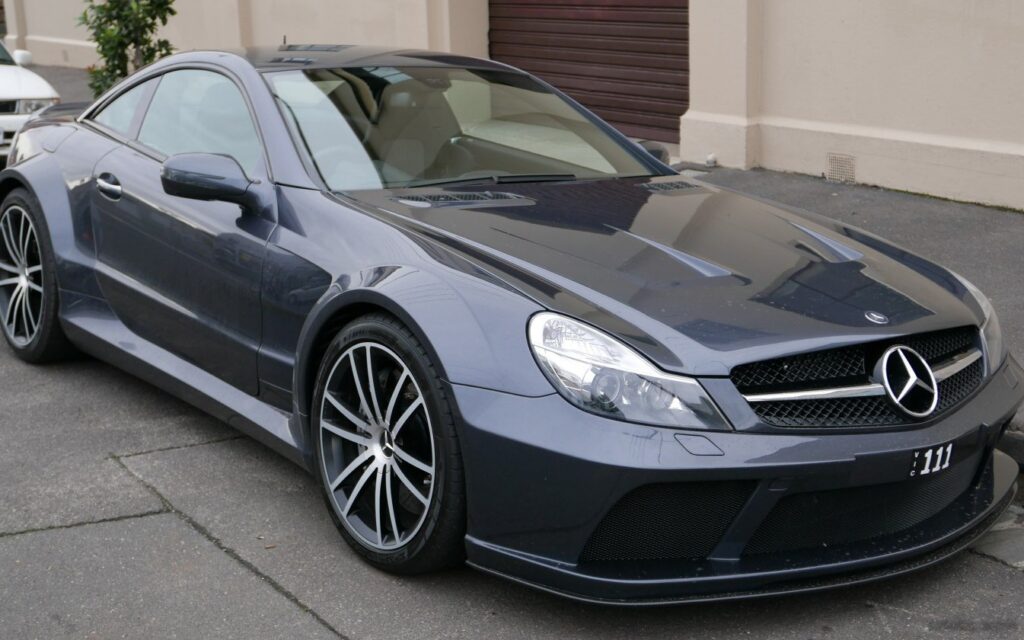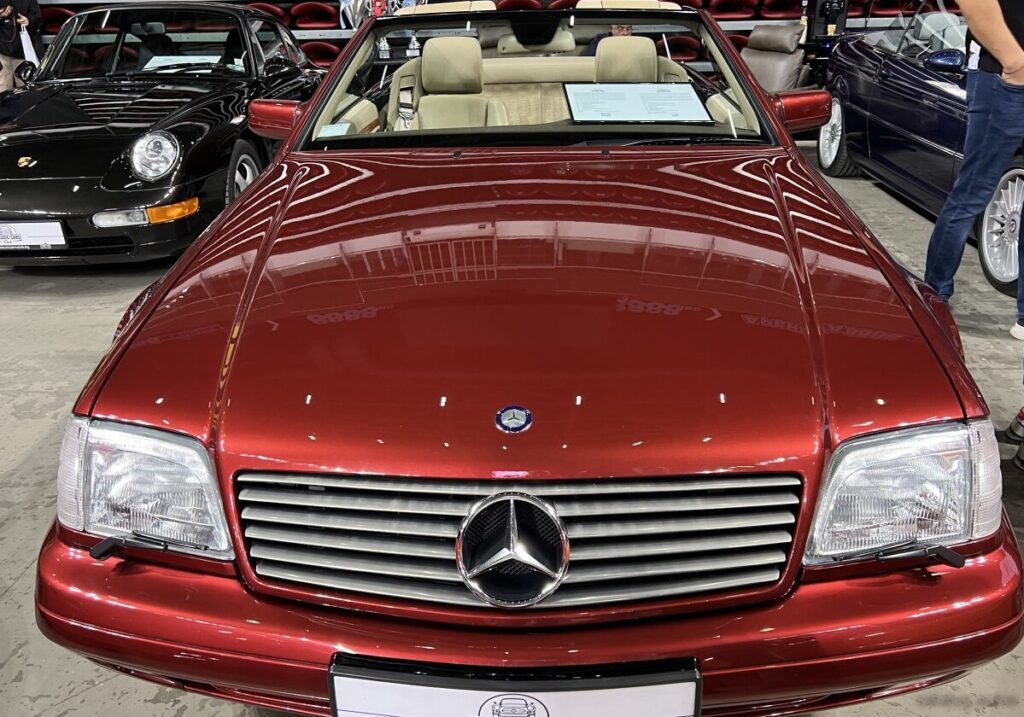
The Mercedes-Benz SL 500 V8 (R129, facelift model) represents a high-performance iteration of the iconic SL roadster, produced between September 1995 and June 1998. Part of the R129 generation, which spanned from 1989 to 2001, the facelifted SL 500 occupied the premium position within the lineup, offering a significant step up in power and refinement compared to the entry-level SL 280 and mid-range SL 320 models. It was positioned as a grand touring vehicle, blending luxury, performance, and open-air driving enjoyment.
SL 500 V8: Powertrain & Engine Architecture
The heart of the SL 500 is the M119.972 5.0-liter (4973 cm3 or 303.47 cu. in.) naturally aspirated V8 engine. This engine is a cornerstone of Mercedes-Benz engineering from the era, known for its robust construction and smooth power delivery. It features a 96.5 mm bore and 85 mm stroke, resulting in a compression ratio of 11:1. The engine utilizes a multi-port manifold fuel injection system and a double overhead camshaft (DOHC) valvetrain with four valves per cylinder. The M119 engine family was renowned for its over-engineering and durability, designed to provide years of reliable service.
Power output is rated at 320 horsepower (hp) at 5600 rpm and 470 Newton-meters (346.65 lb-ft) of torque at 3900 rpm. The engine is longitudinally mounted in the front of the vehicle. The SL 500 exclusively paired this engine with a 5-speed automatic transmission, designed to handle the substantial torque output. This transmission was a sophisticated unit for its time, offering smooth shifts and a relatively wide range of gear ratios optimized for both acceleration and cruising.
Transmission Details
The 5-speed automatic transmission used in the SL 500 was a robust unit, but not without its quirks. Early versions (pre-facelift R129) were known to exhibit occasional harsh shifting, a characteristic largely addressed in the 1995 facelift. The transmission’s gear ratios were tuned to provide brisk acceleration while maintaining comfortable highway cruising. While not as fuel-efficient as a manual transmission, the automatic offered a more relaxed driving experience, aligning with the SL 500’s grand touring character.
Driving Characteristics
The SL 500 delivers a distinctly different driving experience compared to its lower-powered siblings. The substantial torque of the V8 engine provides effortless acceleration in virtually any gear. Acceleration from 0 to 60 mph is achieved in approximately 6.2-6.5 seconds, and the car is electronically limited to a top speed of 250 km/h (155.34 mph). The automatic transmission, while smooth, doesn’t offer the same level of driver engagement as a manual gearbox. However, it contributes to the car’s overall ease of use and comfort. The weight distribution, while front-heavy due to the engine placement, is well-managed by the sophisticated suspension system.
Compared to the SL 320, the SL 500 offers a noticeable increase in performance, particularly in mid-range acceleration. The SL 280, being the entry-level model, felt significantly less powerful and lacked the effortless cruising ability of the SL 500. The SL 500’s power delivery is linear and predictable, making it a relatively easy car to drive quickly, but it also demands respect due to its considerable weight and power.
Equipment & Trim Levels
The SL 500 came standard with a comprehensive list of features befitting its premium status. Interior appointments included leather upholstery, wood trim, and power-adjustable seats. Standard equipment also included automatic climate control, a premium sound system, and power windows and locks. The facelifted models (1995-1998) benefited from revised interior trim and updated switchgear compared to earlier R129s.
Optional extras were plentiful, allowing buyers to customize their SL 500 to their preferences. These included features such as a Bose sound system, heated seats, a panoramic sunroof, and various exterior color options. The SL 500 was often specified with the AMG styling package, which included unique bodywork, wheels, and interior trim.
Chassis & Braking
The R129 SL chassis is a robust unit, featuring a coil spring, wishbone suspension at the front and an independent multi-link suspension at the rear, both incorporating a transverse stabilizer bar. This suspension setup provides a comfortable ride while maintaining good handling characteristics. The SL 500, due to its higher weight, often featured slightly stiffer springs and dampers compared to the lower-powered models.
Braking duties are handled by ventilated discs on all four wheels, assisted by an Anti-lock Braking System (ABS). The braking system is effective and provides ample stopping power, even under demanding conditions. The steering is a cone worm with recirculation balls and hydraulic power assistance, offering a relatively direct feel.
Market Reception & Comparison
The SL 500 was generally well-received by automotive critics, who praised its powerful engine, luxurious interior, and comfortable ride. However, some critics noted the car’s considerable weight and the lack of a manual transmission option. Fuel economy was also a point of concern, with combined fuel consumption averaging 11.5 l/100 km (20.5 US mpg). Compared to other grand tourers of the era, such as the BMW 8 Series and the Porsche 911, the SL 500 offered a unique blend of luxury, performance, and open-air driving enjoyment.
In terms of reliability, the M119 engine is generally considered to be very durable, but maintenance can be expensive due to the complexity of the engine and the age of the vehicle. The automatic transmission, while robust, can require attention as it ages. The R129 SL, in general, is known for its complex electronics, which can be prone to failure.
Technical Specifications
| Brand | Mercedes-Benz |
| Model | SL |
| Generation | SL (R129, facelift 1995) |
| Type (Engine) | SL 500 V8 (320 Hp) Automatic |
| Start of production | September, 1995 |
| End of production | June, 1998 |
| Powertrain Architecture | Internal Combustion engine |
| Body type | Roadster |
| Seats | 2 |
| Doors | 2 |
| Fuel consumption (urban) | 16 l/100 km (14.7 US mpg) |
| Fuel consumption (extra urban) | 9.6 l/100 km (24.5 US mpg) |
| Fuel consumption (combined) | 11.5 l/100 km (20.5 US mpg) |
| Fuel Type | Petrol (Gasoline) |
| Acceleration 0 – 100 km/h | 6.5 sec |
| Acceleration 0 – 62 mph | 6.5 sec |
| Acceleration 0 – 60 mph | 6.2 sec |
| Maximum speed | 250 km/h (155.34 mph) |
| Emission standard | Euro 2 |
| Weight-to-power ratio | 5.7 kg/Hp |
| Weight-to-torque ratio | 3.9 kg/Nm |
| Power | 320 Hp @ 5600 rpm |
| Torque | 470 Nm @ 3900 rpm (346.65 lb.-ft. @ 3900 rpm) |
| Engine layout | Front, Longitudinal |
| Engine Model/Code | M 119.972 |
| Engine displacement | 4973 cm3 (303.47 cu. in.) |
| Number of cylinders | 8 |
| Engine configuration | V-engine |
| Cylinder Bore | 96.5 mm (3.8 in.) |
| Piston Stroke | 85 mm (3.35 in.) |
| Compression ratio | 11:1 |
| Number of valves per cylinder | 4 |
| Fuel injection system | Multi-port manifold injection |
| Engine aspiration | Naturally aspirated engine |
| Valvetrain | DOHC |
| Engine oil capacity | 8 l (8.45 US qt | 7.04 UK qt) |
| Coolant | 15 l (15.85 US qt | 13.2 UK qt) |
| Kerb Weight | 1835 kg (4045.48 lbs.) |
| Max. weight | 2230 kg (4916.31 lbs.) |
| Max load | 395 kg (870.83 lbs.) |
| Trunk (boot) space – minimum | 265 l (9.36 cu. ft.) |
| Fuel tank capacity | 80 l (21.13 US gal | 17.6 UK gal) |
| Length | 4499 mm (177.13 in.) |
| Width | 1812 mm (71.34 in.) |
| Height | 1303 mm (51.3 in.) |
| Wheelbase | 2515 mm (99.02 in.) |
| Front track | 1535 mm (60.43 in.) |
| Rear (Back) track | 1523 mm (59.96 in.) |
| Drag coefficient (Cd) | 0.32-0.40 |
| Minimum turning circle (turning diameter) | 10.7 m (35.1 ft.) |
| Drivetrain Architecture | Rear wheel drive |
| Number of gears and type of gearbox | 5 gears, automatic transmission |
Legacy
Today, the SL 500 (R129) is a sought-after classic, appreciated for its combination of luxury, performance, and timeless design. Well-maintained examples command strong prices in the used car market. The M119 engine continues to be regarded as a highly durable and reliable powerplant, although regular maintenance is essential to prevent issues. The R129 SL, and particularly the SL 500, represents a high point in Mercedes-Benz roadster design and engineering, and remains a desirable vehicle for enthusiasts and collectors alike.