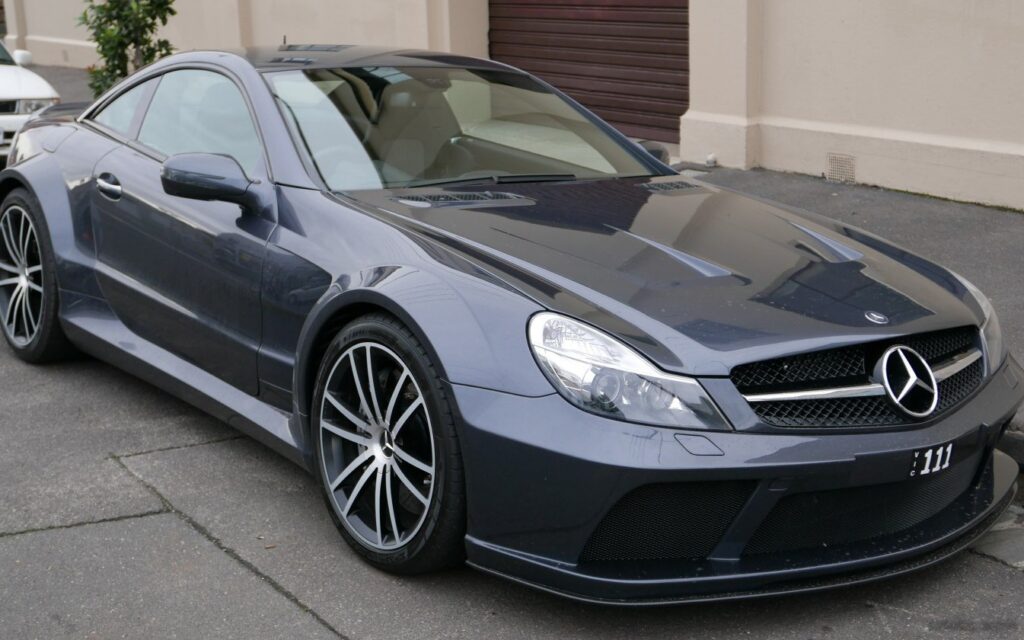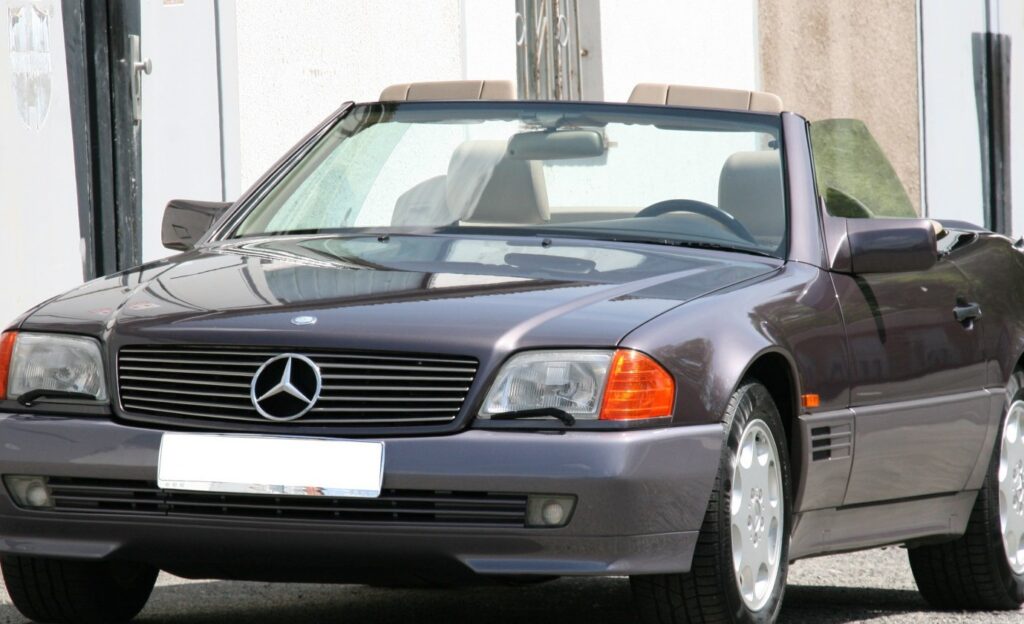
The Mercedes-Benz SL (R129) SL 280, produced between July 1993 and August 1995, represented a compelling entry point into the luxurious and technologically advanced R129 generation of the iconic SL roadster. Positioned as the base model within the initial R129 lineup, the SL 280 offered a blend of performance, comfort, and Mercedes-Benz engineering, appealing to buyers seeking a sophisticated open-top experience without the higher price tag of the more powerful variants. It was built on the 129 platform, known for its robust construction and advanced features for its time, including a fully automatic retractable hardtop – a first for the SL series.
Powertrain & Engine Architecture
The heart of the SL 280 is the M104.943 engine, a 2.8-liter (2799 cc) inline-six cylinder powerplant. This engine is a naturally aspirated, single overhead camshaft (SOHC) design, featuring multi-port fuel injection. The M104 engine family was known for its smoothness and reliability, and the SL 280’s version produced 193 horsepower at 5500 rpm and 270 Nm (199.14 lb-ft) of torque at 3750 rpm. The engine’s bore and stroke measured 89.9 mm (3.54 in) and 73.5 mm (2.89 in) respectively, with a compression ratio of 10:1. Engine oil capacity is 7 liters (7.4 US qt | 6.16 UK qt) and coolant capacity is 11.75 liters (12.42 US qt | 10.34 UK qt).
While a five-speed manual transmission was available, the vast majority of SL 280s were equipped with a four-speed automatic transmission (typically the 722.3). This automatic was a traditional hydraulic control unit, offering smooth shifts but lacking the responsiveness of more modern electronically controlled gearboxes. The automatic transmission was chosen by most buyers for its convenience and suitability for grand touring, aligning with the SL’s intended character.
Engine Management & Fuel System
The M104.943 engine utilized a Bosch Motronic engine management system, controlling fuel injection and ignition timing. The multi-port fuel injection system delivered fuel directly to each cylinder, optimizing combustion efficiency and contributing to the engine’s smooth operation. The engine met Euro 1 emission standards, which were relatively lenient compared to later regulations.
Driving Characteristics
The SL 280, with its 193 hp and automatic transmission, offered a relaxed and refined driving experience. Acceleration from 0 to 100 km/h (0-62 mph) took approximately 10.2 seconds, while 0-60 mph was achieved in around 9.7 seconds. Top speed was electronically limited to 230 km/h (142.92 mph). Compared to the later SL 320 or the more powerful V8 models, the SL 280 felt less urgent in its acceleration. However, the engine provided ample torque for comfortable cruising and effortless overtaking on the highway.
The four-speed automatic transmission, while smooth, did contribute to a slightly less engaging driving experience than the available five-speed manual. Gear ratios were optimized for fuel efficiency and comfortable cruising rather than outright performance. The automatic’s shift points were generally well-chosen, but lacked the responsiveness of more modern transmissions. The weight-to-power ratio of 9.1 kg/Hp and weight-to-torque ratio of 6.5 kg/Nm reflected the car’s substantial weight (1760 kg / 3880.14 lbs) relative to its output.
Equipment & Trim Levels
The SL 280 came standard with a generous array of features, reflecting its positioning as a luxury roadster. Standard equipment included leather upholstery, power windows, power locks, a premium sound system, and automatic climate control. The interior featured wood trim accents, adding to the sense of luxury. The standard seats were comfortable and supportive, designed for long-distance driving.
Optional extras included heated seats, a driver-side airbag (later made standard), upgraded sound systems, and various cosmetic enhancements. The SL 280 was available in a range of exterior colors, and buyers could choose from several leather upholstery options. While not as extensively customizable as higher-end SL models, the SL 280 offered sufficient options to personalize the vehicle to individual tastes.
Chassis & Braking
The R129 SL chassis was a robust and well-engineered structure, providing a solid foundation for the roadster’s handling characteristics. The SL 280 featured coil spring suspension with wishbones at the front and an independent multi-link suspension at the rear, both incorporating a transverse stabilizer bar. This suspension setup provided a comfortable ride while maintaining good handling stability.
Braking duties were handled by ventilated discs at the front and solid discs at the rear. The braking system was equipped with ABS (Anti-lock Braking System) as standard, enhancing safety and control during hard braking. The steering system was a cone worm with recirculation balls, providing a relatively direct steering feel, assisted by hydraulic power steering. The SL 280 rode on 225/55 ZR 16 tires mounted on 8 J x 16 H 2 alloy wheels.
Market Reception & Comparison
The SL 280 was generally well-received by automotive critics as an accessible entry point into the R129 SL range. It was praised for its comfortable ride, refined engine, and luxurious interior. However, some critics noted that its performance was not as exhilarating as that of the more powerful SL 320 or V8 models. Fuel economy was reasonable for a vehicle of its class, with combined fuel consumption of 9.9 l/100 km (23.8 US mpg / 28.5 UK mpg).
Compared to the SL 320, the SL 280 offered a lower purchase price but sacrificed some performance. The SL 320’s larger engine provided noticeably more power and torque, resulting in quicker acceleration and a more engaging driving experience. However, the SL 280’s smaller engine was generally considered more reliable and less prone to expensive repairs. The SL 280 also offered better fuel economy than the V8-powered SL models.
Technical Specifications
| Brand | Mercedes-Benz |
| Model | SL |
| Generation | SL (R129) |
| Type (Engine) | SL 280 (193 Hp) |
| Start of production | July, 1993 |
| End of production | August, 1995 |
| Powertrain Architecture | Internal Combustion engine |
| Body type | Roadster |
| Seats | 2 |
| Doors | 2 |
| Fuel consumption (urban) | 15 l/100 km (15.7 US mpg, 18.8 UK mpg) |
| Fuel consumption (extra urban) | 8.2 l/100 km (28.7 US mpg, 34.4 UK mpg) |
| Fuel consumption (combined) | 9.9 l/100 km (23.8 US mpg, 28.5 UK mpg) |
| Fuel Type | Petrol (Gasoline) |
| Acceleration 0 – 100 km/h | 10.2 sec |
| Acceleration 0 – 62 mph | 10.2 sec |
| Acceleration 0 – 60 mph | 9.7 sec |
| Maximum speed | 230 km/h (142.92 mph) |
| Emission standard | Euro 1 |
| Weight-to-power ratio | 9.1 kg/Hp |
| Weight-to-torque ratio | 6.5 kg/Nm |
| Power | 193 Hp @ 5500 rpm |
| Torque | 270 Nm @ 3750 rpm (199.14 lb.-ft. @ 3750 rpm) |
| Engine layout | Front, Longitudinal |
| Engine Model/Code | M 104.943 |
| Engine displacement | 2799 cm3 (170.81 cu. in.) |
| Number of cylinders | 6 |
| Engine configuration | Inline |
| Cylinder Bore | 89.9 mm (3.54 in.) |
| Piston Stroke | 73.5 mm (2.89 in.) |
| Compression ratio | 10:1 |
| Number of valves per cylinder | 4 |
| Fuel injection system | Multi-port manifold injection |
| Engine aspiration | Naturally aspirated engine |
| Valvetrain | DOHC |
| Engine oil capacity | 7 l (7.4 US qt | 6.16 UK qt) |
| Coolant | 11.75 l (12.42 US qt | 10.34 UK qt) |
| Kerb Weight | 1760 kg (3880.14 lbs.) |
| Max. weight | 2150 kg (4739.94 lbs.) |
| Max load | 390 kg (859.8 lbs.) |
| Trunk (boot) space – minimum | 265 l (9.36 cu. ft.) |
| Fuel tank capacity | 80 l (21.13 US gal | 17.6 UK gal) |
| Length | 4470 mm (175.98 in.) |
| Width | 1812 mm (71.34 in.) |
| Height | 1303 mm (51.3 in.) |
| Wheelbase | 2515 mm (99.02 in.) |
| Minimum turning circle | 10.7 m (35.1 ft.) |
| Drivetrain Architecture | Rear wheel drive |
| Number of gears | 5 (manual) / 4 (automatic) |
Legacy
The SL 280, while often overshadowed by its more powerful siblings, remains a desirable entry point into R129 ownership. The M104 engine is known for its durability and relatively straightforward maintenance. Today, well-maintained examples of the SL 280 can be found on the used car market at relatively affordable prices. The automatic transmission, while not as sporty as the manual, is generally reliable. The R129 SL, in general, is appreciated for its build quality and timeless design, and the SL 280 offers a taste of that experience without the premium price tag of the higher-spec models. Common issues to look for include wear and tear on the hydraulic suspension components, potential leaks in the hydraulic hardtop mechanism, and general age-related deterioration of rubber seals and hoses.