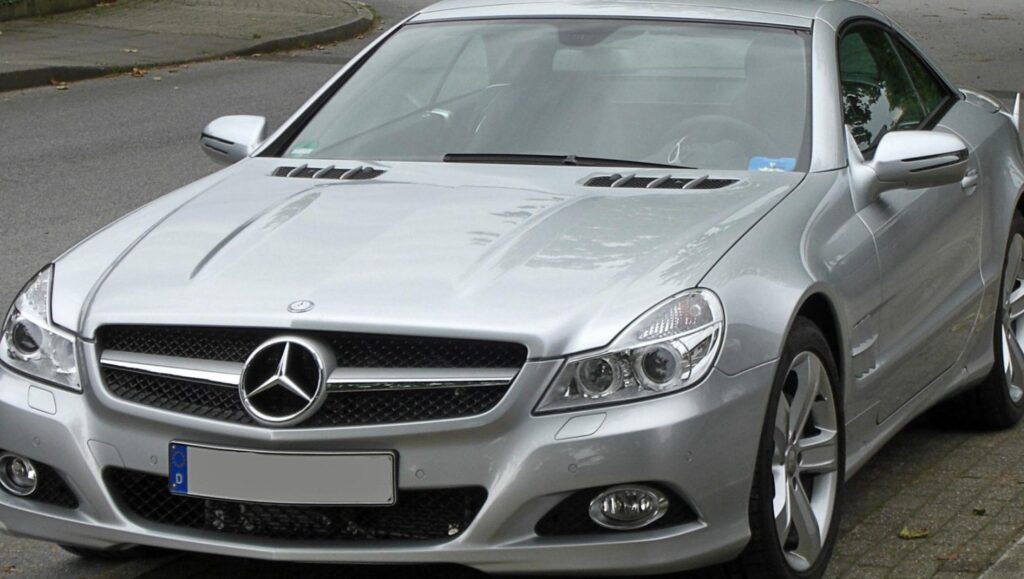
The Mercedes-Benz SL (R230) facelift, produced from 2008 to 2011, represented a significant evolution of the iconic SL roadster. Among the various engine options available, the SL 500 V8 with a 388 horsepower engine and automatic transmission occupied a sweet spot in the lineup, offering a blend of performance, luxury, and relative usability. This variant was positioned as the mid-range offering, sitting above the SL 350 and below the high-performance SL 63 AMG and SL 65 AMG models. It catered to buyers seeking a powerful and refined grand tourer without the extreme price tag or track-focused nature of the AMG variants.
SL 500 V8 (2008-2011): An Overview
The R230 SL facelift brought with it revised styling, updated technology, and improved efficiency compared to the pre-facelift models. The SL 500, powered by the M273 engine, was a key component of this refresh. It aimed to deliver a sophisticated driving experience, combining the open-air thrill of a roadster with the comfort and features expected of a luxury Mercedes-Benz. The introduction of the 7G-TRONIC automatic transmission further enhanced the car’s refinement and fuel economy.
Powertrain & Engine Architecture
At the heart of the SL 500 lay the M273.965 5.5-liter naturally aspirated V8 engine. This engine, a cornerstone of Mercedes-Benz’s engine lineup during the period, featured a three-valve per cylinder design (two intake, one exhaust) and a sophisticated multi-port fuel injection system. The engine produced 388 hp at 6000 rpm and 530 Nm (390.91 lb-ft) of torque between 2800 and 4800 rpm. The engine’s architecture was longitudinal, meaning it was mounted lengthwise in the chassis. The compression ratio was set at 10.7:1, optimizing for both performance and efficiency.
The engine was paired exclusively with Mercedes-Benz’s 7G-TRONIC seven-speed automatic transmission. This transmission was known for its smooth shifts and ability to adapt to driving conditions. It offered a range of driving modes, including a Comfort mode for relaxed cruising and a Sport mode for more responsive acceleration. The transmission’s gear ratios were carefully tuned to maximize the V8’s torque output and provide effortless highway cruising. The 7G-TRONIC also featured a manual shift mode, allowing drivers to take greater control over gear selection.
Driving Characteristics
The SL 500 offered a distinctly different driving experience compared to its siblings. While the SL 350 provided adequate performance for everyday driving, the SL 500 delivered a noticeable surge of power, making it more engaging on winding roads and during overtaking maneuvers. Compared to the more aggressively tuned AMG models, the SL 500 prioritized comfort and refinement. The suspension, while firm enough to provide good handling, was not overly harsh, ensuring a comfortable ride even on less-than-perfect road surfaces.
Acceleration from 0 to 100 km/h (0-62 mph) took approximately 5.4 seconds, and 0-60 mph was achieved in around 5.1 seconds. The electronically limited top speed of 250 km/h (155 mph) provided ample performance for most drivers. The 7G-TRONIC transmission played a crucial role in delivering smooth and seamless acceleration, minimizing any interruption in power delivery. The rear-wheel drive configuration contributed to a balanced and predictable handling characteristic.
Equipment & Trim Levels
The SL 500 came standard with a comprehensive list of features, reflecting its position as a luxury roadster. Standard equipment typically included leather upholstery, automatic climate control, power-adjustable seats with memory function, a premium sound system, and a retractable hardtop. The interior was designed with a focus on elegance and comfort, featuring high-quality materials and meticulous attention to detail.
Optional extras were plentiful, allowing buyers to customize their SL 500 to their specific preferences. Popular options included upgraded leather packages, a panoramic sunroof, a driver assistance package (including features like Distronic adaptive cruise control and lane keeping assist), and a premium audio system. The dashboard configuration was generally consistent across all R230 facelift models, with a central display screen providing access to various vehicle functions and settings.
Chassis & Braking
The SL 500 utilized a sophisticated chassis design, featuring an independent multi-link suspension at both the front and rear. This suspension setup provided a good balance between ride comfort and handling precision. Hydraulic elements were used in the suspension system to provide smooth and controlled damping. The car’s weight distribution was carefully optimized to enhance stability and handling.
Braking duties were handled by ventilated discs at all four corners, providing ample stopping power. The anti-lock braking system (ABS) was standard, enhancing safety and control during emergency braking situations. The steering system was a rack-and-pinion setup with hydraulic power assistance, offering precise and responsive steering feel. Standard tire size was 255/40 R18, mounted on 8.5J x 18 inch wheel rims.
Market Reception & Comparison
The SL 500 was generally well-received by automotive critics. It was praised for its powerful engine, refined transmission, comfortable ride, and luxurious interior. However, some critics noted that the car’s weight could make it feel less agile than some of its competitors. Fuel economy, while improved with the facelift, was still relatively low, reflecting the car’s large engine and substantial weight.
Compared to the SL 350, the SL 500 offered a significant performance upgrade, justifying its higher price tag for buyers seeking more power. Compared to the AMG models, the SL 500 provided a more comfortable and relaxed driving experience, making it a better choice for long-distance touring. The SL 500’s fuel consumption was generally better than the AMG variants, but its CO2 emissions were still relatively high at 272 g/km.
Technical Specifications
| Brand | Mercedes-Benz |
| Model | SL |
| Generation | SL (R230, facelift 2008) |
| Type (Engine) | SL 500 V8 (388 Hp) Automatic |
| Start of production | April, 2008 |
| End of production | December, 2011 |
| Powertrain Architecture | Internal Combustion engine |
| Body type | Roadster |
| Seats | 2 |
| Doors | 2 |
| Fuel consumption (urban) | 17.3 l/100 km (13.6 US mpg, 16.3 UK mpg) |
| Fuel consumption (extra urban) | 8.4 l/100 km (28 US mpg, 33.6 UK mpg) |
| Fuel consumption (combined) | 11.6 l/100 km (20.3 US mpg, 24.4 UK mpg) |
| CO2 emissions | 272 g/km |
| Fuel Type | Petrol (Gasoline) |
| Acceleration 0 – 100 km/h | 5.4 sec |
| Acceleration 0 – 62 mph | 5.4 sec |
| Acceleration 0 – 60 mph | 5.1 sec |
| Maximum speed | 250 km/h (155.34 mph) |
| Emission standard | Euro 5 |
| Weight-to-power ratio | 4.7 kg/Hp |
| Weight-to-torque ratio | 3.5 kg/Nm |
| Power | 388 Hp @ 6000 rpm |
| Torque | 530 Nm @ 2800-4800 rpm (390.91 lb.-ft. @ 2800-4800 rpm) |
| Engine layout | Front, Longitudinal |
| Engine Model/Code | M 273.965 |
| Engine displacement | 5461 cm3 (333.25 cu. in.) |
| Number of cylinders | 8 |
| Engine configuration | V-engine |
| Cylinder Bore | 98 mm (3.86 in.) |
| Piston Stroke | 90.5 mm (3.56 in.) |
| Compression ratio | 10.7:1 |
| Number of valves per cylinder | 4 |
| Fuel injection system | Multi-port manifold injection |
| Engine aspiration | Naturally aspirated engine |
| Valvetrain | DOHC |
| Engine oil capacity | 8.5 l (8.98 US qt | 7.48 UK qt) |
| Coolant | 11.6 l (12.26 US qt | 10.21 UK qt) |
| Kerb Weight | 1835 kg (4045.48 lbs.) |
| Max. weight | 2205 kg (4861.19 lbs.) |
| Max load | 370 kg (815.71 lbs.) |
| Trunk (boot) space – minimum | 235 l (8.3 cu. ft.) |
| Trunk (boot) space – maximum | 339 l (11.97 cu. ft.) |
| Fuel tank capacity | 80 l (21.13 US gal | 17.6 UK gal) |
| Length | 4562 mm (179.61 in.) |
| Width | 1820 mm (71.65 in.) |
| Height | 1317 mm (51.85 in.) |
| Wheelbase | 2560 mm (100.79 in.) |
| Drive wheel | Rear wheel drive |
| Number of gears | 7 |
| Gearbox type | automatic transmission |
Legacy
The SL 500 (R230 facelift) has proven to be a relatively reliable vehicle, particularly when properly maintained. The M273 engine is known for its durability, although regular oil changes and attention to cooling system components are essential. The 7G-TRONIC transmission is also generally reliable, but may require fluid changes and occasional servicing. On the used car market, the SL 500 represents a compelling value proposition, offering a luxurious and powerful roadster experience at a more accessible price point than newer models. However, potential buyers should be aware of the potential maintenance costs associated with a vehicle of this age and complexity.