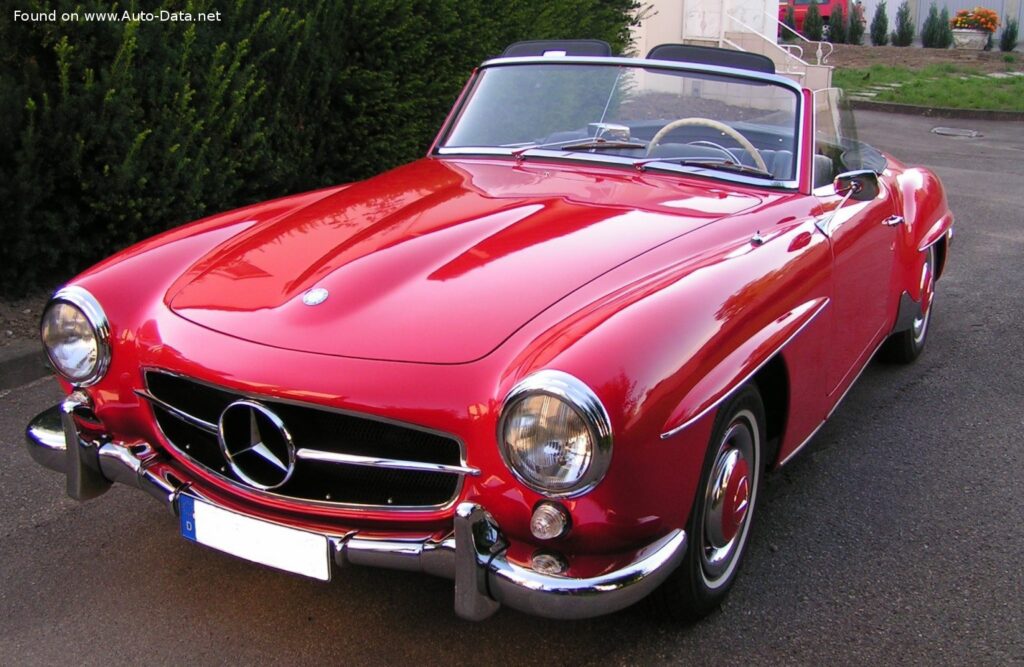
The Mercedes-Benz W121, marketed as the 190 SL, was a two-door roadster produced between 1955 and 1963. Positioned as a more affordable alternative to the iconic 300 SL “Gullwing,” the 190 SL aimed to bring Mercedes-Benz styling and engineering within reach of a broader market. The 190 SL (105 hp) variant, powered by the M121 B II engine, represented the standard configuration for the majority of the production run, serving as the entry point into the SL Roadster range. It was a popular choice for those seeking a stylish and comfortable open-top touring car.
Powertrain & Engine Architecture
The heart of the 190 SL (105 hp) is the Mercedes-Benz M121 B II inline-four cylinder engine. This 1.9-liter (1897 cc) engine featured a cast iron block and an aluminum cylinder head. It utilized a single overhead camshaft (SOHC) valvetrain with two valves per cylinder. Fuel delivery was managed by a Solex 32 PA2 carburetor, a common setup for the era. The engine produced 105 horsepower at 5700 rpm and 142 Nm (104.73 lb-ft) of torque at 3200 rpm. The compression ratio was 8.5:1.
The engine was longitudinally mounted in the front of the vehicle. Power was transmitted to the rear wheels through a four-speed manual transmission, which was the standard offering. While an automatic transmission was available as an option, it was less common and typically found on later production models. The M121 engine, while not a high-performance unit, was known for its reliability and smooth operation. The engine oil capacity was 4 liters (4.23 US qt / 3.52 UK qt) and the coolant capacity was 10 liters (10.57 US qt / 8.8 UK qt).
Engine Code & Variations
The M121 B II engine code designates the specific version used in the 190 SL. Earlier versions of the M121 engine had slightly lower power outputs. The B II designation indicates improvements made to the engine’s design, primarily focusing on increased durability and refinement. While the core architecture remained consistent throughout the production run, minor variations in carburetor tuning and ignition timing could result in slight differences in performance.
Driving Characteristics
The 190 SL (105 hp) offered a comfortable and refined driving experience, prioritizing touring comfort over outright performance. With 105 horsepower propelling a curb weight of approximately 1140 kg (2513.27 lbs), acceleration was adequate but not particularly brisk. The car could reach a maximum speed of 173 km/h (107.5 mph). The four-speed manual transmission provided precise gear changes, allowing drivers to effectively utilize the engine’s power band. The gear ratios were tailored for relaxed cruising, with a focus on smooth transitions rather than rapid acceleration.
Compared to the significantly more powerful 300 SL, the 190 SL felt considerably less athletic. However, it offered a more accessible and user-friendly driving experience. The 190 SL’s handling was predictable and stable, making it a pleasant car to drive on winding roads. The relatively light weight contributed to its agility, although it lacked the sophisticated suspension of its more expensive sibling.
Equipment & Trim Levels
The 190 SL (105 hp) was relatively well-equipped for its time, offering a comfortable and stylish interior. Standard features included comfortable seating for three occupants (though the rear seat was quite small), a fully instrumented dashboard, and a folding soft top. Interior upholstery was typically offered in leather or vinyl, with a range of color options available. The dashboard was constructed from wood veneer, adding a touch of elegance to the cabin.
Optional extras included a hardtop, which provided increased weather protection and security, as well as a Becker Mexico radio. Power windows were also available as an option. Trim levels were relatively limited, with most variations stemming from customer-specified options rather than distinct model designations. The focus was on providing a customizable experience, allowing buyers to tailor the car to their individual preferences.
Chassis & Braking
The 190 SL utilized a robust chassis construction, featuring a monocoque body shell. The front suspension employed a double wishbone design, providing a comfortable ride and good handling characteristics. The rear suspension utilized a dependent spring suspension with a swing axle, a common setup for rear-wheel-drive cars of the era. This setup, while effective, could exhibit some degree of axle tramp under hard acceleration.
Braking was accomplished through drum brakes on all four wheels. While adequate for normal driving conditions, the drum brakes lacked the stopping power and fade resistance of disc brakes. The 190 SL rode on 13-inch wheels. Steering was of the recirculating ball type, providing a relatively heavy but precise feel.
Market Reception & Comparison
The 190 SL was generally well-received by automotive critics and the public. It was praised for its stylish design, comfortable ride, and relatively affordable price point. Compared to the 300 SL, the 190 SL offered a more accessible entry into the Mercedes-Benz SL Roadster family. However, some critics noted that the 190 SL’s performance was somewhat underwhelming, particularly when compared to other sports cars of the era.
In terms of fuel economy, the 190 SL achieved approximately 8.6 l/100 km (27.4 US mpg / 32.8 UK mpg / 11.6 km/l). Reliability was generally good, although regular maintenance was essential to ensure the longevity of the engine and other components. The 190 SL proved to be a popular choice for those seeking a stylish and reliable open-top touring car.
Technical Specifications
| Brand | Mercedes-Benz |
| Model | SL |
| Generation | SL Roadster (W121) |
| Type (Engine) | 190 SL (105 Hp) |
| Start of production | 1955 |
| End of production | 1963 |
| Engine Model/Code | M 121 B II |
| Engine displacement | 1897 cm3 (115.76 cu. in.) |
| Number of cylinders | 4 |
| Engine configuration | Inline |
| Cylinder Bore | 85 mm (3.35 in.) |
| Piston Stroke | 83.6 mm (3.29 in.) |
| Compression ratio | 8.5:1 |
| Number of valves per cylinder | 2 |
| Fuel injection system | Carburettor |
| Power | 105 Hp @ 5700 rpm |
| Torque | 142 Nm @ 3200 rpm (104.73 lb.-ft. @ 3200 rpm) |
| Maximum engine speed | 6000 rpm |
| Kerb Weight | 1140 kg (2513.27 lbs.) |
| Max. weight | 1400 kg (3086.47 lbs.) |
| Max load | 260 kg (573.2 lbs.) |
| Fuel tank capacity | 65 l (17.17 US gal | 14.3 UK gal) |
| Length | 4220 mm (166.14 in.) |
| Width | 1740 mm (68.5 in.) |
| Height | 1320 mm (51.97 in.) |
| Wheelbase | 2400 mm (94.49 in.) |
| Drive wheel | Rear wheel drive |
| Number of gears and type of gearbox | 4 gears, manual transmission |
Legacy
The Mercedes-Benz 190 SL remains a highly sought-after classic car today. Its elegant styling, comfortable ride, and relative affordability have made it a popular choice among collectors and enthusiasts. The M121 engine, while not a powerhouse, is known for its durability and relatively simple maintenance requirements. However, like any classic car, the 190 SL requires regular attention to prevent corrosion and ensure the proper functioning of all systems.
In the used car market, well-maintained examples of the 190 SL (105 hp) can command significant prices, reflecting their desirability and historical significance. The car represents a pivotal moment in Mercedes-Benz history, bridging the gap between the pre-war Silver Arrows and the modern era of luxury automobiles. The 190 SL continues to be celebrated as a stylish and iconic symbol of the 1950s and 1960s.