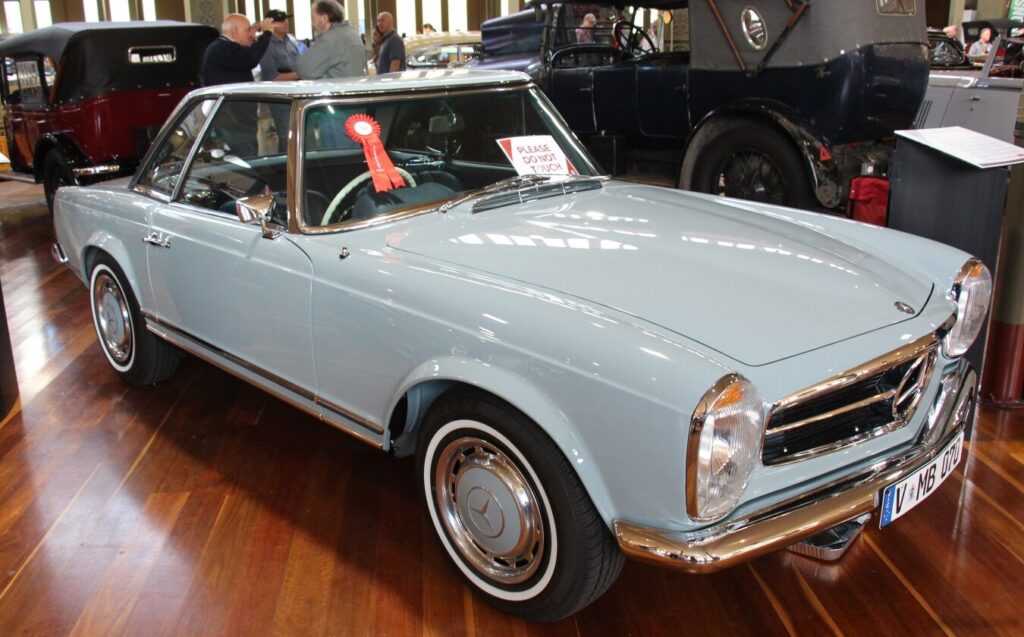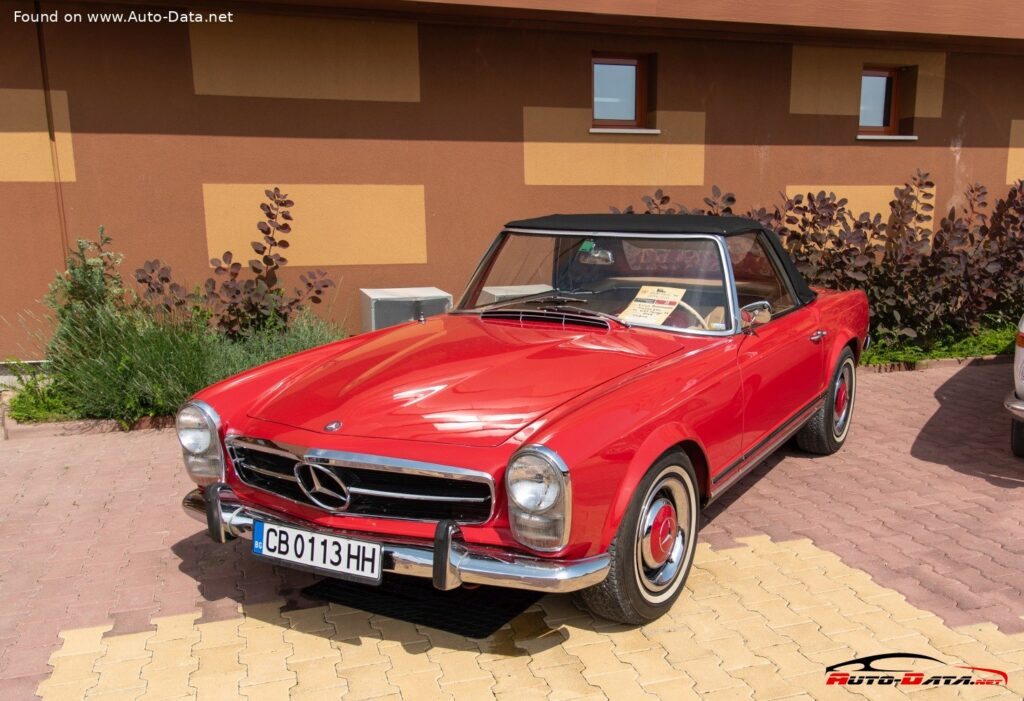
The Mercedes-Benz W113 SL, affectionately known as the “Pagoda SL” due to its distinctive roofline, represented a significant evolution in the SL lineage. Produced between 1963 and 1971, it succeeded the iconic 300 SL “Gullwing” and aimed to blend sporty performance with luxurious comfort. The 230 SL, manufactured from September 1965 to January 1967, occupied a crucial middle ground within the W113 range, offering a compelling combination of power and refinement. It was positioned as the entry-level model after the initial 230 SL introduction, offering a more accessible price point than the later 250 SL and 280 SL variants, while still delivering the core SL experience.
The 230 SL: A Detailed Overview
The 230 SL was a two-seat roadster with a removable hardtop, a feature that distinguished it from its predecessor. The “Pagoda” design, penned by Friedrich Geiger, provided both structural rigidity and a unique aesthetic. The 230 SL aimed to broaden the SL’s appeal beyond the purely sporting driver, attracting those seeking a sophisticated and comfortable grand tourer. The availability of a five-speed manual transmission, as featured in this variant, catered to enthusiasts who preferred a more engaging driving experience.
Powertrain & Engine Architecture
At the heart of the 230 SL was the M127.981 engine, a 2.3-liter inline-six cylinder gasoline engine. This engine was a significant departure from the 300 SL’s complex fuel injection system, utilizing Bosch mechanical multi-port fuel injection. This system, while less sophisticated than later electronic systems, provided reliable performance and improved fuel efficiency compared to carbureted engines. The engine produced 150 horsepower at 5,500 rpm and 196 Nm (144.56 lb-ft) of torque at 4,200 rpm. The engine featured a single overhead camshaft (SOHC) valvetrain with two valves per cylinder.
The five-speed manual transmission offered in this variant was a fully synchronized unit, providing smooth and precise gear changes. The transmission’s gear ratios were tailored to balance acceleration and cruising comfort. First gear was relatively low for quick starts, while fifth gear was an overdrive ratio designed for efficient highway driving. The powertrain layout was front-engine, longitudinal, driving the rear wheels.
Driving Characteristics
The 230 SL with the five-speed manual transmission offered a noticeably more engaging driving experience than the automatic-equipped versions. The manual gearbox allowed drivers to fully exploit the engine’s powerband, resulting in quicker acceleration and more control in spirited driving. Acceleration from 0 to 60 mph was approximately 9.2 seconds, and the car could reach a top speed of 200 km/h (124.27 mph). While not a high-performance sports car by modern standards, the 230 SL provided ample power for comfortable and enjoyable cruising. The suspension, comprised of coil springs, double wishbones at the front, and coil springs at the rear, delivered a compliant ride quality, absorbing bumps and imperfections in the road surface effectively. The steering, a cone worm with recirculation balls system, provided a reasonably direct feel, although it lacked the precision of more modern steering systems.
Equipment & Trim Levels
The 230 SL was well-equipped for its time, offering a level of luxury and refinement that set it apart from many contemporary sports cars. Standard features included leather upholstery, a wood-trimmed dashboard, and a comprehensive instrument panel. The removable hardtop provided excellent weather protection and noise insulation, while the optional soft top offered open-air motoring. Optional extras included power steering, air conditioning, and a radio. Interior color schemes were typically conservative, with a focus on elegant and understated designs. The 230 SL’s interior was designed to be a comfortable and inviting space for both driver and passenger.
Chassis & Braking
The W113 chassis was a robust and well-engineered structure, providing a solid foundation for the car’s performance and handling. The front suspension featured coil springs, double wishbones, and a transverse stabilizer bar, while the rear suspension utilized coil springs. The braking system consisted of disc brakes at the front and drum brakes at the rear. While the drum brakes at the rear were less effective than disc brakes, they were adequate for the car’s weight and performance. The 230 SL weighed approximately 1295 kg (2854.99 lbs) at the curb, contributing to its balanced handling characteristics.
Market Reception & Comparison
The 230 SL was generally well-received by automotive critics, who praised its elegant styling, comfortable ride, and refined powertrain. It was seen as a worthy successor to the 300 SL, offering a more accessible and practical alternative. Compared to the later 250 SL and 280 SL variants, the 230 SL offered a slightly less powerful engine, but it was also more affordable. The 230 SL’s fuel economy was reasonable for its time, averaging around 10.2 l/100 km (23.1 US mpg). Reliability was generally good, although the Bosch fuel injection system required periodic maintenance. The 230 SL’s combination of style, comfort, and performance made it a popular choice among discerning buyers.
Technical Specifications
| Brand | Mercedes-Benz |
| Model | SL |
| Generation | SL (W113) |
| Type | 230 SL (150 Hp) Manual 5-speed |
| Start of production | September, 1965 |
| End of production | January, 1967 |
| Powertrain Architecture | Internal Combustion engine |
| Body type | Roadster |
| Seats | 2 |
| Doors | 2 |
| Fuel consumption (combined) | 10.2 l/100 km |
| Fuel consumption (US mpg) | 23.1 |
| Fuel consumption (UK mpg) | 27.7 |
| Fuel Type | Petrol (Gasoline) |
| Acceleration 0 – 100 km/h | 9.7 sec |
| Acceleration 0 – 62 mph | 9.7 sec |
| Acceleration 0 – 60 mph | 9.2 sec |
| Maximum speed | 200 km/h (124.27 mph) |
| Weight-to-power ratio | 8.6 kg/Hp |
| Power | 150 Hp @ 5500 rpm |
| Torque | 196 Nm @ 4200 rpm (144.56 lb.-ft. @ 4200 rpm) |
| Engine layout | Front, Longitudinal |
| Engine Model/Code | M 127.981 |
| Engine displacement | 2306 cm3 (140.72 cu. in.) |
| Number of cylinders | 6 |
| Engine configuration | Inline |
| Cylinder Bore | 82 mm (3.23 in.) |
| Piston Stroke | 72.8 mm (2.87 in.) |
| Compression ratio | 9.3:1 |
| Number of valves per cylinder | 2 |
| Fuel injection system | Multi-port manifold injection |
| Engine aspiration | Naturally aspirated |
| Valvetrain | SOHC |
| Engine oil capacity | 5.5 l (5.81 US qt | 4.84 UK qt) |
| Coolant capacity | 10.8 l (11.41 US qt | 9.5 UK qt) |
| Kerb Weight | 1295 kg (2854.99 lbs.) |
| Max. weight | 1650 kg (3637.63 lbs.) |
| Max load | 355 kg (782.64 lbs.) |
| Trunk (boot) space – minimum | 340 l (12.01 cu. ft.) |
| Fuel tank capacity | 65 l (17.17 US gal | 14.3 UK gal) |
| Length | 4285 mm (168.7 in.) |
| Width | 1760 mm (69.29 in.) |
| Height | 1320 mm (51.97 in.) |
| Wheelbase | 2400 mm (94.49 in.) |
| Tires size | 185 HR 14 |
| Wheel rims size | 5.5 J x 14 H |
Legacy
The 230 SL, particularly the five-speed manual version, remains a highly sought-after classic car today. Its elegant styling, comfortable ride, and reliable powertrain have ensured its enduring appeal. While the Bosch fuel injection system requires periodic maintenance, the M127 engine is generally considered to be a durable and long-lasting unit. The 230 SL’s values have steadily increased in recent years, reflecting its growing popularity among collectors and enthusiasts. It represents a significant chapter in Mercedes-Benz’s history, bridging the gap between the iconic 300 SL and the more modern SL models that followed. The 230 SL continues to be enjoyed by enthusiasts around the world, offering a unique blend of classic style and driving pleasure.