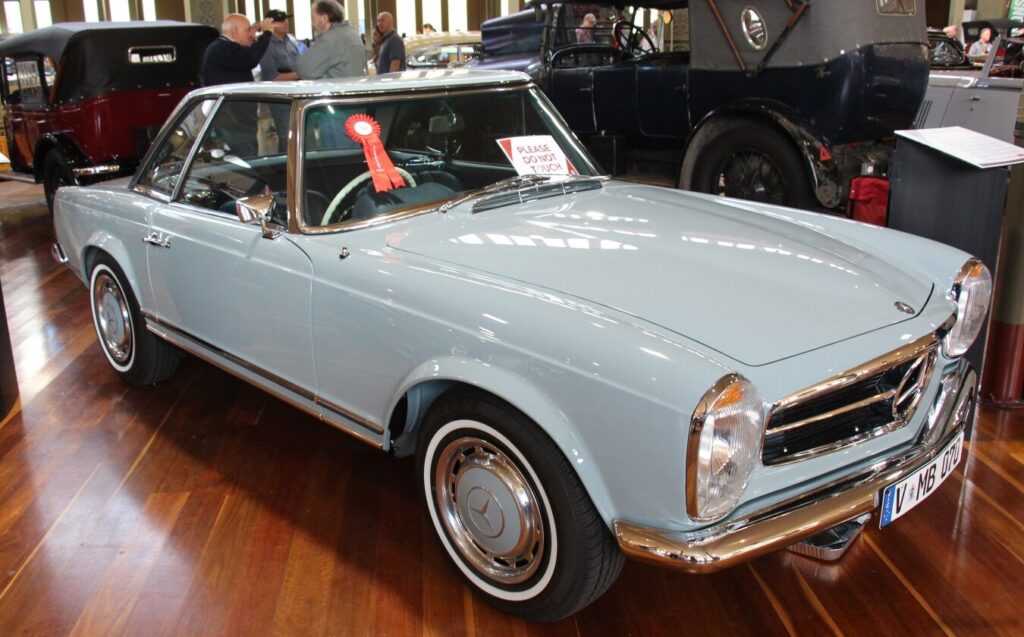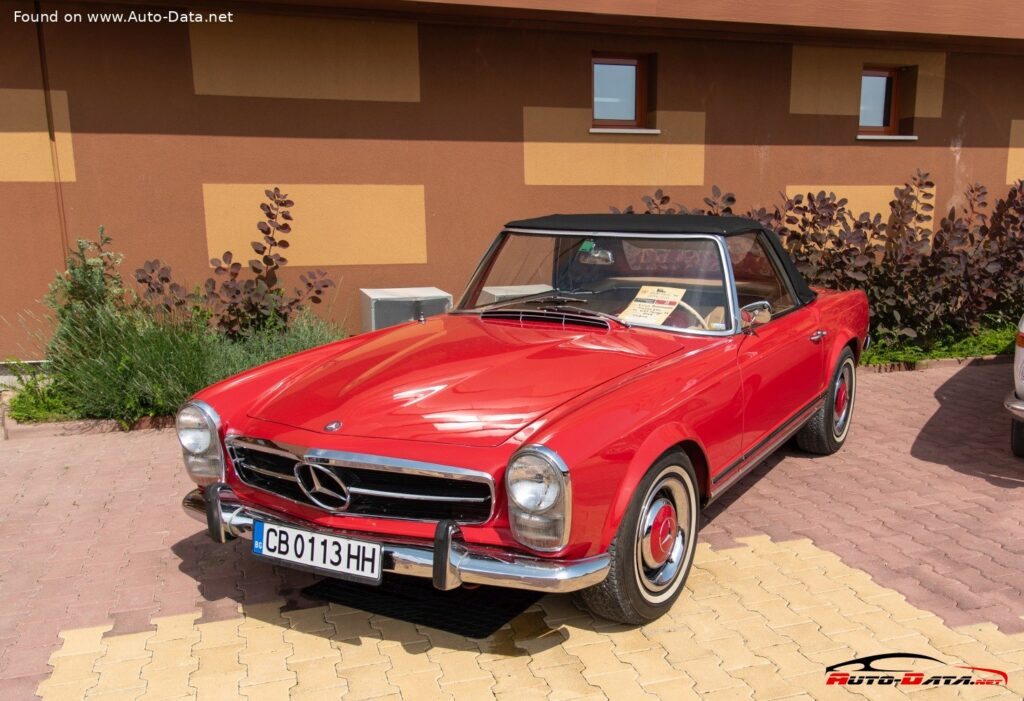
The Mercedes-Benz W113 SL, affectionately known as the “Pagoda SL,” represented a significant evolution in the iconic SL lineage. Produced from 1963 to 1971, the W113 offered a blend of luxury, performance, and sophisticated styling. The 250 SL variant, manufactured from December 1966 to January 1968, occupied a crucial middle ground within the range, bridging the gap between the entry-level 230 SL and the more powerful 280 SL. It was positioned as a refined grand tourer, appealing to buyers seeking a comfortable and capable roadster with a touch more performance than the base model.
The 250 SL: A Refined Grand Tourer
The 250 SL was introduced as a replacement for the 230 SL, addressing some criticisms regarding the earlier model’s performance. While retaining the elegant styling of the W113 platform, the 250 SL benefited from a larger, more powerful engine and subtle refinements to the chassis and interior. It represented a sweet spot in the Pagoda SL lineup, offering a compelling combination of performance, comfort, and relative affordability compared to the top-of-the-line 280 SL.
Powertrain & Engine Architecture
The heart of the 250 SL is the M 129.982 engine, a 2.5-liter inline-six cylinder powerplant. This engine produced 150 horsepower at 5,500 rpm and 159.31 lb-ft of torque at 4,200 rpm. The engine featured a single overhead camshaft (SOHC) valvetrain with two valves per cylinder. Crucially, the 250 SL adopted Bosch multi-port fuel injection, a significant upgrade over the carburetor used in the 230 SL. This improved throttle response, fuel efficiency, and overall engine smoothness. The engine’s layout was longitudinal, mounted in the front of the vehicle.
The 250 SL was primarily offered with a four-speed manual transmission, as detailed here. An optional five-speed manual transmission became available later in production. The manual gearbox provided a more engaging driving experience and allowed drivers to fully exploit the engine’s power. The transmission was designed to handle the engine’s torque output effectively, providing smooth and precise gear changes. The rear wheels were driven, maintaining the classic sports car configuration.
Driving Characteristics
The 250 SL with the four-speed manual transmission offered a balanced driving experience. Acceleration from 0-60 mph was achieved in approximately 9.5 seconds, and it could reach a top speed of 121.17 mph (195 km/h). While not a high-performance sports car by modern standards, the 250 SL provided ample power for comfortable cruising and spirited driving on winding roads. The manual transmission allowed for precise control over the engine’s power band, making it more engaging than the automatic-equipped models.
Compared to the 230 SL, the 250 SL felt noticeably more responsive, thanks to the larger engine and fuel injection. The 280 SL, with its larger 2.8-liter engine, offered even greater performance, but at a higher price point. The 250 SL’s four-speed manual transmission provided a more direct connection to the engine than the available automatic, enhancing the driving experience for enthusiasts. The gear ratios were well-chosen for both highway cruising and spirited backroad driving.
Equipment & Trim Levels
The 250 SL was well-equipped for its time, offering a comfortable and luxurious interior. Standard features included leather upholstery, a wood-trimmed dashboard, and a comprehensive instrument cluster. The interior design was elegant and understated, reflecting the Mercedes-Benz commitment to quality and refinement.
Optional extras included power steering, power windows, a radio, and a hardtop in addition to the standard soft top. The hardtop, a defining feature of the Pagoda SLs, provided increased security and weather protection. Interior color options were varied, allowing buyers to personalize their vehicles. The 250 SL generally featured a higher level of standard equipment than the earlier 230 SL, reflecting its position as a more refined model.
Chassis & Braking
The W113 chassis was a robust and well-engineered platform. The 250 SL utilized a coil spring and double wishbone suspension at the front, providing a comfortable ride and precise handling. The rear suspension employed coil springs. A transverse stabilizer bar was fitted at the front to reduce body roll during cornering. The braking system consisted of disc brakes on all four wheels, providing ample stopping power. The steering system was a cone worm with recirculation balls, offering a good balance of feel and precision.
The curb weight of the 250 SL was approximately 2,998.29 lbs (1360 kg). This relatively low weight contributed to the car’s agile handling characteristics. The suspension was tuned to provide a comfortable ride without sacrificing handling performance. The disc brakes offered consistent and reliable stopping power, even under demanding conditions.
Market Reception & Comparison
The 250 SL was well-received by automotive critics and buyers alike. It was praised for its elegant styling, comfortable ride, and improved performance compared to the 230 SL. The fuel economy, rated at 21 US mpg combined, was considered reasonable for a sports car of its era. Reliability was generally good, although maintenance costs could be relatively high due to the car’s sophisticated engineering.
Compared to the 230 SL, the 250 SL offered a noticeable performance improvement and a more refined driving experience. The 280 SL, while offering even greater performance, was significantly more expensive. The 250 SL struck a balance between performance, luxury, and affordability, making it a popular choice among buyers seeking a classic Mercedes-Benz roadster.
Technical Specifications
| Brand | Mercedes-Benz |
| Model | SL |
| Generation | SL (W113) |
| Type | 250 SL (150 Hp) Manual 4-speed |
| Start of production | December, 1966 |
| End of production | January, 1968 |
| Powertrain Architecture | Internal Combustion engine |
| Body type | Roadster |
| Seats | 2 |
| Doors | 2 |
| Fuel consumption (economy) – combined | 11.2 l/100 km |
| Fuel consumption (economy) – combined | 21 US mpg |
| Fuel consumption (economy) – combined | 25.2 UK mpg |
| Fuel consumption (economy) – combined | 8.9 km/l |
| Fuel Type | Petrol (Gasoline) |
| Acceleration 0 – 100 km/h | 10 sec |
| Acceleration 0 – 62 mph | 10 sec |
| Acceleration 0 – 60 mph | 9.5 sec |
| Maximum speed | 195 km/h |
| Maximum speed | 121.17 mph |
| Weight-to-power ratio | 9.1 kg/Hp |
| Weight-to-power ratio | 110.3 Hp/tonne |
| Weight-to-torque ratio | 6.3 kg/Nm |
| Weight-to-torque ratio | 158.8 Nm/tonne |
| Power | 150 Hp @ 5500 rpm |
| Power per litre | 60.1 Hp/l |
| Torque | 216 Nm @ 4200 rpm |
| Torque | 159.31 lb.-ft. @ 4200 rpm |
| Engine layout | Front, Longitudinal |
| Engine Model/Code | M 129.982 |
| Engine displacement | 2496 cm3 |
| Engine displacement | 152.32 cu. in. |
| Number of cylinders | 6 |
| Engine configuration | Inline |
| Cylinder Bore | 82 mm |
| Cylinder Bore | 3.23 in. |
| Piston Stroke | 78.8 mm |
| Piston Stroke | 3.1 in. |
| Compression ratio | 9.5:1 |
| Number of valves per cylinder | 2 |
| Fuel injection system | Multi-port manifold injection |
| Engine aspiration | Naturally aspirated engine |
| Valvetrain | SOHC |
| Engine oil capacity | 5.5 l |
| Engine oil capacity | 5.81 US qt |
| Engine oil capacity | 4.84 UK qt |
| Coolant | 12.9 l |
| Coolant | 13.63 US qt |
| Coolant | 11.35 UK qt |
| Kerb Weight | 1360 kg |
| Kerb Weight | 2998.29 lbs |
| Max. weight | 1715 kg |
| Max. weight | 3780.93 lbs |
| Max load | 355 kg |
| Max load | 782.64 lbs |
| Trunk (boot) space – minimum | 340 l |
| Trunk (boot) space – minimum | 12.01 cu. ft. |
| Fuel tank capacity | 82 l |
| Fuel tank capacity | 21.66 US gal |
| Fuel tank capacity | 18.04 UK gal |
| Permitted trailer load with brakes (12%) | 1200 kg |
| Permitted trailer load with brakes (12%) | 2645.55 lbs |
| Permitted trailer load without brakes | 715 kg |
| Permitted trailer load without brakes | 1576.31 lbs |
| Length | 4285 mm |
| Length | 168.7 in. |
| Width | 1760 mm |
| Width | 69.29 in. |
| Height | 1320 mm |
| Height | 51.97 in. |
| Wheelbase | 2400 mm |
| Wheelbase | 94.49 in. |
| Front track | 1484 mm |
| Front track | 58.43 in. |
| Rear (Back) track | 1485 mm |
| Rear (Back) track | 58.46 in. |
| Ride height (ground clearance) | 125 mm |
| Ride height (ground clearance) | 4.92 in. |
| Minimum turning circle (turning diameter) | 10.4 m |
| Minimum turning circle (turning diameter) | 34.12 ft. |
| Drivetrain Architecture | The Internal combustion engine (ICE) drives the rear wheels of the vehicle. |
| Drive wheel | Rear wheel drive |
| Number of gears and type of gearbox | 4 gears, manual transmission |
| Front suspension | Coil spring, Double wishbone, Transverse stabilizer |
| Rear suspension | Coil spring |
| Front brakes | Disc |
| Rear brakes | Disc |
| Steering type | Cone worm with recirculation balls |
| Tires size | 185 HR 14 |
| Wheel rims size | 6 J x 14 HB |
Legacy
The 250 SL remains a highly sought-after classic car today. Its elegant styling, refined driving experience, and relative reliability have ensured its enduring appeal. Well-maintained examples command high prices in the collector car market. The M 129 engine, while requiring periodic maintenance, is generally considered a durable and reliable powerplant. The 250 SL represents a high point in Mercedes-Benz roadster design and engineering, and it continues to be cherished by enthusiasts around the world.