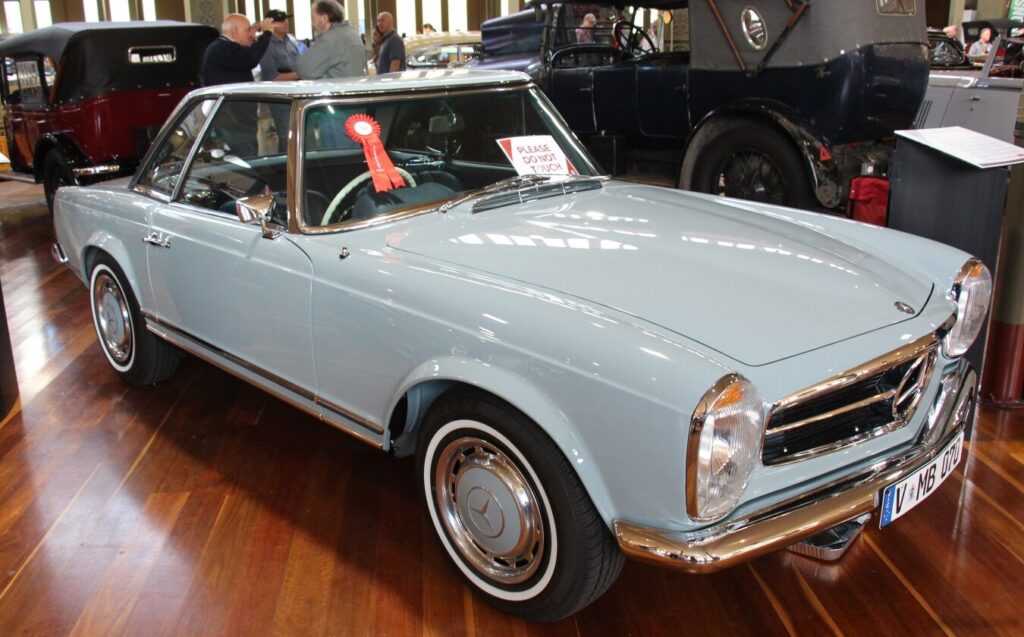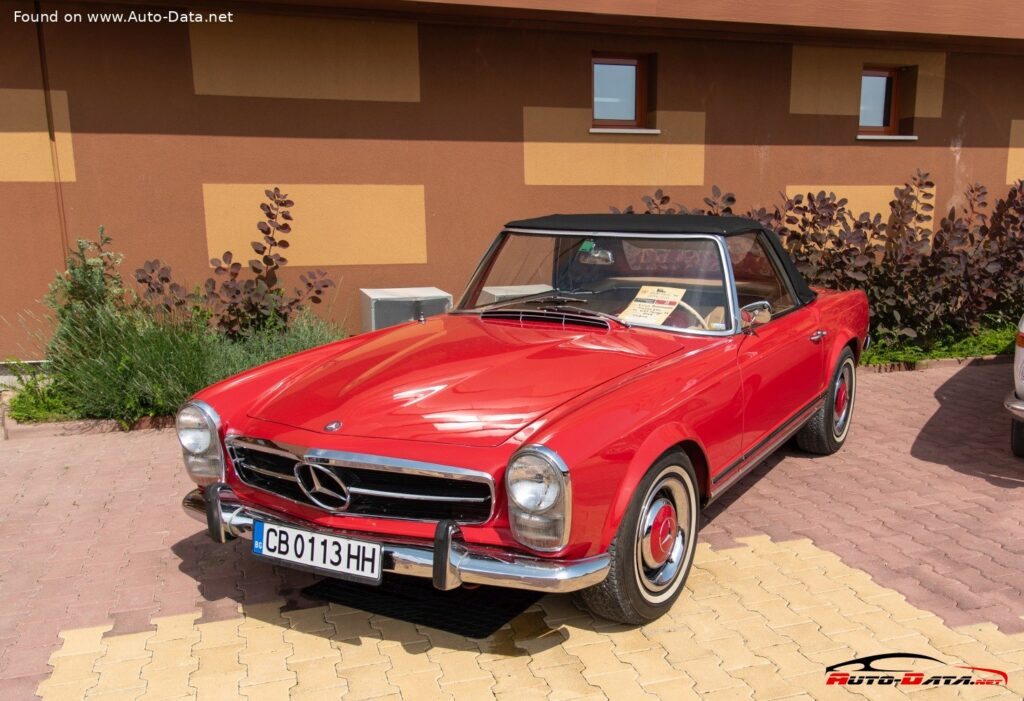
The Mercedes-Benz W113, commonly known as the SL “Pagoda” due to its distinctive roofline, represented a significant evolution in the SL lineage. Produced from 1963 to 1971, the W113 offered a blend of luxury, performance, and advanced engineering for its time. The 280 SL variant, introduced in January 1968 and continuing through March 1971, was the final and most refined iteration of the W113. This model, equipped with a 2.8-liter inline-six engine and a five-speed manual transmission, occupied the premium position within the Pagoda range, representing the highest level of performance and sophistication available.
The 280 SL: A Pinnacle of the W113 Series
The 280 SL superseded the earlier 250 SL and 230 SL models, addressing criticisms regarding the earlier cars’ performance. While the 230 SL and 250 SL were well-regarded, they were often considered underpowered for a grand touring vehicle. The 280 SL aimed to rectify this with a larger displacement engine and improved fuel delivery, resulting in a more responsive and engaging driving experience. The availability of a five-speed manual transmission further enhanced the driver’s control and enjoyment, distinguishing it from the optional four-speed automatic.
Powertrain & Engine Architecture
At the heart of the 280 SL lay the M 130.983 engine, a 2778 cc (169.52 cu. in.) inline-six cylinder powerplant. This engine featured a cast iron block and an aluminum cylinder head, a common configuration for Mercedes-Benz engines of the era. The M 130.983 utilized Bosch mechanical multi-port fuel injection, a significant advancement over the carburetors found in earlier SL models. This system delivered precise fuel metering, contributing to improved performance and fuel efficiency. The engine boasted a compression ratio of 9.5:1 and employed a single overhead camshaft (SOHC) valvetrain with two valves per cylinder. Engine oil capacity was 5.5 liters (5.81 US qt / 4.84 UK qt), and coolant capacity was 12.9 liters (13.63 US qt / 11.35 UK qt). The engine was mounted longitudinally in the front of the vehicle, driving the rear wheels.
The five-speed manual transmission, a Getrag unit, provided precise gear changes and allowed the driver to fully exploit the engine’s power band. The gear ratios were carefully selected to balance acceleration and cruising comfort. Compared to the available four-speed automatic, the manual transmission offered a more direct connection to the engine and a more engaging driving experience, appealing to enthusiasts.
Driving Characteristics
The 280 SL with the five-speed manual transmission delivered a noticeably more spirited driving experience than its automatic counterparts. Acceleration from 0 to 60 mph was achieved in approximately 8.6 seconds, and 0-100 km/h in 9 seconds, respectable figures for a grand tourer of the late 1960s. The engine produced 170 hp at 5750 rpm and 240 Nm (177.01 lb-ft) of torque at 4500 rpm. The manual gearbox allowed the driver to keep the engine in its optimal power range, resulting in strong acceleration in any gear. The car felt balanced and composed on winding roads, thanks to its well-tuned suspension and responsive steering. While not a dedicated sports car, the 280 SL offered a satisfying blend of performance and comfort, making it equally suitable for leisurely cruising and spirited driving.
Equipment & Trim Levels
The 280 SL was positioned as the top-of-the-line Pagoda model and came standard with a comprehensive list of features. The interior was typically appointed with leather upholstery, although options for other materials were available. A wood-trimmed dashboard and center console added to the luxurious ambiance. Standard equipment included power-assisted disc brakes on all four wheels, a heater, and whitewall tires. Optional extras included air conditioning, a radio, power windows, and a hardtop in addition to the standard soft top. The interior layout was driver-focused, with clearly marked gauges and intuitive controls. The 280 SL’s interior was a testament to Mercedes-Benz’s commitment to quality and craftsmanship.
Chassis & Braking
The W113 chassis featured independent suspension all around. The front suspension utilized coil springs, double wishbones, and a transverse stabilizer bar, providing excellent handling and ride comfort. The rear suspension employed coil springs and a limited-slip differential was available as an option. Braking duties were handled by power-assisted disc brakes on all four wheels, offering strong and reliable stopping power. The steering system was a cone worm with recirculation balls, providing precise and responsive steering feel. The 280 SL rode on 185 HR 14 tires mounted on 6 J x 14 HB wheel rims. The curb weight of the 280 SL was 1360 kg (2998.29 lbs), contributing to its balanced handling characteristics.
Market Reception & Comparison
The 280 SL was widely praised by automotive journalists and enthusiasts alike. It was lauded for its refined engine, comfortable ride, and elegant styling. Compared to the earlier 250 SL, the 280 SL offered a noticeable improvement in performance, addressing a key criticism of the previous model. While the 230 SL was more affordable, it lacked the power and sophistication of the 280 SL. The 280 SL’s fuel consumption was rated at 11.4 l/100 km (20.6 US mpg / 24.8 UK mpg / 8.8 km/l), which was typical for a grand touring car of its era. Reliability was generally good, although maintenance costs could be relatively high due to the complexity of the fuel injection system. The 280 SL was considered a worthy competitor to other luxury roadsters of the time, such as the Jaguar E-Type and the Porsche 911.
Technical Specifications
| Brand | Mercedes-Benz |
| Model | SL |
| Generation | SL (W113) |
| Type | 280 SL (170 Hp) Manual 5-speed |
| Start of production | January, 1968 |
| End of production | March, 1971 |
| Engine Model/Code | M 130.983 |
| Engine displacement | 2778 cm3 (169.52 cu. in.) |
| Number of cylinders | 6 |
| Engine configuration | Inline |
| Power | 170 Hp @ 5750 rpm |
| Torque | 240 Nm @ 4500 rpm (177.01 lb.-ft. @ 4500 rpm) |
| Fuel Type | Petrol (Gasoline) |
| Acceleration 0 – 60 mph | 8.6 sec |
| Acceleration 0 – 100 km/h | 9 sec |
| Maximum speed | 200 km/h (124.27 mph) |
| Kerb Weight | 1360 kg (2998.29 lbs) |
| Fuel tank capacity | 82 l (21.66 US gal | 18.04 UK gal) |
| Trunk (boot) space | 340 l (12.01 cu. ft.) |
| Number of gears and type of gearbox | 5 gears, manual transmission |
Legacy
The Mercedes-Benz 280 SL remains a highly sought-after classic car today. Its elegant styling, refined engineering, and enjoyable driving experience have ensured its enduring appeal. The M 130 engine, when properly maintained, is known for its durability and longevity. However, the Bosch fuel injection system can require specialized knowledge and parts for repair. The 280 SL’s values have steadily increased in recent years, reflecting its status as a collectible investment. The five-speed manual transmission variant is particularly prized by enthusiasts, as it offers the most engaging driving experience. The W113 Pagoda, and especially the 280 SL, represents a golden era of Mercedes-Benz design and engineering, and continues to captivate car lovers around the world.