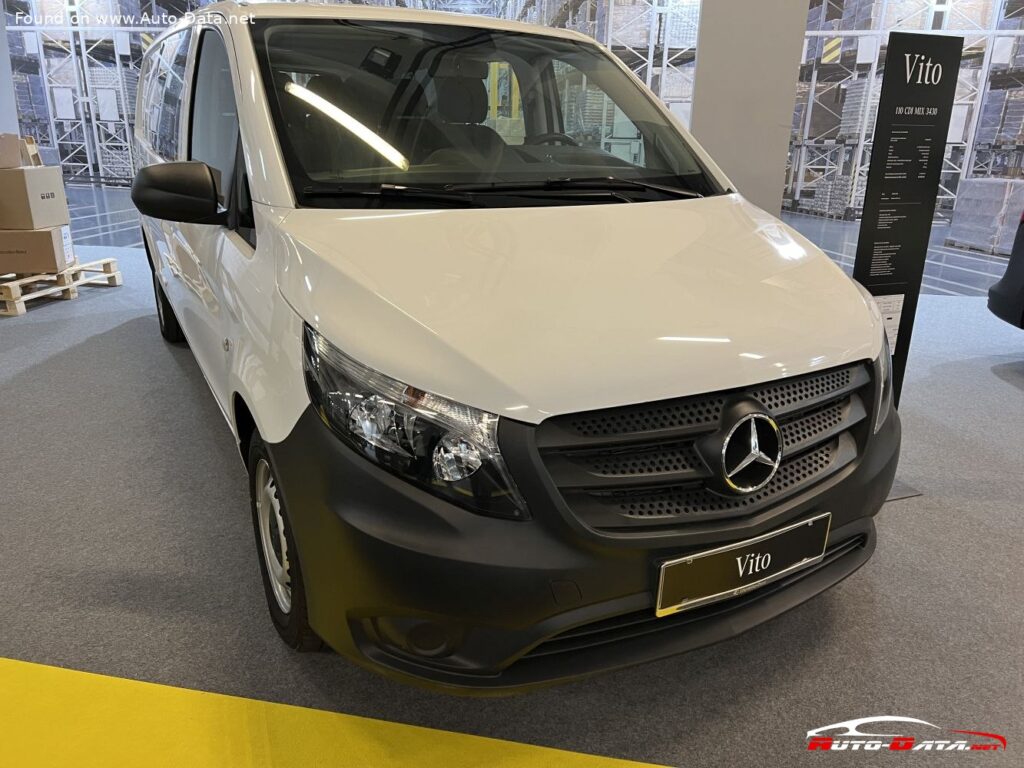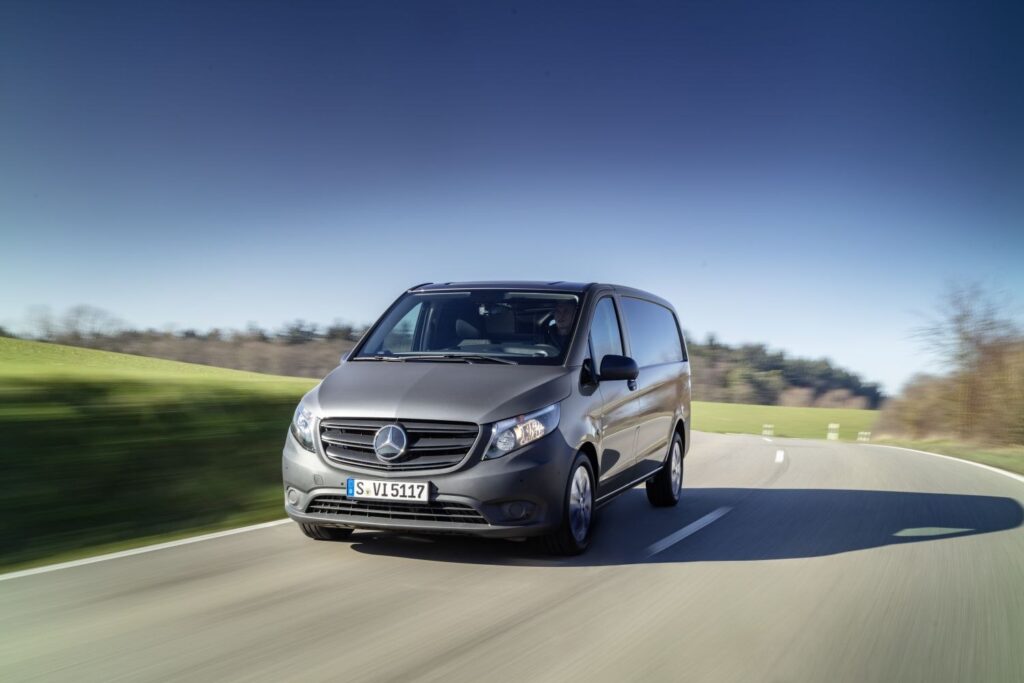
The Mercedes-Benz Vito (W447), particularly the facelifted version introduced in 2020, represents a significant offering in the mid-size van segment. This iteration, specifically the Panel Van Long 110 CDI 1.7 (102 Hp) model, is geared towards commercial use, prioritizing practicality and efficiency. While not directly marketed in the United States, the Vito is a popular choice in Europe and other markets as a versatile workhorse, competing with vehicles like the Volkswagen Transporter and Ford Transit Custom. The W447 generation, launched in 2014 and receiving a substantial refresh in 2020, aimed to modernize the Vito’s design, improve its fuel economy, and enhance its technological features.
Mercedes-Benz Vito W447: A Commercial Vehicle Overview
The Vito, in its various configurations, serves a broad range of needs, from delivery services and tradespeople to passenger transport (with the Multi-Passenger variant). The “110 CDI” designation indicates the engine output – approximately 102 horsepower – and the “Long” body style signifies an extended wheelbase, providing increased cargo capacity. The 2020 facelift brought updated styling, improved driver assistance systems, and more efficient engine options, solidifying the Vito’s position as a competitive van in its class. This model is designed for businesses and individuals requiring a reliable and spacious vehicle for transporting goods or equipment.
Engine & Performance
The heart of the Vito 110 CDI is a 1.7-liter inline-four cylinder diesel engine, designated OM 622.851. This engine produces 102 horsepower at 3800 rpm and 270 Nm (199.14 lb.-ft.) of torque between 1500 and 2500 rpm. While not a performance-oriented engine, it provides adequate power for typical commercial applications. The engine features a turbocharger with intercooler and a diesel commonrail fuel injection system, contributing to improved efficiency and reduced emissions. Power is delivered to the front wheels via a six-speed manual transmission. The weight-to-power ratio is 19.2 kg/Hp, and the weight-to-torque ratio is 7.3 kg/Nm. Fuel consumption, measured using the WLTP cycle, ranges from 7.5 to 7.6 liters per 100 kilometers (31.4 – 30.9 US mpg) combined, depending on driving conditions. The engine also incorporates a Start & Stop system and a particulate filter to meet Euro 6d-TEMP N1 emission standards.
Design & Features
The Mercedes-Benz Vito W447 Panel Van Long is characterized by its functional and robust design. The van body style offers a practical solution for cargo transport, with a minimum trunk space of 6000 liters (211.89 cu. ft.). The long wheelbase contributes to the vehicle’s overall length of 5140 mm (202.36 in.) and a width of 1928 mm (75.91 in.). The Vito prioritizes practicality over aesthetic flourishes, although the 2020 facelift introduced a more modern front fascia and updated interior elements. The van typically seats three occupants and features 4-5 doors for easy access. Key features include a robust chassis, independent suspension on both front and rear axles (McPherson strut front, trailing arm rear), and a comprehensive suite of safety systems, including ABS (Anti-lock braking system). The vehicle’s dimensions are carefully considered to maximize cargo space while maintaining maneuverability in urban environments. The maximum roof load is 150 kg (330.69 lbs), and it can tow a braked trailer up to 1200 kg (2645.55 lbs).
Technical Specifications
| Brand | Mercedes-Benz |
| Model | Vito |
| Generation | Vito (W447, facelift 2020) Panel Van Long |
| Type (Engine) | 110 CDI 1.7 (102 Hp) |
| Start of production | March, 2020 |
| End of production | 2021 |
| Powertrain Architecture | Internal Combustion engine |
| Body type | Van |
| Seats | 3 |
| Doors | 4-5 |
| Fuel consumption at Low speed (WLTP) | 9.2-9.4 l/100 km (25.6 – 25 US mpg) |
| Fuel consumption at Medium speed (WLTP) | 7.3-7.4 l/100 km (32.2 – 31.8 US mpg) |
| Fuel consumption at high speed (WLTP) | 6.4-6.6 l/100 km (36.8 – 35.6 US mpg) |
| Fuel consumption at very high speed (WLTP) | 7.9-8 l/100 km (29.8 – 29.4 US mpg) |
| Combined fuel consumption (WLTP) | 7.5-7.6 l/100 km (31.4 – 30.9 US mpg) |
| CO2 emissions (WLTP) | 196-198 g/km |
| Fuel Type | Diesel |
| Emission standard | Euro 6d-TEMP N1 |
| Weight-to-power ratio | 19.2 kg/Hp |
| Weight-to-torque ratio | 7.3 kg/Nm |
| Power | 102 Hp @ 3800 rpm |
| Torque | 270 Nm @ 1500-2500 rpm (199.14 lb.-ft. @ 1500-2500 rpm) |
| Engine layout | Front, Transverse |
| Engine Model/Code | OM 622.851 |
| Engine displacement | 1749 cm3 (106.73 cu. in.) |
| Number of cylinders | 4 |
| Engine configuration | Inline |
| Fuel injection system | Diesel Commonrail |
| Engine oil capacity | 6.8 l (7.19 US qt | 5.98 UK qt) |
| Coolant | 10.4 l (10.99 US qt | 9.15 UK qt) |
| Kerb Weight | 1963-2002 kg (4327.67 – 4413.65 lbs.) |
| Max. weight | 2800-3050 kg (6172.94 – 6724.1 lbs.) |
| Max load | 837-1048 kg (1845.27 – 2310.44 lbs.) |
| Trunk (boot) space – minimum | 6000 l (211.89 cu. ft.) |
| Fuel tank capacity | 57 l (15.06 US gal | 12.54 UK gal) |
| AdBlue tank | 24 l (6.34 US gal | 5.28 UK gal) |
| Max. roof load | 150 kg (330.69 lbs.) |
| Permitted trailer load with brakes (12%) | 1200 kg (2645.55 lbs.) |
| Permitted trailer load without brakes | 750 kg (1653.47 lbs.) |
| Length | 5140 mm (202.36 in.) |
| Width | 1928 mm (75.91 in.) |
| Height | 1910 mm (75.2 in.) |
| Wheelbase | 3200 mm (125.98 in.) |
| Number of gears and type of gearbox | 6 gears, manual transmission |
The Mercedes-Benz Vito W447, in its 110 CDI 1.7 guise, represents a practical and efficient solution for commercial transport needs. Its blend of reliability, fuel economy, and cargo capacity makes it a popular choice in the European van market, offering a compelling alternative to other mid-size vans.