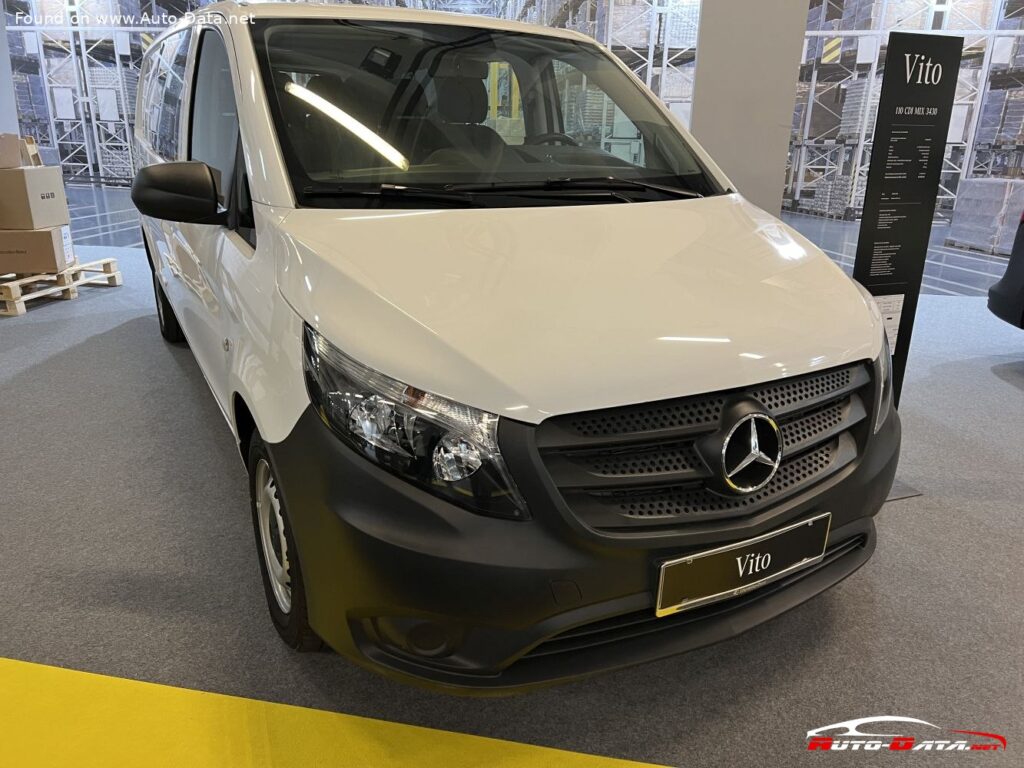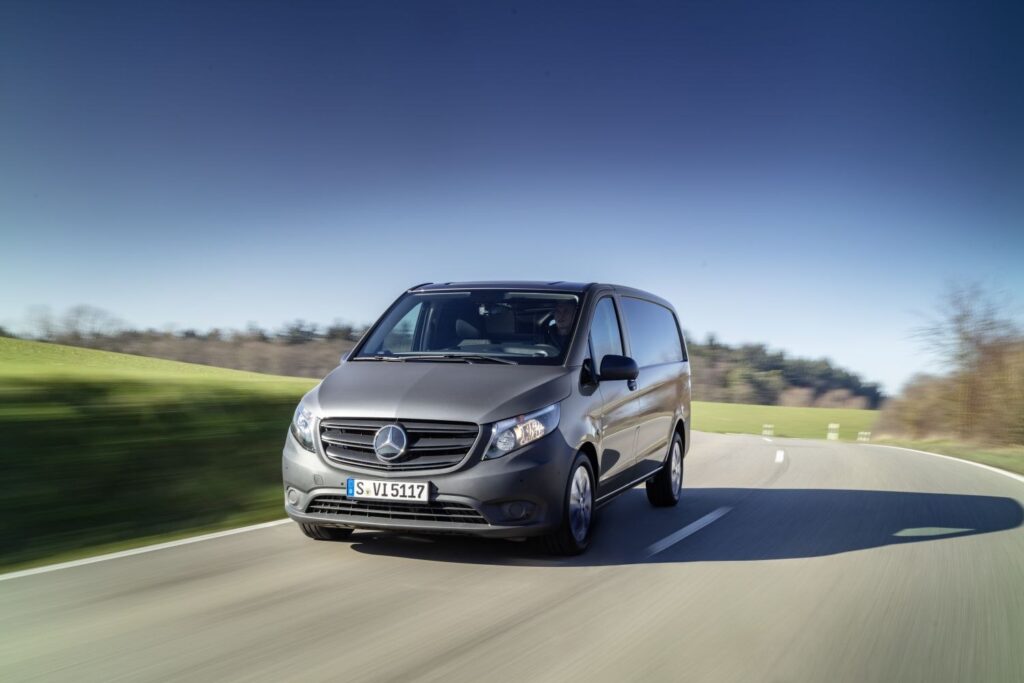
The Mercedes-Benz Vito (W447), particularly the facelifted version introduced in 2020, represents the third generation of this popular mid-size van. While not widely sold in the United States due to the American preference for larger vans, the Vito is a mainstay in European commercial vehicle markets, serving as a versatile platform for both cargo transport and passenger applications. The W447 generation, launched in 2014 and receiving a significant update in 2020, offers a blend of practicality, efficiency, and increasingly, modern technology. This article focuses on the Panel Van Long 119 CDI variant, equipped with a 190 horsepower diesel engine and the 9G-TRONIC automatic transmission, produced between March 2020 and July 2023.
Mercedes-Benz Vito W447: A European Workhorse
The Vito, along with its mechanically similar sibling the V-Class (marketed as a more luxurious people carrier), fills a crucial niche in the European van segment. It’s positioned between smaller, city-focused vans like the Renault Kangoo and larger, full-size vans like the Mercedes-Benz Sprinter. The W447 generation brought improvements in ride quality, fuel efficiency, and safety compared to its predecessors. The 2020 facelift further refined the design, adding updated styling cues and enhanced technology features. The Panel Van Long configuration, as detailed here, prioritizes cargo volume and is commonly used by businesses for deliveries, tradespeople, and specialized commercial applications.
Engine & Performance
The 119 CDI variant of the W447 Vito is powered by a 2.0-liter inline four-cylinder diesel engine, designated OM 654.920. This engine produces 190 horsepower at 4200 rpm and 440 Newton-meters (324.53 lb.-ft.) of torque between 1350 and 2400 rpm. The engine features a bi-turbocharger with an intercooler and a diesel commonrail fuel injection system, contributing to its responsive performance and relatively good fuel economy. Power per liter is rated at 97.4 hp/l. The engine is longitudinally mounted at the front of the vehicle. The 9G-TRONIC nine-speed automatic transmission delivers smooth and efficient power delivery. The Vito 119 CDI achieves a combined fuel consumption of 7.1 to 7.2 liters per 100 kilometers (33.1 to 32.7 US mpg), with CO2 emissions ranging from 187 to 188 grams per kilometer (Euro 6d emission standard). The weight-to-power ratio is 10.8 kg/Hp, and the weight-to-torque ratio is 4.6 kg/Nm.
Design & Features
The W447 Vito Panel Van Long is characterized by its practical and functional design. It’s a four or five-door van with a seating capacity of three. The “Long” designation indicates an extended wheelbase, maximizing cargo space. The vehicle’s dimensions are 5140 mm (202.36 in) in length, 1928 mm (75.91 in) in width, and 1910 mm (75.2 in) in height. The wheelbase measures 3200 mm (125.98 in). The interior is designed with durability and functionality in mind, featuring hard-wearing materials and a driver-focused layout. Standard features typically include air conditioning, a multi-function steering wheel, and a basic infotainment system. The 2020 facelift brought updated dashboard designs and the availability of more advanced features like Mercedes’ MBUX infotainment system (optional). Safety features include ABS (Anti-lock Braking System) and driver assistance systems designed to enhance driver awareness and prevent accidents. The Vito boasts a minimum trunk (boot) space of 6000 liters (211.89 cu. ft.).
Technical Specifications
| General Information | |
| Brand | Mercedes-Benz |
| Model | Vito |
| Generation | Vito (W447, facelift 2020) Panel Van Long |
| Type (Engine) | 119 CDI (190 Hp) 9G-TRONIC |
| Start of production | March, 2020 |
| End of production | July, 2023 |
| Powertrain Architecture | Internal Combustion engine |
| Body type | Van |
| Seats | 3 |
| Doors | 4-5 |
| Performance Specs | |
| Fuel consumption at Low speed (WLTP) | 8.5-8.6 l/100 km (27.7 – 27.4 US mpg, 33.2 – 32.8 UK mpg, 11.8 – 11.6 km/l) |
| Fuel consumption at Medium speed (WLTP) | 7.1 l/100 km (33.1 US mpg, 39.8 UK mpg, 14.1 km/l) |
| Fuel consumption at high speed (WLTP) | 6.2 l/100 km (37.9 US mpg, 45.6 UK mpg, 16.1 km/l) |
| Fuel consumption at very high speed (WLTP) | 7.5 l/100 km (31.4 US mpg, 37.7 UK mpg, 13.3 km/l) |
| Combined fuel consumption (WLTP) | 7.1-7.2 l/100 km (33.1 – 32.7 US mpg, 39.8 – 39.2 UK mpg, 14.1 – 13.9 km/l) |
| CO2 emissions (WLTP) | 187-188 g/km |
| Fuel Type | Diesel |
| Emission standard | Euro 6d |
| Weight-to-power ratio | 10.8 kg/Hp |
| Weight-to-torque ratio | 4.6 kg/Nm |
| Engine Specs | |
| Power | 190 Hp @ 4200 rpm |
| Torque | 440 Nm @ 1350-2400 rpm (324.53 lb.-ft. @ 1350-2400 rpm) |
| Engine layout | Front, Longitudinal |
| Engine Model/Code | OM 654.920 |
| Engine displacement | 1950 cm3 (119 cu. in.) |
| Number of cylinders | 4 |
| Engine configuration | Inline |
| Cylinder Bore | 82 mm (3.23 in.) |
| Piston Stroke | 92.3 mm (3.63 in.) |
| Number of valves per cylinder | 4 |
| Fuel injection system | Diesel Commonrail |
| Engine aspiration | BiTurbo, Intercooler |
| Valvetrain | DOHC |
| Engine oil capacity | 9 l (9.51 US qt | 7.92 UK qt) |
| Coolant | 10.4 l (10.99 US qt | 9.15 UK qt) |
| Space, Volume and Weights | |
| Kerb Weight | 2045-2119 kg (4508.45 – 4671.6 lbs.) |
| Max. weight | 2800-3200 kg (6172.94 – 7054.79 lbs.) |
| Max load | 755-1081 kg (1664.49 – 2383.2 lbs.) |
| Trunk (boot) space – minimum | 6000 l (211.89 cu. ft.) |
| Fuel tank capacity | 57 l (15.06 US gal | 12.54 UK gal) |
| AdBlue tank | 24 l (6.34 US gal | 5.28 UK gal) |
| Max. roof load | 150 kg (330.69 lbs.) |
| Permitted trailer load with brakes (12%) | 2000 kg (4409.25 lbs.) |
| Permitted trailer load without brakes | 750 kg (1653.47 lbs.) |
| Permitted towbar download | 100 kg (220.46 lbs.) |
| Dimensions | |
| Length | 5140 mm (202.36 in.) |
| Width | 1928 mm (75.91 in.) |
| Width including mirrors | 2244 mm (88.35 in.) |
| Height | 1910 mm (75.2 in.) |
| Wheelbase | 3200 mm (125.98 in.) |
| Front track | 1666 mm (65.59 in.) |
| Rear (Back) track | 1646 mm (64.8 in.) |
| Front overhang | 895 mm (35.24 in.) |
| Rear overhang | 1045 mm (41.14 in.) |
| Minimum turning circle (turning diameter) | 11.8 m (38.71 ft.) |
| Drivetrain, Brakes and Suspension Specs | |
| Drivetrain Architecture | The Internal combustion engine (ICE) drives the rear wheels of the vehicle. |
| Drive wheel | Rear wheel drive |
| Number of gears and type of gearbox | 9 gears, automatic transmission G-TRONIC |
| Front suspension | Independent, type McPherson with coil spring and anti-roll bar |
| Rear suspension | Independent coil spring, Trailing arm |
| Front brakes | Ventilated discs |
| Rear brakes | Disc |