
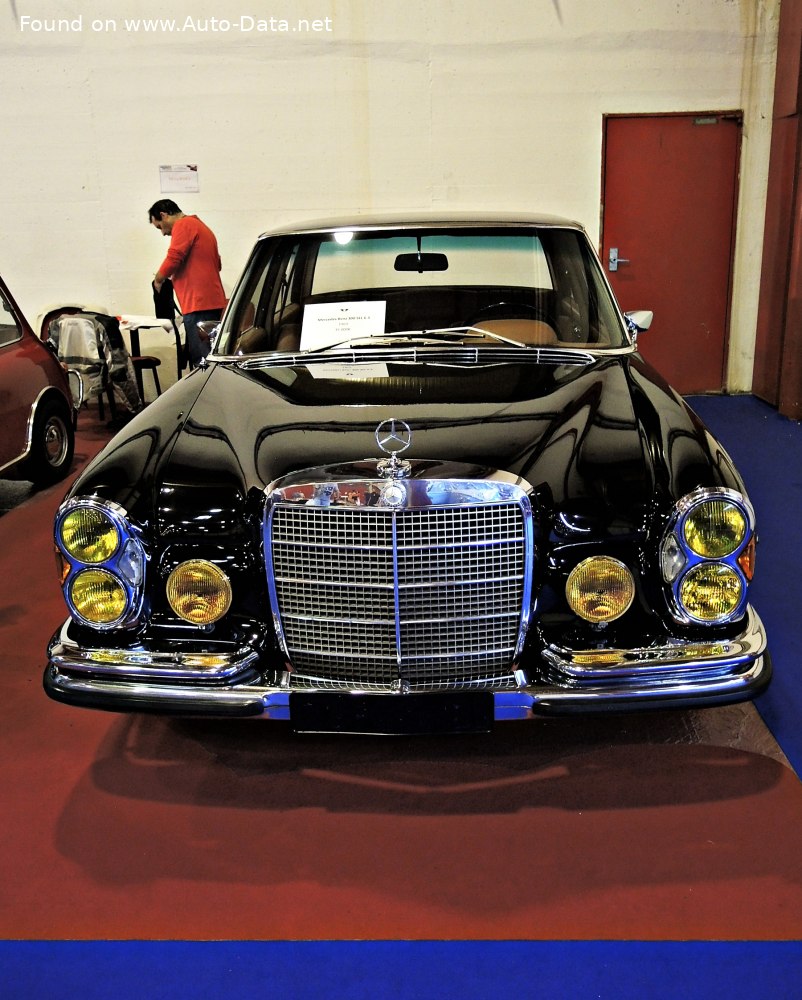
The Mercedes-Benz W109 SEL 300 SEL 3.5 V8 represents a pinnacle of luxury and engineering prowess from the late 1960s and early 1970s, establishing a benchmark for high-performance executive sedans. As part of the prestigious W109 generation, which itself was an evolution of the W108 S-Class models, the 300 SEL 3.5 V8 variant, produced from August 1969 to September 1972, stood out with its potent V8 engine and advanced features. This model was not merely a means of transport but a statement of sophistication and technological advancement, particularly in its primary European markets where it catered to discerning buyers who demanded both opulent comfort and exhilarating performance. It seamlessly blended the classic Mercedes-Benz design language with a powerful new engine, cementing its status as a desirable classic car today, revered for its heritage and mechanical impact.
Engine and Performance of the Mercedes-Benz W109 SEL 300 SEL 3.5 V8
At the heart of the Mercedes-Benz W109 SEL 300 SEL 3.5 V8 lies its formidable M 116 E 35 / 116.981 engine, a V8 unit that marked a significant step forward for Mercedes-Benz in offering more powerful, larger-displacement engines in its luxury sedans. This naturally aspirated, front-longitudinal engine boasts a displacement of 3,499 cubic centimeters (213.52 cubic inches), delivering a robust 200 horsepower at 5,800 revolutions per minute. The power output translated to a respectable 57.2 horsepower per liter, an impressive figure for its era. Complementing the horsepower, the engine generated a substantial 210.94 pound-feet of torque at 4,000 rpm, providing ample thrust for effortless cruising and spirited acceleration.
The M116 engine featured a V-engine configuration with eight cylinders, each equipped with two valves, operated by a Single Overhead Camshaft (SOHC) valvetrain. Fuel delivery was managed by a multi-port manifold injection system, a sophisticated setup for the time, ensuring precise fuel metering and efficient combustion. With a compression ratio of 9.5:1, the engine was designed to operate optimally on gasoline, offering a blend of performance and reliability. The cylinder bore measured 3.62 inches, with a piston stroke of 2.59 inches, indicating an oversquare design that favored higher RPMs and power output.
Performance figures for the 300 SEL 3.5 V8 were quite remarkable for a luxury sedan of its vintage. It could accelerate from 0 to 60 miles per hour in a brisk 8.6 seconds, a testament to the engine’s power and the car’s relatively low curb weight of 3,593.53 pounds. The top speed was rated at 130.49 mph (210 km/h), allowing it to comfortably keep pace on the burgeoning European autobahns. Power was transmitted to the rear wheels via a 4-speed manual transmission, offering engaging driver control. The drivetrain architecture, with its internal combustion engine driving the rear wheels, was a classic and proven setup for luxury vehicles, providing balanced handling and excellent traction. Fuel economy, while not the primary concern for buyers of such a vehicle, was rated at approximately 18.1 US miles per gallon combined, reflecting the technology and expectations of the period.
Design and Features of the W109 SEL
The W109 generation, particularly the 300 SEL 3.5 V8, epitomized Mercedes-Benz’s design philosophy of timeless elegance and functional luxury. As a four-door sedan with seating for five, its exterior dimensions were substantial, measuring 196.85 inches in length, 71.26 inches in width, and 56.69 inches in height. The generous 112.2-inch wheelbase contributed significantly to its stately presence and provided a spacious, comfortable cabin for occupants. The design was characterized by clean lines, a prominent grille, and a sense of understated grandeur that has made it an enduring classic.
Beyond its aesthetic appeal, the W109 SEL was a technological showcase for its time, particularly in its suspension system. A hallmark feature was its sophisticated air suspension, utilized at both the front (double wishbone) and rear (trailing arm). This advanced system provided an exceptionally smooth and comfortable ride, isolating occupants from road imperfections and allowing for automatic self-leveling, regardless of load. This feature was a significant factor in the car’s reputation for superior ride quality and remains a key aspect of its mechanical impact.
Braking performance was handled by disc brakes on both the front and rear wheels, a forward-thinking safety feature for the late 1960s, offering superior stopping power and fade resistance compared to drum brakes. Steering was managed by a cone worm system with recirculation balls, enhanced by hydraulic power steering, ensuring light and precise control even for a vehicle of its size. The car rode on 6J x 14-inch wheel rims, providing a balanced contact patch and contributing to its composed handling. With a curb weight of 3,593.53 pounds and a maximum permissible weight of 4,695.85 pounds, indicating a robust construction and significant load-carrying capacity, the 300 SEL 3.5 V8 was engineered for durability and long-distance comfort, truly reflecting its status as a flagship luxury sedan.
Technical Specifications
| Brand | Mercedes-Benz |
| Model | W109 |
| Generation | W109 SEL |
| Type (Engine) | 300 SEL 3.5 V8 (200 Hp) |
| Start of production | August, 1969 year |
| End of production | September, 1972 year |
| Powertrain Architecture | Internal Combustion engine |
| Body type | Sedan |
| Seats | 5 |
| Doors | 4 |
| Fuel consumption (economy) – combined | 18.1 US mpg (13 l/100 km) |
| Fuel Type | Petrol (Gasoline) |
| Acceleration 0 – 60 mph | 8.6 sec |
| Maximum speed | 130.49 mph (210 km/h) |
| Weight-to-power ratio | 8.2 kg/Hp, 122.7 Hp/tonne |
| Weight-to-torque ratio | 5.7 kg/Nm, 175.5 Nm/tonne |
| Power | 200 Hp @ 5800 rpm. |
| Power per liter | 57.2 Hp/l |
| Torque | 210.94 lb.-ft. @ 4000 rpm. (286 Nm) |
| Engine layout | Front, Longitudinal |
| Engine Model/Code | M 116 E 35 / 116.981 |
| Engine displacement | 213.52 cu. in. (3499 cm3) |
| Number of cylinders | 8 |
| Engine configuration | V-engine |
| Cylinder Bore | 3.62 in. (92 mm) |
| Piston Stroke | 2.59 in. (65.81 mm) |
| Compression ratio | 9.5:1 |
| Number of valves per cylinder | 2 |
| Fuel injection system | Multi-port manifold injection |
| Engine aspiration | Naturally aspirated engine |
| Valvetrain | SOHC |
| Curb Weight | 3593.53 lbs (1630 kg) |
| Max. weight | 4695.85 lbs (2130 kg) |
| Max load | 1102.31 lbs (500 kg) |
| Fuel tank capacity | 21.66 US gal (82 l) |
| Length | 196.85 in. (5000 mm) |
| Width | 71.26 in. (1810 mm) |
| Height | 56.69 in. (1440 mm) |
| Wheelbase | 112.2 in. (2850 mm) |
| Front track | 58.35 in. (1482 mm) |
| Rear (Back) track | 58.46 in. (1485 mm) |
| Drivetrain Architecture | The Internal combustion engine (ICE) drives the rear wheels of the vehicle. |
| Drive wheel | Rear wheel drive |
| Number of gears and type of gearbox | 4 gears, manual transmission |
| Front suspension | Double wishbone, Air suspension |
| Rear suspension | Air suspension, Trailing arm |
| Front brakes | Disc |
| Rear brakes | Disc |
| Steering type | Cone worm with recirculation balls |
| Power steering | Hydraulic Steering |
| Wheel rims size | 6J x 14 |
