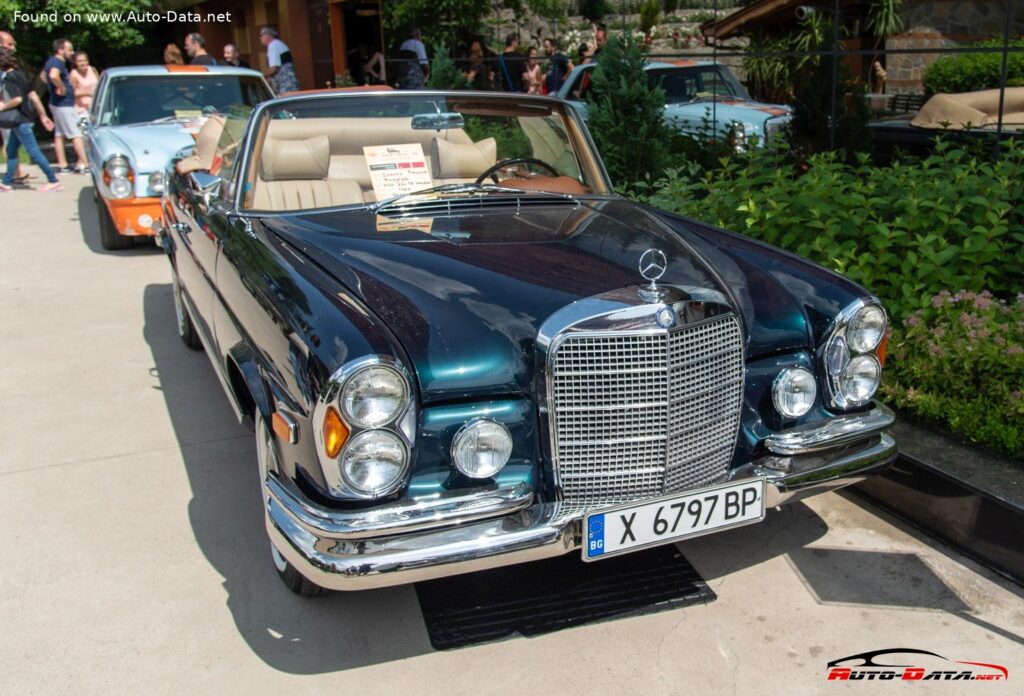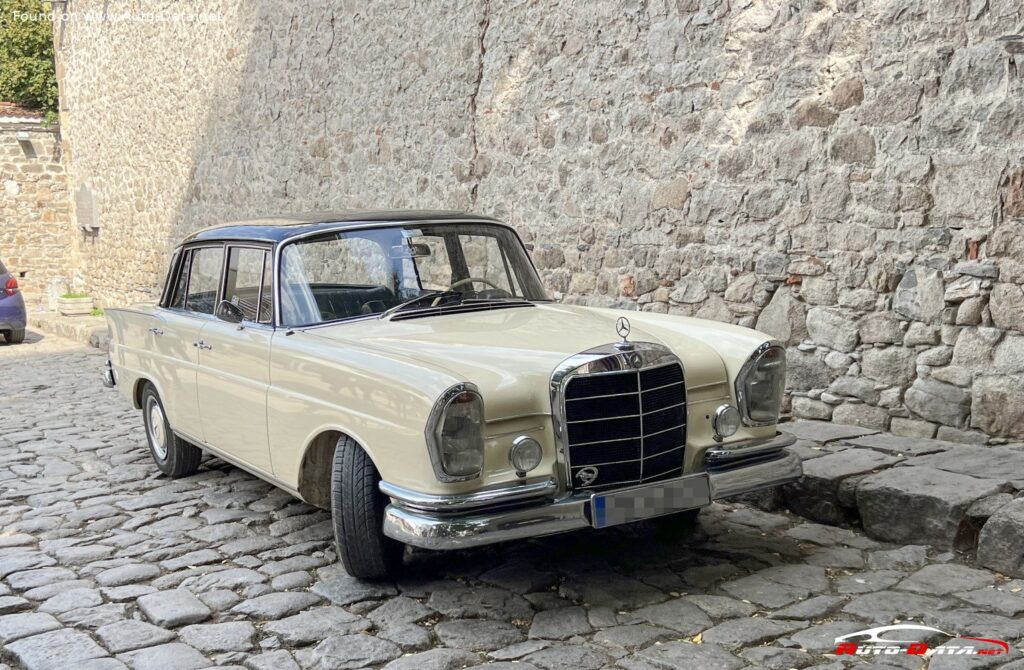
The Mercedes-Benz W111 Coupe 280 SE 3.5 V8, produced between November 1969 and July 1971, represents the pinnacle of the W111 series, often considered one of the most elegant and technologically advanced grand tourers of its era. As a two-door coupe variant of the W111 “Fintail” sedan, it offered a more sporting and luxurious experience. While the W111 series was sold globally, the Coupe, particularly the 3.5 V8 version, was aimed at the upper echelons of the automotive market, competing with vehicles like the Jaguar E-Type and the BMW 2800 CS. This model is highly sought after by collectors today for its combination of classic styling, robust engineering, and powerful V8 engine.
The Mercedes-Benz W111 Coupe: A Legacy of Engineering
The W111 series, introduced in 1959, was a significant step forward for Mercedes-Benz, incorporating advanced safety features like crumple zones – a relatively new concept at the time. The Coupe, launched later in the production run, built upon this foundation with a more refined and exclusive character. The 280 SE 3.5 V8 represented the ultimate evolution of the W111, featuring a larger, more powerful engine and improved specifications throughout. It was a statement of German engineering prowess and a symbol of sophisticated motoring.
Engine & Performance
The heart of the 280 SE 3.5 V8 Coupe is its 3.5-liter (3499 cm3, 213.52 cu. in.) M 116 E 35 V8 engine. This engine, producing 200 horsepower at 5800 rpm and 286 Nm (210.94 lb.-ft.) of torque at 4000 rpm, provided a substantial increase in performance compared to earlier W111 models. The engine featured multi-port manifold fuel injection, a sophisticated system for the time, contributing to smooth power delivery and improved fuel efficiency. Power per liter was a respectable 57.2 Hp/l. This power was channeled through a four-speed automatic transmission to the rear wheels, allowing for a 0-60 mph (0-96 km/h) acceleration time of approximately 8.9 seconds and a top speed of 205 km/h (127.38 mph). The weight-to-power ratio of 7.9 kg/Hp and weight-to-torque ratio of 5.5 kg/Nm further highlight the engine’s capability. The engine’s longitudinal front-mounted layout contributed to balanced handling.
Design & Features
The W111 Coupe’s design is characterized by its elegant lines, low roofline, and distinctive “fintail” rear end – a styling cue that gave the series its nickname. The 280 SE 3.5 V8 Coupe featured a more refined interior than earlier models, with high-quality materials and meticulous craftsmanship. The vehicle comfortably seats five passengers, although the rear seats are best suited for shorter journeys. Standard features included power steering, disc brakes on all four wheels, and a sophisticated suspension system designed to provide a comfortable ride. The front suspension utilized a double wishbone setup with a transverse stabilizer, while the rear employed a hydro-pneumatic element and trailing arm configuration. The car’s dimensions – 4905 mm (193.11 in.) in length, 1845 mm (72.64 in.) in width, and 1410 mm (55.51 in.) in height – positioned it as a substantial grand tourer. The 82-liter (21.66 US gal) fuel tank provided a reasonable range for long-distance travel, despite the combined fuel consumption of 13 l/100 km (18.1 US mpg).
Technical Specifications
| Brand | Mercedes-Benz |
| Model | W111 |
| Generation | W111 Coupe |
| Type (Engine) | 280 SE 3.5 V8 (200 Hp) Automatic |
| Start of production | November, 1969 |
| End of production | July, 1971 |
| Powertrain Architecture | Internal Combustion engine |
| Body type | Coupe |
| Seats | 5 |
| Doors | 2 |
| Fuel consumption (economy) – combined | 13 l/100 km |
| Fuel consumption (economy) – combined (US mpg) | 18.1 US mpg |
| Fuel consumption (economy) – combined (UK mpg) | 21.7 UK mpg |
| Fuel consumption (economy) – combined (km/l) | 7.7 km/l |
| Fuel Type | Petrol (Gasoline) |
| Acceleration 0 – 100 km/h | 9.4 sec |
| Acceleration 0 – 62 mph | 9.4 sec |
| Acceleration 0 – 60 mph | 8.9 sec |
| Maximum speed | 205 km/h |
| Maximum speed (mph) | 127.38 mph |
| Weight-to-power ratio | 7.9 kg/Hp |
| Weight-to-torque ratio | 5.5 kg/Nm |
| Power | 200 Hp @ 5800 rpm |
| Power per litre | 57.2 Hp/l |
| Torque | 286 Nm @ 4000 rpm |
| Torque (lb.-ft.) | 210.94 lb.-ft. @ 4000 rpm |
| Engine layout | Front, Longitudinal |
| Engine Model/Code | M 116 E 35 / 116.980 |
| Engine displacement | 3499 cm3 |
| Engine displacement (cu. in.) | 213.52 cu. in. |
| Number of cylinders | 8 |
| Engine configuration | V-engine |
| Cylinder Bore | 92 mm |
| Cylinder Bore (in.) | 3.62 in. |
| Piston Stroke | 65.8 mm |
| Piston Stroke (in.) | 2.59 in. |
| Compression ratio | 9.5:1 |
| Number of valves per cylinder | 2 |
| Fuel injection system | Multi-port manifold injection |
| Engine aspiration | Naturally aspirated engine |
| Valvetrain | SOHC |
| Kerb Weight | 1570 kg |
| Kerb Weight (lbs.) | 3461.26 lbs. |
| Max. weight | 2040 kg |
| Max. weight (lbs.) | 4497.43 lbs. |
| Max load | 470 kg |
| Max load (lbs.) | 1036.17 lbs. |
| Fuel tank capacity | 82 l |
| Fuel tank capacity (US gal) | 21.66 US gal |
| Fuel tank capacity (UK gal) | 18.04 UK gal |
| Length | 4905 mm |
| Length (in.) | 193.11 in. |
| Width | 1845 mm |
| Width (in.) | 72.64 in. |
| Height | 1410 mm |
| Height (in.) | 55.51 in. |
| Wheelbase | 2750 mm |
| Wheelbase (in.) | 108.27 in. |
| Front track | 1482 mm |
| Front track (in.) | 58.35 in. |
| Rear (Back) track | 1485 mm |
| Rear (Back) track (in.) | 58.46 in. |
| Drivetrain Architecture | The Internal combustion engine (ICE) drives the rear wheels of the vehicle. |
| Drive wheel | Rear wheel drive |
| Number of gears and type of gearbox | 4 gears, automatic transmission |
| Front suspension | Double wishbone, Transverse stabilizer |
| Rear suspension | Hydro-pneumatic element, Trailing arm |
| Front brakes | Disc |
| Rear brakes | Disc |
| Steering type | Cone worm with recirculation balls |
| Power steering | Hydraulic Steering |
| Wheel rims size | 6J x 14 |
The Mercedes-Benz W111 Coupe 280 SE 3.5 V8 remains a highly desirable classic car, representing a golden age of automotive design and engineering. Its combination of luxury, performance, and build quality ensures its continued appeal to enthusiasts and collectors worldwide.