
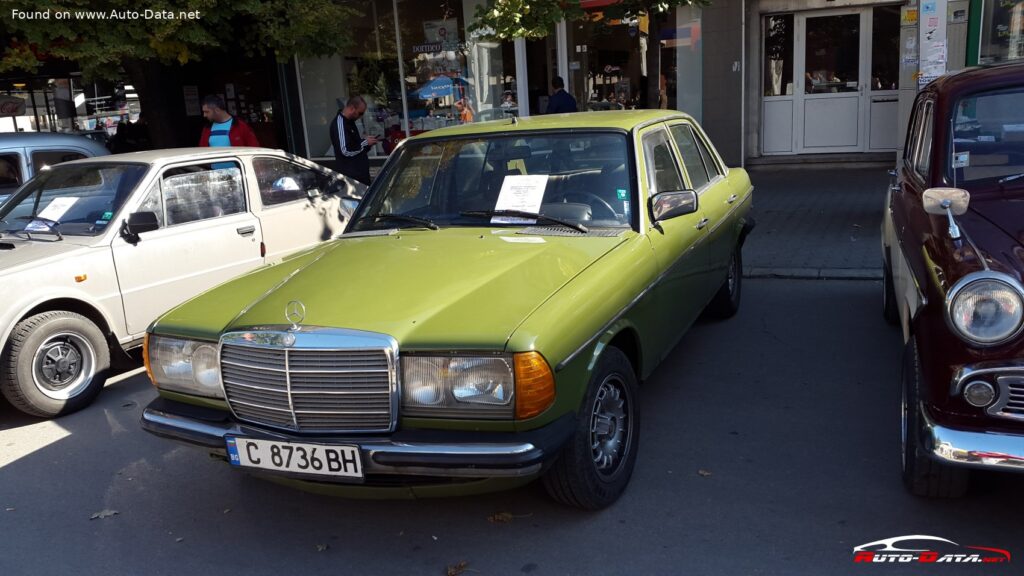
The Mercedes-Benz W123, produced from January 1975 to April 1985, represents a pivotal generation in the lineage of the iconic Mercedes-Benz E-Class. Serving as the successor to the W114 and W115, the W123 established new benchmarks for safety, comfort, and engineering refinement in the mid-size executive car segment. While offered with a range of engine options, the 200 D variant, powered by a 2.0-liter diesel engine producing 55 horsepower, was a particularly significant model, especially in European markets where diesel fuel was more prevalent and economically advantageous. This article details the specifications and characteristics of the W123 200 D, focusing on its technical aspects and place within the automotive landscape of its time.
The Mercedes-Benz W123 200 D: A Detailed Overview
The W123 was a global success for Mercedes-Benz, though its market presence varied. In North America, it was initially offered with gasoline engines due to stricter emissions regulations. However, in Europe, the diesel-powered models, like the 200 D, were highly popular due to their fuel efficiency and durability. The W123 was available in sedan (saloon), coupe, and estate (wagon) body styles, with the sedan being the most common. The 200 D specifically targeted buyers seeking a practical, reliable, and economical vehicle for daily commuting and long-distance travel.
Engine & Performance
The heart of the W123 200 D is its OM 615 D 20 inline-four cylinder diesel engine, displacing 1988 cubic centimeters (121.32 cubic inches). This naturally aspirated engine produces 55 horsepower at 4200 rpm and 113 Newton-meters (83.34 lb.-ft.) of torque at 2400 rpm. While the horsepower figure may seem modest by modern standards, the engine’s torque characteristics provide adequate performance for everyday driving. The engine utilizes precombustion chamber injection, a common diesel technology of the era, to improve combustion efficiency. Power per liter is rated at 27.7 hp/l.
Performance figures reflect the engine’s focus on economy rather than outright speed. Acceleration from 0 to 100 km/h (0-62 mph) takes approximately 27.4 seconds, while 0 to 60 mph is achieved in around 26 seconds. The top speed is limited to 135 km/h (83.89 mph). The W123 200 D’s drivetrain is rear-wheel drive, coupled with a 4-speed automatic transmission. The weight-to-power ratio is 25.3 kg/Hp, and the weight-to-torque ratio is 12.3 kg/Nm.
Design & Features
The W123 sedan is a four-door, five-seater vehicle characterized by its clean, understated styling. Its design prioritized functionality and durability over flamboyant aesthetics. The body dimensions are 4725 mm (186.02 in) in length, 1786 mm (70.31 in) in width, and 1438 mm (56.61 in) in height, with a wheelbase of 2795 mm (110.04 in). The kerb weight is 1390 kg (3064.43 lbs), with a maximum permissible weight of 1910 kg (4210.83 lbs) and a maximum load capacity of 520 kg (1146.4 lbs).
Safety features, while basic by today’s standards, were advanced for the 1970s and 80s. The W123 incorporated a reinforced passenger safety cell, crumple zones, and disc brakes on all four wheels. The steering system is a cone worm with recirculation balls. Suspension consists of a double wishbone setup at the front and a trailing arm arrangement at the rear, providing a comfortable ride. The vehicle rides on 5.5J x 14 inch wheel rims. The fuel tank capacity is 65 liters (17.17 US gal | 14.3 UK gal).
Technical Specifications
| Brand | Mercedes-Benz |
| Model | W123 |
| Generation | W123 |
| Type (Engine) | 200 D (55 Hp) |
| Start of production | January, 1975 |
| End of production | April, 1985 |
| Powertrain Architecture | Internal Combustion engine |
| Body type | Sedan |
| Seats | 5 |
| Doors | 4 |
| Fuel consumption (urban) | 9.5 l/100 km (24.8 US mpg, 29.7 UK mpg, 10.5 km/l) |
| Fuel consumption (extra urban) | 7.1 l/100 km (33.1 US mpg, 39.8 UK mpg, 14.1 km/l) |
| Fuel Type | Diesel |
| Acceleration 0 – 100 km/h | 27.4 sec |
| Acceleration 0 – 62 mph | 27.4 sec |
| Acceleration 0 – 60 mph | 26 sec |
| Maximum speed | 135 km/h (83.89 mph) |
| Weight-to-power ratio | 25.3 kg/Hp |
| Weight-to-torque ratio | 12.3 kg/Nm |
| Power | 55 Hp @ 4200 rpm |
| Power per litre | 27.7 Hp/l |
| Torque | 113 Nm @ 2400 rpm (83.34 lb.-ft. @ 2400 rpm) |
| Engine layout | Front, Longitudinal |
| Engine Model/Code | OM 615 D 20 / 615.940 |
| Engine displacement | 1988 cm3 (121.32 cu. in.) |
| Number of cylinders | 4 |
| Engine configuration | Inline |
| Cylinder Bore | 87 mm (3.43 in.) |
| Piston Stroke | 83.6 mm (3.29 in.) |
| Compression ratio | 21.5:1 |
| Number of valves per cylinder | 2 |
| Fuel injection system | Precombustion chamber injection |
| Engine aspiration | Naturally aspirated engine |
| Valvetrain | SOHC |
| Engine oil capacity | 6.5 l (6.87 US qt | 5.72 UK qt) |
| Coolant | 10 l (10.57 US qt | 8.8 UK qt) |
| Kerb Weight | 1390 kg (3064.43 lbs.) |
| Max. weight | 1910 kg (4210.83 lbs.) |
| Max load | 520 kg (1146.4 lbs.) |
| Fuel tank capacity | 65 l (17.17 US gal | 14.3 UK gal) |
| Length | 4725 mm (186.02 in.) |
| Width | 1786 mm (70.31 in.) |
| Height | 1438 mm (56.61 in.) |
| Wheelbase | 2795 mm (110.04 in.) |
| Front track | 1488 mm (58.58 in.) |
| Rear track | 1446 mm (56.93 in.) |
| Drive wheel | Rear wheel drive |
| Number of gears | 4 gears, automatic transmission |
| Front suspension | Double wishbone |
| Rear suspension | Trailing arm |
| Front brakes | Disc |
| Rear brakes | Disc |
| Steering type | Cone worm with recirculation balls |
| Wheel rims size | Front wheel rims: 5.5J x 14Rear wheel rims: 5.5J x 14 |
The Mercedes-Benz W123 200 D, while not a performance icon, remains a highly respected vehicle. Its robust construction, fuel efficiency, and comfortable ride cemented its reputation as a reliable and practical family car, particularly in Europe. The W123’s enduring appeal has made it a popular choice among classic car enthusiasts and collectors, representing a high point in Mercedes-Benz engineering and design.
