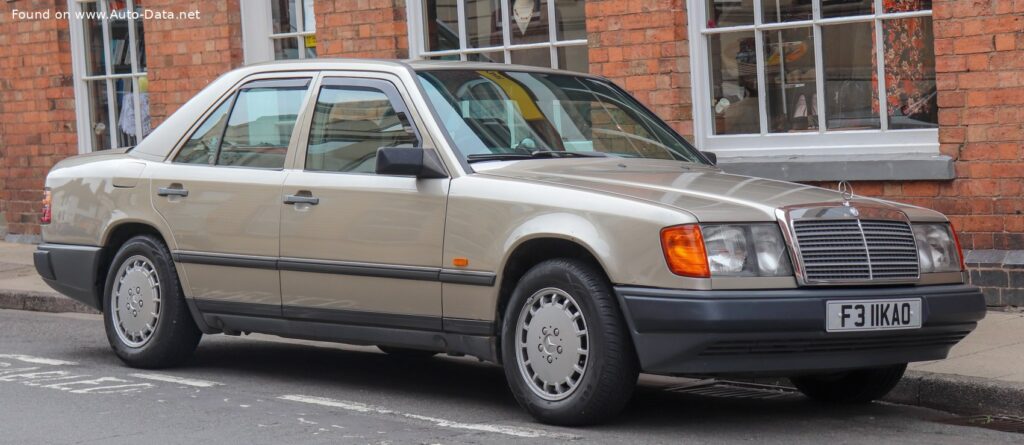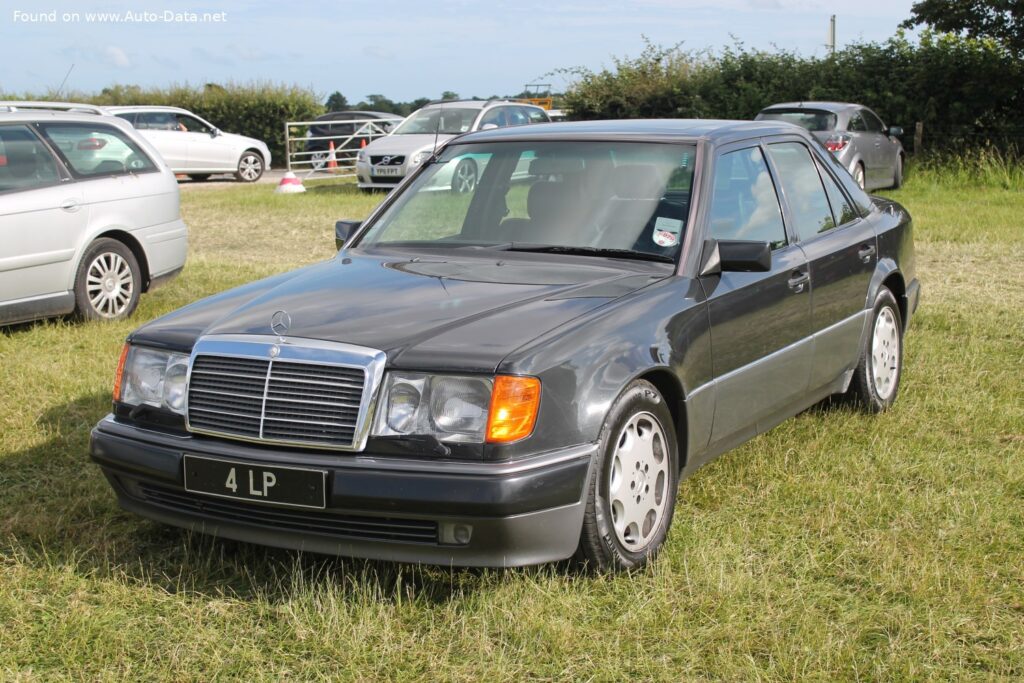
The Mercedes-Benz W124 represents a pivotal era for the German automaker, bridging the gap between the earlier, more utilitarian W115 and W123 models and the more technologically advanced designs of the 1990s. Produced from 1985 to 1996, the W124 was lauded for its robust build quality, sophisticated engineering, and understated elegance. The 1989 facelift brought subtle but significant improvements to the design and mechanicals, solidifying the W124’s reputation as a durable and comfortable mid-size executive car. The 200 model, powered by a 2.0-liter engine producing 105 horsepower, served as an entry point into the W124 range, offering a balance of performance and fuel efficiency.
Mercedes-Benz W124 (Facelift 1989) 200
The W124 200, specifically the version produced after the 1989 facelift, was primarily aimed at the European market. While not directly sold in the United States during its production run due to evolving emissions and safety standards, the W124 in general gained a strong following among enthusiasts who appreciated its build quality and timeless design. The 200 model offered a more economical option within the W124 lineup, appealing to buyers seeking a comfortable and reliable sedan without the higher costs associated with the larger-displacement engines.
Engine & Performance
The heart of the W124 200 is the M102 V 20 engine, a 1,996 cc (121.8 cu. in.) inline-four cylinder powerplant. This engine, producing 105 horsepower at 5,500 rpm and 158 Nm (116.53 lb.-ft.) of torque at 3,500 rpm, was known for its durability and smooth operation. The engine utilized a carburettor fuel injection system, a common feature for the time, and a single overhead camshaft (SOHC) valvetrain. Acceleration from 0 to 100 km/h (0-62 mph) took approximately 13 seconds, while reaching 0 to 60 mph required 12.4 seconds. The top speed was rated at 185 km/h (114.95 mph). The engine’s power-to-weight ratio was 12.6 kg/Hp, and the power per litre was 52.6 Hp/l. The engine required 5 liters (5.28 US qt | 4.4 UK qt) of engine oil and 8.5 liters (8.98 US qt | 7.48 UK qt) of coolant for optimal operation.
Design & Features
The W124 200 is a four-door sedan with a classic three-box design. The 1989 facelift brought subtle refinements to the exterior, including a revised front grille, updated headlights, and smoother body lines. The interior was characterized by its high-quality materials, comfortable seating for five passengers, and a focus on practicality. Safety features, while not as comprehensive as modern standards, included disc brakes on all four wheels and an Anti-lock Braking System (ABS), which was becoming increasingly common in this class of vehicle. The W124’s independent multi-link rear suspension contributed to a comfortable ride and stable handling. The steering system employed a cone worm with recirculation balls, coupled with hydraulic power steering for ease of maneuverability. The vehicle rode on 185/65 R15 tires mounted on 6J x 15 inch wheel rims.
Technical Specifications
| Brand | Mercedes-Benz |
| Model | W124 |
| Generation | W124 (facelift 1989) |
| Type (Engine) | 200 (105 Hp) |
| Start of production | September, 1989 |
| End of production | June, 1990 |
| Powertrain Architecture | Internal Combustion engine |
| Body type | Sedan |
| Seats | 5 |
| Doors | 4 |
| Fuel consumption (urban) | 11.4 l/100 km (20.6 US mpg, 24.8 UK mpg, 8.8 km/l) |
| Fuel consumption (extra urban) | 7 l/100 km (33.6 US mpg, 40.4 UK mpg, 14.3 km/l) |
| Fuel Type | Petrol (Gasoline) |
| Acceleration 0 – 100 km/h | 13 sec |
| Acceleration 0 – 62 mph | 13 sec |
| Acceleration 0 – 60 mph | 12.4 sec |
| Maximum speed | 185 km/h (114.95 mph) |
| Weight-to-power ratio | 12.6 kg/Hp |
| Weight-to-torque ratio | 8.4 kg/Nm |
| Power | 105 Hp @ 5500 rpm |
| Torque | 158 Nm @ 3500 rpm (116.53 lb.-ft. @ 3500 rpm) |
| Engine layout | Front, Longitudinal |
| Engine Model/Code | M 102 V 20 / 102.922 |
| Engine displacement | 1996 cm3 (121.8 cu. in.) |
| Number of cylinders | 4 |
| Engine configuration | Inline |
| Cylinder Bore | 89 mm (3.5 in.) |
| Piston Stroke | 80.2 mm (3.16 in.) |
| Compression ratio | 9.1:1 |
| Number of valves per cylinder | 2 |
| Fuel injection system | Carburettor |
| Engine aspiration | Naturally aspirated engine |
| Valvetrain | SOHC |
| Engine oil capacity | 5 l (5.28 US qt | 4.4 UK qt) |
| Coolant | 8.5 l (8.98 US qt | 7.48 UK qt) |
| Kerb Weight | 1320 kg (2910.1 lbs.) |
| Max. weight | 1840 kg (4056.51 lbs.) |
| Max load | 520 kg (1146.4 lbs.) |
| Fuel tank capacity | 70 l (18.49 US gal | 15.4 UK gal) |
| Length | 4740 mm (186.61 in.) |
| Width | 1740 mm (68.5 in.) |
| Height | 1423 mm (56.02 in.) |
| Wheelbase | 2800 mm (110.24 in.) |
| Front track | 1501 mm (59.09 in.) |
| Rear track | 1491 mm (58.7 in.) |
| Drivetrain Architecture | Rear wheel drive |
| Drive wheel | Rear wheel drive |
| Number of gears | 5 gears, manual transmission |
| Front suspension | Wishbone |
| Rear suspension | Independent multi-link suspension |
| Front brakes | Disc |
| Rear brakes | Disc |
| Assisting systems | ABS (Anti-lock braking system) |
| Steering type | Cone worm with recirculation balls |
| Power steering | Hydraulic Steering |
| Front tire size | 185/65 R15 |
| Rear tire size | 185/65 R15 |
| Front wheel rim size | 6J x 15 |
| Rear wheel rim size | 6J x 15 |
The Mercedes-Benz W124 200, even in its base configuration, represented a significant step forward in automotive engineering and design. Its enduring appeal lies in its combination of comfort, reliability, and understated elegance, making it a sought-after classic among Mercedes-Benz enthusiasts.