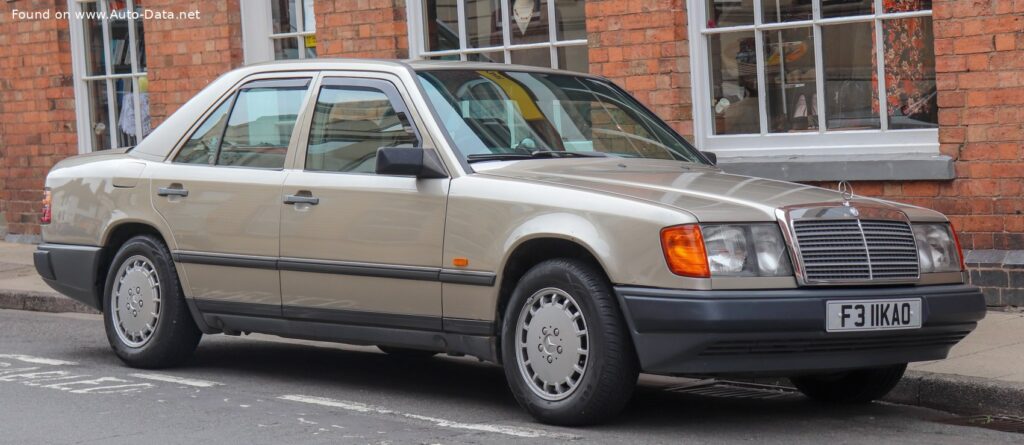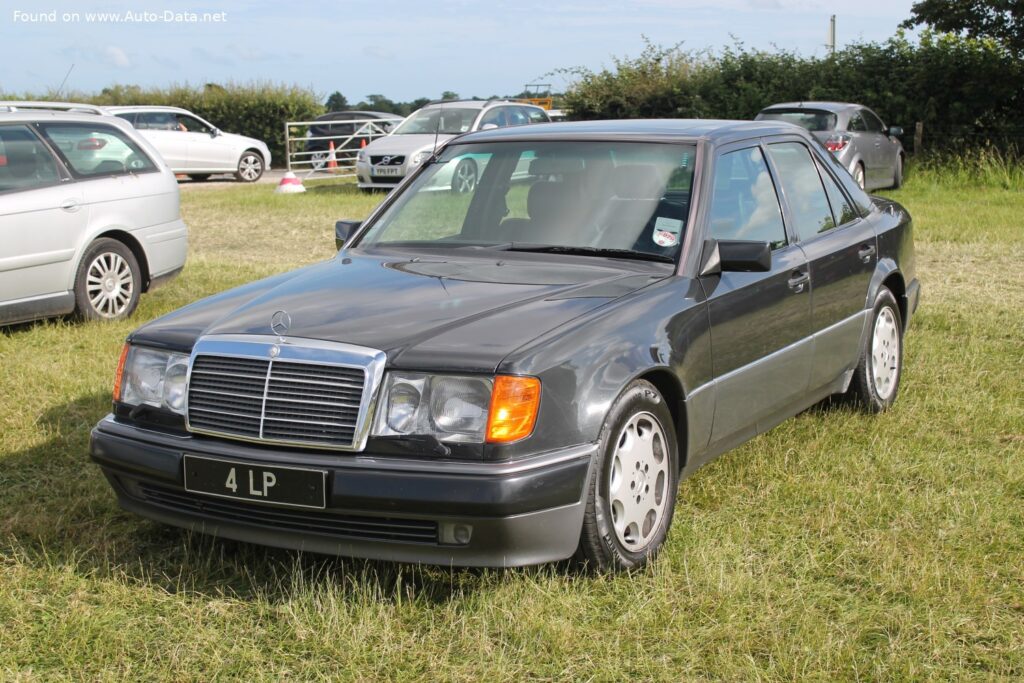
The Mercedes-Benz W124 represents a pivotal era for the German automaker, bridging the gap between the earlier, more utilitarian W115 and W123 models and the more technologically advanced designs of the 1990s. Produced from 1985 to 1996, the W124 was lauded for its robust build quality, sophisticated engineering, and understated elegance. The 1989 facelift brought subtle but significant improvements to the design and mechanicals, solidifying the W124’s reputation as a durable and comfortable mid-size executive car. This article focuses on the W124 200 model, a 2.0-liter, naturally aspirated variant offered primarily in European markets, and its specifications as produced between September 1989 and June 1990.
Mercedes-Benz W124 200 (1989-1990): A Detailed Overview
The W124 200 occupied a crucial position in Mercedes-Benz’s lineup. While not typically sold in the North American market, the W124 series as a whole was highly successful in Europe, Australia, and other regions. The 200 model served as an entry point into the W124 range, offering a balance of fuel efficiency and respectable performance. It was designed to appeal to buyers seeking a premium sedan with the renowned Mercedes-Benz reliability and comfort, without the higher price tag associated with the larger-displacement engines.
Engine & Performance
The heart of the W124 200 is the M102 V 20 engine, a 1,996 cc (121.8 cu. in.) inline-four cylinder powerplant. This engine, producing 105 horsepower at 5,500 rpm and 158 Nm (116.53 lb.-ft.) of torque at 3,500 rpm, was known for its smoothness and durability. The engine utilized a single overhead camshaft (SOHC) valvetrain and a carburetor fuel injection system – a relatively conventional setup for the time. While not a performance-oriented engine, it provided adequate power for comfortable cruising and everyday driving. The engine’s power-to-weight ratio of 12.6 kg/Hp and torque-to-weight ratio of 8.4 kg/Nm contributed to a respectable, if not exhilarating, driving experience.
Power is delivered to the rear wheels via a four-speed automatic transmission. Acceleration from 0 to 100 km/h (0-62 mph) takes 13.5 seconds, while 0 to 60 mph is achieved in approximately 12.8 seconds. The W124 200 has a maximum speed of 180 km/h (111.85 mph). Fuel economy is rated at 11.2 l/100 km (21 US mpg) in urban conditions and 7.6 l/100 km (30.9 US mpg) on the open road.
Design & Features
The W124 200 is a four-door sedan with a classic, understated design. The 1989 facelift brought minor cosmetic changes, including revised front and rear styling, improved aerodynamics, and updated interior trim. The body’s design prioritized safety and passenger comfort, featuring a robust safety cell and crumple zones. The interior was characterized by high-quality materials and a functional layout, typical of Mercedes-Benz at the time.
Standard features included power steering, disc brakes on all four wheels, and an anti-lock braking system (ABS), enhancing safety and control. The W124’s suspension system – featuring a wishbone front suspension and an independent multi-link rear suspension – provided a comfortable and controlled ride. The vehicle has seating for five passengers and offers a generous 70-liter (18.49 US gal) fuel tank, providing a substantial driving range. The W124’s design emphasized practicality and longevity, making it a popular choice for families and business professionals alike.
Technical Specifications
| Brand | Mercedes-Benz |
| Model | W124 |
| Generation | W124 (facelift 1989) |
| Type (Engine) | 200 (105 Hp) Automatic |
| Start of production | September, 1989 |
| End of production | June, 1990 |
| Powertrain Architecture | Internal Combustion engine |
| Body type | Sedan |
| Seats | 5 |
| Doors | 4 |
| Fuel consumption (urban) | 11.2 l/100 km (21 US mpg) |
| Fuel consumption (extra urban) | 7.6 l/100 km (30.9 US mpg) |
| Fuel Type | Petrol (Gasoline) |
| Acceleration 0 – 100 km/h | 13.5 sec |
| Acceleration 0 – 62 mph | 13.5 sec |
| Acceleration 0 – 60 mph | 12.8 sec |
| Maximum speed | 180 km/h (111.85 mph) |
| Weight-to-power ratio | 12.6 kg/Hp |
| Weight-to-torque ratio | 8.4 kg/Nm |
| Power | 105 Hp @ 5500 rpm |
| Torque | 158 Nm @ 3500 rpm (116.53 lb.-ft. @ 3500 rpm) |
| Engine layout | Front, Longitudinal |
| Engine Model/Code | M 102 V 20 / 102.922 |
| Engine displacement | 1996 cm3 (121.8 cu. in.) |
| Number of cylinders | 4 |
| Engine configuration | Inline |
| Cylinder Bore | 89 mm (3.5 in.) |
| Piston Stroke | 80.2 mm (3.16 in.) |
| Compression ratio | 9.1:1 |
| Number of valves per cylinder | 2 |
| Fuel injection system | Carburettor |
| Engine aspiration | Naturally aspirated engine |
| Valvetrain | SOHC |
| Engine oil capacity | 5 l (5.28 US qt | 4.4 UK qt) |
| Coolant | 8.5 l (8.98 US qt | 7.48 UK qt) |
| Kerb Weight | 1320 kg (2910.1 lbs.) |
| Max. weight | 1840 kg (4056.51 lbs.) |
| Max load | 520 kg (1146.4 lbs.) |
| Fuel tank capacity | 70 l (18.49 US gal | 15.4 UK gal) |
| Length | 4740 mm (186.61 in.) |
| Width | 1740 mm (68.5 in.) |
| Height | 1423 mm (56.02 in.) |
| Wheelbase | 2800 mm (110.24 in.) |
| Front track | 1501 mm (59.09 in.) |
| Rear track | 1491 mm (58.7 in.) |
| Drivetrain Architecture | Rear wheel drive |
| Number of gears and type of gearbox | 4 gears, automatic transmission |
| Front suspension | Wishbone |
| Rear suspension | Independent multi-link suspension |
| Front brakes | Disc |
| Rear brakes | Disc |
| Assisting systems | ABS (Anti-lock braking system) |
| Steering type | Cone worm with recirculation balls |
| Power steering | Hydraulic Steering |
| Tires size | 185/65 R15 |
| Wheel rims size | 6J x 15 |
The Mercedes-Benz W124 200, while not a high-performance machine, represents a significant achievement in automotive engineering. Its blend of comfort, durability, and understated elegance cemented its place as a desirable and reliable mid-size sedan, particularly in European markets. The W124 series, as a whole, remains highly regarded by enthusiasts and collectors today, a testament to its enduring quality and timeless design.