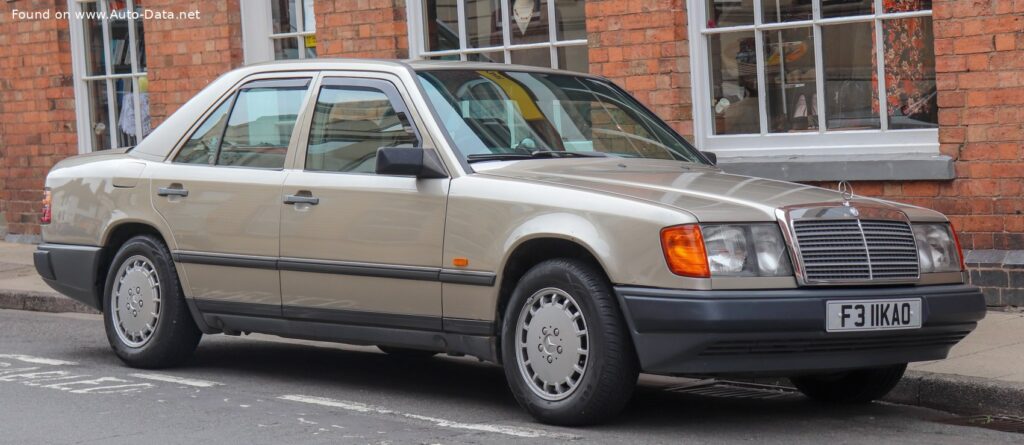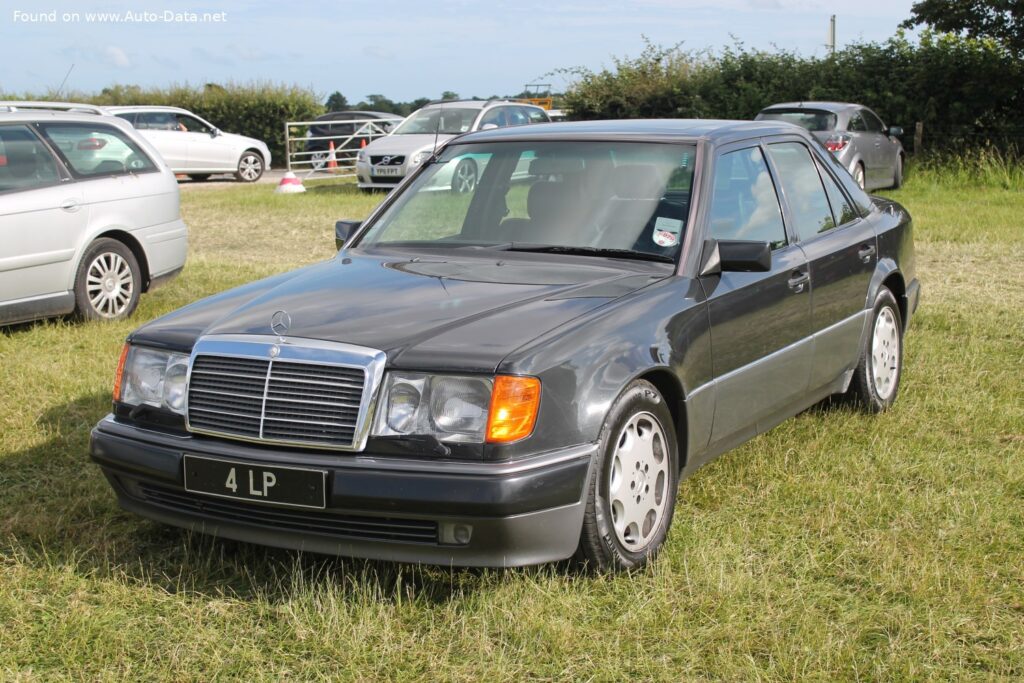
The Mercedes-Benz W124, produced from 1985 to 1996, represented a significant leap forward in engineering and design for the German automaker. The facelifted version introduced in 1989, and specifically the 250 D model with its 94 horsepower diesel engine and automatic transmission, was a popular choice in European markets for its blend of comfort, durability, and fuel efficiency. While not officially sold in the United States during its production run, the W124 has gained a dedicated following among American enthusiasts for its build quality and classic Mercedes-Benz styling. This article details the specifications and characteristics of the 1989-1993 facelifted W124 250 D.
The Mercedes-Benz W124: A Legacy of Engineering
The W124 was designed as a successor to the W201 (190E) and W123 models, aiming to combine the compact dimensions of the 190E with the spaciousness and luxury of the larger W123. The facelift in 1989 brought subtle but important changes, including revised styling, improved safety features, and updated engine options. The 250 D, powered by a 2.5-liter five-cylinder diesel engine, was positioned as a practical and economical option within the W124 range. It appealed to buyers prioritizing long-distance comfort and reliability over outright performance.
Engine & Performance
The heart of the W124 250 D is the OM 602 D 25 engine, a 2.5-liter (2497 cm3 or 152.38 cu. in.) inline five-cylinder diesel. This engine produces 94 horsepower (Hp) at 4600 rpm and 158 Nm (116.53 lb.-ft.) of torque between 2600-3100 rpm. The engine utilizes precombustion chamber injection, a common diesel technology of the era, to improve combustion efficiency. While not a performance-oriented vehicle, the 250 D offered adequate power for comfortable cruising. Acceleration from 0 to 100 km/h (0-62 mph) takes approximately 17 seconds, and 0 to 60 mph is achieved in around 16.2 seconds. The top speed is rated at 170 km/h (105.63 mph). The engine’s power-to-weight ratio is 67.6 Hp/tonne, and its torque-to-weight ratio is 113.7 Nm/tonne. Fuel economy is a strong point, with urban consumption at 8.8 l/100 km (26.7 US mpg), and extra-urban consumption at 5.9 l/100 km (39.9 US mpg).
Design & Features
The W124 250 D is a four-door sedan with a classic, understated Mercedes-Benz design. Its body is characterized by clean lines, a relatively upright stance, and a focus on practicality. The interior is well-appointed, offering seating for five passengers. Key features included hydraulic power steering, disc brakes on all four wheels, and an anti-lock braking system (ABS) – a significant safety advancement for the time. The automatic transmission provided a smooth and convenient driving experience. The W124’s robust construction and attention to detail contributed to its reputation for longevity and reliability. The vehicle’s design prioritized passenger safety, incorporating a reinforced passenger cell and crumple zones to absorb impact energy in the event of a collision. The relatively large fuel tank capacity of 70 liters (18.49 US gal) allowed for extended driving ranges between refueling stops.
Technical Specifications
| Brand | Mercedes-Benz |
| Model | W124 |
| Generation | W124 (facelift 1989) |
| Type (Engine) | 250 D (94 Hp) Automatic |
| Start of production | September, 1989 |
| End of production | July, 1993 |
| Powertrain Architecture | Internal Combustion engine |
| Body type | Sedan |
| Seats | 5 |
| Doors | 4 |
| Fuel consumption (urban) | 8.8 l/100 km (26.7 US mpg) |
| Fuel consumption (extra urban) | 5.9 l/100 km (39.9 US mpg) |
| Fuel Type | Diesel |
| Acceleration 0 – 100 km/h | 17 sec |
| Acceleration 0 – 62 mph | 17 sec |
| Acceleration 0 – 60 mph | 16.2 sec |
| Maximum speed | 170 km/h (105.63 mph) |
| Weight-to-power ratio | 14.8 kg/Hp |
| Weight-to-torque ratio | 8.8 kg/Nm |
| Power | 94 Hp @ 4600 rpm |
| Torque | 158 Nm @ 2600-3100 rpm (116.53 lb.-ft. @ 2600-3100 rpm) |
| Engine layout | Front, Longitudinal |
| Engine Model/Code | OM 602 D 25 / 602.912 |
| Engine displacement | 2497 cm3 (152.38 cu. in.) |
| Number of cylinders | 5 |
| Engine configuration | Inline |
| Cylinder Bore | 87 mm (3.43 in.) |
| Piston Stroke | 84 mm (3.31 in.) |
| Compression ratio | 22:1 |
| Number of valves per cylinder | 2 |
| Fuel injection system | Precombustion chamber injection |
| Engine aspiration | Naturally aspirated |
| Valvetrain | SOHC |
| Engine oil capacity | 7 l (7.4 US qt | 6.16 UK qt) |
| Coolant capacity | 9.5 l (10.04 US qt | 8.36 UK qt) |
| Kerb Weight | 1390 kg (3064.43 lbs.) |
| Max. weight | 1970 kg (4343.11 lbs.) |
| Max load | 580 kg (1278.68 lbs.) |
| Fuel tank capacity | 70 l (18.49 US gal | 15.4 UK gal) |
| Length | 4740 mm (186.61 in.) |
| Width | 1740 mm (68.5 in.) |
| Height | 1428 mm (56.22 in.) |
| Wheelbase | 2800 mm (110.24 in.) |
| Front track | 1501 mm (59.09 in.) |
| Rear track | 1491 mm (58.7 in.) |
| Drivetrain Architecture | Rear wheel drive |
| Drive wheel | Rear wheel drive |
| Number of gears | 4 gears, automatic transmission |
| Front suspension | Wishbone |
| Rear suspension | Independent multi-link suspension |
| Front brakes | Disc |
| Rear brakes | Disc |
| Assisting systems | ABS (Anti-lock braking system) |
| Steering type | Cone worm with recirculation balls |
| Power steering | Hydraulic |
| Tires size | 195/65 R15 |
| Wheel rims size | 6.5J x 15 |
The Mercedes-Benz W124 250 D, while not a high-performance vehicle, remains a highly regarded example of German engineering. Its combination of durability, comfort, and fuel efficiency made it a popular choice for discerning drivers, and its enduring quality ensures its continued presence on roads and among classic car enthusiasts today.