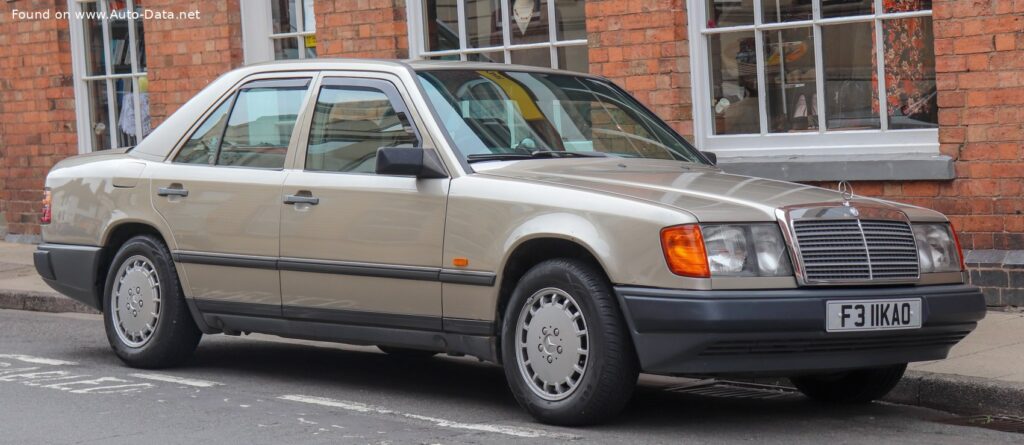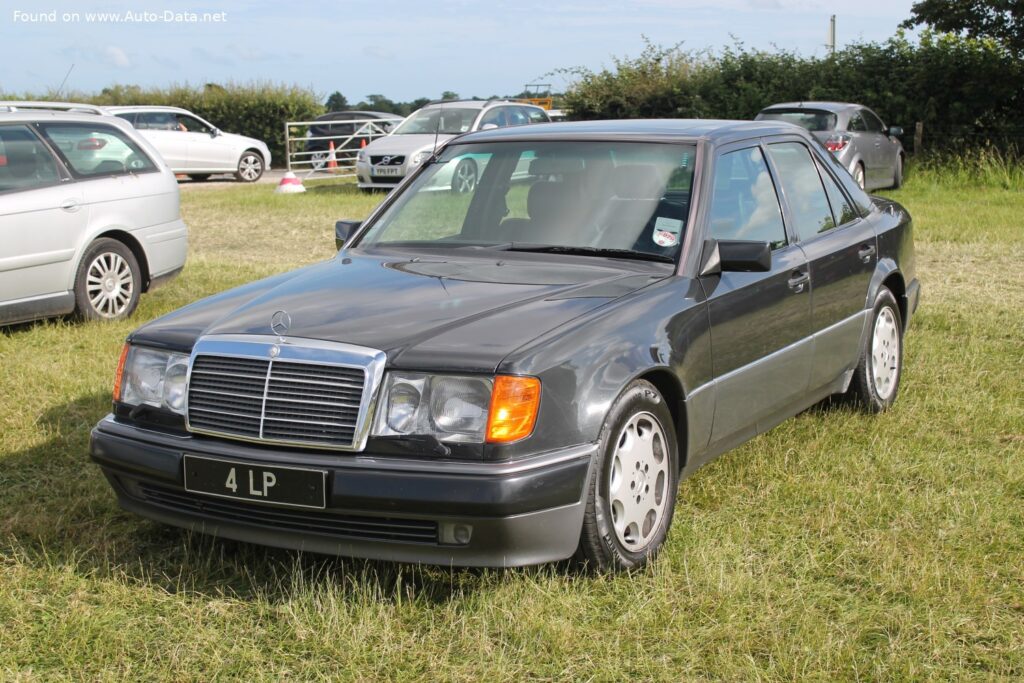
The Mercedes-Benz W124, particularly the 300 D variant produced from 1989 to 1993, represents a pivotal era for the German automaker. This facelifted version of the W124 series solidified Mercedes-Benz’s reputation for building durable, comfortable, and technologically advanced automobiles. Positioned in the mid-size luxury segment, the 300 D offered a compelling blend of performance, efficiency, and refinement, appealing to buyers seeking a sophisticated and reliable sedan. While not initially a high-volume seller in the United States due to the growing preference for gasoline engines, the W124, and especially the diesel models, became highly regarded for their longevity and build quality.
The Mercedes-Benz W124 300 D: A Refined Sedan
The W124 series, launched in 1985, was intended as a successor to the W201 (190E) and W116 models. It represented a significant step forward in terms of design, engineering, and safety. The 1989 facelift brought subtle but important changes, including revised styling, improved aerodynamics, and enhanced safety features. The 300 D, powered by a robust inline-six diesel engine, was a key component of the W124 lineup, offering a fuel-efficient alternative to the gasoline-powered models. It catered to a market that valued long-distance comfort and low running costs.
Engine & Performance
The heart of the 300 D is its 3.0-liter (2996 cm3) inline-six cylinder diesel engine, designated OM 603 D 30 / 603.912. This engine produces 113 horsepower at 4600 rpm and 210 Nm (154.89 lb.-ft.) of torque at 2800 rpm. While the horsepower figure might seem modest by modern standards, the engine’s strength lies in its torque delivery, providing ample pulling power for comfortable cruising and effortless acceleration. The engine utilizes precombustion chamber injection, a technology common in Mercedes-Benz diesels of the era, for efficient combustion and reduced emissions. Power is delivered to the rear wheels through a four-speed automatic transmission. Acceleration from 0 to 100 km/h (0-62 mph) takes 14.1 seconds, while 0 to 60 mph is achieved in approximately 13.4 seconds. The top speed is electronically limited to 185 km/h (114.95 mph). The engine’s design prioritizes durability and longevity, making these vehicles capable of accumulating very high mileage with proper maintenance.
Design & Features
The W124 300 D is a four-door sedan with a classic, understated design. The body lines are clean and elegant, reflecting the conservative styling preferences of the late 1980s and early 1990s. The interior is characterized by high-quality materials, comfortable seating for five passengers, and a focus on practicality. Key features include power steering, ventilated front disc brakes, and disc brakes on the rear axle. The inclusion of ABS (Anti-lock Braking System) was a significant safety advancement for the time. The W124’s robust construction and multi-link rear suspension contribute to a comfortable ride and stable handling. Trunk space is a generous 520 liters (18.36 cu. ft.), providing ample room for luggage. The vehicle’s dimensions are 4740 mm (186.61 in.) in length, 1740 mm (68.5 in.) in width, and 1428 mm (56.22 in.) in height, with a wheelbase of 2800 mm (110.24 in.).
Technical Specifications
| Brand | Mercedes-Benz |
| Model | W124 |
| Generation | W124 (facelift 1989) |
| Type | 300 D (113 Hp) Automatic |
| Start of production | September, 1989 |
| End of production | July, 1993 |
| Powertrain Architecture | Internal Combustion engine |
| Body type | Sedan |
| Seats | 5 |
| Doors | 4 |
| Fuel consumption (urban) | 9.3 l/100 km (25.3 US mpg) |
| Fuel consumption (extra urban) | 6.2 l/100 km (37.9 US mpg) |
| Fuel Type | Diesel |
| Acceleration 0 – 100 km/h | 14.1 sec |
| Acceleration 0 – 62 mph | 14.1 sec |
| Acceleration 0 – 60 mph | 13.4 sec |
| Maximum speed | 185 km/h (114.95 mph) |
| Weight-to-power ratio | 12.7 kg/Hp |
| Weight-to-torque ratio | 6.9 kg/Nm |
| Power | 113 Hp @ 4600 rpm |
| Torque | 210 Nm @ 2800 rpm (154.89 lb.-ft. @ 2800 rpm) |
| Engine layout | Front, Longitudinal |
| Engine Model/Code | OM 603 D 30 / 603.912 |
| Engine displacement | 2996 cm3 (182.83 cu. in.) |
| Number of cylinders | 6 |
| Engine configuration | Inline |
| Cylinder Bore | 87 mm (3.43 in.) |
| Piston Stroke | 84 mm (3.31 in.) |
| Compression ratio | 22:1 |
| Number of valves per cylinder | 2 |
| Fuel injection system | Precombustion chamber injection |
| Engine aspiration | Naturally aspirated |
| Valvetrain | SOHC |
| Engine oil capacity | 7.5 l (7.93 US qt | 6.6 UK qt) |
| Coolant capacity | 9 l (9.51 US qt | 7.92 UK qt) |
| Kerb Weight | 1440 kg (3174.66 lbs.) |
| Max. weight | 2020 kg (4453.34 lbs.) |
| Max load | 580 kg (1278.68 lbs.) |
| Trunk (boot) space | 520 l (18.36 cu. ft.) |
| Fuel tank capacity | 70 l (18.49 US gal | 15.4 UK gal) |
| Length | 4740 mm (186.61 in.) |
| Width | 1740 mm (68.5 in.) |
| Height | 1428 mm (56.22 in.) |
| Wheelbase | 2800 mm (110.24 in.) |
| Front track | 1501 mm (59.09 in.) |
| Rear track | 1491 mm (58.7 in.) |
| Drivetrain | Rear wheel drive |
| Number of gears | 4 |
| Gearbox type | Automatic transmission |
| Front suspension | Wishbone |
| Rear suspension | Independent multi-link suspension |
| Front brakes | Ventilated discs |
| Rear brakes | Disc |
| Assisting systems | ABS (Anti-lock braking system) |
| Steering type | Cone worm with recirculation balls |
| Power steering | Hydraulic |
| Tires size | 195/65 R15 |
| Wheel rims size | 6.5J x 15 |
The Mercedes-Benz W124 300 D remains a highly sought-after vehicle among enthusiasts and collectors. Its combination of robust engineering, comfortable ride, and fuel efficiency has ensured its enduring appeal. The W124 series, and the 300 D in particular, stands as a testament to Mercedes-Benz’s commitment to quality and durability, representing a golden age of German automotive engineering.