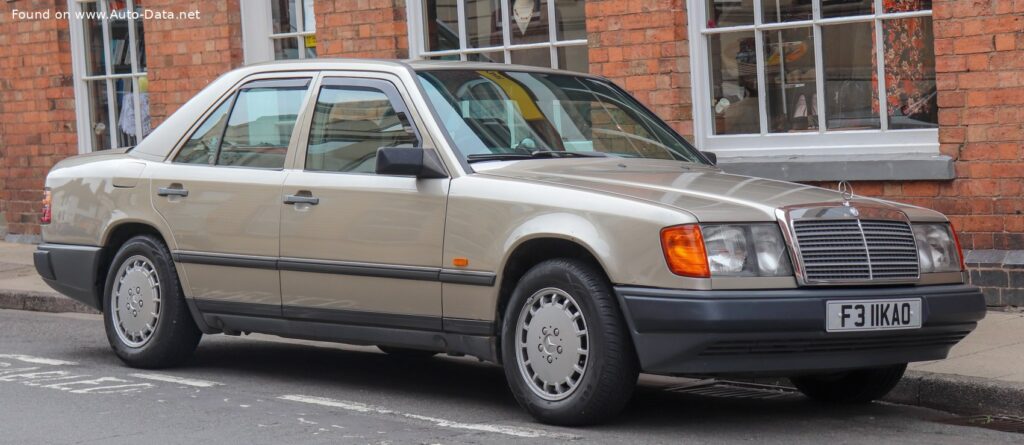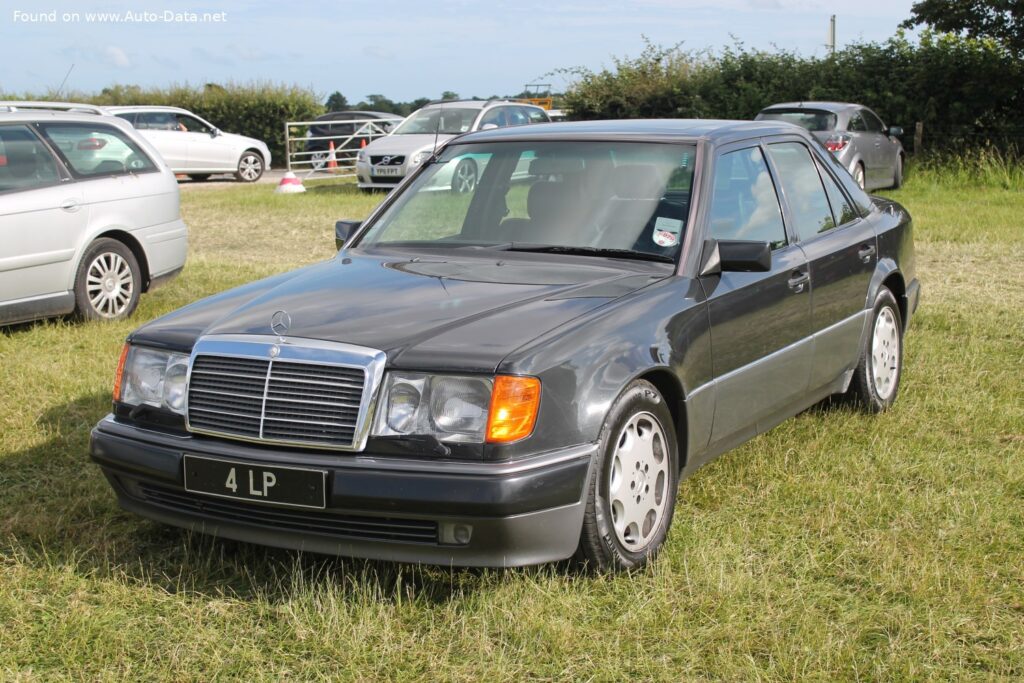
The Mercedes-Benz W124, produced from 1985 to 1996, represented a significant leap forward in engineering and design for the German automaker. The facelifted version introduced in 1989 refined the already successful platform, offering enhanced aesthetics and improved features. Among the variants was the 300 D CAT (Catalytic Converter) 4MATIC, a diesel-powered sedan equipped with all-wheel drive. This model, produced between September 1989 and June 1991, catered to buyers seeking a blend of fuel efficiency, robust performance, and all-weather capability. While not initially a large seller in the United States, the W124 established Mercedes-Benz as a benchmark for mid-size luxury and durability, and continues to be highly regarded by enthusiasts today.
Mercedes-Benz W124 300 D CAT 4MATIC: A Detailed Overview
The W124 series was designed as a successor to the W201 (190E) and W123 models, aiming to bridge the gap between compact and full-size Mercedes-Benz offerings. The 300 D CAT 4MATIC specifically targeted drivers who needed a practical, reliable, and comfortable vehicle capable of handling diverse road conditions. The inclusion of the 4MATIC all-wheel-drive system distinguished it from standard rear-wheel-drive W124 sedans, providing enhanced traction and stability, particularly in inclement weather. The “CAT” designation indicated the presence of a catalytic converter, a crucial component for meeting increasingly stringent emissions regulations.
Engine & Performance
The heart of the 300 D CAT 4MATIC is the OM 603 D 30 inline-six cylinder diesel engine, displacing 2.996 liters (182.83 cubic inches). This engine produced 110 horsepower at 4600 rpm and 191 Nm (140.87 lb.-ft.) of torque between 2800 and 3050 rpm. While the horsepower figure might seem modest by modern standards, the engine’s strength lay in its substantial torque output, providing strong pulling power and effortless cruising. The engine utilized precombustion chamber injection, a technology common in Mercedes-Benz diesels of the era, for efficient combustion and reduced emissions. Power is delivered to all four wheels via a four-speed automatic transmission. Acceleration from 0 to 100 km/h (0-62 mph) took approximately 16 seconds, while the top speed was limited to 178 km/h (110.6 mph). The weight-to-power ratio of 14.3 kg/Hp and weight-to-torque ratio of 8.2 kg/Nm highlight the engine’s ability to move the vehicle effectively despite its considerable weight of 1570 kg (3461.26 lbs).
Design & Features
The W124 300 D CAT 4MATIC is a four-door sedan with a classic, understated Mercedes-Benz design. The 1989 facelift brought subtle but noticeable changes, including a revised front grille, updated headlights, and smoothed body lines. The interior was characterized by its high-quality materials, comfortable seating for five occupants, and a focus on practicality. Key features included hydraulic power steering, ventilated front disc brakes, and disc brakes on the rear axle. The 4MATIC system employed a mechanically operated clutch to engage the front wheels when rear wheel slip was detected, providing seamless all-wheel-drive operation. Safety features, while not as comprehensive as those found in modern vehicles, included an Anti-lock Braking System (ABS) which was a significant advancement for the time. The vehicle’s robust construction and attention to detail contributed to its reputation for longevity and reliability.
Technical Specifications
| Brand | Mercedes-Benz |
| Model | W124 |
| Generation | W124 (facelift 1989) |
| Type | 300 D CAT (110 Hp) 4MATIC Automatic |
| Start of production | September, 1989 |
| End of production | June, 1991 |
| Powertrain Architecture | Internal Combustion engine |
| Body type | Sedan |
| Seats | 5 |
| Doors | 4 |
| Fuel consumption (urban) | 9.9 l/100 km (23.8 US mpg, 28.5 UK mpg, 10.1 km/l) |
| Fuel consumption (extra urban) | 6.8 l/100 km (34.6 US mpg, 41.5 UK mpg, 14.7 km/l) |
| Fuel Type | Diesel |
| Acceleration 0 – 100 km/h | 16 sec |
| Acceleration 0 – 62 mph | 16 sec |
| Acceleration 0 – 60 mph | 15.2 sec |
| Maximum speed | 178 km/h (110.6 mph) |
| Weight-to-power ratio | 14.3 kg/Hp |
| Weight-to-torque ratio | 8.2 kg/Nm |
| Power | 110 Hp @ 4600 rpm |
| Power per litre | 36.7 Hp/l |
| Torque | 191 Nm @ 2800-3050 rpm (140.87 lb.-ft. @ 2800-3050 rpm) |
| Engine layout | Front, Longitudinal |
| Engine Model/Code | OM 603 D 30 / 603.912 |
| Engine displacement | 2996 cm3 (182.83 cu. in.) |
| Number of cylinders | 6 |
| Engine configuration | Inline |
| Cylinder Bore | 87 mm (3.43 in.) |
| Piston Stroke | 84 mm (3.31 in.) |
| Compression ratio | 22:1 |
| Number of valves per cylinder | 2 |
| Fuel injection system | Precombustion chamber injection |
| Engine aspiration | Naturally aspirated engine |
| Valvetrain | SOHC |
| Engine oil capacity | 7.5 l (7.93 US qt | 6.6 UK qt) |
| Coolant | 9 l (9.51 US qt | 7.92 UK qt) |
| Kerb Weight | 1570 kg (3461.26 lbs.) |
| Max. weight | 2090 kg (4607.66 lbs.) |
| Max load | 520 kg (1146.4 lbs.) |
| Fuel tank capacity | 70 l (18.49 US gal | 15.4 UK gal) |
| Length | 4740 mm (186.61 in.) |
| Width | 1740 mm (68.5 in.) |
| Height | 1450 mm (57.09 in.) |
| Wheelbase | 2800 mm (110.24 in.) |
| Front track | 1501 mm (59.09 in.) |
| Rear track | 1491 mm (58.7 in.) |
| Drivetrain Architecture | All wheel drive (4×4). ICE drives rear wheels, front wheels engaged via clutch. |
| Number of gears and type of gearbox | 4 gears, automatic transmission |
| Front suspension | Wishbone |
| Rear suspension | Independent multi-link suspension |
| Front brakes | Ventilated discs |
| Rear brakes | Disc |
| Assisting systems | ABS (Anti-lock braking system) |
| Steering type | Cone worm with recirculation balls |
| Power steering | Hydraulic Steering |
| Tires size | Front/Rear: 195/65 R15 |
| Wheel rims size | Front/Rear: 6.5J x 15 |