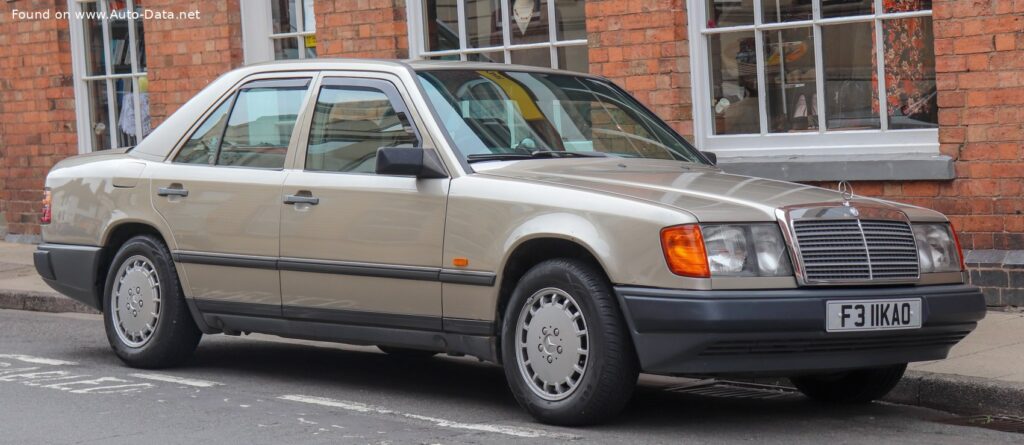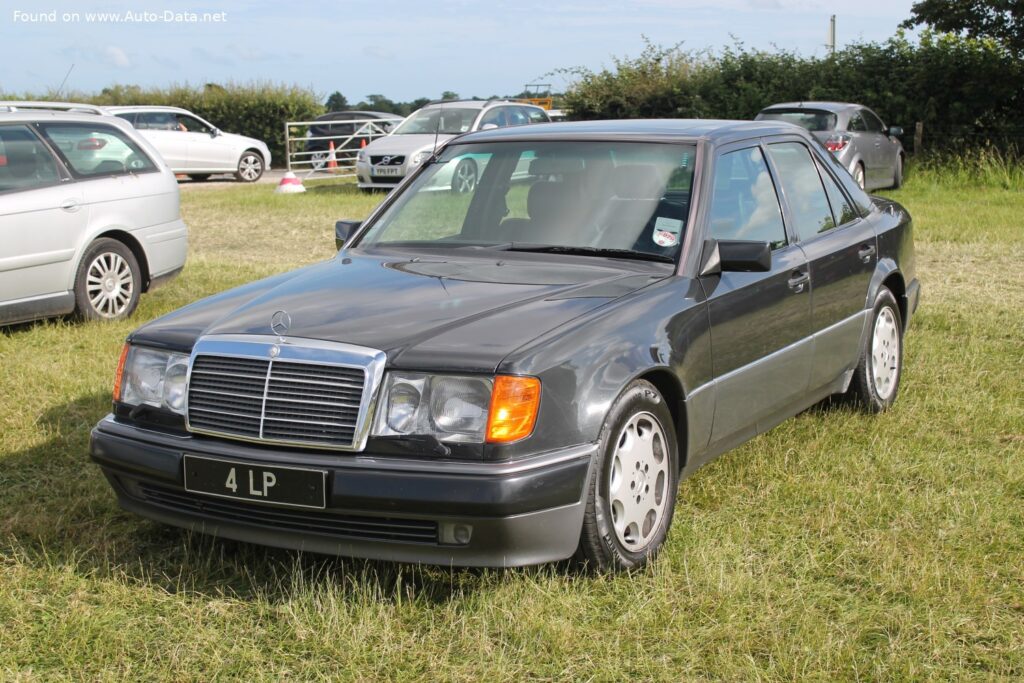
The Mercedes-Benz W124, particularly the 320 E variant produced from 1992 to 1993, represents a high point in the brand’s mid-size sedan offerings. Positioned above the 230 E and 280 E in the lineup, the 320 E was designed to offer a more refined and powerful driving experience. The W124 series, produced from 1985 to 1996, was a significant model for Mercedes-Benz, known for its robust engineering, build quality, and advanced (for its time) safety features. The 1989 facelift brought subtle but important styling updates and mechanical improvements, solidifying the W124’s reputation as a durable and luxurious vehicle. While not initially a large seller in the North American market compared to its BMW rivals, the W124 gained a dedicated following among enthusiasts who appreciated its understated elegance and long-term reliability.
The Mercedes-Benz W124 320 E: A Refined Sedan
The W124 320 E was a key part of Mercedes-Benz’s strategy to offer a comprehensive range of sedans catering to different needs and preferences. It bridged the gap between the more economical models and the flagship S-Class (W126) of the era. The “E” designation signified fuel injection (Einspritzung in German), and the 320 indicated the engine displacement. This model aimed to provide a balance of performance, comfort, and practicality, appealing to buyers who desired a premium sedan without the higher price tag of the S-Class.
Engine & Performance
At the heart of the 320 E lies the M104 E 32 inline-six cylinder engine, a 3.2-liter (3199 cm3 or 195.21 cu. in.) naturally aspirated powerplant. This engine produced 220 horsepower at 5500 rpm and 310 Nm (228.64 lb.-ft.) of torque at the same engine speed. The M104 was a technologically advanced engine for its time, featuring multi-port fuel injection and a double overhead camshaft (DOHC) valvetrain with four valves per cylinder. This configuration contributed to its smooth power delivery and relatively high specific output of 68.8 hp per liter. The 320 E could accelerate from 0 to 100 km/h (0-62 mph) in 8 seconds, and 0 to 60 mph in a calculated 7.6 seconds, reaching a top speed of 235 km/h (146.02 mph). The engine’s longitudinal front-engine layout and rear-wheel drive configuration provided a traditional, balanced driving experience. A five-speed manual transmission was standard, offering drivers full control over the engine’s power.
Design & Features
The W124 320 E’s design was characterized by its understated elegance and functional aesthetics. The sedan body style, with its four doors and five-seat capacity, was the most common configuration. The 1989 facelift brought subtle revisions to the exterior, including a more integrated front bumper and updated taillights. Inside, the 320 E offered a comfortable and well-appointed cabin, typical of Mercedes-Benz. Features included high-quality materials, comfortable seating, and a focus on practicality. Safety was also a priority, with the inclusion of Anti-lock Braking System (ABS) as standard equipment. The W124’s robust construction and attention to detail contributed to its reputation for longevity and reliability. The vehicle’s dimensions – 4740 mm (186.61 in.) in length, 1740 mm (68.5 in.) in width, and 1428 mm (56.22 in.) in height – provided ample space for passengers and luggage. The wheelbase measured 2800 mm (110.24 in.), contributing to a stable and comfortable ride.
Technical Specifications
| Brand | Mercedes-Benz |
| Model | W124 |
| Generation | W124 (facelift 1989) |
| Type (Engine) | 320 E (220 Hp) |
| Start of production | June, 1992 |
| End of production | July, 1993 |
| Powertrain Architecture | Internal Combustion engine |
| Body type | Sedan |
| Seats | 5 |
| Doors | 4 |
| Fuel consumption (urban) | 14.7 l/100 km (16 US mpg, 19.2 UK mpg, 6.8 km/l) |
| Fuel consumption (extra urban) | 8.2 l/100 km (28.7 US mpg, 34.4 UK mpg, 12.2 km/l) |
| Fuel Type | Petrol (Gasoline) |
| Acceleration 0 – 100 km/h | 8 sec |
| Acceleration 0 – 62 mph | 8 sec |
| Acceleration 0 – 60 mph | 7.6 sec |
| Maximum speed | 235 km/h (146.02 mph) |
| Weight-to-power ratio | 6.8 kg/Hp, 147.7 Hp/tonne |
| Weight-to-torque ratio | 4.8 kg/Nm, 208.1 Nm/tonne |
| Power | 220 Hp @ 5500 rpm |
| Power per litre | 68.8 Hp/l |
| Torque | 310 Nm @ 5500 rpm (228.64 lb.-ft. @ 5500 rpm) |
| Engine layout | Front, Longitudinal |
| Engine Model/Code | M 104 E 32 / 104.992 |
| Engine displacement | 3199 cm3 (195.21 cu. in.) |
| Number of cylinders | 6 |
| Engine configuration | Inline |
| Cylinder Bore | 89.9 mm (3.54 in.) |
| Piston Stroke | 84 mm (3.31 in.) |
| Compression ratio | 10:1 |
| Number of valves per cylinder | 4 |
| Fuel injection system | Multi-port manifold injection |
| Engine aspiration | Naturally aspirated engine |
| Valvetrain | DOHC |
| Engine oil capacity | 7.5 l (7.93 US qt | 6.6 UK qt) |
| Coolant | 9 l (9.51 US qt | 7.92 UK qt) |
| Kerb Weight | 1490 kg (3284.89 lbs.) |
| Max. weight | 2040 kg (4497.43 lbs.) |
| Max load | 550 kg (1212.54 lbs.) |
| Fuel tank capacity | 70 l (18.49 US gal | 15.4 UK gal) |
| Length | 4740 mm (186.61 in.) |
| Width | 1740 mm (68.5 in.) |
| Height | 1428 mm (56.22 in.) |
| Wheelbase | 2800 mm (110.24 in.) |
| Front track | 1501 mm (59.09 in.) |
| Rear track | 1491 mm (58.7 in.) |
| Drivetrain Architecture | Rear wheel drive |
| Number of gears and type of gearbox | 5 gears, manual transmission |
| Front suspension | Wishbone |
| Rear suspension | Independent multi-link suspension |
| Front brakes | Ventilated discs |
| Rear brakes | Disc |
| Assisting systems | ABS (Anti-lock braking system) |
| Steering type | Cone worm with recirculation balls |
| Power steering | Hydraulic Steering |
| Tires size | Front: 195/65 R15, Rear: 195/65 R15 |
| Wheel rims size | Front: 6.5J x 15, Rear: 6.5J x 15 |
The Mercedes-Benz W124 320 E remains a sought-after classic, appreciated for its blend of performance, luxury, and durability. Its robust engineering and timeless design ensure its continued relevance among automotive enthusiasts.