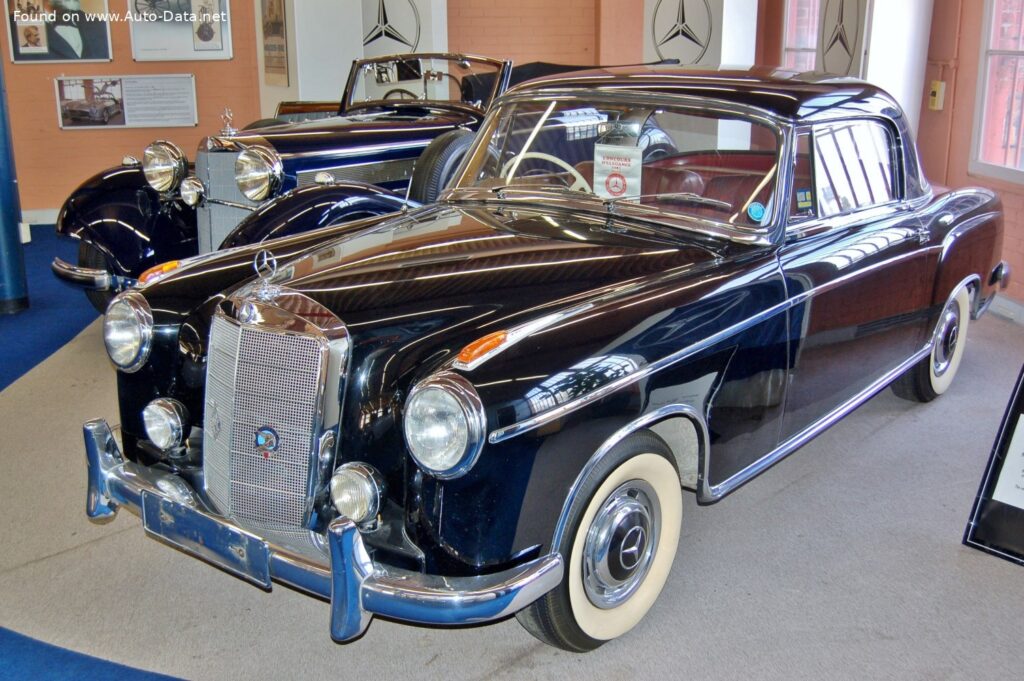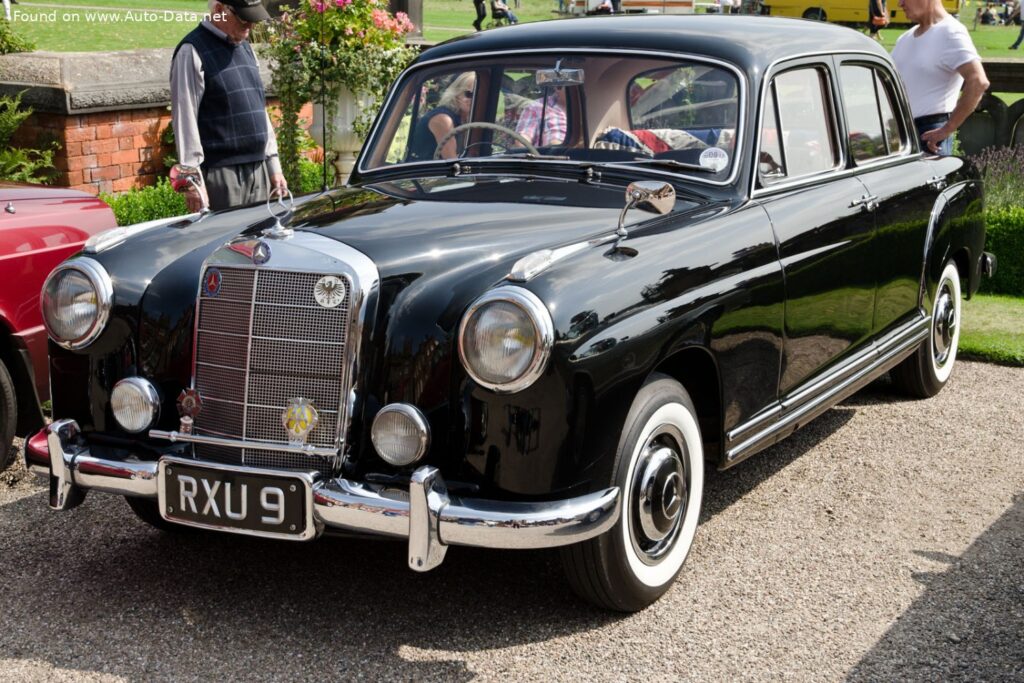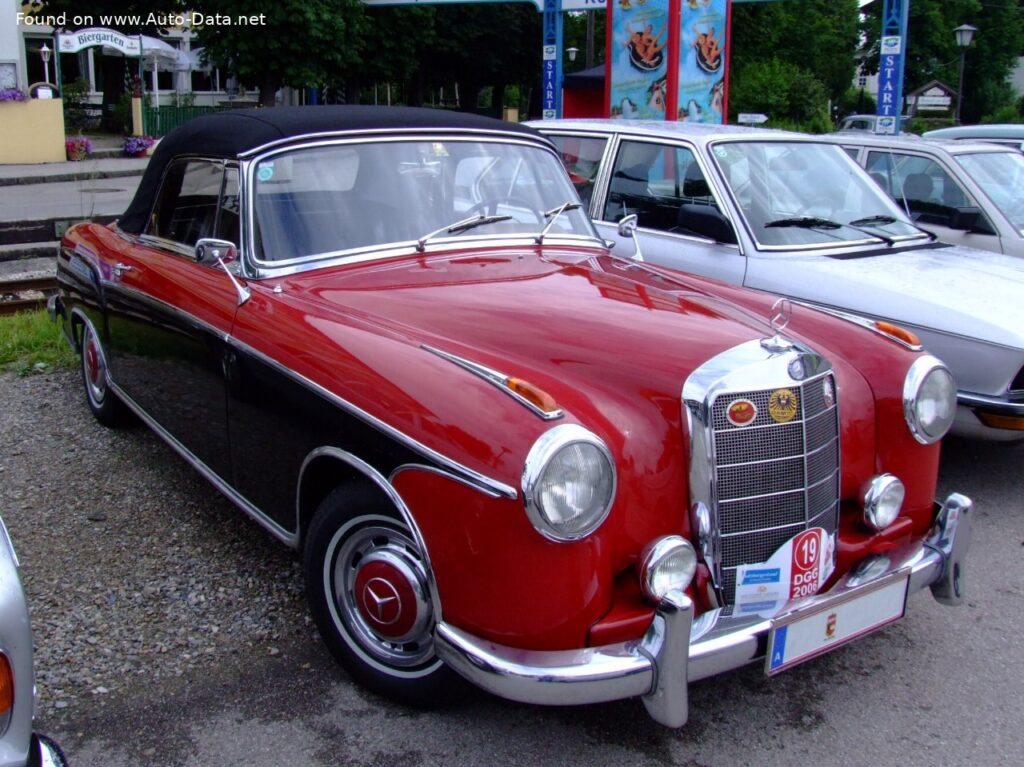
The Mercedes-Benz W128 Cabriolet 220 SE, produced between July 1958 and August 1959, represents a pinnacle of post-war German automotive engineering and design. Part of the “Ponton” series, known for its unibody construction – a significant departure from the separate chassis and body designs of earlier Mercedes-Benz models – the W128 Cabriolet offered a luxurious and sophisticated open-air motoring experience. This model occupied the upper-middle-class segment, appealing to buyers seeking a blend of comfort, performance, and prestige. The 220 SE designation indicated the engine displacement and fuel injection system, marking a technological advancement for the era. While not widely exported to the United States during its production run, the W128 Cabriolet remains a highly sought-after classic, celebrated for its elegant styling and engineering prowess.
Mercedes-Benz W128 Cabriolet 220 SE: A Detailed Overview
The W128 series, encompassing saloon, coupe, and cabriolet body styles, was a crucial step in establishing Mercedes-Benz’s reputation for modern automotive design. The Ponton design, characterized by its rounded lines and integrated body, offered improved passenger space and safety compared to its predecessors. The Cabriolet variant, in particular, was a statement of luxury, featuring a fully automatic, hydraulically operated soft top. The “SE” suffix denoted the presence of Bosch mechanical fuel injection, a relatively advanced feature for the late 1950s, contributing to improved engine performance and fuel efficiency. The Hydrak transmission, a four-speed manual, was a notable feature, offering a unique driving experience.
Engine & Performance
The heart of the W128 Cabriolet 220 SE is its 2.2-liter (2195 cm³) inline-six cylinder engine, designated the M 127 I / 127.980. This engine produced 115 horsepower at 4800 rpm and 186 Nm (137.19 lb.-ft.) of torque at 3800 rpm. The Bosch mechanical fuel injection system played a key role in optimizing the air-fuel mixture, resulting in a power-to-liter ratio of 52.4 hp/l. While acceleration figures were modest by modern standards – 0 to 100 km/h (0-62 mph) in 15 seconds and 0 to 60 mph in 14.3 seconds – the engine delivered smooth and refined power delivery. The top speed was recorded at 160 km/h (99.42 mph). The weight-to-power ratio of 12.4 kg/Hp and weight-to-torque ratio of 7.7 kg/Nm reflect the car’s substantial weight and the engine’s characteristics. The engine’s configuration, with a cylinder bore of 80 mm and a piston stroke of 72.8 mm, and a compression ratio of 8.7:1, contributed to its durability and reliability.
Design & Features
The W128 Cabriolet is a two-door, five-seater vehicle with a classic cabriolet body style. Its design embodies the elegance of the late 1950s, featuring flowing lines, prominent chrome accents, and a spacious interior. The fully automatic, hydraulically operated soft top allowed for convenient open-air driving. Inside, the cabin was appointed with high-quality materials, including leather upholstery and wood trim, reflecting the car’s luxury positioning. Safety features, while limited by the standards of the time, included robust construction and effective drum brakes on all four wheels. The steering system employed a cone worm with recirculation balls, providing precise control. The car’s dimensions – 4700 mm (185.04 in.) in length, 1790 mm (70.47 in.) in width, and 1530 mm (60.24 in.) in height – provided ample space for passengers and luggage. The wheelbase measured 2700 mm (106.3 in.), contributing to a comfortable ride. The front and rear tracks were 1430 mm (56.3 in.) and 1470 mm (57.87 in.) respectively.
Technical Specifications
| Brand | Mercedes-Benz |
| Model | Ponton |
| Generation | W128 Cabriolet |
| Type (Engine) | 220 SE (115 Hp) Hydrak |
| Start of production | July, 1958 |
| End of production | August, 1959 |
| Powertrain Architecture | Internal Combustion engine |
| Body type | Cabriolet |
| Seats | 5 |
| Doors | 2 |
| Fuel consumption (combined) | 10.9 l/100 km |
| Fuel consumption (US mpg) | 21.6 US mpg |
| Fuel consumption (UK mpg) | 25.9 UK mpg |
| Fuel consumption (km/l) | 9.2 km/l |
| Fuel Type | Petrol (Gasoline) |
| Acceleration 0 – 100 km/h | 15 sec |
| Acceleration 0 – 62 mph | 15 sec |
| Acceleration 0 – 60 mph | 14.3 sec |
| Maximum speed | 160 km/h (99.42 mph) |
| Weight-to-power ratio | 12.4 kg/Hp |
| Weight-to-torque ratio | 7.7 kg/Nm |
| Power | 115 Hp @ 4800 rpm |
| Power per litre | 52.4 Hp/l |
| Torque | 186 Nm @ 3800 rpm (137.19 lb.-ft. @ 3800 rpm) |
| Engine layout | Front, Longitudinal |
| Engine Model/Code | M 127 I / 127.980 |
| Engine displacement | 2195 cm3 (133.95 cu. in.) |
| Number of cylinders | 6 |
| Engine configuration | Inline |
| Cylinder Bore | 80 mm (3.15 in.) |
| Piston Stroke | 72.8 mm (2.87 in.) |
| Compression ratio | 8.7:1 |
| Number of valves per cylinder | 2 |
| Fuel injection system | Multi-port manifold injection |
| Engine aspiration | Naturally aspirated engine |
| Valvetrain | SOHC |
| Kerb Weight | 1430 kg (3152.61 lbs.) |
| Max. weight | 1830 kg (4034.46 lbs.) |
| Max load | 400 kg (881.85 lbs.) |
| Fuel tank capacity | 62 l (16.38 US gal | 13.64 UK gal) |
| Length | 4700 mm (185.04 in.) |
| Width | 1790 mm (70.47 in.) |
| Height | 1530 mm (60.24 in.) |
| Wheelbase | 2700 mm (106.3 in.) |
| Front track | 1430 mm (56.3 in.) |
| Rear track | 1470 mm (57.87 in.) |
| Drivetrain Architecture | Rear wheel drive |
| Drive wheel | Rear wheel drive |
| Number of gears and type of gearbox | 4 gears, manual transmission Hydrak |
| Front suspension | Double wishbone, Transverse stabilizer |
| Rear suspension | Trailing arm |
| Front brakes | Drum |
| Rear brakes | Drum |
| Steering type | Cone worm with recirculation balls |
The Mercedes-Benz W128 Cabriolet 220 SE remains a significant vehicle in automotive history, representing a blend of luxury, engineering innovation, and elegant design. Its enduring appeal lies in its ability to evoke a bygone era of sophisticated motoring, making it a prized possession for collectors and enthusiasts worldwide.