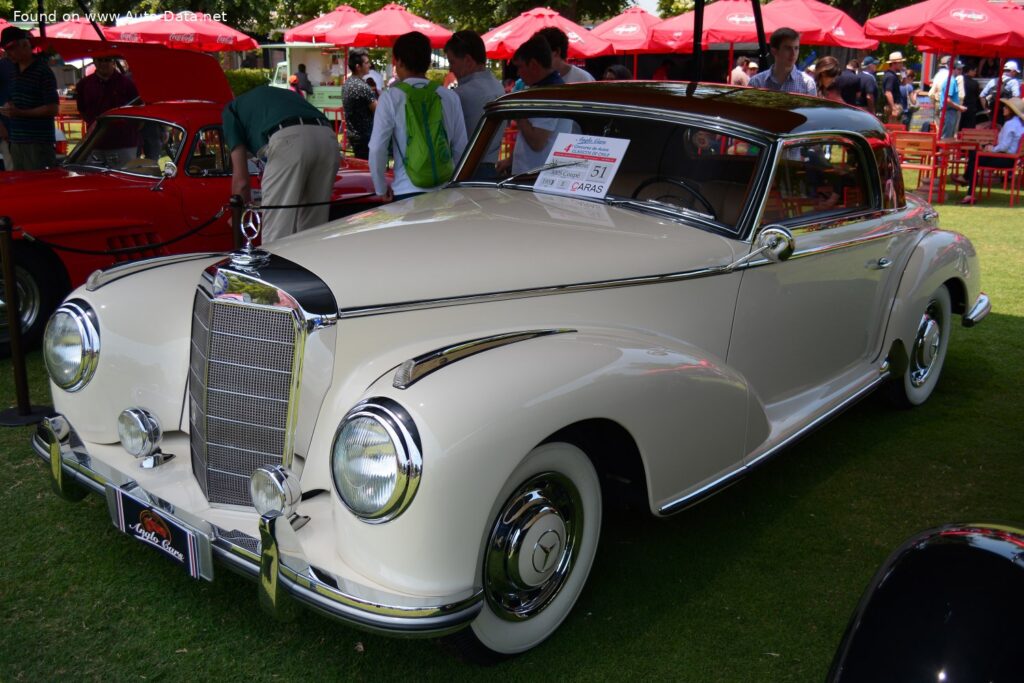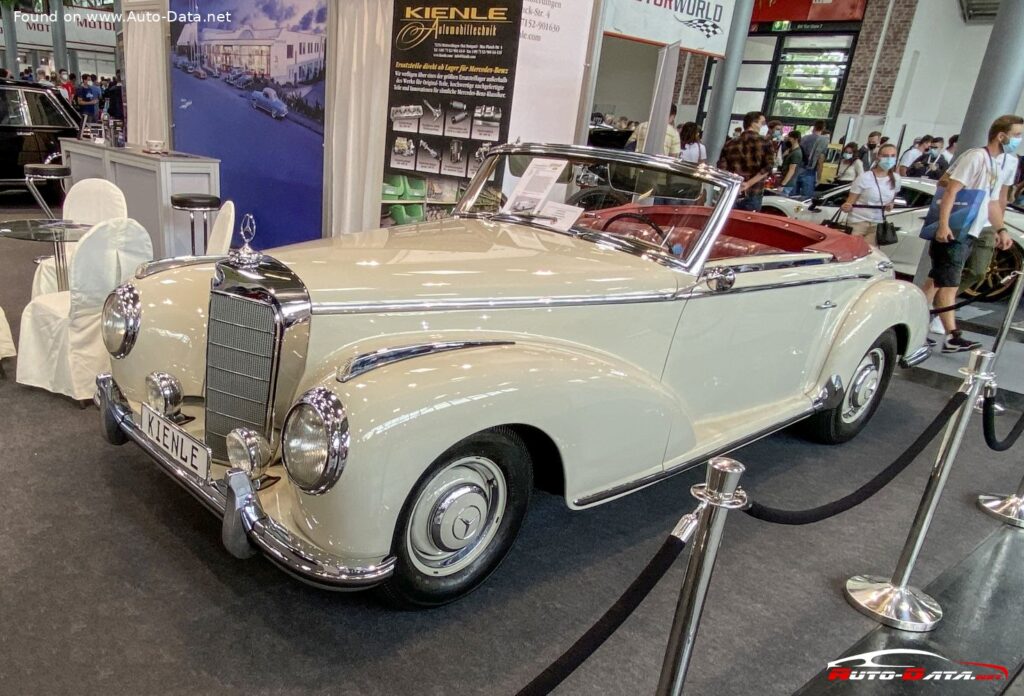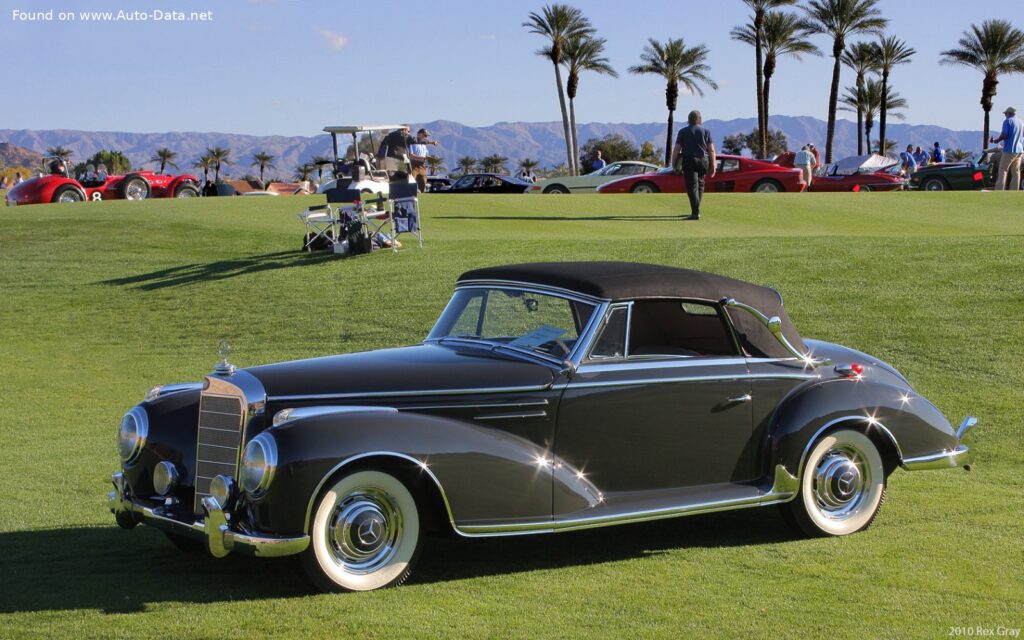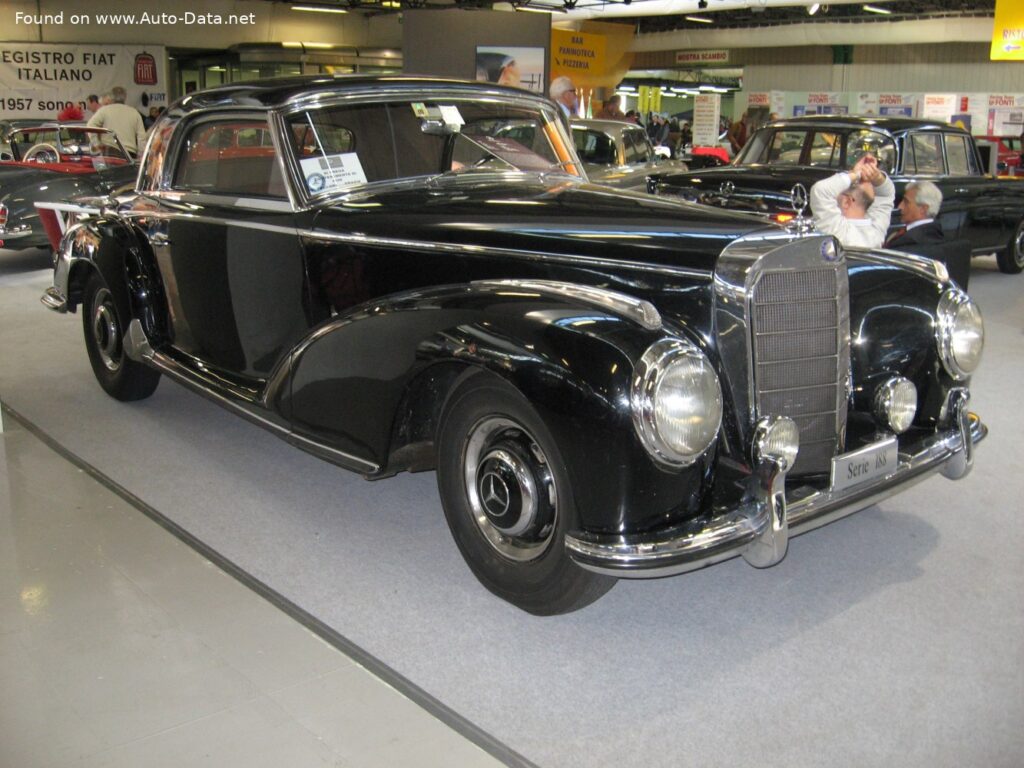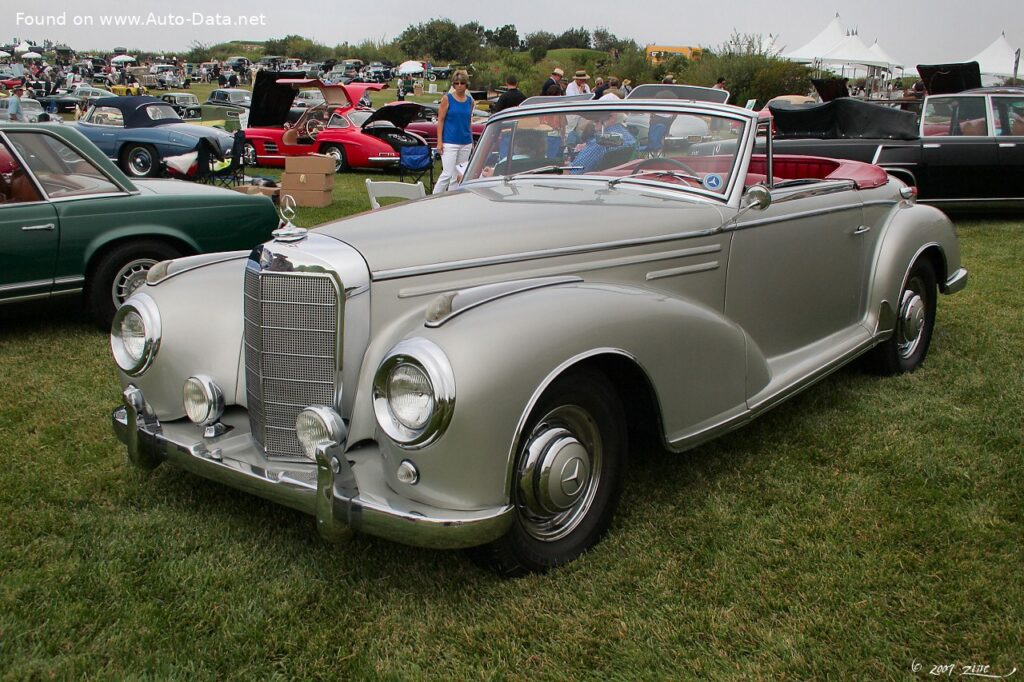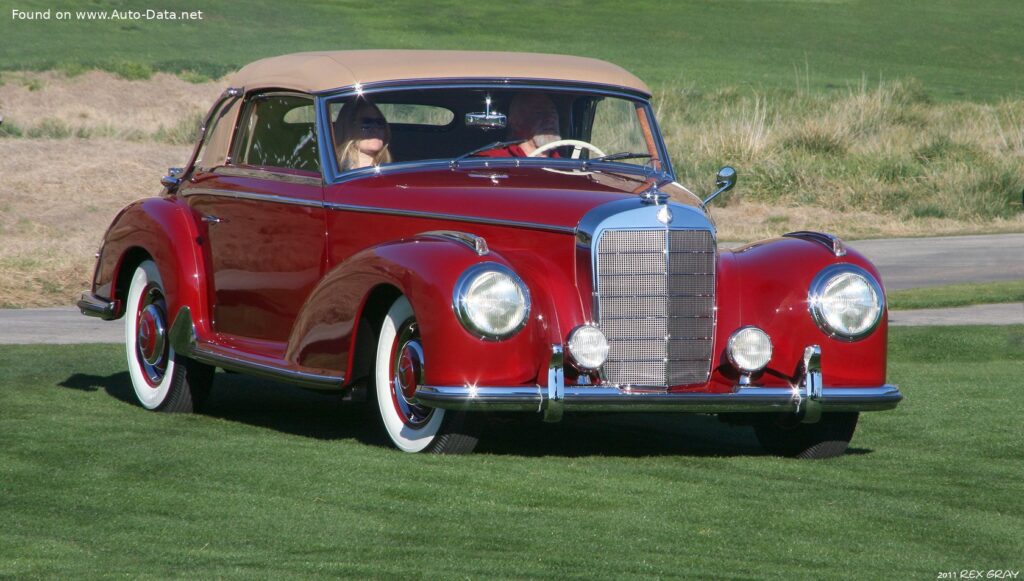
The Mercedes-Benz W188 I Cabriolet A 300 S represents a pivotal moment in post-war German automotive engineering. Produced between September 1951 and July 1955, this luxurious cabriolet was not merely a car; it was a statement of recovery and a symbol of burgeoning prosperity in a nation rebuilding after World War II. The 300 S, positioned in the high-end luxury segment, aimed to re-establish Mercedes-Benz as a premier automotive manufacturer, competing with offerings from Rolls-Royce and Cadillac. While not initially a high-volume seller, the W188 established key design and engineering principles that would define Mercedes-Benz for decades to come.
The Mercedes-Benz W188 I Cabriolet A 300 S
The W188 series, encompassing both saloon and cabriolet body styles, was the first entirely new design to emerge from Mercedes-Benz after the war. It represented a significant departure from pre-war designs, incorporating modern styling cues and advanced engineering for the time. The Cabriolet A, specifically, was the open-top variant, offering a more exclusive and glamorous experience. It catered to a clientele seeking both luxury and the open-air driving experience. The car was never officially sold in the United States during its production run, but examples were imported privately, becoming highly sought-after collector’s items.
Engine & Performance
At the heart of the 300 S lies the M188 3.0-liter inline-six engine. This engine, producing 150 horsepower at 5000 rpm and 230 Nm (169.64 lb.-ft.) of torque at 3800 rpm, was a technological marvel for its era. The engine featured a single overhead camshaft (SOHC) valvetrain and a relatively high 7.8:1 compression ratio. Fuel was delivered via a carburetor, a common practice for the time. The engine’s longitudinal front-engine layout contributed to a balanced weight distribution. Despite its substantial power output, the car’s 1740 kg (3836.04 lbs) curb weight resulted in a 0-60 mph acceleration time of approximately 14.3 seconds and a top speed of 175 km/h (108.74 mph). The power-to-weight ratio of 11.6 kg/Hp and torque-to-weight ratio of 7.6 kg/Nm, while not exceptional by modern standards, were respectable for the early 1950s. Fuel economy was understandably poor, averaging 13.8 l/100 km (17 US mpg).
Design & Features
The W188 Cabriolet A boasted elegant and flowing lines, characteristic of the early 1950s automotive design aesthetic. The two-door, five-seat configuration offered a spacious interior for its time. The body was constructed with a steel chassis and aluminum body panels, contributing to both strength and relatively light weight. The convertible top, when raised, provided adequate weather protection. Interior appointments were lavish, featuring high-quality leather upholstery and wood trim.
Safety features, while rudimentary by today’s standards, were considered advanced for the period. Drum brakes were employed on all four wheels, providing adequate stopping power. Steering was accomplished through a cone worm and recirculation balls system. Suspension utilized a double wishbone setup with a transverse stabilizer at the front and a trailing arm configuration at the rear, aiming to provide a comfortable ride. The car’s overall design prioritized luxury and aesthetics, reflecting the desires of its affluent target market.
Technical Specifications
| Brand | Mercedes-Benz |
| Model | W188 |
| Generation | W188 I Cabriolet A |
| Type (Engine) | 300 S (150 Hp) |
| Start of production | September, 1951 |
| End of production | July, 1955 |
| Powertrain Architecture | Internal Combustion engine |
| Body type | Cabriolet |
| Seats | 5 |
| Doors | 2 |
| Fuel consumption (combined) | 13.8 l/100 km |
| Fuel consumption (US mpg) | 17 US mpg |
| Fuel consumption (UK mpg) | 20.5 UK mpg |
| Fuel consumption (km/l) | 7.2 km/l |
| Fuel Type | Petrol (Gasoline) |
| Acceleration 0 – 100 km/h | 15 sec |
| Acceleration 0 – 62 mph | 15 sec |
| Acceleration 0 – 60 mph | 14.3 sec |
| Maximum speed | 175 km/h (108.74 mph) |
| Weight-to-power ratio | 11.6 kg/Hp |
| Hp/tonne | 86.2 Hp/tonne |
| Weight-to-torque ratio | 7.6 kg/Nm |
| Nm/tonne | 132.2 Nm/tonne |
| Power | 150 Hp @ 5000 rpm |
| Power per litre | 50.1 Hp/l |
| Torque | 230 Nm @ 3800 rpm (169.64 lb.-ft. @ 3800 rpm) |
| Engine layout | Front, Longitudinal |
| Engine Model/Code | M 188 / 188.920 |
| Engine displacement | 2996 cm3 (182.83 cu. in.) |
| Number of cylinders | 6 |
| Engine configuration | Inline |
| Cylinder Bore | 85 mm (3.35 in.) |
| Piston Stroke | 88 mm (3.46 in.) |
| Compression ratio | 7.8:1 |
| Number of valves per cylinder | 2 |
| Fuel injection system | Carburettor |
| Engine aspiration | Naturally aspirated engine |
| Valvetrain | SOHC |
| Kerb Weight | 1740 kg (3836.04 lbs.) |
| Max. weight | 2000 kg (4409.25 lbs.) |
| Max load | 260 kg (573.2 lbs.) |
| Fuel tank capacity | 85 l (22.45 US gal | 18.7 UK gal) |
| Length | 4730 mm (186.22 in.) |
| Width | 1910 mm (75.2 in.) |
| Height | 1510 mm (59.45 in.) |
| Wheelbase | 2900 mm (114.17 in.) |
| Front track | 1480 mm (58.27 in.) |
| Rear track | 1525 mm (60.04 in.) |
| Drivetrain Architecture | Rear wheel drive |
| Drive wheel | Rear wheel drive |
| Number of gears | 4 gears, manual transmission |
| Front suspension | Double wishbone, Transverse stabilizer |
| Rear suspension | Trailing arm |
| Front brakes | Drum |
| Rear brakes | Drum |
| Steering type | Cone worm with recirculation balls |
The Mercedes-Benz W188 I Cabriolet A 300 S remains a highly collectible and historically significant automobile. It represents a crucial step in the revitalization of the Mercedes-Benz brand and embodies the elegance and engineering prowess of the early 1950s. Its enduring appeal lies in its combination of luxurious appointments, sophisticated engineering, and timeless design.