
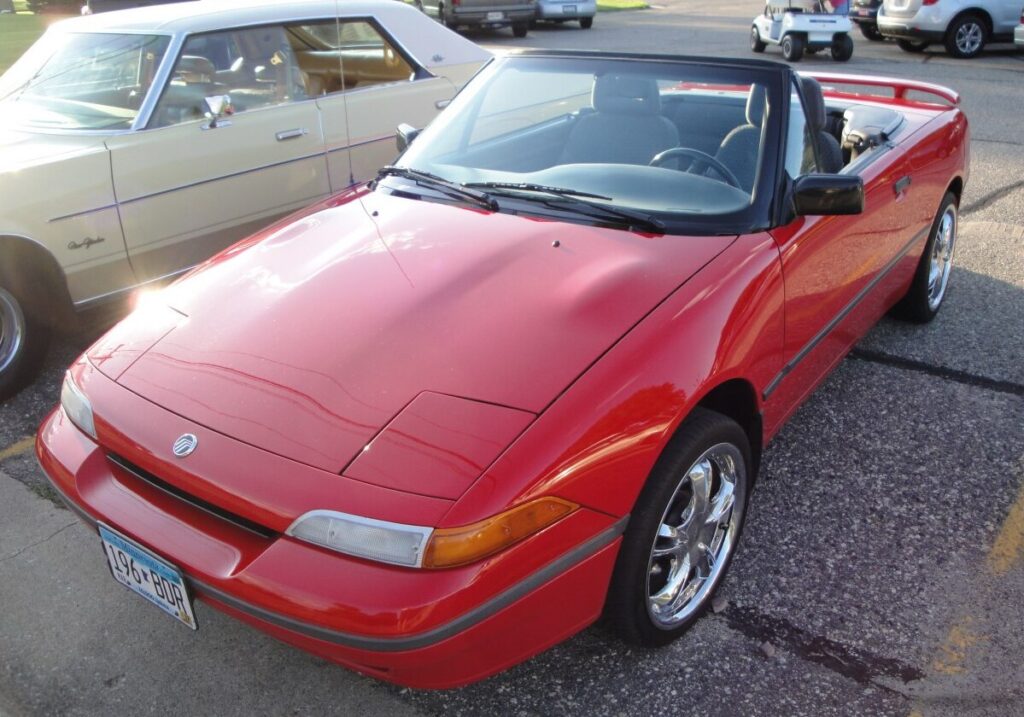
The Mercury Capri III 1.6 (100 hp) represents a specific iteration of the third-generation Mercury Capri, produced between 1990 and 1995. This variant, exclusively offered as a cabriolet, occupied the entry-level position within the Capri III lineup, providing an accessible open-air motoring experience. It was based on the Ford Escort platform, sharing many components with its more practical sibling. The Capri III, and this 1.6L version in particular, aimed to capture a segment of the market desiring a stylish, affordable convertible, primarily targeting younger buyers and those seeking a weekend leisure vehicle. It was a rebadged version of the European Ford Capri, adapted for the North American market with some styling and mechanical changes.
Technical Specifications
| Brand | Mercury |
| Model | Capri |
| Generation | Capri III |
| Type (Engine) | 1.6 (100 Hp) |
| Start of Production | 1990 |
| End of Production | 1995 |
| Powertrain Architecture | Internal Combustion Engine |
| Body Type | Cabriolet |
| Fuel Type | Petrol (Gasoline) |
| Power | 100 Hp |
| Engine Model/Code | B6D |
| Engine Aspiration | Naturally Aspirated |
| Engine Oil Capacity | 3.4 l (3.59 US qt | 2.99 UK qt) |
| Coolant Capacity | 5 l (5.28 US qt | 4.4 UK qt) |
Powertrain & Engine Architecture
The Capri III 1.6 utilized the Ford B6D engine, a 1.6-liter inline-four cylinder gasoline engine. This engine was a relatively simple design, featuring a single overhead camshaft (SOHC) and two valves per cylinder. Fuel delivery was managed by a Bosch fuel injection system, a significant upgrade from the carburetors found in earlier Capri models. The B6D engine produced 100 horsepower at approximately 5,500 rpm and 98 lb-ft of torque at 3,500 rpm. The engine’s architecture prioritized fuel efficiency and reliability over outright performance. The automatic transmission paired with this engine was typically a three-speed unit, designed for smooth, comfortable operation rather than sporty acceleration. This transmission was chosen to appeal to the target demographic who prioritized ease of use over driver engagement.
Driving Characteristics
The 1.6-liter engine and three-speed automatic transmission combination resulted in a driving experience focused on relaxed cruising. Acceleration was adequate for everyday driving, but not particularly brisk. The Capri III 1.6 wasn’t designed for spirited performance; its 0-60 mph time was estimated to be around 11-12 seconds. The automatic transmission’s gear ratios were optimized for fuel economy and smooth transitions, rather than aggressive downshifts. Compared to the later, more powerful Capri variants (which were not officially sold in the US), the 1.6 felt noticeably slower. Manual transmission versions, available in Europe, offered a more engaging driving experience, but the US market primarily received the automatic. The steering was light and easy, making it maneuverable in city traffic, but lacked the feedback desired by driving enthusiasts. The suspension, while comfortable, was not particularly sporty, resulting in some body roll during cornering.
Equipment & Trim Levels
The Capri III 1.6, as the entry-level model, came with a relatively basic standard equipment list. Interior upholstery was typically cloth, available in a range of colors. The dashboard featured a simple layout with analog gauges for speed, fuel level, and coolant temperature. Power steering was standard, but air conditioning was often an optional extra. Other available options included upgraded audio systems, alloy wheels, and a rear spoiler. The Capri III 1.6 aimed for affordability, so many features considered standard on higher-trim models were offered as optional packages. The convertible top was manually operated, further contributing to the vehicle’s lower price point. Interior trim was generally functional and durable, prioritizing practicality over luxury.
Chassis & Braking
The Capri III utilized a MacPherson strut front suspension and a semi-independent twist-beam rear suspension. This suspension setup was chosen for its cost-effectiveness and ability to provide a comfortable ride. The front brakes were disc brakes, while the rear brakes were typically drum brakes, a cost-saving measure for the base model. Stabilizer bars were fitted to both the front and rear axles to reduce body roll, but their effectiveness was limited by the relatively soft suspension tuning. The steering system was a rack-and-pinion setup, providing light and easy steering feel. The chassis was relatively lightweight, contributing to the vehicle’s fuel efficiency, but also limiting its handling capabilities. The tires were typically narrow, prioritizing fuel economy over grip.
Market Reception & Comparison
The Mercury Capri III 1.6 received mixed reviews from automotive critics. While praised for its stylish design and affordable price, it was often criticized for its lack of performance and basic interior. Compared to other convertibles on the market at the time, such as the Mazda Miata, the Capri III 1.6 offered a more spacious interior and a lower price point, but lacked the Miata’s sporty handling and refinement. Fuel economy was reasonable for the time, averaging around 25-30 mpg in combined driving. Reliability was generally good, although the automatic transmission could be prone to issues if not properly maintained. The Capri III 1.6 appealed to buyers who prioritized style and affordability over performance and driving dynamics. It was often seen as a fashionable alternative to more practical compact cars.
Legacy
The Mercury Capri III, and the 1.6L variant specifically, has become a relatively affordable classic car in the used market. The B6D engine is known for its durability and relatively simple maintenance requirements, making it a popular choice for enthusiasts on a budget. However, finding parts can be challenging as production ceased nearly three decades ago. The Capri III 1.6 is often sought after by those looking for a stylish and affordable entry into classic convertible ownership. While not a high-performance vehicle, it offers a unique driving experience and a nostalgic connection to the 1990s automotive landscape. Its relatively simple mechanicals make it a good candidate for restoration projects, and its distinctive styling continues to attract attention. The Capri III 1.6 remains a reminder of a time when affordable convertibles were accessible to a wider range of buyers.
