
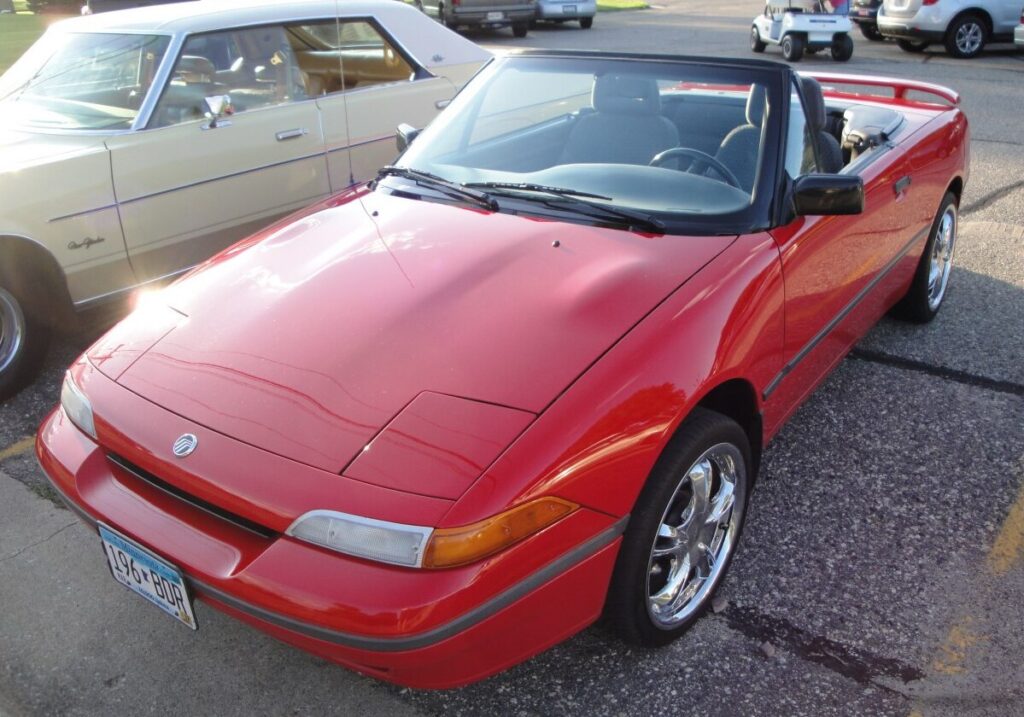
The Mercury Capri III 1.6 turbo, produced between 1990 and 1995, represented a somewhat niche offering within the broader Capri III range. Positioned as a performance-oriented variant, it aimed to deliver a more engaging driving experience than the base models, while remaining accessible to a wider audience than the more expensive, higher-specification trims. The Capri III, built upon the Fox platform shared with several Ford models, was primarily marketed in Europe, offering a stylish and relatively affordable convertible option. This 1.6 turbo model sought to capitalize on the growing demand for turbocharged engines, providing a boost in power and torque without significantly increasing the vehicle’s price point. It was a late-life Capri, attempting to inject some excitement into a model line nearing the end of its production run.
Technical Specifications
| Brand | Mercury |
| Model | Capri |
| Generation | Capri III |
| Engine Type | 1.6 turbo (132 Hp) |
| Production Years | 1990 – 1995 |
| Powertrain Architecture | Internal Combustion Engine |
| Body Type | Cabriolet |
| Fuel Type | Petrol (Gasoline) |
| Power Output | 132 Hp |
| Engine Model/Code | B6T |
| Engine Aspiration | Turbocharger |
| Engine Oil Capacity | 3.4 l (3.59 US qt | 2.99 UK qt) |
| Coolant Capacity | 5 l (5.28 US qt | 4.4 UK qt) |
Powertrain & Engine Architecture
The heart of the Capri III 1.6 turbo is the B6T engine, a 1.6-liter inline-four cylinder powerplant. This engine is notable for its single overhead camshaft (SOHC) valvetrain and multi-point fuel injection. The addition of a turbocharger, a Garrett T25 unit typically, significantly increased the engine’s output compared to naturally aspirated versions. The turbocharger forces more air into the cylinders, allowing for a greater fuel-air mixture and thus, more power. The B6T engine featured a relatively low compression ratio (around 8.5:1) to accommodate the increased cylinder pressures generated by the turbocharger. The fuel injection system was a Bosch-supplied unit, providing precise fuel delivery for optimal combustion and efficiency. While specific transmission options varied by market, the Capri III 1.6 turbo was most commonly paired with a four-speed automatic transmission, although a five-speed manual was also available. The automatic transmission, while offering convenience, did impact the overall performance and responsiveness of the vehicle.
Driving Characteristics
The 1.6 turbo engine provided a noticeable improvement in performance over the base Capri models. With 132 horsepower and approximately 150 lb-ft of torque, the Capri III 1.6 turbo offered brisk acceleration, particularly in the mid-range. However, the automatic transmission, while smooth, did introduce some inherent losses in power delivery. The gear ratios were tuned for comfortable cruising rather than outright performance, meaning that the engine didn’t always feel as responsive as it could be. Compared to the manual transmission version, the automatic felt slightly more sluggish, especially during overtaking maneuvers. The turbocharger did exhibit some degree of turbo lag, a common characteristic of early turbocharger systems, meaning there was a slight delay between pressing the accelerator and feeling the full boost of power. Handling was typical of the Fox platform – competent but not particularly sporty. The Capri’s relatively lightweight construction helped to mitigate some of the understeer inherent in front-wheel-drive vehicles.
Equipment & Trim Levels
The Capri III 1.6 turbo generally occupied a mid-range position within the Capri lineup. Standard equipment typically included power steering, central locking, and an upgraded interior trim compared to the base models. The interior featured cloth upholstery, although leather options were available as an extra cost. The dashboard layout was relatively simple and functional, with clearly marked gauges and controls. Optional extras included air conditioning, a sunroof, and upgraded audio systems. The 1.6 turbo models often featured unique badging and styling cues to differentiate them from other Capri variants, such as a subtle rear spoiler and distinctive alloy wheels. The overall interior ambiance was geared towards comfort and practicality rather than outright luxury.
Chassis & Braking
The Capri III utilized a MacPherson strut front suspension and a semi-independent twist-beam rear suspension. This setup provided a reasonable balance between ride comfort and handling. The front suspension featured stabilizer bars to reduce body roll during cornering. Braking systems varied depending on the market and specific trim level. Most Capri III 1.6 turbo models were equipped with front disc brakes and rear drum brakes. Higher-specification models sometimes featured rear disc brakes for improved stopping power. The braking system was generally adequate for the vehicle’s performance capabilities, but it lacked the sophistication of more modern braking systems. The steering was a rack-and-pinion system, providing reasonably precise steering feel.
Market Reception & Comparison
The Capri III 1.6 turbo received mixed reviews from automotive critics. While the increased power and torque were generally praised, some reviewers criticized the automatic transmission for detracting from the driving experience. Fuel economy was reasonable for a turbocharged vehicle of its era, averaging around 28-32 mpg on the highway. Compared to other Capri variants, the 1.6 turbo offered a compelling blend of performance and affordability. The naturally aspirated 1.6-liter models were significantly less powerful, while the V6-powered Capri models were considerably more expensive. The 1.6 turbo also offered a more refined driving experience than the diesel-powered Capri variants. Reliability was generally good, although the turbocharger itself could be a potential source of maintenance issues if not properly maintained.
Legacy
The Mercury Capri III 1.6 turbo, while not a high-volume seller, holds a certain appeal for enthusiasts of classic Ford and Mercury vehicles. The B6T engine, while not known for its exceptional durability, is relatively straightforward to maintain and repair. Today, well-maintained examples of the Capri III 1.6 turbo are becoming increasingly collectible. The car represents a unique chapter in the Capri’s history, offering a glimpse of Ford’s experimentation with turbocharging technology in the early 1990s. The availability of spare parts can be a challenge, but a dedicated community of Capri enthusiasts continues to support the preservation and restoration of these vehicles. The Capri III 1.6 turbo remains a stylish and enjoyable classic convertible, offering a distinctive driving experience that sets it apart from more common vehicles of its era.
