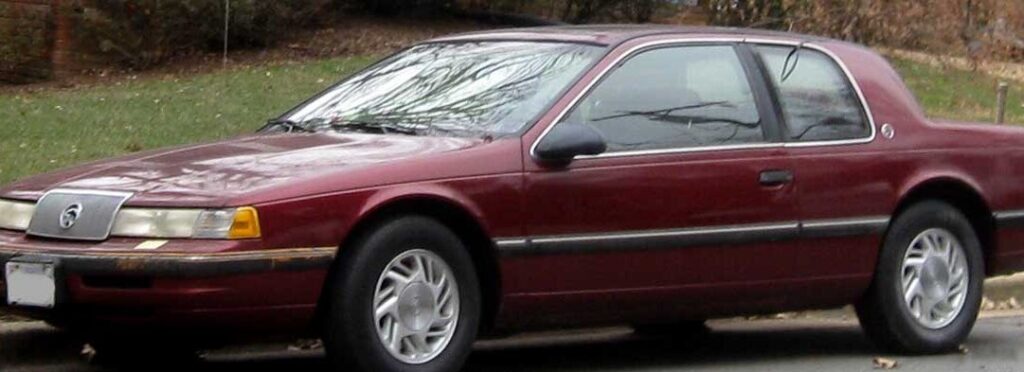
The Mercury Cougar VII XR7, powered by the 3.8-liter V6 engine producing 220 horsepower, represented a significant iteration of Ford’s personal luxury coupe. Produced from 1989 to 1997, this generation Cougar (internally designated the MN-12) aimed to blend sporty styling with comfortable, upscale features. The XR7 trim, positioned as the premium offering within the Cougar lineup, catered to buyers seeking a more refined experience than the base model. It was a key player in Mercury’s attempt to carve out a distinct identity within the Ford Motor Company portfolio, appealing to a demographic desiring a coupe with a touch of sophistication.
Technical Specifications
| Brand | Mercury |
| Model | Cougar |
| Generation | Cougar VII (XR7) |
| Type (Engine) | 3.8 V6 (220 Hp) |
| Start of production | 1989 |
| End of production | 1997 |
| Powertrain Architecture | Internal Combustion engine |
| Body type | Coupe |
| Fuel Type | Petrol (Gasoline) |
| Power | 220 Hp @ 3800 rpm |
| Power per litre | 57.9 Hp/l |
| Torque | 292 Nm @ 2200 rpm / 215.37 lb.-ft. @ 2200 rpm |
| Engine layout | Front, Transverse |
| Engine Model/Code | Essex V6 |
| Engine displacement | 3797 cm3 / 231.71 cu. in. |
| Number of cylinders | 6 |
| Engine configuration | V-engine |
| Cylinder Bore | 96.8 mm / 3.81 in. |
| Piston Stroke | 86 mm / 3.39 in. |
| Compression ratio | 9:1 |
| Number of valves per cylinder | 2 |
| Fuel injection system | Multi-port manifold injection |
| Engine aspiration | Naturally aspirated engine |
| Engine oil capacity | 4.7 l / 4.97 US qt | 4.14 UK qt |
| Coolant | 12.6 l / 13.31 US qt | 11.09 UK qt |
Powertrain & Engine Architecture
The heart of the Cougar XR7 was the Ford Essex 3.8-liter V6 engine. This engine, a mainstay of Ford’s lineup for decades, was known for its durability and smooth operation. The 3.8L utilized a 90-degree V-configuration, contributing to its inherent balance. The XR7 variant featured multi-port fuel injection, a significant upgrade over earlier carbureted versions, enhancing both performance and fuel efficiency. The engine’s 220 horsepower output at 3800 rpm and 292 Nm (215.37 lb-ft) of torque at 2200 rpm provided ample power for comfortable cruising and spirited acceleration. The engine was transversely mounted in the front of the vehicle, driving the front wheels. The transmission paired with this engine was typically a 4-speed automatic, chosen for its ease of use and suitability for the luxury-oriented nature of the XR7. While a 5-speed manual transmission was available on some Cougar models, it was less common with the 3.8L V6, particularly in the XR7 trim.
Driving Characteristics
The Cougar XR7 3.8L Automatic offered a comfortable and refined driving experience. The automatic transmission, while not offering the direct control of a manual, provided smooth and seamless gear changes. Acceleration was respectable, with the engine delivering adequate power for merging onto highways and passing maneuvers. The front-wheel-drive configuration provided good traction in most conditions, although it didn’t offer the sporty handling characteristics of a rear-wheel-drive vehicle. Compared to the base model Cougar with the smaller 2.5-liter four-cylinder engine, the XR7 offered a noticeable improvement in performance. It also felt more refined and capable than the V6 models equipped with the less powerful 140-horsepower version of the 3.8L engine. The gear ratios were tuned for comfortable cruising, prioritizing smooth operation over outright performance.
Equipment & Trim Levels
The XR7 trim level represented the pinnacle of Cougar luxury. Standard features included leather upholstery, power windows and locks, a premium sound system, and air conditioning. The interior typically featured woodgrain trim accents, adding to the upscale ambiance. Optional extras included a sunroof, upgraded sound systems with CD changers, and automatic climate control. The XR7 also featured unique exterior styling cues, such as chrome accents and alloy wheels, distinguishing it from the base model. The dashboard configuration was designed with ergonomics in mind, providing easy access to controls. The seats were designed for comfort, offering ample support for long drives.
Chassis & Braking
The Cougar VII utilized a MacPherson strut front suspension and a multi-link rear suspension, providing a comfortable ride and reasonable handling. The XR7 trim typically featured a thicker stabilizer bar compared to the base model, reducing body roll during cornering. Braking duties were handled by power-assisted disc brakes on the front wheels and drum brakes on the rear. Anti-lock brakes (ABS) were available as an option, enhancing safety and control during emergency braking situations. The chassis was designed to provide a balance between comfort and handling, prioritizing a smooth ride over sporty performance. The steering was power-assisted, making it easy to maneuver in tight spaces.
Market Reception & Comparison
The Mercury Cougar XR7 3.8L Automatic was generally well-received by critics, who praised its comfortable ride, spacious interior, and refined features. However, some reviewers noted that its handling wasn’t as sharp as some of its competitors, such as the Honda Accord Coupe or the Toyota Camry Coupe. Fuel economy was average for the class, with the XR7 achieving around 18 mpg city and 26 mpg highway. Reliability was generally good, although some owners reported minor issues with the automatic transmission and the fuel injection system. Compared to the base model Cougar, the XR7 offered a significant upgrade in terms of features and performance, justifying its higher price tag.
Legacy
The Mercury Cougar VII XR7 3.8L Automatic remains a popular choice among collectors and enthusiasts today. The Essex 3.8L V6 engine is known for its durability and relatively simple maintenance requirements. While not a high-performance machine, the XR7 offers a comfortable and stylish driving experience. Parts availability is generally good, as many components are shared with other Ford and Mercury vehicles. The Cougar XR7 represents a unique chapter in Mercury’s history, embodying the brand’s attempt to blend American luxury with a touch of European flair. The car’s enduring appeal lies in its combination of comfort, style, and reliability, making it a desirable classic for those seeking a comfortable and distinctive coupe.