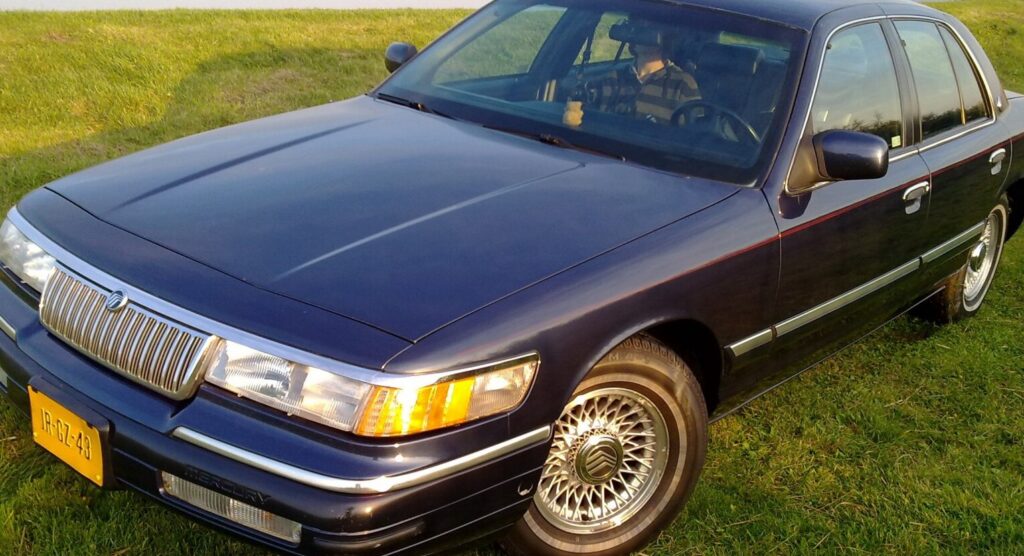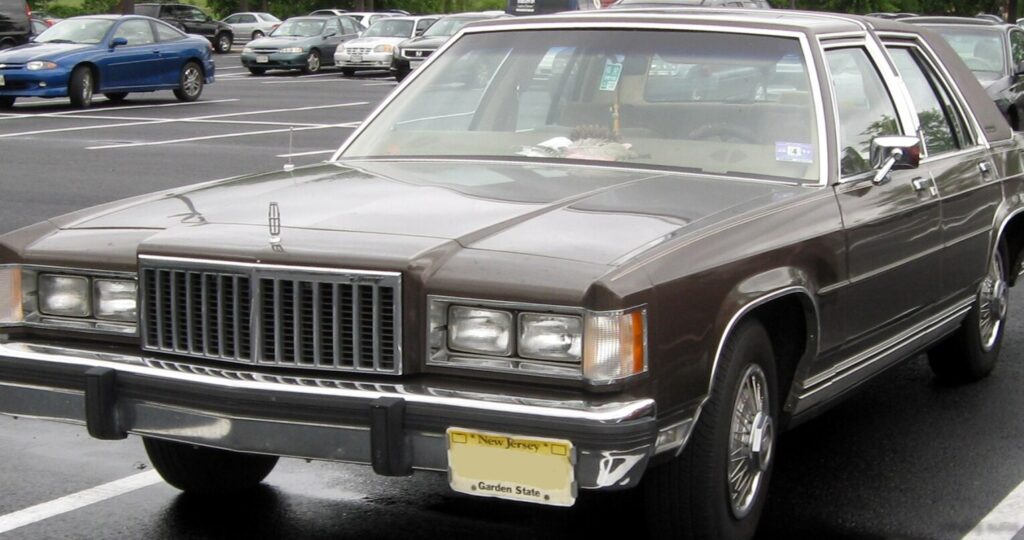
The Mercury Grand Marquis I, powered by a 5.0L V8 engine producing 150 horsepower, represents the initial iteration of a full-size American sedan that would become a staple of the Mercury lineup from 1983 to 1991. Positioned as a more luxurious and refined alternative to the Ford LTD Crown Victoria, the Grand Marquis I aimed to capture a segment of the market seeking comfortable, spacious transportation with a touch of prestige. This first generation established the rear-wheel-drive, body-on-frame formula that would define the model for decades, and the 5.0L V8/automatic transmission combination was a cornerstone of its early appeal.
Technical Specifications
| Brand | Mercury |
| Model | Grand Marquis |
| Generation | Grand Marquis I |
| Engine Type | 5.0 L V8 (150 Hp) |
| Production Years | 1983 – 1991 |
| Powertrain Architecture | Internal Combustion Engine |
| Body Type | Sedan |
| Seats | 5 |
| Doors | 4 |
| Fuel Type | Petrol (Gasoline) |
| Weight-to-Power Ratio | 11.6 kg/Hp, 86 Hp/tonne |
| Weight-to-Torque Ratio | 4.8 kg/Nm, 209.7 Nm/tonne |
| Power | 150 Hp @ 3200 rpm |
| Power per Liter | 30.4 Hp/l |
| Torque | 366 Nm @ 3300 rpm (269.95 lb.-ft. @ 3300 rpm) |
| Engine Layout | Front, Longitudinal |
| Engine Displacement | 4942 cm3 (301.58 cu. in.) |
| Number of Cylinders | 8 |
| Engine Configuration | V-engine |
| Cylinder Bore | 101.6 mm (4 in.) |
| Piston Stroke | 76.2 mm (3 in.) |
| Compression Ratio | 8.9:1 |
| Valves per Cylinder | 2 |
| Fuel Injection System | Multi-port Manifold Injection |
| Engine Aspiration | Naturally Aspirated |
| Engine Oil Capacity | 4.7 l (4.97 US qt | 4.14 UK qt) |
| Coolant Capacity | 15 l (15.85 US qt | 13.2 UK qt) |
| Kerb Weight | 1745 kg (3847.07 lbs.) |
| Fuel Tank Capacity | 68 l (17.96 US gal | 14.96 UK gal) |
| Length | 5245 mm (206.5 in.) |
| Width | 1970 mm (77.56 in.) |
| Height | 1410 mm (55.51 in.) |
| Wheelbase | 2910 mm (114.57 in.) |
| Front Track | 1580 mm (62.2 in.) |
| Rear Track | 1610 mm (63.39 in.) |
| Drivetrain | Rear Wheel Drive |
Powertrain & Engine Architecture
The heart of the Grand Marquis I was the Ford 302 cubic inch (4.9L) small-block V8 engine. This engine, internally designated as the 5.0L, was a staple of the Ford Motor Company for decades. The 1983-1991 iteration utilized a cast iron block and cylinder heads, with a two-barrel, multi-port fuel injection system. This system, a significant upgrade from the carburetor-equipped engines of the past, improved fuel efficiency and drivability. The engine featured a single overhead camshaft (OHC) valvetrain with two valves per cylinder. The engine produced 150 horsepower at 3200 rpm and 270 lb-ft of torque at 3300 rpm. The engine was mated to a four-speed automatic transmission, a common pairing for this class of vehicle, prioritizing smooth operation over outright performance. The transmission was designed for durability and ease of maintenance, reflecting the conservative engineering philosophy of the era.
Driving Characteristics
The 5.0L V8 and automatic transmission combination in the Grand Marquis I delivered a comfortable, if not particularly sporty, driving experience. Acceleration was adequate for everyday driving, but the car was not designed for quick bursts of speed. The automatic transmission’s gear ratios were optimized for cruising and fuel economy, rather than aggressive acceleration. Compared to potential upgrades like the later fuel-injected 5.0L engines with higher horsepower ratings, or even the manual transmission options available on other Ford/Mercury platforms, this setup prioritized smoothness and ease of use. The rear-wheel-drive configuration provided a balanced feel, but the car’s substantial weight (over 3800 pounds) was noticeable in cornering. The focus was on providing a relaxed and comfortable ride, typical of a large American sedan.
Equipment & Trim Levels
The Grand Marquis I, even in its base form, offered a respectable level of standard equipment. Typically, it included features such as air conditioning, power steering, power brakes, a tilt steering wheel, and cloth upholstery. The interior was designed with comfort in mind, featuring spacious seating and a relatively simple dashboard layout. Optional extras included upgraded sound systems, leather upholstery, power windows and locks, and a sunroof. The Grand Marquis I was positioned as a step above the base Ford LTD Crown Victoria, offering a more refined interior and a slightly more upscale appearance. Trim levels were relatively limited, with most variations stemming from the addition of optional packages.
Chassis & Braking
The Grand Marquis I utilized a traditional body-on-frame construction, providing a robust and durable chassis. The suspension consisted of independent front suspension with coil springs and a solid rear axle with leaf springs. This setup prioritized ride comfort over handling precision. Braking was initially accomplished with front disc brakes and rear drum brakes. Later models saw the adoption of rear disc brakes as standard equipment. Stabilizer bars were included at both the front and rear to reduce body roll, but the car’s weight still contributed to a noticeable degree of body lean in corners. The steering was power-assisted, making maneuvering the large sedan relatively easy.
Market Reception & Comparison
The Mercury Grand Marquis I was generally well-received by critics and consumers alike. It was praised for its spacious interior, comfortable ride, and relatively affordable price. However, some critics noted its lack of sporty handling and its somewhat dated styling. Compared to its sibling, the Ford LTD Crown Victoria, the Grand Marquis offered a more luxurious interior and a slightly more upscale image. Compared to other full-size sedans of the era, such as the Chevrolet Caprice and the Chrysler Fifth Avenue, the Grand Marquis offered a competitive combination of features, comfort, and value. Fuel economy was typical for a large American sedan of the time, averaging around 16-18 mpg in city driving and 22-25 mpg on the highway.
Legacy
The 5.0L V8 and automatic transmission combination in the first-generation Mercury Grand Marquis proved to be a reliable and durable powertrain. While not known for blistering performance, it provided years of dependable service for many owners. Today, these cars are relatively affordable and readily available on the used car market. The 5.0L engine is known for its simplicity and ease of maintenance, making it a popular choice for enthusiasts and those seeking a classic American sedan. Parts availability remains good, and the car’s robust construction ensures that many examples are still on the road today. The Grand Marquis I laid the foundation for a successful model line that would continue for over two decades, solidifying its place in automotive history as a comfortable, reliable, and distinctly American vehicle.