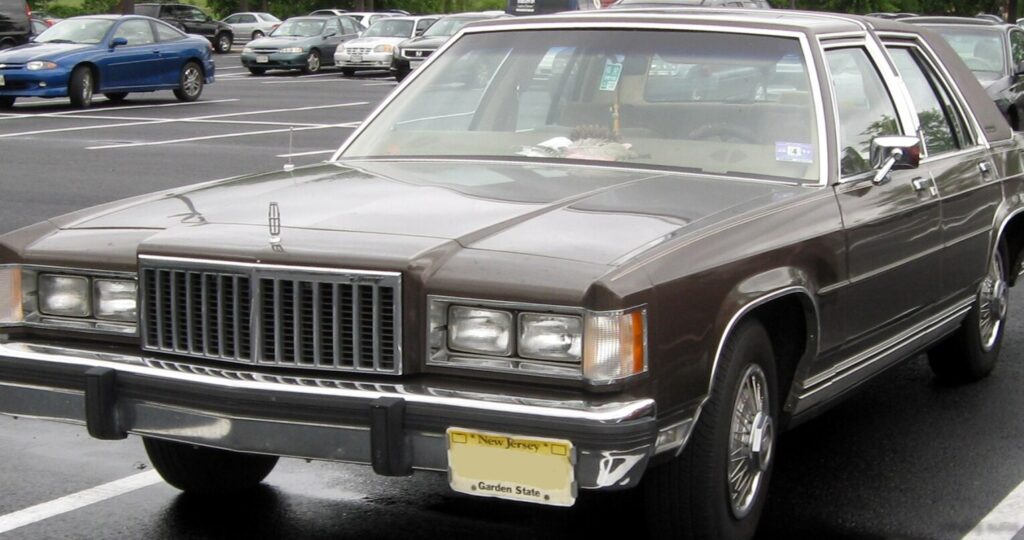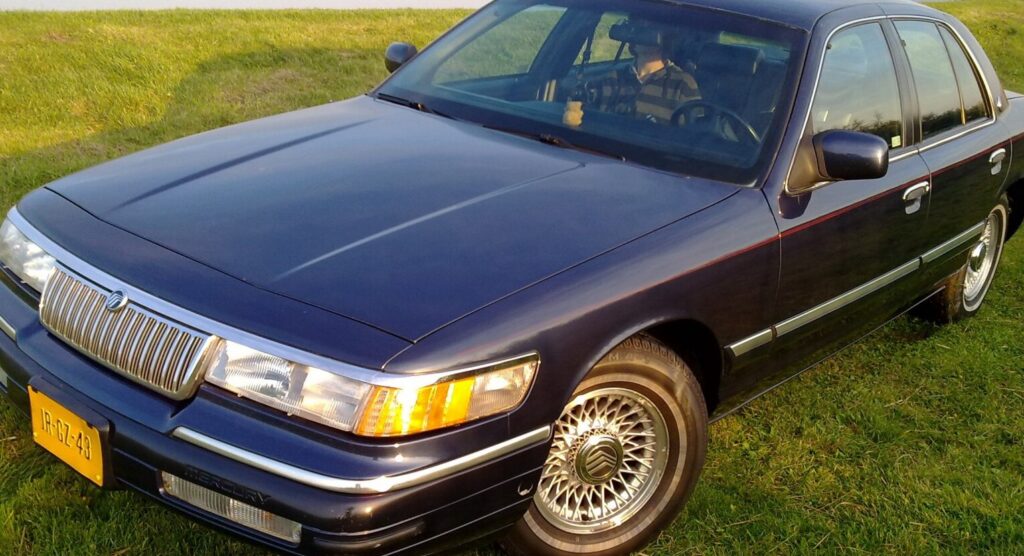
The Mercury Grand Marquis II, specifically equipped with the 4.6-liter V8 engine producing 203 horsepower, represented a significant iteration of Mercury’s full-size sedan. Produced from 1991 through 2000, this variant occupied a middle ground within the Grand Marquis lineup, offering a balance between performance and affordability. It was built on the Panther platform, shared with the Ford Crown Victoria and Lincoln Town Car, and aimed to provide comfortable, reliable transportation for families and those seeking a traditional American sedan experience. This generation marked a substantial redesign from the original Grand Marquis, incorporating updated styling and improved mechanical components.
Technical Specifications
| Brand | Mercury |
| Model | Grand Marquis |
| Generation | Grand Marquis II |
| Type (Engine) | 4.6 V8 (203 Hp) |
| Start of production | 1991 |
| End of production | 2000 |
| Powertrain Architecture | Internal Combustion engine |
| Body type | Sedan |
| Seats | 5 |
| Doors | 4 |
| Fuel consumption (urban) | 13.8 l/100 km (17 US mpg, 20.5 UK mpg) |
| Fuel consumption (extra urban) | 9.8 l/100 km (24 US mpg, 28.8 UK mpg) |
| Fuel Type | Petrol (Gasoline) |
| Maximum speed | 190 km/h (118.06 mph) |
| Weight-to-power ratio | 8.5 kg/Hp, 118 Hp/tonne |
| Weight-to-torque ratio | 4.8 kg/Nm, 209.3 Nm/tonne |
| Power | 203 Hp @ 4250 rpm |
| Power per litre | 44.1 Hp/l |
| Torque | 360 Nm @ 3000 rpm (265.52 lb.-ft. @ 3000 rpm) |
| Engine layout | Front, Longitudinal |
| Engine displacement | 4601 cm3 (280.77 cu. in.) |
| Number of cylinders | 8 |
| Engine configuration | V-engine |
| Cylinder Bore | 90.2 mm (3.55 in.) |
| Piston Stroke | 90 mm (3.54 in.) |
| Compression ratio | 9.1:1 |
| Number of valves per cylinder | 2 |
| Fuel injection system | Multi-port manifold injection |
| Engine aspiration | Naturally aspirated engine |
| Valvetrain | OHC |
| Engine oil capacity | 4.7 l (4.97 US qt | 4.14 UK qt) |
| Coolant | 13.3 l (14.05 US qt | 11.7 UK qt) |
| Kerb Weight | 1720 kg (3791.95 lbs.) |
| Trunk (boot) space | 585 l (20.66 cu. ft.) |
| Fuel tank capacity | 72 l (19.02 US gal | 15.84 UK gal) |
| Length | 5380 mm (211.81 in.) |
| Width | 1980 mm (77.95 in.) |
| Height | 1440 mm (56.69 in.) |
| Wheelbase | 2910 mm (114.57 in.) |
| Front track | 1600 mm (62.99 in.) |
| Rear track | 1610 mm (63.39 in.) |
| Drivetrain Architecture | Rear wheel drive |
| Drive wheel | Rear wheel drive |
| Number of gears | 4 |
| Gearbox type | Automatic transmission |
| Front suspension | Double wishbone |
| Rear suspension | Coil spring |
| Front brakes | Ventilated discs |
| Rear brakes | Disc |
| Assisting systems | ABS (Anti-lock braking system), Hydraulic Power Steering |
| Tires size | 225/60 R16 |
Powertrain & Engine Architecture
The heart of the Grand Marquis II 4.6 was the 4.6-liter Modular V8 engine. This engine, designated as the Windsor family, featured a cast-iron block with aluminum cylinder heads. The 203 horsepower output was achieved through a multi-port fuel injection system and a 9.1:1 compression ratio. The overhead camshaft (OHC) design, with two valves per cylinder, contributed to a relatively smooth and refined power delivery. The engine’s longitudinal mounting and rear-wheel-drive configuration were hallmarks of traditional American automotive engineering. Paired with this engine was a four-speed automatic transmission, designed for comfortable cruising rather than aggressive shifting. This transmission was electronically controlled, offering smooth transitions between gears, but lacked the responsiveness of some contemporary automatic transmissions.
Driving Characteristics
The 4.6-liter V8 and four-speed automatic combination in the Grand Marquis II delivered adequate, but not exhilarating, performance. Acceleration from 0 to 60 mph typically took around 8-9 seconds. The automatic transmission’s gear ratios were tuned for relaxed cruising, prioritizing fuel economy and comfort over outright speed. Compared to the higher-output Police Interceptor version of the 4.6L, or even the later 220hp versions, this configuration felt noticeably less powerful. The emphasis was on providing a smooth and quiet ride, making it well-suited for long highway journeys. The rear-wheel-drive layout provided a balanced feel, although handling was not particularly sporty.
Equipment & Trim Levels
The Grand Marquis II 4.6 typically came standard with features like air conditioning, power windows and locks, and an AM/FM stereo. Upholstery was usually cloth, although leather was available as an option. The dashboard featured a traditional analog gauge cluster. Optional extras included a premium sound system, power seats, and a sunroof. This trim level generally sat in the mid-range of the Grand Marquis lineup, offering more features than the base model but falling short of the luxury appointments found in the higher-end trims.
Chassis & Braking
The Grand Marquis II utilized a body-on-frame construction, contributing to its substantial weight. The front suspension employed a double wishbone design, while the rear suspension featured a coil spring setup. Braking duties were handled by ventilated discs at the front and solid discs at the rear. Anti-lock braking system (ABS) was standard, enhancing safety. The steering was hydraulic power-assisted, providing relatively light and easy steering feel. The suspension was tuned for comfort, prioritizing a smooth ride over sharp handling.
Market Reception & Comparison
The Grand Marquis II 4.6 was generally well-received by consumers seeking a large, comfortable, and reliable sedan. Critics praised its spacious interior and smooth ride, but noted its lack of sporty handling and relatively modest performance compared to some competitors. Fuel economy was average for a full-size sedan of its era, with the 17 mpg city and 24 mpg highway figures being typical. Compared to the Crown Victoria, the Grand Marquis offered a slightly more upscale interior and exterior styling. Compared to the higher-output Grand Marquis trims, this variant offered a lower price point, making it accessible to a wider range of buyers.
Legacy
The Mercury Grand Marquis II 4.6 V8 has proven to be a relatively durable and reliable vehicle. The 4.6-liter Modular V8 engine is known for its longevity, and with proper maintenance, can exceed 200,000 miles. The four-speed automatic transmission is also generally reliable, although it may require servicing over time. Today, these vehicles are often found on the used car market at affordable prices, appealing to those seeking a classic American sedan. While not a performance icon, the Grand Marquis II 4.6 remains a testament to a bygone era of comfortable, spacious, and reliable automotive engineering.