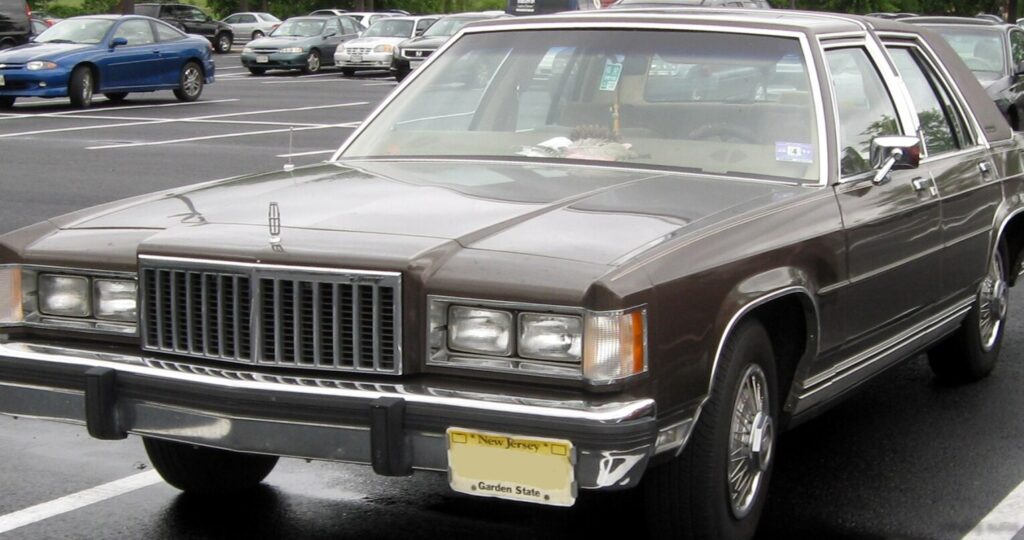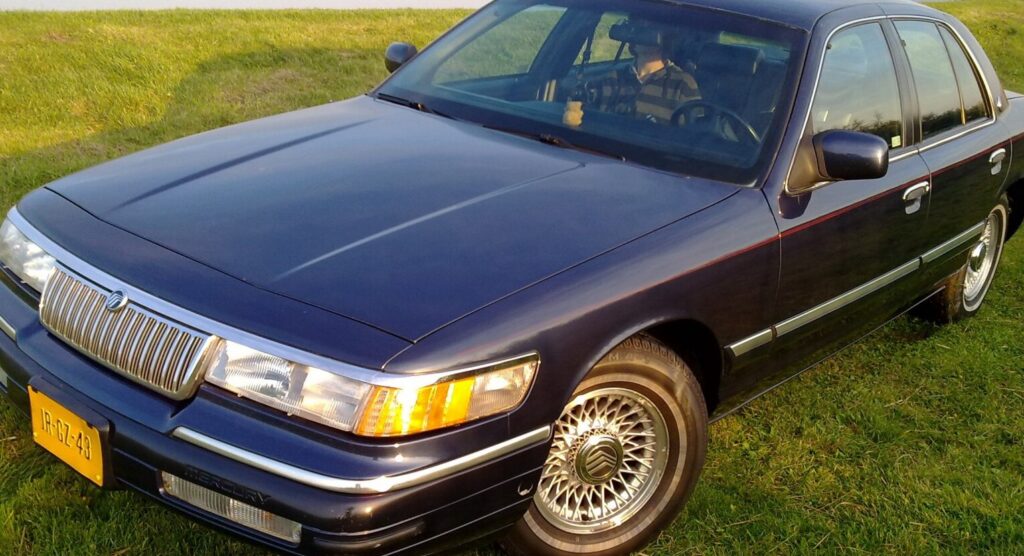
The Mercury Grand Marquis II, specifically equipped with the 4.6-liter V8 engine producing 223 horsepower, represented a continuation of Mercury’s full-size, rear-wheel-drive sedan lineage. Produced for the 2001 and 2002 model years, this variant occupied a middle ground within the Grand Marquis lineup, offering a balance between performance and traditional American luxury. It was built on the Panther platform, a durable and long-lived chassis shared with the Ford Crown Victoria and Lincoln Town Car. The Grand Marquis II aimed to provide a comfortable and spacious experience for families and those seeking a classic, body-on-frame sedan.
Technical Specifications
| Brand | Mercury |
| Model | Grand Marquis |
| Generation | Grand Marquis II |
| Engine Type | 4.6 V8 (223 Hp) |
| Production Years | 2001-2002 |
| Powertrain Architecture | Internal Combustion Engine |
| Body Type | Sedan |
| Seats | 5 |
| Doors | 4 |
| Fuel Consumption (Urban) | 13.8 l/100 km (17 US mpg) |
| Fuel Consumption (Extra Urban) | 9.8 l/100 km (24 US mpg) |
| Fuel Type | Petrol (Gasoline) |
| Maximum Speed | 190 km/h (118.06 mph) |
| Weight-to-Power Ratio | 8 kg/Hp |
| Weight-to-Torque Ratio | 5 kg/Nm |
| Power | 223 Hp @ 4750 rpm |
| Power per Liter | 48.5 Hp/l |
| Torque | 360 Nm @ 4000 rpm (265.52 lb.-ft. @ 4000 rpm) |
| Engine Layout | Front, Longitudinal |
| Engine Displacement | 4601 cm3 (280.77 cu. in.) |
| Number of Cylinders | 8 |
| Engine Configuration | V-engine |
| Cylinder Bore | 90.2 mm (3.55 in.) |
| Piston Stroke | 90 mm (3.54 in.) |
| Compression Ratio | 9.4:1 |
| Valves per Cylinder | 2 |
| Fuel Injection System | Multi-port Manifold Injection |
| Engine Aspiration | Naturally Aspirated |
| Engine Oil Capacity | 4.7 l (4.97 US qt | 4.14 UK qt) |
| Coolant Capacity | 15 l (15.85 US qt | 13.2 UK qt) |
| Kerb Weight | 1795 kg (3957.3 lbs.) |
| Trunk Space (Minimum) | 585 l (20.66 cu. ft.) |
| Fuel Tank Capacity | 72 l (19.02 US gal | 15.84 UK gal) |
| Length | 5380 mm (211.81 in.) |
| Width | 1980 mm (77.95 in.) |
| Height | 1440 mm (56.69 in.) |
| Wheelbase | 2910 mm (114.57 in.) |
| Front Track | 1600 mm (62.99 in.) |
| Rear Track | 1610 mm (63.39 in.) |
| Drivetrain | Rear Wheel Drive |
| Gearbox | 4-speed Automatic |
| Front Suspension | Double Wishbone |
| Rear Suspension | Coil Spring |
| Front Brakes | Ventilated Discs |
| Rear Brakes | Discs |
| Safety Systems | ABS (Anti-lock Braking System) |
| Steering | Hydraulic Power Steering |
| Tire Size | 225/60 R16 |
Powertrain & Engine Architecture
The heart of the Grand Marquis II 4.6 was the Modular 4.6L V8 engine, specifically the version designated for rear-wheel-drive applications. This engine featured a cast-iron block with aluminum cylinder heads, a configuration that balanced durability with weight savings. The engine utilized a single overhead camshaft (OHC) design per bank of cylinders, operating two valves per cylinder. Fuel delivery was managed by a multi-port fuel injection system, providing precise fuel metering for optimal combustion. The 4R70W four-speed automatic transmission was the sole transmission offering for this variant. This transmission was known for its robustness and smooth shifting characteristics, though it lacked the efficiency of more modern transmissions. The engine’s longitudinal mounting and rear-wheel-drive configuration were hallmarks of traditional American full-size sedans.
Driving Characteristics
The 223 horsepower and 360 lb-ft of torque provided by the 4.6L V8 and 4R70W automatic combination delivered adequate, but not exhilarating, performance. Acceleration from 0 to 60 mph typically took around 8-9 seconds. The automatic transmission’s gear ratios were tuned for comfortable cruising and relaxed acceleration, prioritizing smoothness over outright speed. Compared to the Police Interceptor versions of the same engine, or even the later, more powerful Grand Marquis trims, this variant felt less responsive. However, it offered a more refined driving experience, particularly for those not seeking aggressive performance. The rear-wheel-drive layout provided a balanced feel, though it wasn’t particularly sporty.
Equipment & Trim Levels
The Grand Marquis II 4.6 typically came standard with features expected of a full-size American sedan, including air conditioning, power windows and locks, a tilt steering wheel, and a basic audio system. Upholstery was typically cloth, though leather was available as an option. The dashboard featured a traditional analog gauge cluster and a center console with controls for the audio system and climate control. Optional extras included a premium sound system, power seats, and alloy wheels. This trim level generally represented a step up from the base Grand Marquis, offering a more comfortable and well-equipped interior without the added cost of the higher-end trims.
Chassis & Braking
The Grand Marquis II utilized a body-on-frame construction, providing a robust and durable chassis. The front suspension employed a double-wishbone design, while the rear suspension featured a coil-spring setup. This configuration prioritized ride comfort over handling precision. Braking duties were handled by ventilated discs at the front and solid discs at the rear. Anti-lock braking system (ABS) was standard, enhancing safety during emergency stops. The steering system was hydraulic power steering, providing light and easy steering effort.
Market Reception & Comparison
The Grand Marquis II 4.6 was generally well-received by consumers seeking a large, comfortable, and reliable sedan. Critics praised its spacious interior, smooth ride, and robust powertrain. However, it was often criticized for its relatively dated design and lack of modern features compared to some of its import competitors. Fuel economy was also a concern, averaging around 17 mpg in the city and 24 mpg on the highway. Compared to the higher-output Grand Marquis trims, this variant offered a more affordable entry point into the model range, but at the expense of performance. The 1.8L and 1.9L TDI versions of the European Ford Mondeo, while smaller, offered significantly better fuel economy, but lacked the Grand Marquis’s size and V8 power.
Legacy
The Mercury Grand Marquis II 4.6 V8 has become a popular choice among collectors and enthusiasts seeking a classic American sedan. The 4.6L V8 engine is known for its durability and relatively simple maintenance requirements. While not a high-performance machine, the Grand Marquis II offers a comfortable and reliable driving experience. Parts availability remains good, making it a relatively easy vehicle to maintain. In the used car market, these models are often sought after for their spaciousness, classic styling, and affordability. The Panther platform’s longevity and robust construction have ensured that many Grand Marquis II models remain on the road today, a testament to their enduring quality.