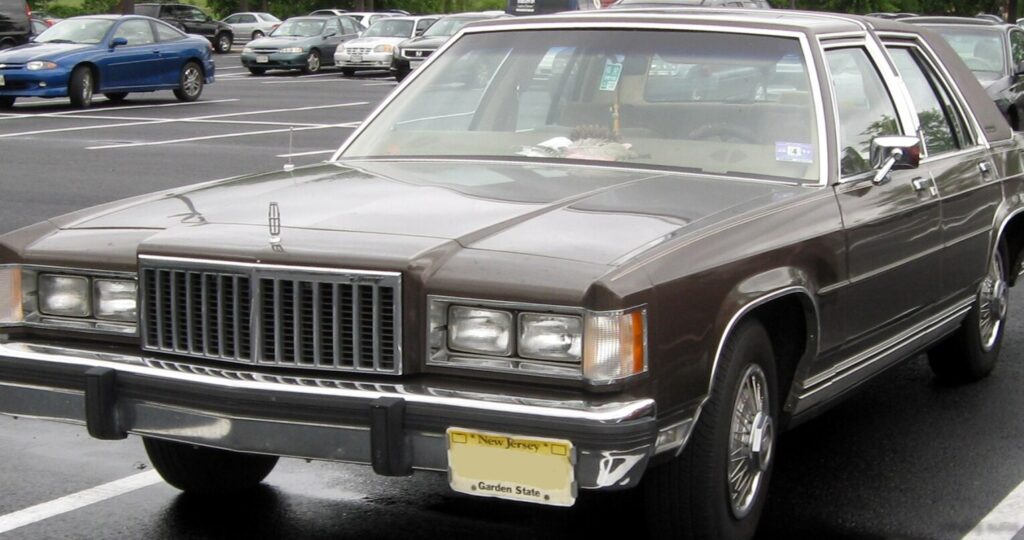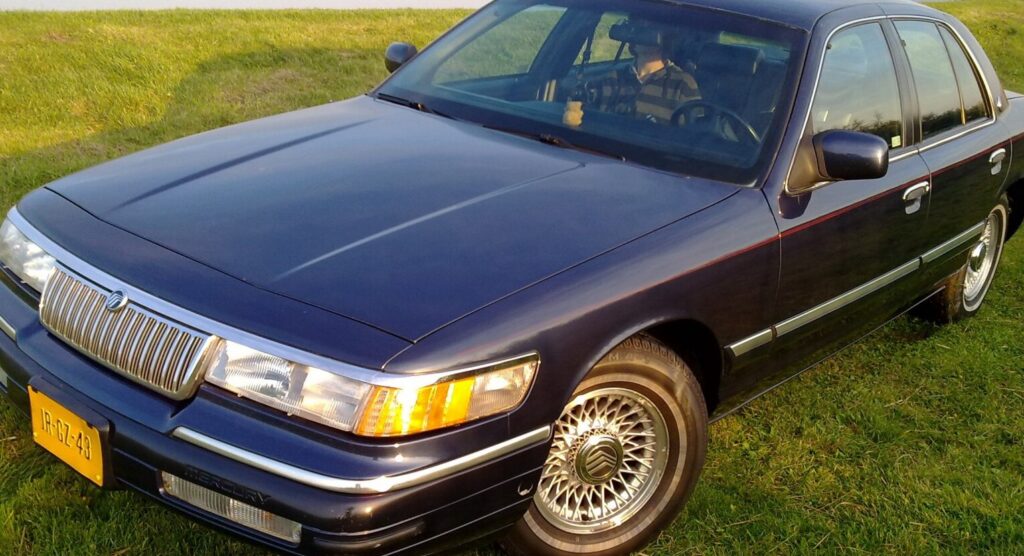
The Mercury Grand Marquis II, specifically equipped with the 4.6-liter V8 engine producing 235 horsepower, represented a continuation of Mercury’s long-standing tradition of full-size, rear-wheel-drive sedans. Produced for the 2001 and 2002 model years, this iteration of the Grand Marquis sat within the second generation (1998-2005) of the model, sharing its Panther platform with the Ford Crown Victoria and Lincoln Town Car. This variant occupied a middle ground in the Grand Marquis lineup, offering a balance between performance and traditional comfort, appealing to buyers seeking a spacious, powerful, and relatively affordable American sedan.
Technical Specifications
| Brand | Mercury |
| Model | Grand Marquis |
| Generation | Grand Marquis II |
| Type (Engine) | 4.6 V8 (235 Hp) |
| Start of production | 2001 |
| End of production | 2002 |
| Powertrain Architecture | Internal Combustion engine |
| Body type | Sedan |
| Seats | 5 |
| Doors | 4 |
| Fuel Type | Petrol (Gasoline) |
| Weight-to-power ratio | 7.6 kg/Hp, 130.9 Hp/tonne |
| Weight-to-torque ratio | 4.8 kg/Nm, 207.8 Nm/tonne |
| Power | 235 Hp @ 4750 rpm |
| Power per litre | 51.1 Hp/l |
| Torque | 373 Nm @ 4000 rpm, 275.11 lb.-ft. @ 4000 rpm |
| Engine layout | Front, Longitudinal |
| Engine displacement | 4601 cm3, 280.77 cu. in. |
| Number of cylinders | 8 |
| Engine configuration | V-engine |
| Cylinder Bore | 90.2 mm, 3.55 in. |
| Piston Stroke | 90 mm, 3.54 in. |
| Compression ratio | 9.4:1 |
| Number of valves per cylinder | 2 |
| Fuel injection system | Multi-port manifold injection |
| Engine aspiration | Naturally aspirated engine |
| Valvetrain | OHC |
| Engine oil capacity | 4.7 l, 4.97 US qt | 4.14 UK qt |
| Coolant | 15 l, 15.85 US qt | 13.2 UK qt |
| Kerb Weight | 1795 kg, 3957.3 lbs |
| Trunk (boot) space – minimum | 585 l, 20.66 cu. ft |
| Fuel tank capacity | 72 l, 19.02 US gal | 15.84 UK gal |
| Length | 5380 mm, 211.81 in |
| Width | 1980 mm, 77.95 in |
| Height | 1440 mm, 56.69 in |
| Wheelbase | 2910 mm, 114.57 in |
| Front track | 1600 mm, 62.99 in |
| Rear (Back) track | 1610 mm, 63.39 in |
| Drivetrain Architecture | The Internal combustion engine (ICE) drives the rear wheels of the vehicle. |
| Drive wheel | Rear wheel drive |
| Number of gears and type of gearbox | 4 gears, automatic transmission |
| Front suspension | Double wishbone |
| Rear suspension | Coil spring |
| Front brakes | Ventilated discs |
| Rear brakes | Disc |
| Assisting systems | ABS (Anti-lock braking system) |
| Power steering | Hydraulic Steering |
| Tires size | 225/60 R16 |
Powertrain & Engine Architecture
The heart of the Grand Marquis II 4.6 was the Ford Modular 4.6L V8 engine. This engine, designated within the Ford family as the Romeo engine (due to its manufacturing location), featured a cast iron block with aluminum cylinder heads. The 4.6L engine utilized a single overhead camshaft (OHC) design per bank, operating two valves per cylinder. Fuel delivery was managed by a multi-port fuel injection system, providing precise fuel metering for optimal combustion. The 235 horsepower output was achieved through a combination of the engine’s displacement, cylinder head design, and carefully calibrated engine management system. Paired with this engine was a four-speed automatic transmission, a mainstay of Ford’s rear-wheel-drive platforms for decades. This transmission was chosen for its smooth operation and suitability for comfortable cruising, aligning with the Grand Marquis’s intended role as a luxury-oriented sedan.
Driving Characteristics
The 4.6L V8 and four-speed automatic combination in the Grand Marquis II delivered a driving experience focused on smooth, effortless power. While not a sports car, the 235 horsepower provided ample acceleration for highway merging and passing maneuvers. The automatic transmission was tuned for comfort, with relatively relaxed shift points. Compared to the standard 4.6L engine found in some Crown Victoria Police Interceptor models, the Grand Marquis’s tuning prioritized drivability over outright performance. The gear ratios were optimized for cruising, resulting in a comfortable ride at highway speeds. Compared to the manual transmission options available on other Panther platform vehicles, the automatic offered a more relaxed and user-friendly experience, particularly in city driving. However, the automatic did result in slightly slower acceleration times and reduced fuel economy compared to the manual.
Equipment & Trim Levels
The Grand Marquis II 4.6 typically came well-equipped, reflecting its position as a premium sedan. Standard features included air conditioning, power windows and locks, a premium sound system, and cloth upholstery. Leather upholstery, a power-adjustable driver’s seat, and upgraded audio systems were available as options. The interior design was characterized by a spacious cabin and a traditional, comfortable layout. Exterior features generally included full wheel covers, color-keyed mirrors and door handles, and a relatively understated aesthetic. Optional extras could include a sunroof, upgraded alloy wheels, and a rear-seat entertainment system.
Chassis & Braking
The Grand Marquis II utilized a body-on-frame construction, a hallmark of traditional American full-size sedans. The chassis featured a double-wishbone front suspension and a coil-spring rear suspension, providing a comfortable ride quality. The braking system consisted of ventilated disc brakes at the front and solid disc brakes at the rear. Anti-lock braking system (ABS) was standard, enhancing safety and control during emergency braking situations. Hydraulic power steering provided effortless maneuverability. The suspension was tuned for comfort, prioritizing a smooth ride over sporty handling. Stabilizer bars were included at both the front and rear to reduce body roll during cornering.
Market Reception & Comparison
The Mercury Grand Marquis II 4.6 was generally well-received by automotive critics as a comfortable, spacious, and reliable sedan. However, it was often criticized for its somewhat dated design and lack of sporty handling. Compared to the Ford Crown Victoria, the Grand Marquis offered a more luxurious interior and a slightly more refined driving experience. Compared to the Lincoln Town Car, the Grand Marquis was positioned as a more affordable and slightly more driver-focused option. Fuel economy was typical for a full-size, rear-wheel-drive V8 sedan of the era, averaging around 17-20 mpg in combined driving. Reliability was generally good, with the 4.6L V8 engine proving to be a durable and long-lasting powerplant.
Legacy
The Mercury Grand Marquis II 4.6, like other Panther platform vehicles, has developed a loyal following among enthusiasts. The 4.6L V8 engine is known for its reliability and relative ease of maintenance. Today, well-maintained examples of the Grand Marquis II 4.6 can be found on the used car market at affordable prices. While not a collector’s item, the Grand Marquis II represents a significant chapter in American automotive history, embodying the traditional values of spaciousness, comfort, and V8 power. The simplicity of the powertrain and readily available parts contribute to its continued appeal for those seeking a classic American sedan.