Technical Specifications
| Brand | Mercury |
| Model | Mariner |
| Generation | Mariner I |
| Type (Engine) | 2.3 i 16V (155 Hp) |
| Start of production | 2005 |
| End of production | 2007 |
| Powertrain Architecture | Internal Combustion engine |
| Body type | SUV, Crossover |
| Seats | 5 |
| Doors | 5 |
| Fuel consumption (urban) | 10.7 l/100 km (22 US mpg) |
| Fuel consumption (extra urban) | 9.1 l/100 km (25.8 US mpg) |
| Fuel Type | Petrol (Gasoline) |
| Maximum speed | 170 km/h (105.63 mph) |
| Weight-to-power ratio | 9.8 kg/Hp |
| Weight-to-torque ratio | 7.4 kg/Nm |
| Power | 155 Hp @ 5800 rpm |
| Power per litre | 68.6 Hp/l |
| Torque | 206 Nm @ 4250 rpm (151.94 lb.-ft. @ 4250 rpm) |
| Engine layout | Front, Transverse |
| Engine displacement | 2261 cm3 (137.97 cu. in.) |
| Number of cylinders | 4 |
| Engine configuration | Inline |
| Cylinder Bore | 87.5 mm (3.44 in.) |
| Piston Stroke | 94 mm (3.7 in.) |
| Compression ratio | 9.4:1 |
| Number of valves per cylinder | 4 |
| Fuel injection system | Multi-port manifold injection |
| Engine aspiration | Naturally aspirated engine |
| Engine oil capacity | 4.25 l (4.49 US qt | 3.74 UK qt) |
| Coolant | 6 l (6.34 US qt | 5.28 UK qt) |
| Kerb Weight | 1520 kg (3351.03 lbs.) |
| Max. weight | 1978 kg (4360.74 lbs.) |
| Max load | 458 kg (1009.72 lbs.) |
| Trunk (boot) space – minimum | 830 l (29.31 cu. ft.) |
| Trunk (boot) space – maximum | 1878 l (66.32 cu. ft.) |
| Fuel tank capacity | 62 l (16.38 US gal | 13.64 UK gal) |
| Length | 4427 mm (174.29 in.) |
| Width | 1781 mm (70.12 in.) |
| Height | 1795 mm (70.67 in.) |
| Wheelbase | 2620 mm (103.15 in.) |
| Front track | 1552 mm (61.1 in.) |
| Rear (Back) track | 1534 mm (60.39 in.) |
| Drivetrain Architecture | Front wheel drive |
| Number of gears | 4 |
| Type of gearbox | automatic transmission |
| Front suspension | Spring Strut |
| Rear suspension | Coil spring |
| Front brakes | Disc |
| Rear brakes | Drum |
| Assisting systems | ABS (Anti-lock braking system) |
| Tires size | 235/70 R16 |
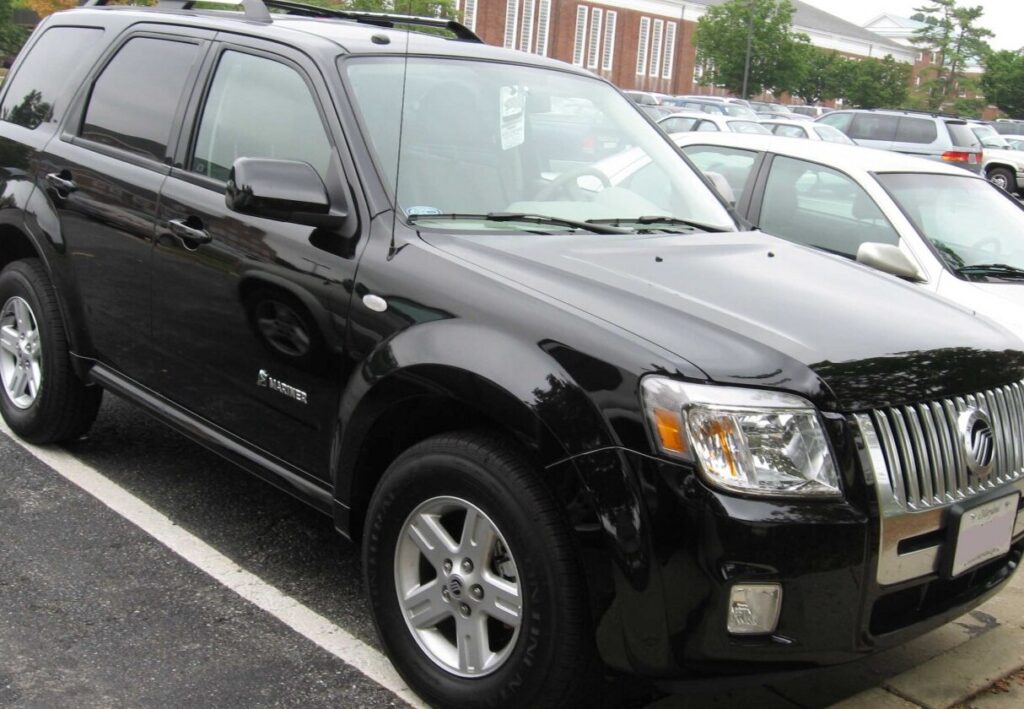
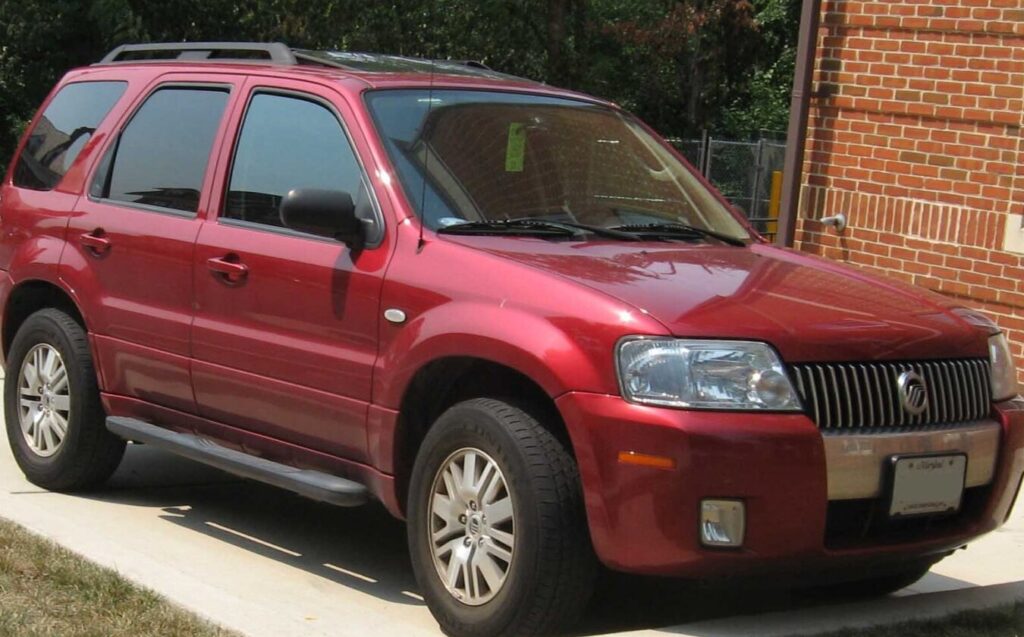
The Mercury Mariner I 2.3 i 16V, produced from 2005 to 2007, served as the entry-level model within the first generation of the Mariner lineup. Built on the P249 platform shared with the Ford Escape and Mazda Tribute, the Mariner aimed to provide a slightly more upscale experience within the Ford Motor Company’s range of compact crossover SUVs. This particular variant, featuring the 2.3-liter inline-four engine coupled with a four-speed automatic transmission, struck a balance between affordability and practicality for the North American consumer. It directly competed with popular vehicles like the Honda CR-V and Toyota RAV4, appealing to buyers looking for a versatile and reasonably fuel-efficient small SUV.
Powertrain & Engine Architecture
At the core of the Mariner I 2.3 i 16V lies the 2.3-liter inline-four cylinder engine, known internally as the 2.3L Duratec. This engine is part of Ford’s Duratec engine family, and features a single overhead camshaft (SOHC) design with four valves per cylinder. The engine utilizes a multi-port fuel injection system, delivering fuel directly into the intake ports for optimized combustion. A compression ratio of 9.4:1 was chosen as a compromise, allowing the engine to operate reliably on regular unleaded gasoline while still providing adequate power. The engine was paired with a four-speed automatic transmission, a common choice for American buyers who valued ease of operation over outright performance. While generally reliable, this transmission wasn’t known for its particularly rapid shifting or exceptional fuel economy when compared to more modern automatic transmissions.
Driving Characteristics
The 2.3-liter engine produced 155 horsepower and 152 lb-ft of torque, providing adequate, though not particularly exciting, performance. Acceleration from a standstill to 60 mph typically took around 9 to 10 seconds. The four-speed automatic transmission, while smooth in operation, contributed to a somewhat relaxed driving experience. The gear ratios were optimized for fuel economy rather than aggressive acceleration. Compared to the optional 3.0-liter V6 engine offered in other Mariner trims, the 2.3L engine felt noticeably less powerful, especially when the vehicle was fully loaded with passengers and cargo or when tackling uphill climbs. However, the 2.3L engine offered a more refined and quieter driving experience than the V6, and its lighter weight contributed to slightly improved handling characteristics.
Equipment & Trim Levels
The Mariner I 2.3 i 16V typically came standard with features such as air conditioning, power windows and door locks, a CD player, and cloth upholstery. Safety features included anti-lock brakes (ABS) and front airbags. Optional extras included a premium audio system, alloy wheels, a power sunroof, and leather upholstery. The base trim level focused on providing essential features at an accessible price point, while higher trim levels offered more luxury and convenience options. The interior design was functional and straightforward, prioritizing usability and practicality over elaborate styling.
Chassis & Braking
The Mariner I employed a front-wheel-drive layout with an independent front suspension utilizing MacPherson struts and a multi-link rear suspension. The front brakes were disc brakes, providing good stopping power, while the rear brakes were drum brakes – a cost-saving measure common in this vehicle segment. ABS was standard equipment, enhancing braking control during emergency stopping situations. The suspension tuning was geared towards providing a comfortable ride over a variety of road surfaces. Stabilizer bars were included to minimize body roll during cornering, but the Mariner wasn’t designed for particularly sporty handling.
Market Reception & Comparison
Automotive critics generally regarded the Mariner I 2.3 i 16V as a competent and practical crossover SUV. However, the 2.3-liter engine was frequently criticized for feeling underpowered, especially when compared to the available V6 engine option. Fuel economy was considered average for the class, achieving approximately 22 mpg in city driving and 26 mpg on the highway. The 2.3L version was often recommended for buyers who prioritized fuel efficiency and affordability over outright performance. Compared to the V6 models, the 2.3L offered lower insurance costs and potentially better long-term reliability due to its simpler engine design.
Legacy
The 2.3-liter Duratec engine proved to be a relatively reliable powertrain when properly maintained. Common issues included occasional oil leaks and failures of various sensors, but these were generally not major or prohibitively expensive to address. Today, used Mariner I 2.3 i 16V models are relatively affordable and can represent a good value for buyers seeking a practical and dependable small SUV. The four-speed automatic transmission, while somewhat dated by modern standards, is generally durable. The overall simplicity of the vehicle makes it relatively easy and inexpensive to repair. While not a performance leader, the Mariner I 2.3 i 16V remains a viable option for those seeking a no-frills, functional crossover SUV.