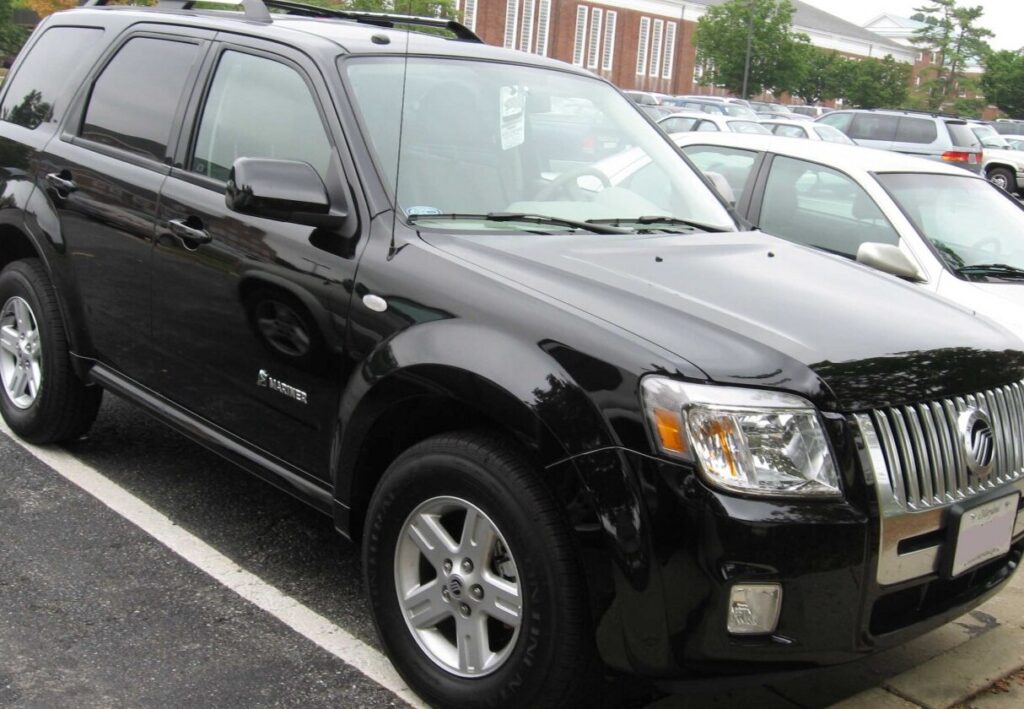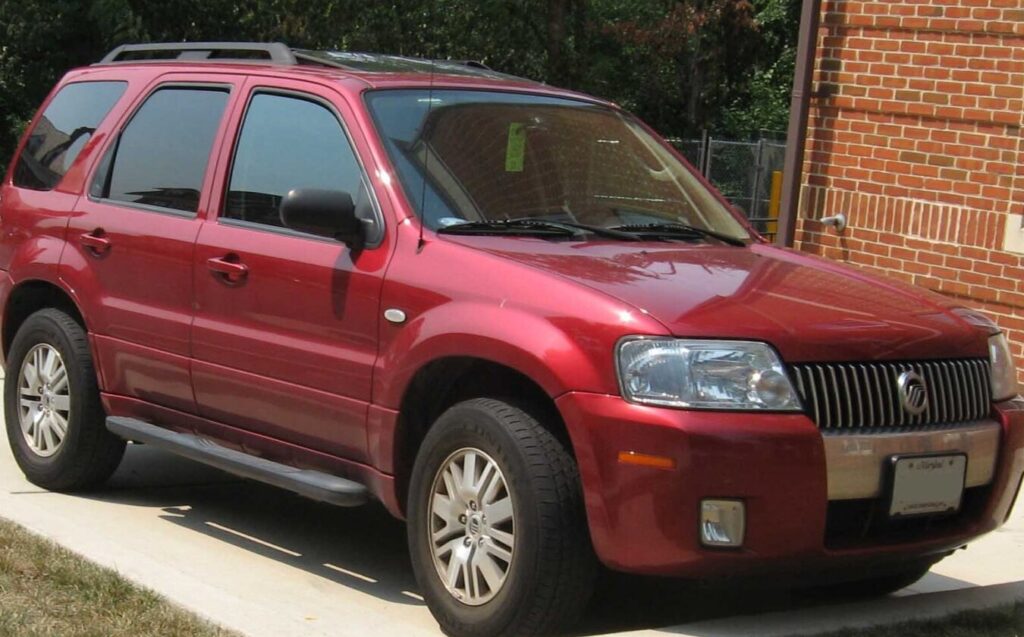
The Mercury Mariner I 2.3 i 16V AWD, produced from 2005 to 2007, represented Mercury’s entry into the burgeoning compact SUV/Crossover market. Based on the Ford Escape, the Mariner aimed to offer a more upscale alternative with a focus on comfort and convenience features. This particular variant, equipped with the 2.3-liter inline-four engine and a four-speed automatic transmission, served as the base model for the Mariner lineup, offering all-wheel drive as standard equipment. It occupied a crucial position, appealing to buyers seeking a practical and affordable SUV with added all-weather capability.
Technical Specifications
| Brand | Mercury |
| Model | Mariner |
| Generation | Mariner I |
| Type (Engine) | 2.3 i 16V AWD (155 Hp) |
| Start of production | 2005 |
| End of production | 2007 |
| Powertrain Architecture | Internal Combustion engine |
| Body type | SUV, Crossover |
| Seats | 5 |
| Doors | 5 |
| Fuel consumption (urban) | 11.8 l/100 km (19.9 US mpg) |
| Fuel consumption (extra urban) | 10.2 l/100 km (23.1 US mpg) |
| Fuel Type | Petrol (Gasoline) |
| Maximum speed | 170 km/h (105.63 mph) |
| Weight-to-power ratio | 10.4 kg/Hp |
| Weight-to-torque ratio | 7.8 kg/Nm |
| Power | 155 Hp @ 5800 rpm |
| Power per litre | 68.6 Hp/l |
| Torque | 206 Nm @ 4250 rpm (151.94 lb.-ft. @ 4250 rpm) |
| Engine layout | Front, Transverse |
| Engine displacement | 2261 cm3 (137.97 cu. in.) |
| Number of cylinders | 4 |
| Engine configuration | Inline |
| Cylinder Bore | 87.5 mm (3.44 in.) |
| Piston Stroke | 94 mm (3.7 in.) |
| Compression ratio | 9.4:1 |
| Number of valves per cylinder | 4 |
| Fuel injection system | Multi-port manifold injection |
| Engine aspiration | Naturally aspirated engine |
| Engine oil capacity | 4.25 l (4.49 US qt | 3.74 UK qt) |
| Coolant | 6 l (6.34 US qt | 5.28 UK qt) |
| Kerb Weight | 1610 kg (3549.44 lbs.) |
| Max. weight | 2050 kg (4519.48 lbs.) |
| Max load | 440 kg (970.03 lbs.) |
| Trunk (boot) space – minimum | 830 l (29.31 cu. ft.) |
| Trunk (boot) space – maximum | 1878 l (66.32 cu. ft.) |
| Fuel tank capacity | 62 l (16.38 US gal | 13.64 UK gal) |
| Length | 4427 mm (174.29 in.) |
| Width | 1781 mm (70.12 in.) |
| Height | 1795 mm (70.67 in.) |
| Wheelbase | 2620 mm (103.15 in.) |
| Front track | 1552 mm (61.1 in.) |
| Rear (Back) track | 1534 mm (60.39 in.) |
| Drive wheel | All wheel drive (4×4) |
| Number of gears and type of gearbox | 4 gears, automatic transmission |
| Front suspension | Spring Strut |
| Rear suspension | Coil spring |
| Front brakes | Disc |
| Rear brakes | Drum |
| Assisting systems | ABS (Anti-lock braking system) |
| Tires size | 235/70 R16 |
Powertrain & Engine Architecture
The heart of the Mariner I 2.3 i AWD was the 2.3-liter inline-four cylinder engine, internally designated as the 2.3L Duratec. This engine, part of Ford’s Duratec family, featured a single overhead camshaft (SOHC) design with four valves per cylinder. The engine utilized a multi-port fuel injection system, delivering fuel directly into the intake ports. The 9.4:1 compression ratio was a compromise between performance and the ability to run on regular unleaded gasoline. Paired with this engine was a four-speed automatic transmission, chosen for its smooth operation and ease of use, catering to the target demographic who prioritized comfort over sporty driving dynamics. This transmission was a conventional hydraulic automatic, lacking the more advanced features found in some contemporary transmissions.
Driving Characteristics
The 155 horsepower and 152 lb-ft of torque produced by the 2.3-liter engine provided adequate, but not exhilarating, performance. Acceleration was best described as leisurely, with a 0-60 mph time estimated around 10-11 seconds. The four-speed automatic transmission, while smooth, lacked the responsiveness of a manual gearbox or a transmission with more gears. The gear ratios were tuned for fuel efficiency and comfortable cruising rather than aggressive acceleration. Compared to the optional 3.0-liter V6 engine available in other Mariner trims, the 2.3L felt noticeably less powerful, especially when fully loaded or tackling steep inclines. However, the all-wheel-drive system provided enhanced traction in inclement weather, making it a more confident choice for drivers in regions with snow or rain.
Equipment & Trim Levels
The base Mariner I 2.3 i AWD typically came standard with features such as air conditioning, power windows and locks, a CD player, and cloth upholstery. Safety features included anti-lock brakes (ABS) and front airbags. Optional extras included a premium audio system, alloy wheels, a sunroof, and leather upholstery. The interior design was functional and straightforward, prioritizing practicality over luxury. The dashboard layout was clean and easy to navigate, with logically placed controls. The Mariner aimed to provide a comfortable and user-friendly experience for everyday driving.
Chassis & Braking
The Mariner I utilized a traditional body-on-frame construction, providing a robust and durable platform. The front suspension featured independent MacPherson struts, while the rear suspension employed a multi-link setup. This configuration aimed to balance ride comfort with handling stability. Braking duties were handled by disc brakes at the front and drum brakes at the rear. While adequate for normal driving conditions, the rear drum brakes were a cost-saving measure and didn’t offer the same stopping power as disc brakes. The ABS system helped to prevent wheel lockup during hard braking, enhancing safety.
Market Reception & Comparison
The Mercury Mariner I 2.3 i AWD was generally well-received by critics as a practical and affordable entry-level SUV. However, the 2.3-liter engine was often criticized for its lack of power, particularly when compared to the V6 engine option. Fuel economy was considered average for its class, achieving around 19 mpg city and 23 mpg highway. Compared to competitors like the Honda CR-V and Toyota RAV4, the Mariner offered a more affordable price point but lacked the same level of refinement and fuel efficiency. The all-wheel-drive system was a significant selling point, providing a competitive advantage in regions with challenging weather conditions.
Legacy
The Mercury Mariner I 2.3 i AWD, while not a performance standout, proved to be a reliable and durable vehicle. The 2.3-liter Duratec engine is known for its longevity, and with proper maintenance, can reach high mileage. In the used car market, these Mariners are often sought after as affordable and practical transportation. Common issues include minor oil leaks and occasional sensor failures, but overall, the powertrain is considered relatively trouble-free. The Mariner I represents a significant step in Mercury’s attempt to compete in the growing SUV market, offering a blend of practicality, affordability, and all-weather capability.