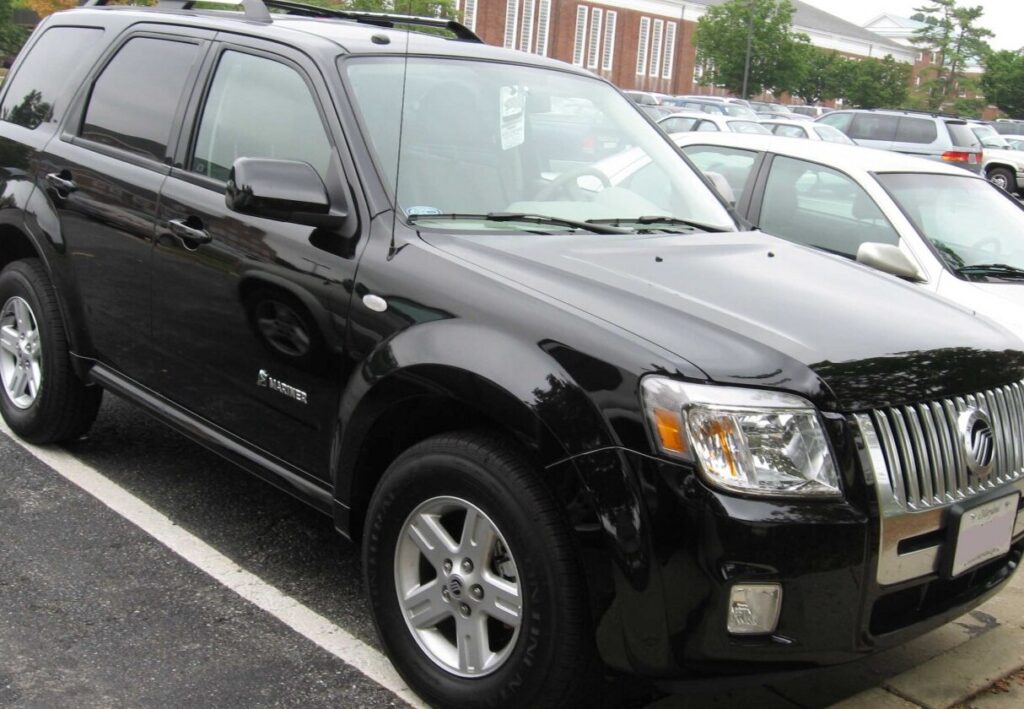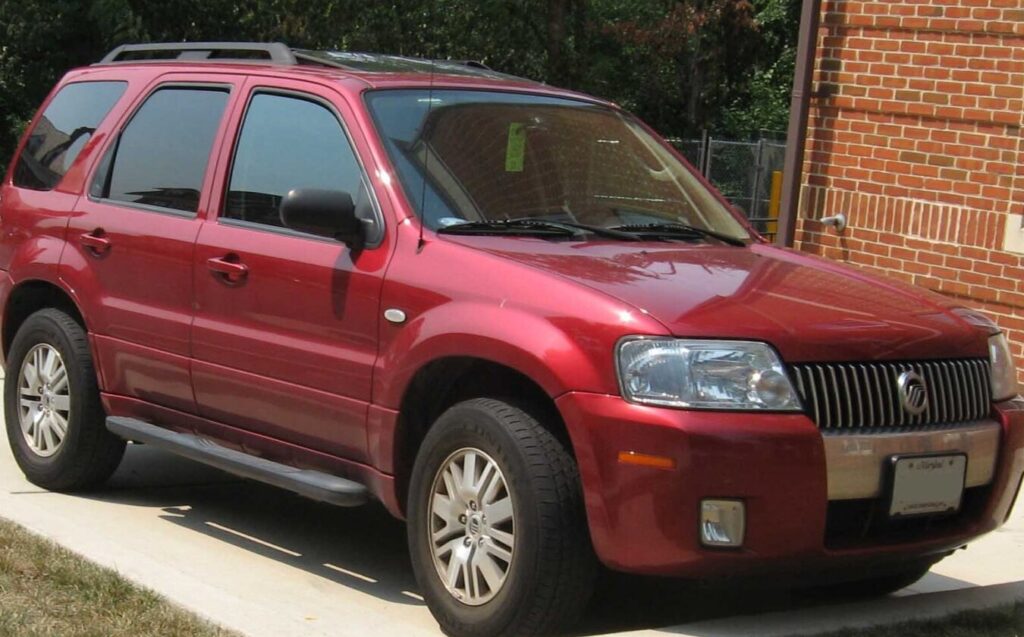
The Mercury Mariner I 2.3i 16V Hybrid, produced for the 2006 and 2007 model years, represented Mercury’s entry into the burgeoning hybrid SUV market. Built on the Ford Escape Hybrid platform (sharing the 5H platform code), the Mariner Hybrid aimed to offer fuel efficiency without sacrificing the practicality and space expected of a compact crossover. This particular variant, equipped with the 2.3-liter inline-four hybrid powertrain and all-wheel drive (AWD), occupied a unique position in the Mariner lineup, serving as the premium, fuel-conscious option. It was positioned above the conventionally powered 2.4L four-cylinder and V6 models in terms of technology and fuel economy, but often at a higher price point.
Technical Specifications
| Brand | Mercury |
| Model | Mariner |
| Generation | Mariner I |
| Type (Engine) | 2.3 i 16V Hybrid (135 Hp) AWD |
| Start of production | 2006 |
| End of production | 2007 |
| Powertrain Architecture | FHEV (Full Hybrid Electric Vehicle) |
| Body type | SUV, Crossover |
| Seats | 5 |
| Doors | 5 |
| Fuel consumption (urban) | 8.1 l/100 km (29 US mpg) |
| Fuel consumption (extra urban) | 7.1 l/100 km (33.1 US mpg) |
| Fuel Type | Petrol (Gasoline) |
| Weight-to-power ratio | 12.9 kg/Hp |
| Weight-to-torque ratio | 10 kg/Nm |
| Power | 135 Hp @ 6000 rpm |
| Torque | 175 Nm @ 4500 rpm (129.07 lb.-ft. @ 4500 rpm) |
| Engine layout | Front, Transverse |
| Engine displacement | 2261 cm3 (137.97 cu. in.) |
| Number of cylinders | 4 |
| Engine configuration | Inline |
| Cylinder Bore | 87.5 mm (3.44 in.) |
| Piston Stroke | 94 mm (3.7 in.) |
| Compression ratio | 12.3:1 |
| Number of valves per cylinder | 4 |
| Fuel injection system | Multi-port manifold injection |
| Kerb Weight | 1745 kg (3847.07 lbs.) |
| Max. weight | 2126 kg (4687.03 lbs.) |
| Max load | 381 kg (839.96 lbs.) |
| Trunk (boot) space – minimum | 830 l (29.31 cu. ft.) |
| Trunk (boot) space – maximum | 1878 l (66.32 cu. ft.) |
| Fuel tank capacity | 57 l (15.06 US gal) |
| Length | 4427 mm (174.29 in.) |
| Width | 1781 mm (70.12 in.) |
| Height | 1795 mm (70.67 in.) |
| Wheelbase | 2620 mm (103.15 in.) |
| Front track | 1552 mm (61.1 in.) |
| Rear track | 1534 mm (60.39 in.) |
| Drivetrain Architecture | FHEV, AWD |
| Number of gears | 4 |
| Type of gearbox | Automatic transmission |
| Front suspension | Spring Strut |
| Rear suspension | Coil spring |
| Front brakes | Disc |
| Rear brakes | Disc |
| Assisting systems | ABS (Anti-lock braking system) |
| Tires size | 235/70 R16 |
Powertrain & Engine Architecture
The heart of the Mariner Hybrid was the 2.3-liter, inline-four cylinder engine, designated as the 4G91. This engine was specifically designed for hybrid applications, featuring a modified block and head to accommodate the electric motor and related components. It utilized multi-port fuel injection and a relatively high 12.3:1 compression ratio to maximize efficiency. The engine produced 135 horsepower at 6000 rpm and 175 Nm (129 lb-ft) of torque at 4500 rpm. Crucially, the engine was paired with an electric motor, drawing power from a nickel-metal hydride (NiMH) battery pack. The hybrid system allowed for electric-only operation at low speeds and assisted the gasoline engine during acceleration, resulting in improved fuel economy. The powertrain employed a continuously variable transmission (CVT) – a key element in optimizing fuel efficiency and providing smooth acceleration. The AWD system was an on-demand system, engaging the rear wheels when traction was needed.
Driving Characteristics
The 2.3i Hybrid with the automatic transmission offered a noticeably different driving experience compared to the standard Mariner models. While not particularly quick, the hybrid system provided adequate acceleration for everyday driving. The CVT, while efficient, lacked the direct feel of a traditional automatic transmission. The electric motor provided instant torque, filling in gaps in the gasoline engine’s power delivery. The AWD system enhanced stability in inclement weather, but didn’t transform the Mariner into an off-road vehicle. Compared to the V6 models, the hybrid was significantly less powerful, but offered superior fuel economy. Against the 2.4L four-cylinder, the hybrid provided a more refined and responsive driving experience, thanks to the electric motor assistance.
Equipment & Trim Levels
The Mariner Hybrid was generally well-equipped, reflecting its position as the premium trim level. Standard features typically included air conditioning, power windows and locks, a CD player with an auxiliary input, and keyless entry. Higher trim levels added features such as leather upholstery, a sunroof, and a premium audio system. Safety features included ABS, front airbags, and side curtain airbags. The interior design was generally functional and comfortable, though not particularly luxurious. The hybrid-specific instrumentation included a power flow display, showing the interaction between the gasoline engine and the electric motor.
Chassis & Braking
The Mariner Hybrid utilized a typical crossover SUV chassis, with a front strut suspension and a multi-link rear suspension. The suspension was tuned for comfort, providing a relatively smooth ride. The braking system consisted of disc brakes on all four wheels, coupled with ABS. The hybrid system also incorporated regenerative braking, which captured energy during deceleration and used it to recharge the battery pack. The vehicle’s weight, due to the battery pack and hybrid components, was slightly higher than the standard Mariner models, which impacted handling somewhat.
Market Reception & Comparison
The Mercury Mariner Hybrid was generally well-received by critics, who praised its fuel efficiency and smooth driving experience. However, some reviewers noted the higher price compared to the standard Mariner models. Fuel economy figures were competitive with other hybrid SUVs of the time, such as the Toyota RAV4 Hybrid and the Honda CR-V Hybrid. Reliability was generally good, though some owners reported issues with the hybrid battery pack over the long term. Compared to the V6 Mariner, the hybrid offered significantly better fuel economy but less power. Against the 2.4L four-cylinder, the hybrid provided a more refined and responsive driving experience, albeit at a higher cost.
Legacy
The Mercury Mariner Hybrid, while a relatively short-lived model, played a significant role in introducing hybrid technology to a wider audience. The powertrain proved to be generally reliable, though the NiMH battery pack did require eventual replacement for some owners. Today, used Mariner Hybrids are relatively rare, but can be found at affordable prices. They represent a unique opportunity to own a fuel-efficient and technologically advanced SUV from the mid-2000s. The lessons learned from the Mariner Hybrid contributed to the development of subsequent Ford and Mercury hybrid models, paving the way for the company’s continued commitment to fuel efficiency and sustainable transportation.