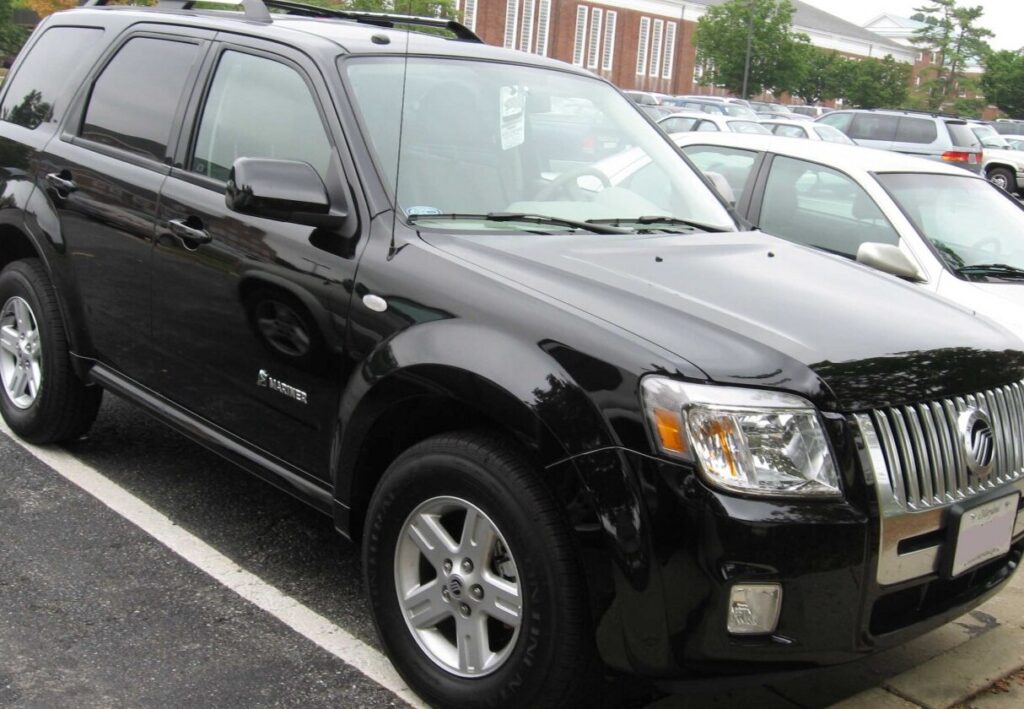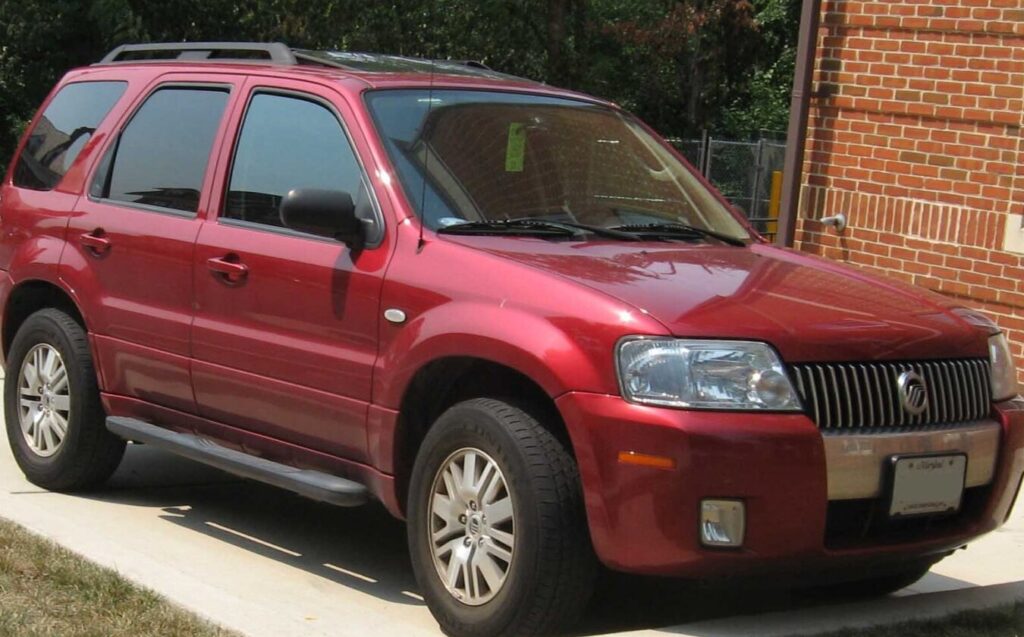
The Mercury Mariner I 3.0 i V6 24V AWD, produced from 2005 to 2007, represented Mercury’s entry into the burgeoning compact SUV/Crossover market. Built on the Ford CD2 platform (shared with the Ford Escape and Mazda Tribute), the Mariner aimed to offer a more upscale alternative within the Ford family. This particular variant, equipped with the 3.0-liter Duratec V6 engine and a four-speed automatic transmission, occupied a mid-range position in the Mariner lineup, offering a balance of power, comfort, and all-weather capability. It was positioned above the base 2.3L four-cylinder models and below potential future performance-oriented trims.
Technical Specifications
| Brand | Mercury |
| Model | Mariner |
| Generation | Mariner I |
| Type (Engine) | 3.0 i V6 24V AWD (203 Hp) |
| Start of production | 2005 |
| End of production | 2007 |
| Powertrain Architecture | Internal Combustion engine |
| Body type | SUV, Crossover |
| Seats | 5 |
| Doors | 5 |
| Fuel consumption (urban) | 13.1 l/100 km (18 US mpg, 21.6 UK mpg) |
| Fuel consumption (extra urban) | 10.2 l/100 km (23.1 US mpg, 27.7 UK mpg) |
| Fuel Type | Petrol (Gasoline) |
| Maximum speed | 175 km/h (108.74 mph) |
| Weight-to-power ratio | 8 kg/Hp, 124.5 Hp/tonne |
| Weight-to-torque ratio | 6 kg/Nm, 166.3 Nm/tonne |
| Power | 203 Hp @ 5750 rpm |
| Power per litre | 68.4 Hp/l |
| Torque | 271 Nm @ 4500 rpm (199.88 lb.-ft. @ 4500 rpm) |
| Engine layout | Front, Transverse |
| Engine displacement | 2967 cm3 (181.06 cu. in.) |
| Number of cylinders | 6 |
| Engine configuration | V-engine |
| Cylinder Bore | 89 mm (3.5 in.) |
| Piston Stroke | 79.5 mm (3.13 in.) |
| Compression ratio | 10:1 |
| Number of valves per cylinder | 4 |
| Fuel injection system | Multi-port manifold injection |
| Engine aspiration | Naturally aspirated engine |
| Valvetrain | DOHC |
| Engine oil capacity | 5.7 l (6.02 US qt | 5.02 UK qt) |
| Coolant | 10 l (10.57 US qt | 8.8 UK qt) |
| Kerb Weight | 1630 kg (3593.53 lbs.) |
| Max. weight | 2087 kg (4601.05 lbs.) |
| Max load | 457 kg (1007.51 lbs.) |
| Trunk (boot) space – minimum | 830 l (29.31 cu. ft.) |
| Trunk (boot) space – maximum | 1878 l (66.32 cu. ft.) |
| Fuel tank capacity | 62 l (16.38 US gal | 13.64 UK gal) |
| Length | 4427 mm (174.29 in.) |
| Width | 1781 mm (70.12 in.) |
| Height | 1795 mm (70.67 in.) |
| Wheelbase | 2620 mm (103.15 in.) |
| Front track | 1552 mm (61.1 in.) |
| Rear (Back) track | 1534 mm (60.39 in.) |
| Drive wheel | All wheel drive (4×4) |
| Number of gears and type of gearbox | 4 gears, automatic transmission |
| Front suspension | Spring Strut |
| Rear suspension | Coil spring |
| Front brakes | Disc |
| Rear brakes | Drum |
| Assisting systems | ABS (Anti-lock braking system) |
| Tires size | 235/70 R16 |
Powertrain & Engine Architecture
The heart of the Mariner I 3.0 i AWD was the Ford Duratec 30 3.0-liter V6 engine. This engine, part of Ford’s Duratec family, featured a 60-degree V-angle, dual overhead camshafts (DOHC), and four valves per cylinder. The engine code varied slightly depending on the specific production year, but generally fell within the AJ series. Fuel delivery was handled by a multi-port fuel injection system, providing adequate atomization for efficient combustion. The 3.0L Duratec was known for its relatively smooth operation and decent power output for its size. Paired with this engine was a four-speed automatic transmission (typically the 5R55E), chosen for its balance of cost, reliability, and drivability. While not offering the most advanced gear ratios, it provided smooth shifts and adequate performance for everyday driving. The all-wheel-drive system was typically an automatic, on-demand system, engaging the rear wheels when traction was lost.
Driving Characteristics
The 3.0-liter V6 and four-speed automatic combination in the Mariner I delivered a comfortable, if not particularly sporty, driving experience. Acceleration was adequate for merging onto highways and passing slower traffic, but it wasn’t a particularly quick vehicle. The automatic transmission, while smooth, lacked the responsiveness of a manual gearbox or a more modern automatic with more gears. The gear ratios were tuned for fuel economy and relaxed cruising rather than outright performance. Compared to the base 2.3L four-cylinder Mariner, the 3.0L offered a noticeable improvement in power and responsiveness. However, it didn’t match the performance of the later, more powerful 4.0L V6 options available on the Escape and Tribute. The all-wheel-drive system provided enhanced traction in inclement weather, making it a capable vehicle for drivers in regions with snow or rain.
Equipment & Trim Levels
The Mariner I 3.0 i AWD typically came standard with features such as air conditioning, power windows and locks, a CD player, and cloth upholstery. Higher trim levels, such as the Convenience Package, added features like alloy wheels, upgraded audio systems, and keyless entry. Optional extras included a sunroof, leather upholstery, and a navigation system. Interior design was generally functional and straightforward, with a focus on practicality rather than luxury. The dashboard layout was typical of Ford products from that era, with clearly labeled controls and a relatively simple design.
Chassis & Braking
The Mariner I utilized a fairly conventional chassis setup for a compact SUV. Front suspension consisted of MacPherson struts, while the rear employed a multi-link independent suspension. This setup provided a reasonable balance of ride comfort and handling. Brakes were disc brakes in the front and drum brakes in the rear, which was common for vehicles in this class at the time. Anti-lock brakes (ABS) were standard, enhancing safety by preventing wheel lockup during hard braking. Stabilizer bars were included at both the front and rear to reduce body roll during cornering.
Market Reception & Comparison
The Mercury Mariner I 3.0 i AWD was generally well-received by critics as a competent and comfortable compact SUV. However, it wasn’t considered a standout performer in its class. Fuel economy was average for a V6-powered SUV of its size, and reliability was generally good, although some owners reported minor issues with the automatic transmission. Compared to the Ford Escape, the Mariner offered a slightly more refined interior and a more upscale image. However, it also came with a higher price tag. Against competitors like the Honda CR-V and Toyota RAV4, the Mariner offered a more powerful engine but lacked the same level of reputation for long-term reliability.
Legacy
The Mercury Mariner I 3.0 i AWD, while not a groundbreaking vehicle, remains a relatively affordable and practical option in the used car market. The Duratec 3.0L V6 engine is generally considered to be a reliable powerplant, and the four-speed automatic transmission, while not the most advanced, is known for its durability. However, potential buyers should be aware of potential issues with the transmission, such as slipping or harsh shifting. Overall, the Mariner I 3.0 i AWD represents a solid, if somewhat unremarkable, entry into the compact SUV segment, offering a blend of comfort, capability, and affordability.