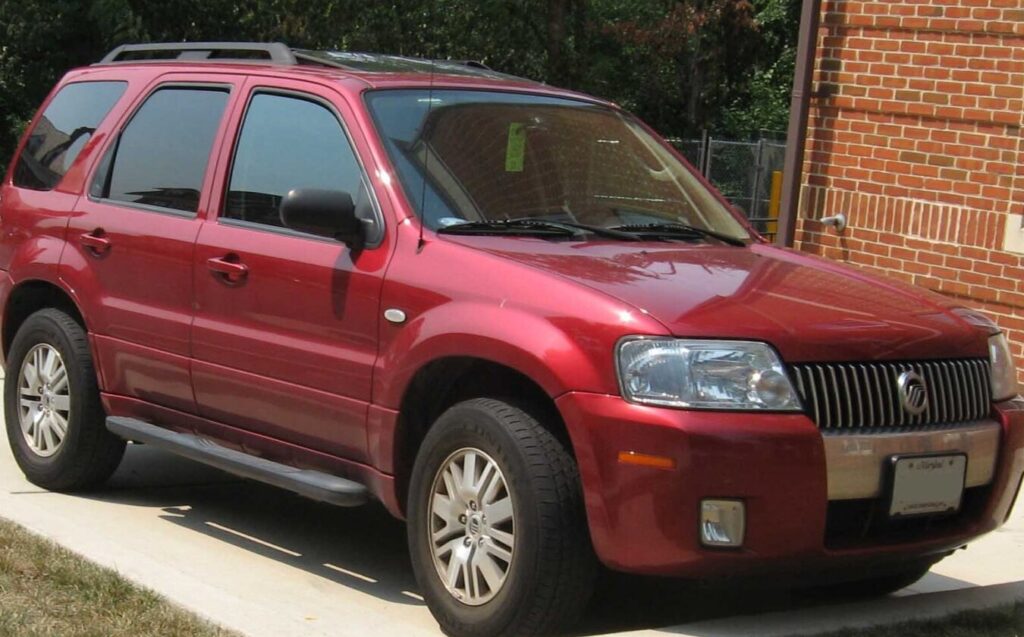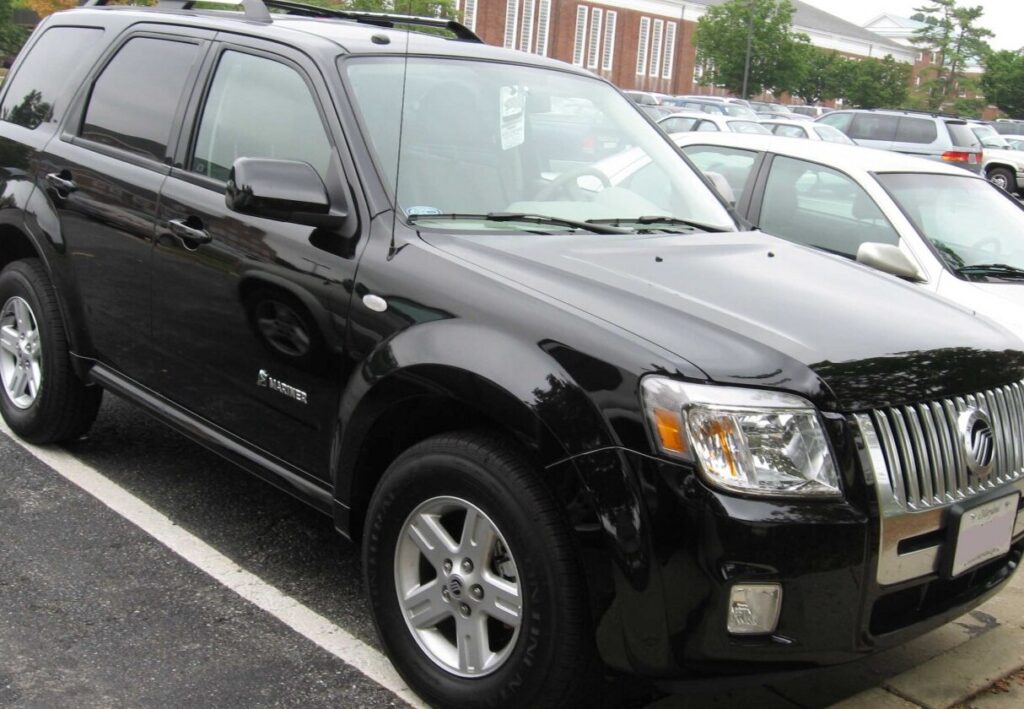
The Mercury Mariner II 2.5, equipped with a 171 horsepower engine and automatic transmission, was a compact crossover SUV produced by the Mercury division of Ford Motor Company from 2008 to October 2010. Positioned as a slightly more upscale offering than the Ford Escape with which it shared a platform (the Mazda Tribute was also a sibling), the Mariner II aimed to attract buyers seeking a blend of practicality, comfort, and a more refined driving experience. This particular 2.5-liter configuration represented the mid-range offering in the Mariner II lineup, slotting between the base 2.0-liter engine and potential higher-trim level options depending on the model year. It was primarily sold in the North American market.
Technical Specifications
| Brand | Mercury |
| Model | Mariner |
| Generation | Mariner II |
| Type (Engine) | 2.5 (171 Hp) Automatic |
| Start of production | 2008 |
| End of production | October, 2010 |
| Powertrain Architecture | Internal Combustion engine |
| Body type | SUV, Crossover |
| Seats | 5 |
| Doors | 5 |
| Fuel consumption (urban) | 11.2-11.8 l/100 km (21 – 19.9 US mpg) |
| Fuel consumption (extra urban) | 8.4 l/100 km (28 US mpg) |
| Fuel consumption (combined) | 10.2 l/100 km (23.1 US mpg) |
| Fuel Type | Petrol (Gasoline) |
| Weight-to-power ratio | 8.9 kg/Hp |
| Weight-to-torque ratio | 6.5 kg/Nm |
| Power | 171 Hp @ 4500 rpm |
| Power per litre | 68.7 Hp/l |
| Torque | 232 Nm @ 4500 rpm (171.11 lb.-ft. @ 4500 rpm) |
| Engine layout | Front, Transverse |
| Engine Model/Code | Duratec 25 |
| Engine displacement | 2488 cm3 (151.83 cu. in.) |
| Number of cylinders | 4 |
| Engine configuration | Inline |
| Cylinder Bore | 89 mm (3.5 in.) |
| Piston Stroke | 100 mm (3.94 in.) |
| Compression ratio | 9.7:1 |
| Number of valves per cylinder | 4 |
| Fuel injection system | Multi-port manifold injection |
| Engine aspiration | Naturally aspirated engine |
| Valvetrain | DOHC |
| Engine oil capacity | 5 l (5.28 US qt | 4.4 UK qt) |
| Coolant capacity | 7 l (7.4 US qt | 6.16 UK qt) |
| Kerb Weight | 1515 kg (3340 lbs.) |
| Max. weight | 1996 kg (4400.43 lbs.) |
| Max load | 481 kg (1060.42 lbs.) |
| Trunk (boot) space – minimum | 889 l (31.39 cu. ft.) |
| Trunk (boot) space – maximum | 1903 l (67.2 cu. ft.) |
| Fuel tank capacity | 62 l (16.38 US gal | 13.64 UK gal) |
| Permitted trailer load with brakes (12%) | 680 kg (1499.14 lbs.) |
| Length | 4448 mm (175.12 in.) |
| Width | 1806 mm (71.1 in.) |
| Width with mirrors folded | 1979 mm (77.91 in.) |
| Width including mirrors | 2065 mm (81.3 in.) |
| Height | 1725-1778 mm (67.91 – 70 in.) |
| Wheelbase | 2619 mm (103.11 in.) |
| Front track | 1542 mm (60.71 in.) |
| Rear (Back) track | 1529 mm (60.2 in.) |
| Ride height (ground clearance) | 213 mm (8.39 in.) |
| Minimum turning circle | 11.2 m (36.75 ft.) |
| Drivetrain Architecture | Front wheel drive |
| Number of gears and type of gearbox | 6 gears, automatic transmission |
| Front suspension | Independent, type McPherson with coil spring and anti-roll bar |
| Rear suspension | Independent multi-link spring suspension with stabilizer |
| Front brakes | Ventilated discs, 302 mm |
| Rear brakes | Drum, 254 mm |
| Assisting systems | ABS (Anti-lock braking system) |
| Steering type | Steering rack and pinion |
| Power steering | Electric Steering |
| Tires size | 235/70 R16; 225/65 R17 |
| Wheel rims size | 16; 17 |
Powertrain & Engine Architecture
The heart of the Mariner II 2.5 was Ford’s Duratec 25 engine, a 2.5-liter inline-four cylinder powerplant. This engine, part of the Duratec family, featured a cast iron block and aluminum cylinder head, a configuration chosen for its balance of durability and weight savings. It utilized multi-port fuel injection and a double overhead camshaft (DOHC) valvetrain with four valves per cylinder, contributing to its respectable power output for its displacement. The engine’s 9.7:1 compression ratio was a compromise between performance and the ability to run on regular unleaded gasoline. Paired with this engine was a six-speed automatic transmission, a relatively modern feature for the time, designed to optimize fuel efficiency and provide smooth shifting. This transmission was sourced from Aisin, a well-regarded transmission manufacturer.
Driving Characteristics
The 171 horsepower and 232 lb-ft of torque produced by the 2.5-liter engine provided adequate, though not exhilarating, performance in the Mariner II. Acceleration was generally considered acceptable for everyday driving, but passing maneuvers at highway speeds required planning. The automatic transmission, while smooth, wasn’t particularly sporty, prioritizing comfort and fuel economy over aggressive shifting. Compared to the base 2.0-liter engine, the 2.5-liter offered a noticeable improvement in power and responsiveness, making it a more suitable choice for drivers who frequently carried passengers or cargo, or who lived in hilly areas. The six-speed automatic helped keep the engine in its optimal power band, but it lacked the engagement and control offered by a manual transmission.
Equipment & Trim Levels
The Mariner II 2.5 typically came standard with features such as air conditioning, power windows and locks, a CD player with auxiliary input, and anti-lock brakes (ABS). Higher trim levels, such as the Convenience Package or the Limited trim, added features like alloy wheels, a sunroof, leather upholstery, heated front seats, and a premium audio system. Interior upholstery was typically cloth on the base models, with leather available as an upgrade. The dashboard layout was functional and straightforward, with easy-to-read gauges and logically placed controls. Optional extras included a navigation system and a rear entertainment system.
Chassis & Braking
The Mariner II utilized an independent front suspension with McPherson struts and a coil spring, coupled with an independent multi-link rear suspension. This setup aimed to provide a comfortable ride while maintaining reasonable handling characteristics. Front brakes were ventilated discs, providing good stopping power, while rear brakes were drum brakes, a cost-saving measure common in this class of vehicle. A stabilizer bar was included at both the front and rear to reduce body roll during cornering. The suspension tuning was geared towards comfort rather than sporty handling, resulting in a relatively soft and forgiving ride.
Market Reception & Comparison
The Mercury Mariner II 2.5 was generally well-received by automotive critics as a competent and practical crossover SUV. However, it wasn’t considered a standout performer in its segment. Critics praised its comfortable ride and spacious interior, but noted that its acceleration and handling were not as engaging as some of its competitors, such as the Honda CR-V or Toyota RAV4. Fuel economy was average for its class, falling in line with other similarly sized crossovers. Compared to the Ford Escape, the Mariner II offered a slightly more refined interior and a more upscale image, but at a higher price point. The 2.5-liter engine offered a good balance of power and fuel economy, making it a popular choice among buyers.
Legacy
The Mercury Mariner II, and specifically the 2.5-liter automatic variant, has proven to be a relatively reliable vehicle in the used car market. The Duratec 25 engine is known for its durability, and the Aisin automatic transmission is also considered to be robust. Common issues reported by owners include minor oil leaks and occasional problems with the power steering system. However, these issues are generally not major and can be addressed with routine maintenance. Today, the Mariner II 2.5 represents an affordable and practical option for buyers seeking a used crossover SUV with a decent track record for reliability. Its relatively simple mechanical design makes it easier and less expensive to maintain compared to more modern vehicles with complex electronic systems.